HPLC Testing Equipment: Components & Industry Guide
HPLC, or High-Performance Liquid Chromatography, is a powerful technique used in various industries. It separates, identifies, and quantifies components with precision. After you understand basic HPLC testing, you might wonder what specific equipment is needed for accurate HPLC analysis. This article explores the essential instrument, materials, and accessories required for effective HPLC testing.
What components make up a complete HPLC system? How do these instrument work together to ensure precise analysis? Let's dive into the key elements and understand their roles in HPLC testing.
Key Takeaways
- High-Performance Liquid Chromatography (HPLC) is the industry standard for separating, identifying, and quantifying components in liquid mixtures with extreme precision.
- Selecting the right equipment requires matching specific components like detectors and pumps to your industry's unique regulatory needs.
- Torontech offers flexible configurations including compact benchtop models for limited space and robust industrial systems for high-volume testing.
- Critical features such as the P1/P2/P4 pump series and advanced Diode Array Detectors ensure high sensitivity and compliance with quality standards.
- Routine maintenance and proper selection of consumables are essential for maximizing the lifespan and accuracy of your analytical instrument.
Key Component of HPLC Testing Equipment
HPLC analysis relies on a sophisticated system of instrument, with the primary component being the HPLC device itself. This system includes several critical parts working together to perform precise separations. But what are the components of an HPLC device?
1. Solvent Reservoirs
Solvent reservoirs hold the mobile phase solvents, which transport the sample through the system. Common solvents include water, methanol, and acetonitrile. These solvents must be of high purity to avoid introducing contaminants into the system. The choice of solvent can affect the separation and analysis of the sample.
Related article: Stop Batch Failures: Assay vs Purity in HPLC
2. Pump
Essential for maintaining the flow of solvents, the pump generates the high pressure needed to move solvents through the column. HPLC pumps can generate pressures up to 400 bar, ensuring fast and efficient separations. Consistent flow rates provided by these pumps are critical for reproducible results.
3. Injector
This component introduces the sample into the mobile phase stream. Accurate injection of a precise sample volume is crucial for reproducibility and accuracy. Injectors can be manual or automated, with autosamplers being particularly useful for high-throughput analysis.
4. Column
Packed with stationary phase material, the column is where the separation of sample components occurs. Different components interact with the stationary phase based on their chemical properties, such as polarity or size. Various types of columns, including reversed-phase, normal-phase, and ion-exchange, cater to different analytical needs.
5. Detector
Detectors identify and quantify the separated components as they exit the column. UV-Vis detectors measure light absorbance, while mass spectrometers provide detailed molecular information. The choice of your HPLC detector type depends on the specific requirements of the analysis.
6. Data System
Modern data systems record and analyze the output from detectors. They offer advanced software for data processing, peak identification, quantification, and reporting. These systems are integral for obtaining detailed and accurate information about the sample composition.
Each component plays an integral role in HPLC analysis. Working together, they ensure accurate and reliable results. Now that you understand the key instrument, let's explore the essential materials used in HPLC. What materials are critical for effective HPLC testing? Let's find out.
Selecting the Right HPLC for Your Industry
Different industries face unique regulatory hurdles and analytical challenges. A "one-size-fits-all" HPLC system often leads to compliance gaps or inefficiency. Below is a breakdown of what to prioritize based on your specific sector and how the Torontech TT-HPLC series fits those needs.
1. Pharmaceutical & Biotech
The Challenge: The primary drivers here are regulatory compliance (FDA 21 CFR Part 11, GMP) and the need for extreme precision in separating structurally similar compounds (isomers/impurities).
What to Look For:
- Peak Purity Analysis: For method development and impurity profiling, a standard UV detector often isn't enough. We recommend configuring the TT-HPLC with a Diode Array Detector, which captures the entire spectrum to ensure no impurities are hiding under the main peak.
- Precision & Reproducibility: In pharma QC, flow rate stability is critical. The HPLC P1/P2/P4 Pump series is designed with high-hardness alloy steel cams to ensure minimal pulsation and maximum uptime, crucial for meeting strict system suitability requirements.
2. Food & Beverage Safety
The Challenge: Labs must often test for trace-level toxins (mycotoxins, pesticides) or additives in complex matrices that can easily foul up a column or cause cross-contamination.
What to Look For:
- Robust Sample Handling: Sticky or viscous samples (like honey or syrup analysis) require precision injection. The HPLC Autosampler included in our systems features an integrated constant pressure needle design, which significantly reduces the risk of carryover between samples—a must for allergen or toxin testing.
- Specialized Detection:
- Vitamins & Aflatoxins: These naturally fluorescent compounds are best detected by pairing the system with a Fluorescence Detector (FLD).
- Sugars & Alcohols: Since these lack UV chromophores, the TT-HPLC should be coupled with a Refractive Index (RI) detector for accurate quantification.
3. Environmental Analysis (Water & Soil)
The Challenge: Environmental labs are volume-driven and must detect contaminants at trace levels (parts per billion). Equipment durability is paramount due to the high volume of samples run daily.
What to Look For:
- Pump Durability: When running continuous batches of water samples, pump seal wear is a common failure point. The HPLC P1/P2/P4 Pump variants are engineered with optimized plungers and seal designs to withstand heavy usage cycles without losing flow accuracy.
- Sensitivity: For trace analysis of organic pollutants, the HPLC UV-Vis Detector offers the dual-wavelength monitoring necessary to filter out matrix interference and isolate the target contaminant.
4. Petrochemical & Polymer Manufacturing
The Challenge: Samples are often non-polar, viscous, or require specific temperature controls to maintain solubility and reproducibility.
What to Look For:
- Temperature Stability: Viscosity changes with temperature, which can ruin retention time consistency in polymer analysis. The HPLC Column Oven in the Torontech lineup utilizes a Fuzzy PID algorithm to maintain precise temperature control, ensuring that your molecular weight distribution data remains accurate regardless of lab ambient temperature swings.
- Solvent Compatibility: Petrochemical applications often use aggressive organic solvents. The TT-HPLC system builds are compatible with Refractive Index (RI) detectors, the industry standard for polymer analysis where UV absorption is minimal.
5. Forensic Toxicology & Clinical Research
The Challenge: You are dealing with complex biological matrices (blood, urine, hair) and require results that can stand up to legal scrutiny.
What to Look For:
- Binary vs. Quaternary: For rapid drug screening, gradient response time is key. The TT-HPLC platform allows for flexible pump configurations (P1/P2/P4 series), enabling labs to choose between high-pressure binary mixing for speed or quaternary mixing for method flexibility.
- Automated Workflows: High sample loads in toxicology require reliable automation. The HPLC Autosampler ensures that large batches of biological extracts can be run overnight with high injection precision, freeing up analysts for data interpretation.
What is the Size of HPLC Equipment?
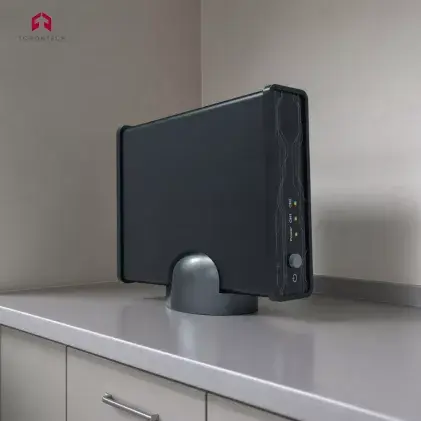
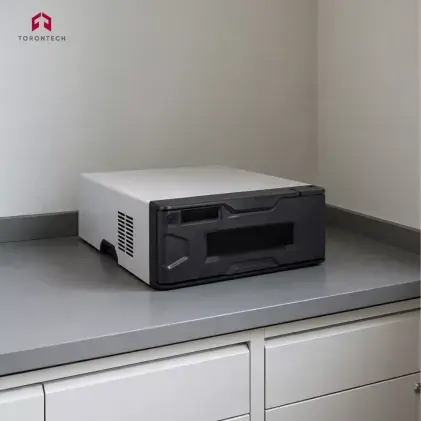
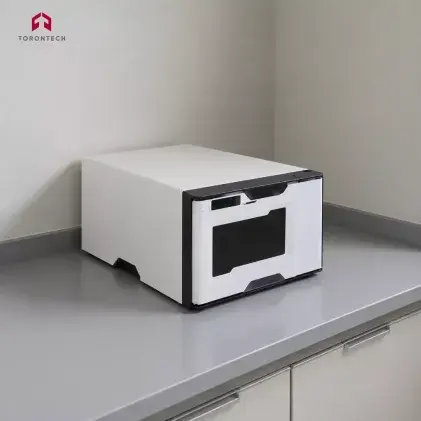
HPLC testing equipment comes in various sizes and configurations, tailored to meet the needs of different laboratory environments and applications. The size of the HPLC system can range from compact benchtop units to larger, more complex setups.
Quick Comparison: HPLC System Sizes & Configurations
System Type | Typical Dimensions (Approx.) | Key Characteristics | Best Application / Environment |
1. Benchtop HPLC | W: 40–60 cm H: 30–50 cm D: 40–60 cm | Compact design; easily integrates into existing setups without requiring floor space. | Laboratories with limited bench space requiring standard analytical capabilities. |
2. Modular HPLC | Per Module: 15–25 cm (W/H/D) (Total size varies) | Highly flexible; allows for the addition or removal of specific components (pumps, detectors) as needed. | Research labs requiring scalability or frequent reconfiguration of testing methods. |
3. Industrial HPLC | Variable (Large): Can measure several meters in width/height | Robust design for continuous, high-throughput operation; often requires dedicated floor space. | Pharmaceutical manufacturing and large-scale analytical labs requiring heavy-duty processing. |
4. Portable HPLC | W: 20–30 cm H: 20–30 cm D: 20–30 cm | Lightweight and small; designed specifically for mobility and ease of transport. | Fieldwork, on-site environmental testing, and mobile analysis. |
1. Benchtop HPLC Systems - Compact and Space-Saving
Benchtop HPLC systems are designed to fit on laboratory benches. These systems are typically compact and can be easily integrated into existing lab setups.
The dimensions of a typical benchtop HPLC system can range from approximately 40-60 cm in width, 30-50 cm in height, and 40-60 cm in depth. This makes them suitable for laboratories with limited space.
2. Modular HPLC Systems - Customizable Size
Modular HPLC systems consist of separate modules for each component (pump, injector, detector, etc.). You can arrange these modules according to your specific needs and available space.
The modular design allows for flexibility in configuration, enabling the addition or removal of modules as required. This can impact the overall size, with each module typically measuring around 15-25 cm in width, height, and depth.
3. Industrial HPLC Systems - Larger and More Robust
Industrial HPLC systems are larger and designed for high-throughput and continuous operation. These systems are often used in pharmaceutical manufacturing and large-scale analytical labs.
Related article: What is HPLC in the Pharmaceutical Industry? Explained
The dimensions of industrial HPLC systems can vary widely but are generally much larger than benchtop systems, sometimes requiring dedicated floor space. They can measure up to several meters in width and height, depending on the complexity and capacity of the system.
4. Portable HPLC Systems - Small and Lightweight
Portable HPLC systems are designed for field use and are smaller and lighter than benchtop or industrial systems. They provide mobility and convenience for on-site testing and analysis.
Portable systems typically measure around 20-30 cm in width, height, and depth, making them easy to transport and set up in various locations.
5. Considerations for Choosing the Right Size
- Lab Space: Assess the available space in your laboratory to determine whether a benchtop, modular, or industrial system is most appropriate.
- Application Requirements: Consider the specific needs of your application, including throughput, sensitivity, and the types of analyses you will perform.
- Flexibility and Scalability: Modular systems offer flexibility and scalability, allowing you to expand or reconfigure the system as your needs evolve.
Choosing the right size and configuration of HPLC equipment ensures that you can efficiently perform your analyses while optimizing the use of available space in your laboratory.
Materials Used in HPLC
Understanding the materials used in HPLC testing equipment is essential for effective and accurate analysis. These components play a critical role in the separation, identification, and quantification of sample components.
Mobile Phase Solvents
- Common Solvents: Water, methanol, and acetonitrile are frequently used as mobile phase solvents. These solvents must be of high purity to prevent contamination and ensure accurate results.
- Selection: The choice of solvent affects the separation process. For instance, methanol and acetonitrile are often chosen for their ability to dissolve a wide range of compounds.
Stationary Phase Materials
- Silica: Often used as the stationary phase in HPLC columns, silica particles provide a large surface area for interactions with sample components.
- Alumina: Another material used in certain types of columns, suitable for different analytical needs.
- HPLC Kits Polymeric Resins: Used for specific types of chromatography, such as ion-exchange, providing unique interaction properties for the separation process.
Sample Preparation Materials
- Filters and Membranes: Used to remove particulates from samples and solvents, ensuring they are clean before entering the HPLC system.
- Sample Vials: High-quality vials and caps are essential for storing and injecting samples without contamination.
These materials are essential for the smooth operation of the HPLC system, ensuring accurate and reliable analysis. Now, let's delve into the basic instrument necessary for HPLC and their roles in achieving precise separations and measurements.
HPLC Kits and Accessories
To enhance the functionality and efficiency of your HPLC testing equipment system, various kits and accessories are available. These components not only support the main system but also help in maintaining its performance and extending its capabilities.
1. HPLC Kits
HPLC kits typically include all the essential components required to set up and start HPLC analysis. These kits are particularly useful for new laboratories or when upgrading existing equipment.
- Complete Setup: An HPLC kit often contains the basic instrument such as solvent reservoirs, pumps, injectors, columns, detectors, and data systems. It provides everything needed for a full installation and immediate operation.
- Standard Samples: Many kits come with standard samples for calibration and validation, ensuring that your system is correctly set up and ready for accurate analysis.
- User Manuals and Guides: Comprehensive guides and manuals included in the kits help you understand the setup process and operational procedures.
2. Essential HPLC Accessories
Various accessories are available to enhance the functionality of your HPLC system. These accessories help maintain the system, improve its performance, and ensure accurate results.
- Vials and Caps: Used for sample storage and injection, high-quality vials and caps prevent contamination and ensure the integrity of your samples.
- Tubing and Fittings: These components connect the various parts of the HPLC system. High-quality tubing and fittings are essential for preventing leaks and ensuring a smooth flow of solvents and samples.
- Column Holders and Clamps: These accessories secure the columns in place during analysis, providing stability and ensuring consistent results.
- Solvent Filters and Spargers: These ensure the purity of solvents by removing particulates and dissolved gases, which can interfere with the analysis and damage the equipment.
3. Enhancements and Specialized Apparatus
In addition to the basic components and accessories, there are specialized apparatus and enhancements that can significantly improve the performance and reliability of your HPLC system.
- Degassers: These devices remove dissolved gases from solvents, preventing bubble formation that can disrupt the flow and accuracy of the analysis.
- Column Ovens: Maintaining a constant temperature for the column is crucial for consistent separations. Column ovens provide precise temperature control, which is essential for reproducible results.
- Autosamplers: Automating the injection process for multiple samples, autosamplers increase throughput and consistency, especially in high-volume testing environments.
Partner With Torontech for HPLC Equipment
Understanding HPLC components and equipment is crucial for precise analysis. The HPLC system includes solvent reservoirs, pumps, injectors, columns, detectors, and data systems. Each part plays a key role in separating and analyzing complex mixtures.
Choosing the right materials and accessories enhances efficiency. Consider solvents, stationary phases, and essential accessories for better results. Whether you need a compact benchtop system or a robust industrial setup, selecting the right size and configuration is vital.
Each component and accessory contributes to the system's performance. Optimizing your HPLC process ensures accurate and reliable outcomes. For more detailed information on HPLC testing equipment and to explore the best options for your specific requirements, please visit our product page or contact us now.
References:
Lynch, K., Chen, A., & Liu, S. (2018). Miniaturized high-performance liquid chromatography instrumentation. Talanta, 177, 94-103. doi.org/10.1016/j.talanta.2017.09.016
Hussen, A. (2022). High-Performance Liquid Chromatography (HPLC): A review. Annals of Advances in Chemistry. doi.org/10.29328/journal.aac.1001026
Kowalska, M., Woźniak, M., Kijek, M., Mitrosz, P., Szakiel, J., & Turek, P. (2022). Management of validation of HPLC method for determination of acetylsalicylic acid impurities in a new pharmaceutical product. Scientific Reports, 12. doi.org/10.1038/s41598-021-99269-x
LaCourse, M., & LaCourse, W. (2017). General instrumentation in HPLC. 417-429. doi.org/10.1016/b978-0-12-805393-5.00017-8
McMaster, M. (1994). HPLC: A Practical User's Guide. doi.org/10.5860/choice.32-3317