

Synchronous Thermal Analyzer (STA) –ToronSTA™ Series
The Torontech ToronSTA™ Synchronous Thermal Analyzer (STA) is a high-performance, multi-technique thermal analysis instrument that combines thermogravimetric analysis (TGA) and differential scanning calorimetry (DSC) — and optionally differential thermal analysis (DTA) — into a single, compact bench-top platform. Because both TGA and DSC signals are acquired from the same sample in the same measurement, the ToronSTA™ eliminates the run-to-run variability inherent in sequential single-technique measurements and provides a uniquely correlated view of mass-change and thermal-event data.
Available in two temperature configurations — the ToronSTA™ 2000 (standard model, up to 1250°C) and the ToronSTA™ 3000 (high-temperature model, up to 1550°C) — the ToronSTA™ Synchronous Thermal Analyzer covers the full range of thermal characterization needs from routine polymer quality control to advanced research on ceramics, metals, and catalysts. An intuitive 7-inch color touch screen, PID multi-stage temperature control, an imported high-precision weighing system, and a fully featured, copyright-protected software suite make this synchronous thermal analyzer a complete solution for laboratories requiring accurate, reproducible, and traceable STA data.
Synchronous Thermal Analyzer (STA) –ToronSTA™ Series Applications
The ToronSTA™ Synchronous Thermal Analyzer is widely used for research and development, process optimization, and quality control in:
- Plastics and polymers — thermal stability assessment, decomposition kinetics, glass transition temperature (Tg), melting point, and crystallinity determination using simultaneous TGA/DSC
- Rubber and elastomers — vulcanization behavior, thermal degradation profiling, filler and additive content quantification
- Coatings and paints — curing characterization, solvent and moisture loss, heat resistance evaluation
- Pharmaceuticals and active ingredients — polymorphic transitions, dehydration, purity, and thermal decomposition profiling
- Catalysts and inorganic materials — redox reactions, decomposition behavior, solid-phase transitions, and oxidation/reduction studies
- Metallic materials and alloys — phase transitions, oxidation kinetics, melting and solidification enthalpy
- Composite materials — fiber and filler content determination, thermal stability screening, and multi-stage decomposition analysis
- Adsorption and desorption studies — moisture, solvent, and gas uptake and release characterization
- Quantitative component analysis — additive, filler, and residue determination using TGA mass-loss steps
- Moisture and volatiles measurement — precise quantification of moisture content, residual solvents, and volatile fractions in raw materials and finished products
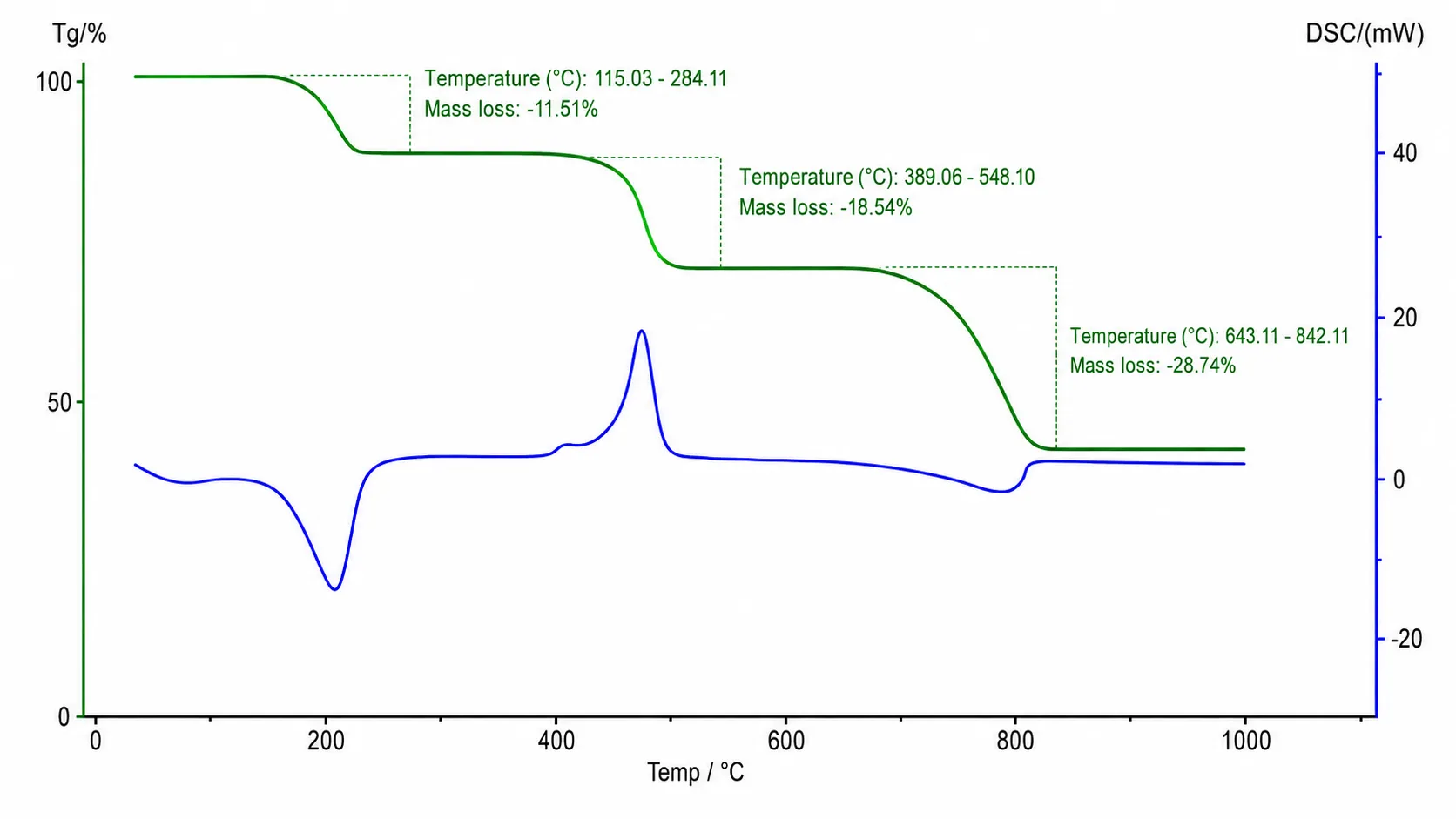
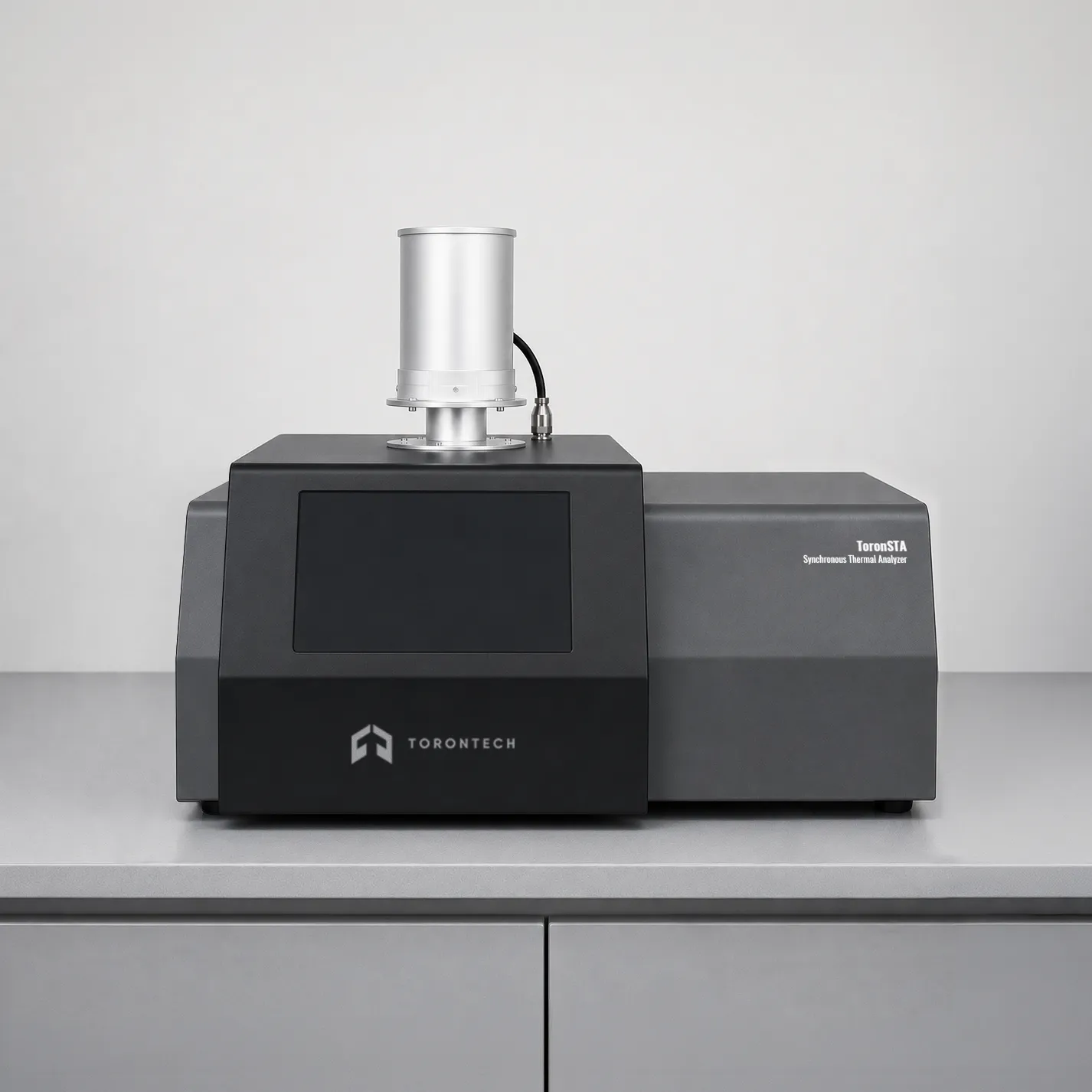
Synchronous Thermal Analyzer (STA) –ToronSTA™ Series Key Features
- True simultaneous TGA and DSC measurement on a single sample in a single run — eliminating the sample-to-sample variability of sequential single-technique measurements and enabling direct correlation of mass-change and thermal-event data
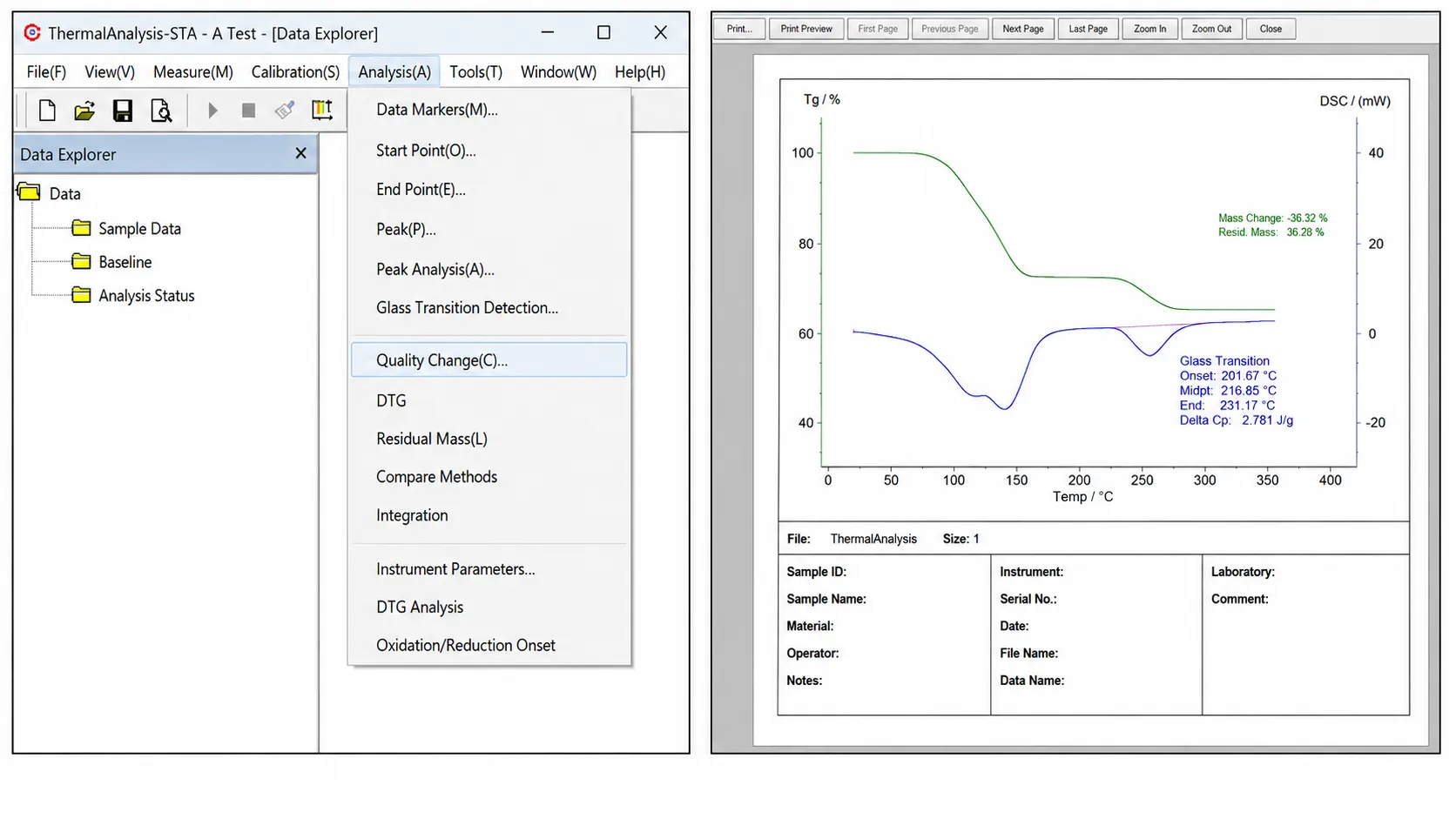 | |
Parameter Setting Interface Intuitive parameter management with organized categories for easy configuration and adjustment | Parameter Report Interface Clear data visualization and report generation for performance tracking and analysis |
- Flexible software architecture: the analysis software can be switched among differential (DTA), differential thermal (DSC), thermogravimetric (TGA), and synchronous thermal (STA) modes to accommodate diverse application requirements on a single instrument
- Dual temperature range models: ToronSTA™ 2000 (standard, room temperature to 1250°C) and ToronSTA™ 3000 (high-temperature, room temperature to 1550°C) — covering the full spectrum from routine polymer analysis to high-temperature ceramics and metals research
- Double-row precious metal alloy wire furnace winding reduces electromagnetic interference and delivers superior high-temperature stability, oxidation resistance, and long-term durability compared to single-row wound furnaces
- Upper open-cover furnace design enables safe, convenient sample placement without the need to move or tilt the furnace body, reducing the risk of sample rod damage and simplifying sample loading
- Imported high-precision weighing system with 0.01 mg resolution, 0.01 mg accuracy, and a measurement range of 0.01 mg to 3 g (expandable to 5 g) provides high stability and excellent repeatability for TGA mass-loss measurements
- PID multi-stage temperature control with high precision and low temperature pulse enables complex multi-ramp, isothermal, and cooling programs to be executed with a temperature resolution of 0.01°C and fluctuation of ±0.1°C
- Wide heating rate range of 0.1 to 100°C/min accommodates slow quasi-isothermal scanning for fine feature resolution and rapid screening programs for high-throughput quality control applications
- 7-inch color touch screen with comprehensive information display provides an intuitive, high-convenience operating interface for setting instrument parameters, monitoring real-time measurement data, and managing test programs
- USB bidirectional communication between the instrument and PC software enables full remote operation: test parameters can be configured and tests can be initiated, monitored, or stopped from the connected computer
- Proprietary analysis software with software copyright certification supports Chinese/English language switching and export. Features include real-time spectral recording, multi-spectrum overlay analysis, peak integration, baseline subtraction, glass transition analysis, DTG analysis, spectrum smoothing, magnification and scaling tools, and direct report saving and printing
- Advanced data processing engine ensures accuracy and reproducibility of analyzed data, with automatic saving functions to prevent data loss during extended measurements
- Customizable instrument configurations and optional accessories — including tablet press, various crucible types (ceramic, alumina, platinum), and optional PC — allow the ToronSTA™ to be configured to specific laboratory and application requirements
Theory and Method
The ToronSTA™ Synchronous Thermal Analyzer operates on the principle of simultaneous measurement of thermogravimetric (TGA) and calorimetric (DSC) signals from a single sample during a programmed temperature scan. The instrument controls the heating furnace to execute user-defined heating ramps, isothermal holds, and cooling segments with high precision, while continuously detecting and recording the temperature, mass, and heat flow response of the sample.
In the thermogravimetric analysis (TGA) channel, the imported high-precision weighing system continuously monitors the mass of the sample as a function of temperature and time. Any mass change — due to decomposition, evaporation, oxidation, reduction, or absorption — is recorded at a resolution of 0.01 mg, producing the characteristic TGA and derivative TGA (DTG) curves.
In the DSC channel, the differential heat flow between the sample and an empty reference crucible is measured as the furnace temperature changes. Exothermic and endothermic events — such as melting, crystallization, glass transition, curing, and decomposition — appear as characteristic peaks or step changes in the DSC signal, resolved to 0.01 mW. Because both signals are obtained simultaneously on the same sample in the same temperature program, TGA mass-loss events and DSC thermal events are inherently correlated in time and temperature, enabling unambiguous interpretation of complex multi-step thermal behaviors that cannot be resolved by single-technique instruments.
The furnace uses double-row winding of precious metal alloy resistance wire, delivering high-temperature resistance, oxidation resistance, and reduced electromagnetic interference. A PID temperature control algorithm with multi-stage programming capability ensures precise tracking of complex temperature profiles — including multi-ramp heating, isothermal holds, and controlled cooling. The upper open-cover furnace structure enables safe and convenient sample loading without disturbing the sample rod.
Synchronous Thermal Analyzer (STA) –ToronSTA™ Series Technical Specifications
| Technical Parameter | ToronSTA™ 2000 (Standard Model) | ToronSTA™ 3000 (High-Temperature Model) |
|---|---|---|
| Temperature Range | Room temperature – 1250°C | Room temperature – 1550°C |
| Temperature Resolution | 0.01°C | |
| Temperature Fluctuation | ±0.1°C | |
| Heating Rate | 0.1 – 100°C/min | |
| Temperature Control Method | PID — heating, isothermal hold, cooling | |
| Balance Measurement Range | 0.01 mg – 3 g (expandable to 5 g) | |
| DSC Range | 0 – ±800 mW | 0 – ±1000 mW |
| DSC Resolution | 0.01 mW | |
| Weighing System Accuracy | 0.01 mg | |
| Test Range | Simultaneous TGA and DSC signals | |
| Furnace Heating Element | Precious metal alloy wire, double-row wound | |
| Furnace Structure | Upper open-cover design | |
| Display | 7-inch color touch screen | |
| Data Interface | Standard USB (bidirectional) | |
| Working Voltage | AC 220V / 50 Hz (110V is also available) | |
| Customizable | Yes | |
Software and Accessories
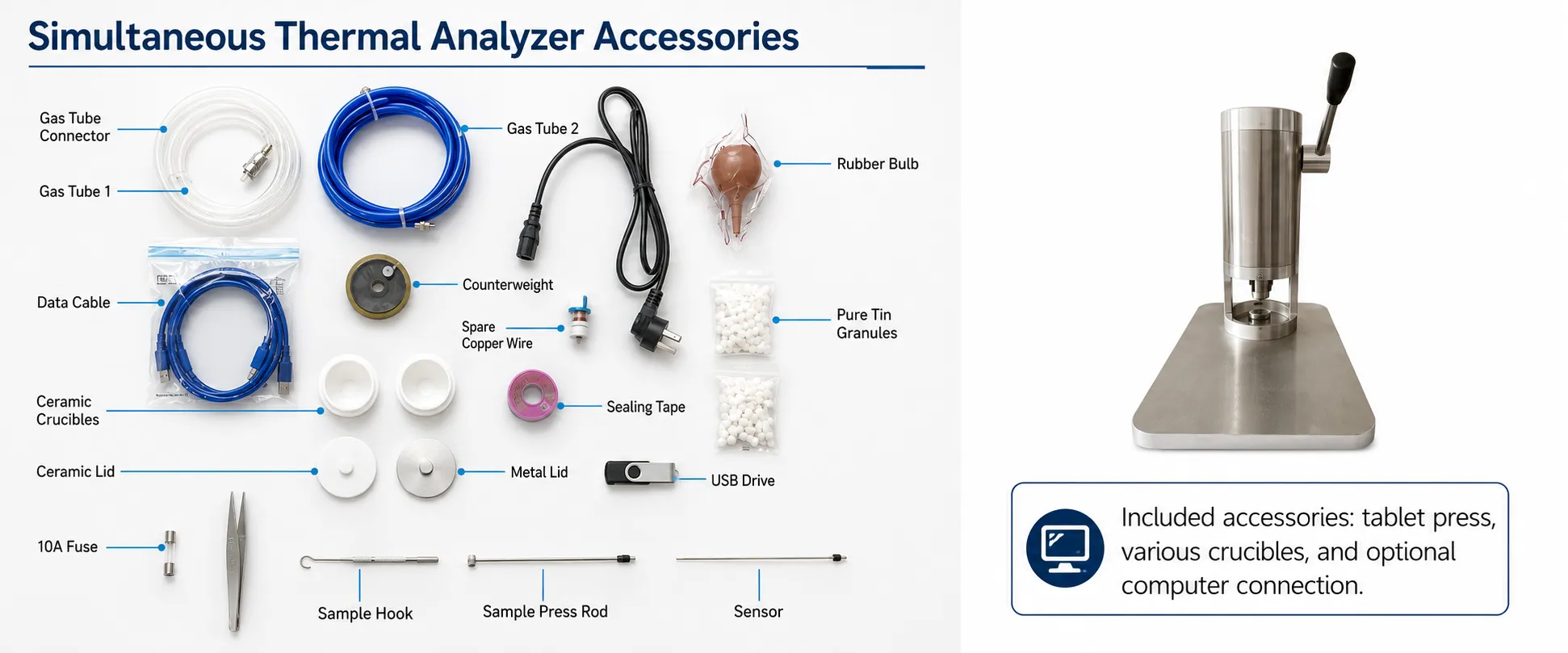
| Item | Details |
|---|---|
| Software | Proprietary, copyright-certified software; Chinese/English switchable; free lifetime updates and upgrades |
| Software Modes | Differential (DTA), differential thermal (DSC), thermogravimetric (TGA), and synchronous thermal (STA) |
| Software Functions | Real-time spectrum recording, multi-spectrum overlay, peak analysis, baseline correction, glass transition, DTG analysis, spectrum smoothing, magnification, scaling, report saving and printing |
| Optional | Computer (PC) |
| Standard Accessories (ToronSTA™ 2000) | Accessory box, one reference standard substance |
| Standard Accessories (ToronSTA™ 3000) | Accessory box, one reference standard substance, semiconductor reference, etc. |
| Optional Accessories | Tablet press, various crucibles (ceramic, alumina, platinum), additional standard substances |
For more information or to request a quotation, please contact us. Specifications are subject to change without prior notice.