
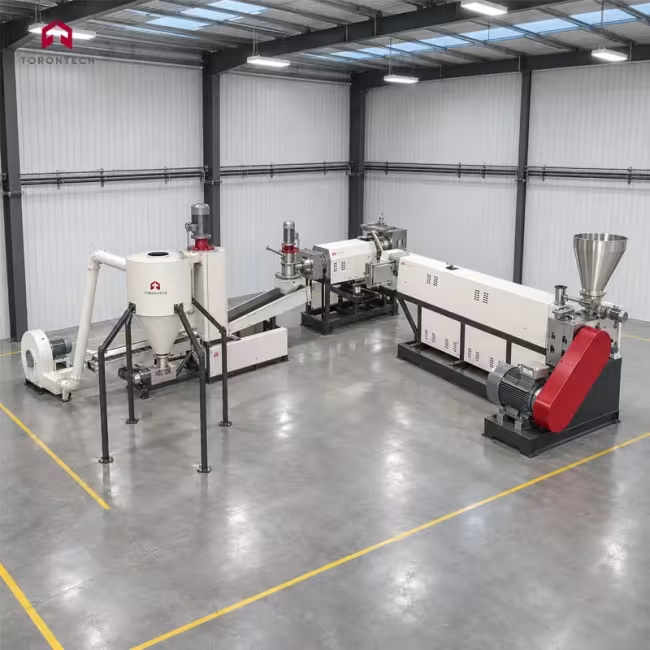
Rigid Plastic Pelletizing Line - ToronPR™ PPL R Series
PE PP Rigid Plastic Pelletizing Line for Regrind and Flake
The rigid plastic pelletizing line converts washed PE and PP regrind into uniform pellets ready for injection molding, extrusion, or compounding. Recyclers and molders use it to turn flake from a rigid washing line, production scrap, and squeezed film into a resin they can sell or reuse. The ToronPR™ PPL R pairs a metered feeding system with a single screw extruder, vacuum degassing, a hydraulic screen changer, and a pellet cutting unit. Six models cover output rates of 150 to 1,000 kg/h.
Regrind and flake are dense enough to feed a screw directly, so this line uses a screw loader and inverter-controlled feeder instead of a cutter compactor. That keeps the layout compact and the feed rate easy to tune. Buyers can choose single-stage or double-stage extrusion, and either water ring hot cutting or strand pelletizing. Besides PE and PP, the line also handles other rigid plastics such as ABS and PS.
Rigid Plastic Pelletizing Line - ToronPR™ PPL R Series Applications
This plastic recycling pelletizing line is the granulating equipment operations use to turn clean rigid plastic flake back into a consistent pelletized resin..
- Post-Consumer Rigid Recycling: pelletizes washed HDPE and PP flake recovered from bottles, crates, and containers
- Injection Molding Plants: reprocesses sprues, runners, rejected parts, and purge into pellets for blending back into production
- Squeezed Film Pelletizing: converts film that a squeezer dryer has already densified into PE pellets
- Pipe and Profile Scrap: turns PE and PP pipe regrind into resin for lower-grade pipe or molded goods
- ABS and PS Scrap Recovery: pelletizes clean ABS and PS regrind from appliance, electronics, and housing production scrap
- Compounding Operations: produces recycled base resin for blending with virgin polymer, fillers, and color masterbatch
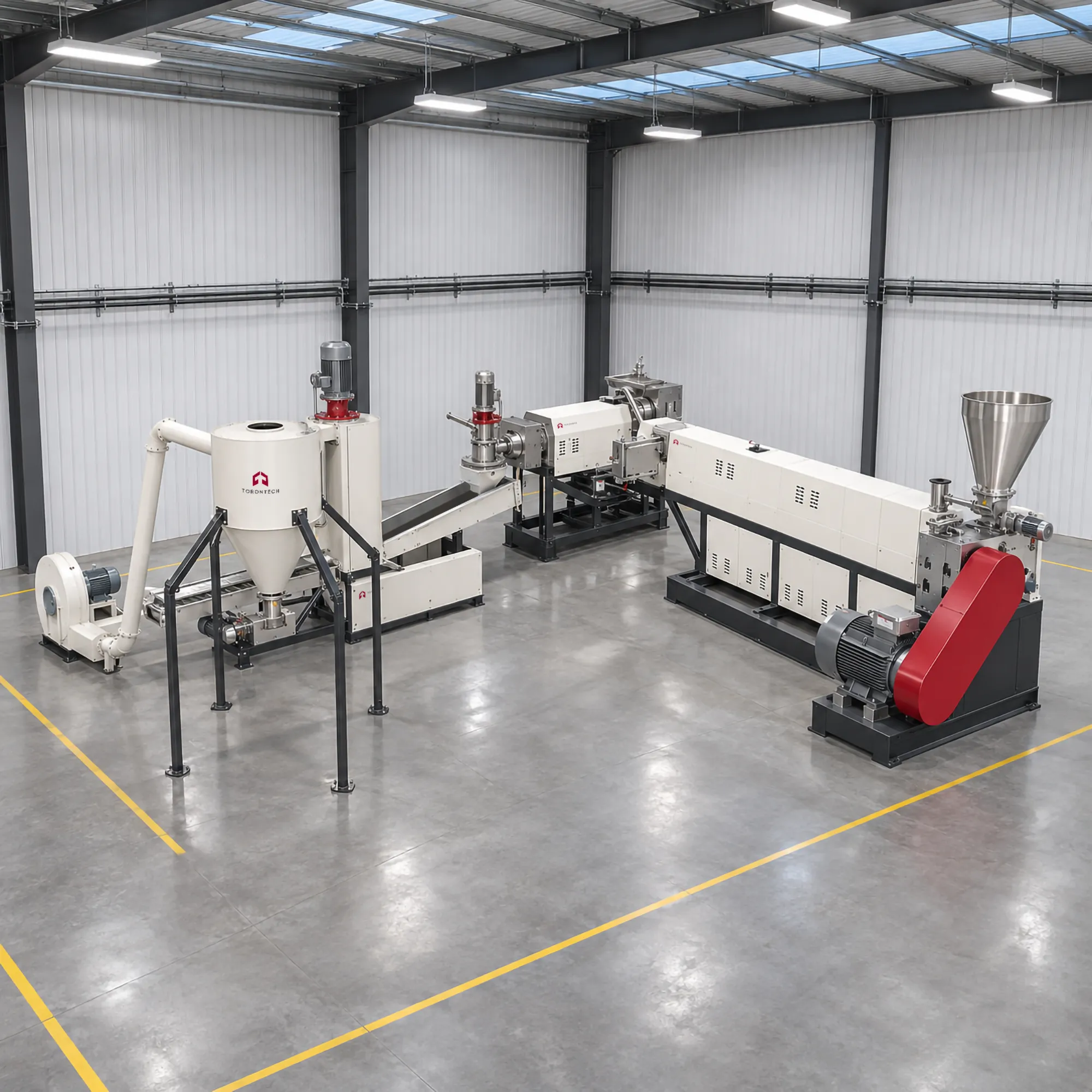
Rigid Plastic Pelletizing Line - ToronPR™ PPL R Series Key Features
The line combines metered feeding with a flexible extrusion and pelletizing setup that adapts to different rigid materials.
- Automatic Hopper Loading: a screw loader with a material limit switch fills the hopper and stops on its own when full
- Inverter-Controlled Feeding: the quantitative feeder meters regrind at an adjustable rate, preventing blockages at the screw feed section
- Vacuum Degassing: the extruder vents moisture, oil, and ink volatiles to reduce bubbles and voids in the finished pellets
- Non-Stop Screen Changes: a double-station hydraulic screen changer lets operators swap screens without stopping the line
- Single or Double-Stage Extrusion: choose one extruder for clean regrind or two for heavier contamination
- Choice of Pelletizing Method: water ring hot cutting or strand pelletizing, selected to suit the material and pellet shape required
- Multi-Material Capability: processes PE and PP plus other rigid plastics such as ABS and PS
- Selectable Filter Designs: plate, piston, self-cleaning, and back-flush screen changers match different contamination levels
- Closed-Loop Cooling Water: water collected under the dewatering machine returns to the water ring cutter for reuse
- Six Capacity Options: models span 150 kg/h through 1,000 kg/h of pellet output
Main Machine Units
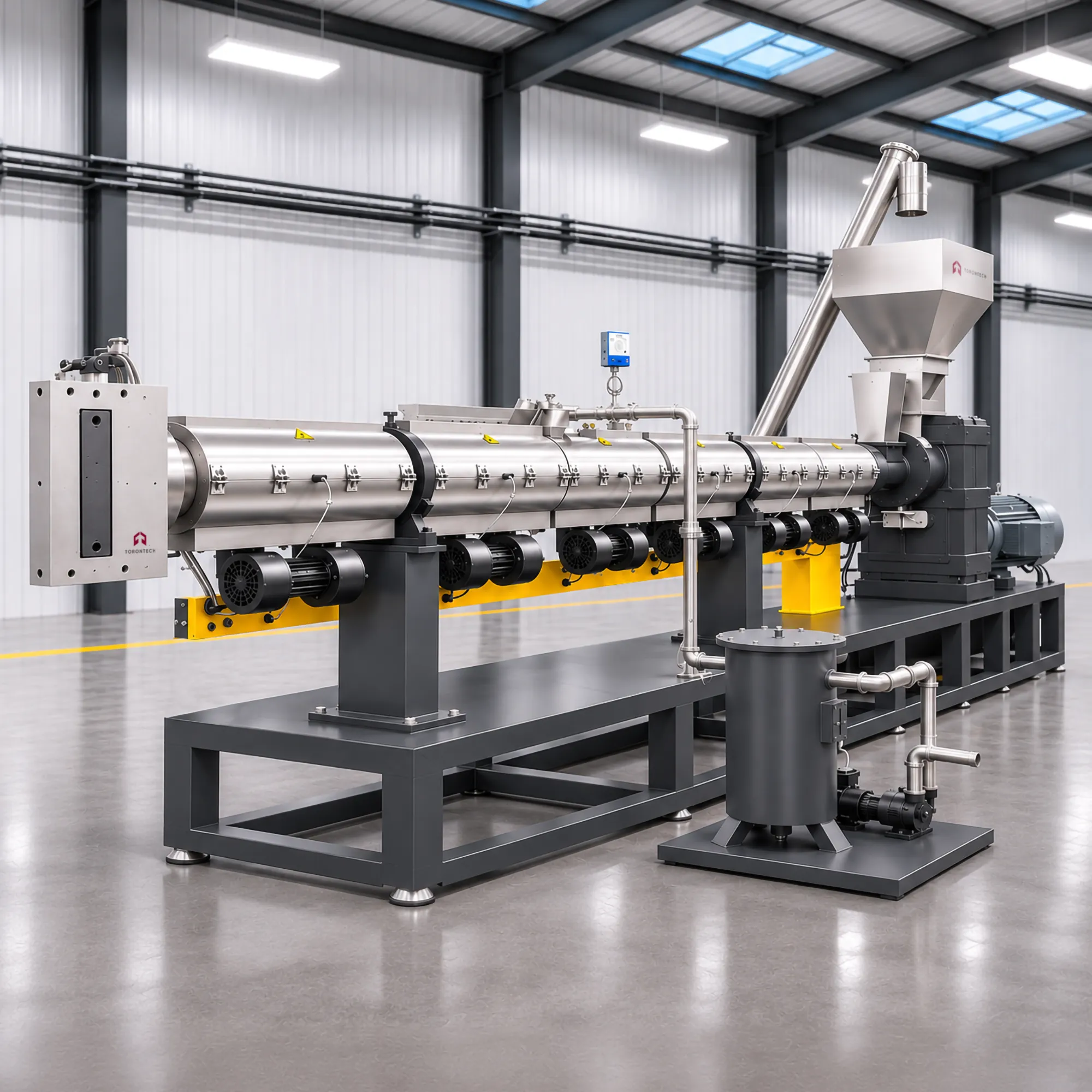
Each ToronPR™ PPL R line is configured to the customer's material and output, so the exact unit list varies by project. The six units below form the core of a typical water ring configuration.
Screw Loader
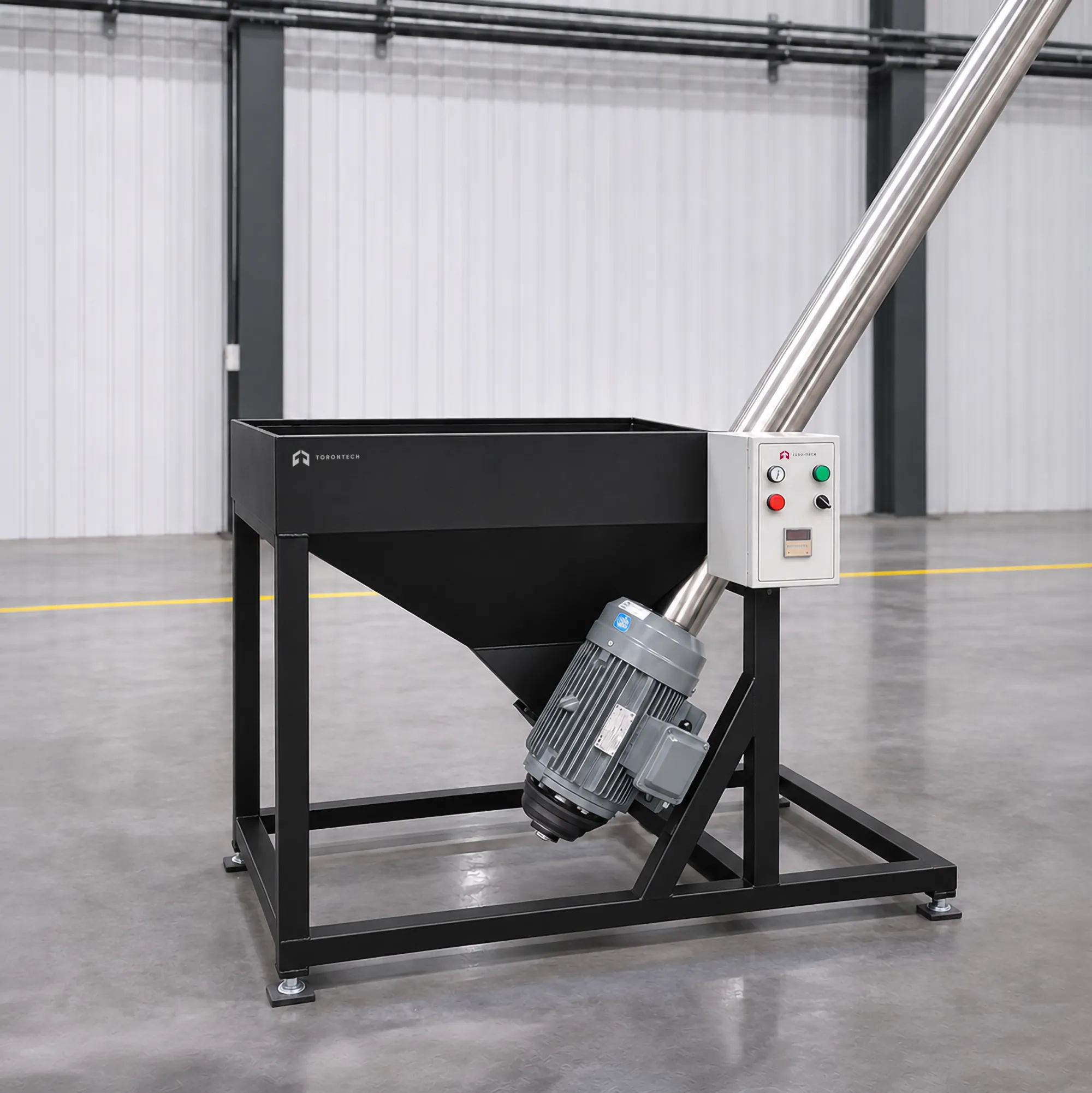
The screw loader lifts regrind and flake from a storage bin into the extruder hopper. A material limit switch monitors the hopper level and stops the loader automatically when the hopper fills. This keeps the hopper topped up without overfilling or constant operator attention. Buyers who prefer a different layout can choose a belt conveyor instead.
Quantitative Feeder
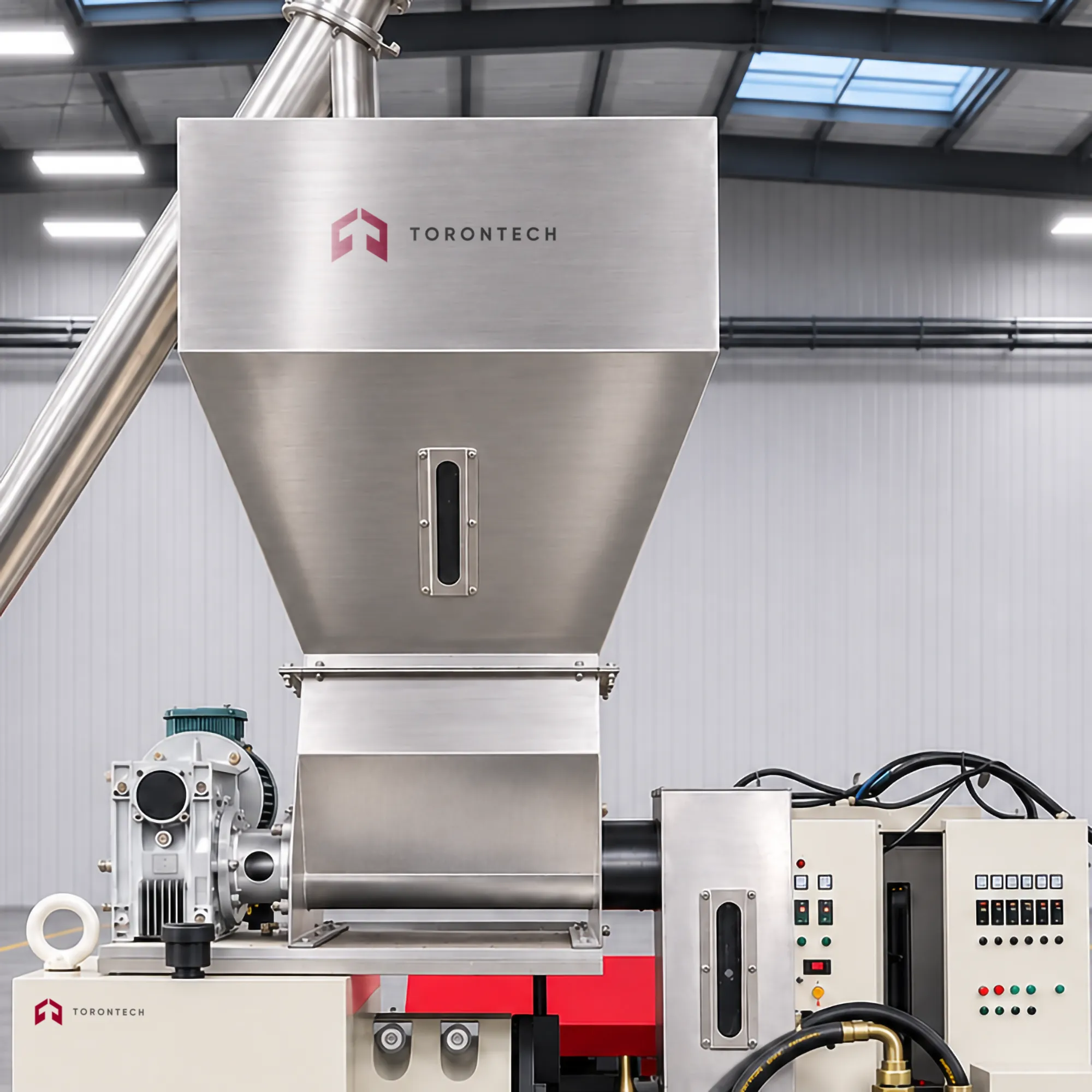
The volumetric feeder (metering screw feeder) delivers material into the extruder screw and barrel at a steady, continuous rate. An inverter controls its speed, so operators can match the feed rate to the extruder's output. Metered feeding prevents large volumes of regrind from packing and blocking the feed section of the screw. The result is stable melt pressure and consistent pellet quality across a production run.
Single Screw Extruder
The single screw extruder melts, mixes, and conveys the material toward the die. The screw and heated barrel plasticize the polymer through a combination of shear and external heat. A vacuum degassing section along the barrel removes moisture, oil, and ink volatiles from the melt. Double-stage lines add a second extruder that refines the melt further before pelletizing.
Hydraulic Screen Changer
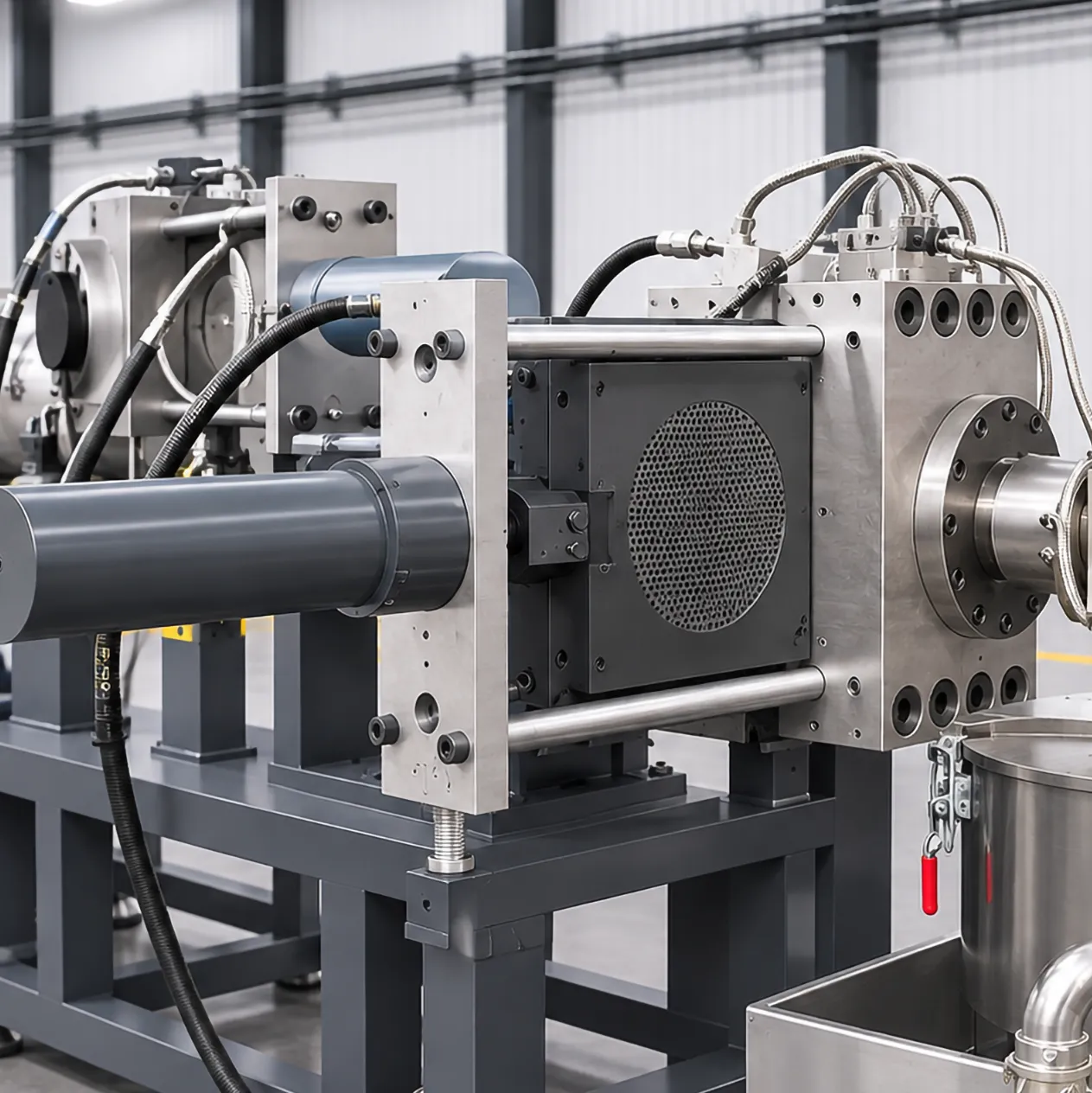
The hydraulic screen changer filters solid impurities out of the melt before it reaches the die. Its double-station design lets one screen stay in service while the operator replaces the other. This keeps the line running continuously instead of stopping for every screen change. Buyers can choose plate, piston, self-cleaning, or back-flush types to suit their contamination level.
Water Ring Hot Cutting Unit
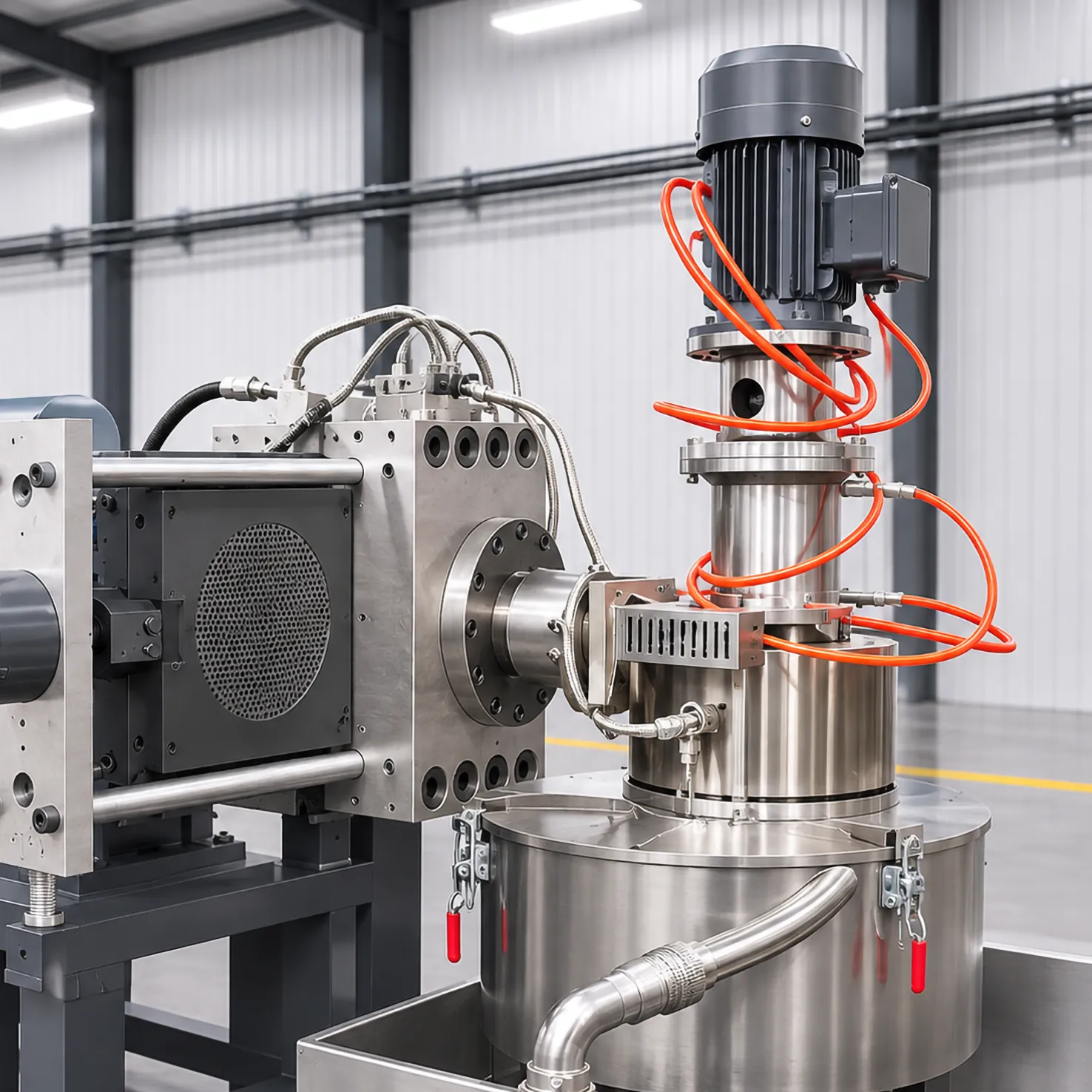
The water ring hot cutting unit forms pellets at the die head. Rotating blades cut the melt into granules as it leaves the die holes. The granules fly into a ring of water around the cutter, which cools them and carries them out of the unit. Buyers who prefer a different pellet shape or polymer handling can choose strand pelletizing instead.
High-Speed Dewatering Machine
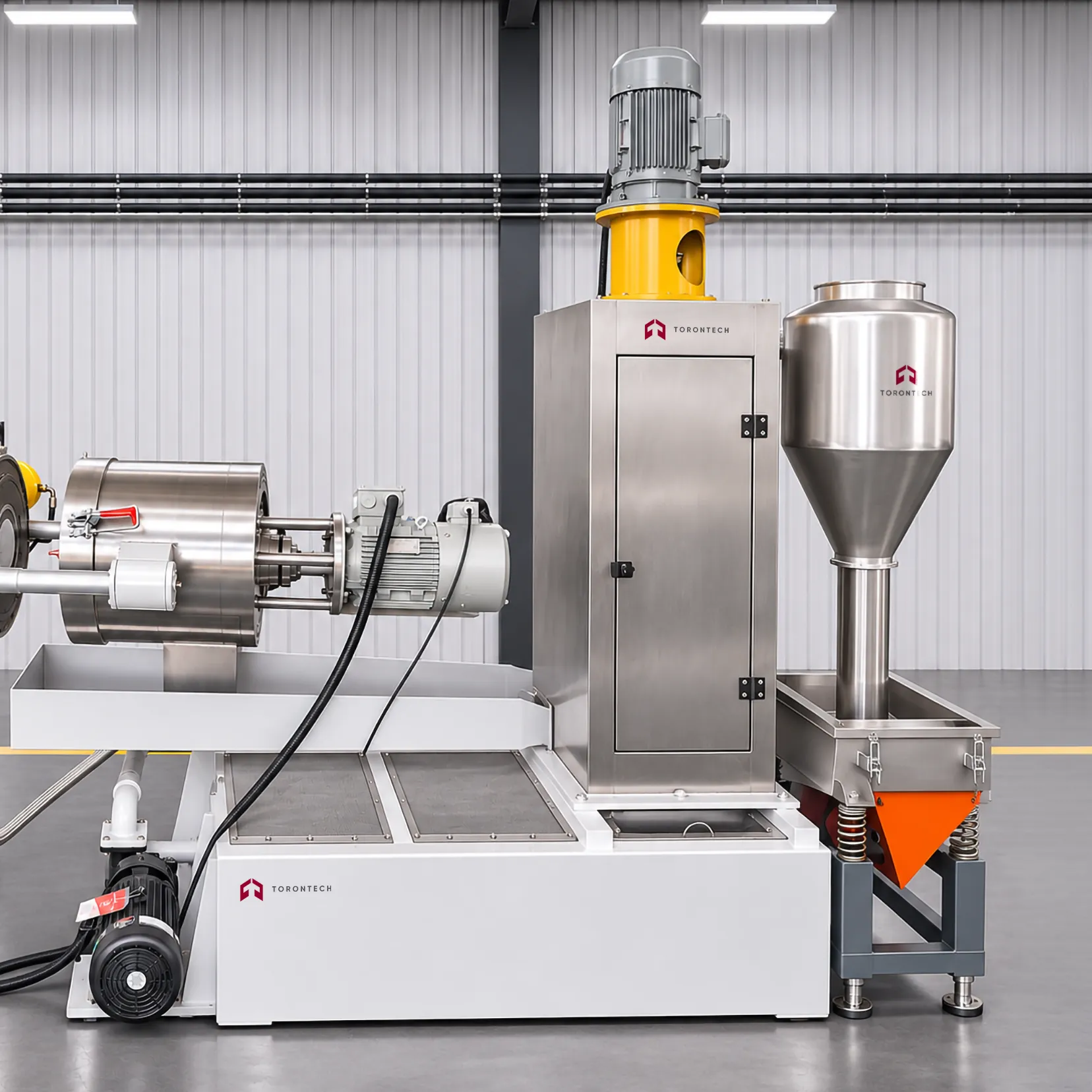
The high-speed dewatering machine dries pellets after water ring cutting. A rotor spins at high speed inside a screen, creating strong centrifugal force on the wet pellets. That force throws surface water outward through the surrounding mesh, leaving pellets ready for bagging. Water collected under the machine returns to the water ring cutter, cutting fresh water use.
Theory and Method
Steady feeding sets up stable extrusion. Loose flake has a low bulk density and can bridge or pack unevenly in a hopper throat. The quantitative feeder solves this with an inverter-driven screw that meters material into the extruder at a controlled rate. A consistent feed rate keeps the screw evenly filled, which stabilizes melt pressure, temperature, and output.
The extruder screw then conveys, compresses, and melts the polymer through shear and barrel heating. A vacuum degassing zone follows, where the screw geometry drops the melt pressure. Moisture, oil, and ink volatiles flash out of the melt at low pressure, and a vacuum pump draws them away. A hydraulic screen changer then filters solid contaminants out of the melt before it reaches the die.
Pellet formation happens at the die. Water ring hot cutting slices the melt at the die face and throws the pellets into a spinning ring of water that quenches them. Strand pelletizing instead pulls continuous strands through a water bath and chops them once they solidify. A double-stage line adds a second, lower-power extruder for extra filtration and degassing when the regrind carries more contamination.
Rigid Plastic Pelletizing Line - ToronPR™ PPL R Series Technical Specifications
| Parameter | ToronPR™ PPL R 100/100 | ToronPR™ PPL R 120/120 | ToronPR™ PPL R 130/130 | ToronPR™ PPL R 160/160 | ToronPR™ PPL R 180/180 | ToronPR™ PPL R 200/200 |
|---|---|---|---|---|---|---|
| Output Capacity | 150-250 kg/h | 250-350 kg/h | 350-450 kg/h | 550-650 kg/h | 750-850 kg/h | 900-1,000 kg/h |
| First Stage Extruder Motor Power | 55 kW | 90 kW | 110 kW | 160 kW | 200 kW | 250 kW |
| Second Stage Extruder Motor Power | 15 kW | 30 kW | 37 kW | 55 kW | 75 kW | 90 kW |
Second stage motor power applies to double-stage lines only. Parameters are for reference only and may change according to the final line configuration.
Configuration Options
| Item | Available Options |
|---|---|
| Hopper Loading | Screw loader with material limit switch, or belt conveyor |
| Feeding | Inverter-controlled quantitative feeder |
| Extrusion Stages | Single-stage or double-stage |
| Pelletizing Method | Water ring hot cutting or strand pelletizing |
| Screen Changer Type | Plate type, piston type, self-cleaning type, back-flush type |
| Screen Changer Station | Double-station hydraulic, for non-stop screen changes |
| Degassing | Vacuum degassing on the extruder barrel |
| Feed Material | PE and PP flakes, PE squeezed film, other rigid plastics such as ABS and PS |
| Output | PE and PP pellets |