
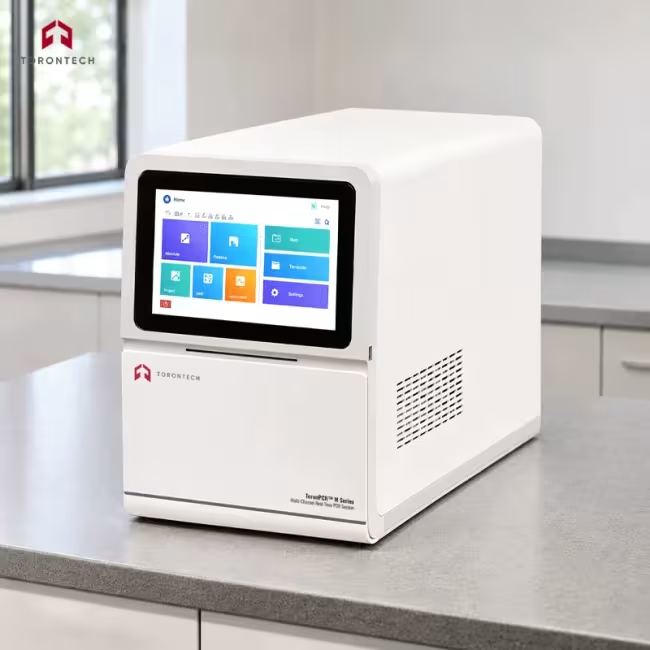
Multi-Channel Real-Time PCR System - ToronPCR™ M Series
96-Well Real-Time PCR System (qPCR) with 4 or 6 Fluorescence Channels
The multi-channel real-time PCR system ToronPCR™ M Series runs 96 reactions at once with 4 or 6 fluorescence channels, built for gene expression, genotyping, and multiplex assay work. A CMOS imaging module captures the whole plate in one exposure, so every well is read at the same moment. The 4-channel model suits dual and triple-target panels, while the 6-channel model supports up to six targets per well. Each model comes in a 0.2 mL tube format or a 0.1 mL tube format.
A multi-zone thermal block with six-zone gradient control lets one run test several annealing conditions. A 10.1-inch Windows touchscreen handles setup, detection, analysis, and storage without a connected PC. The software classifies positive and negative results automatically and supports quantitative, genotyping, melting curve, and isothermal analysis. Its Ct algorithm works without a reference dye, which simplifies reaction setup.
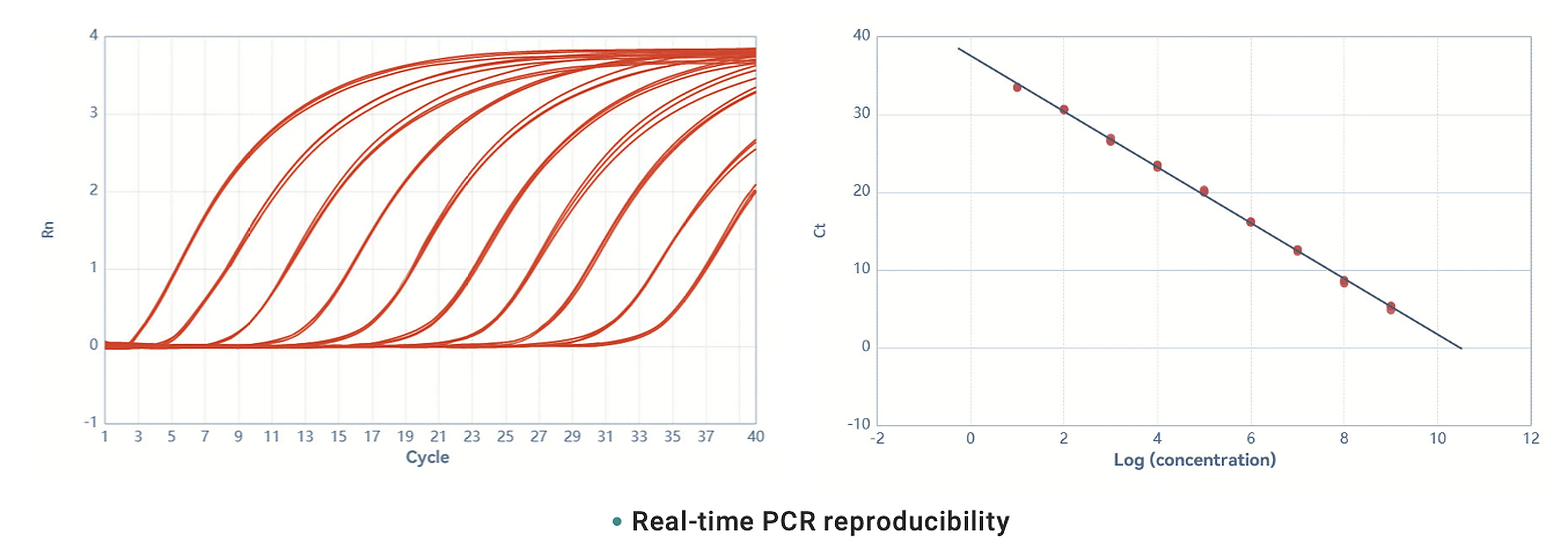
Detection reaches a single copy. The dynamic range spans 10⁰ to 10¹⁰ copies/μL, and Ct repeatability holds at CV ≤ 1%. USB, LAN, and expandable wireless connections move data to a LIS or PC. Results export as Excel or PDF files. Research laboratories, clinical research groups, and forensic teams use this 96-well qPCR instrument for high-volume work.
Multi-Channel Real-Time PCR System - ToronPCR™ M Series Applications
The ToronPCR™ M Series serves laboratories that need plate-scale throughput and multi-target detection in a single run.
- Gene Expression Analysis: quantifies mRNA levels across many samples and replicates with Ct-based relative or absolute quantification
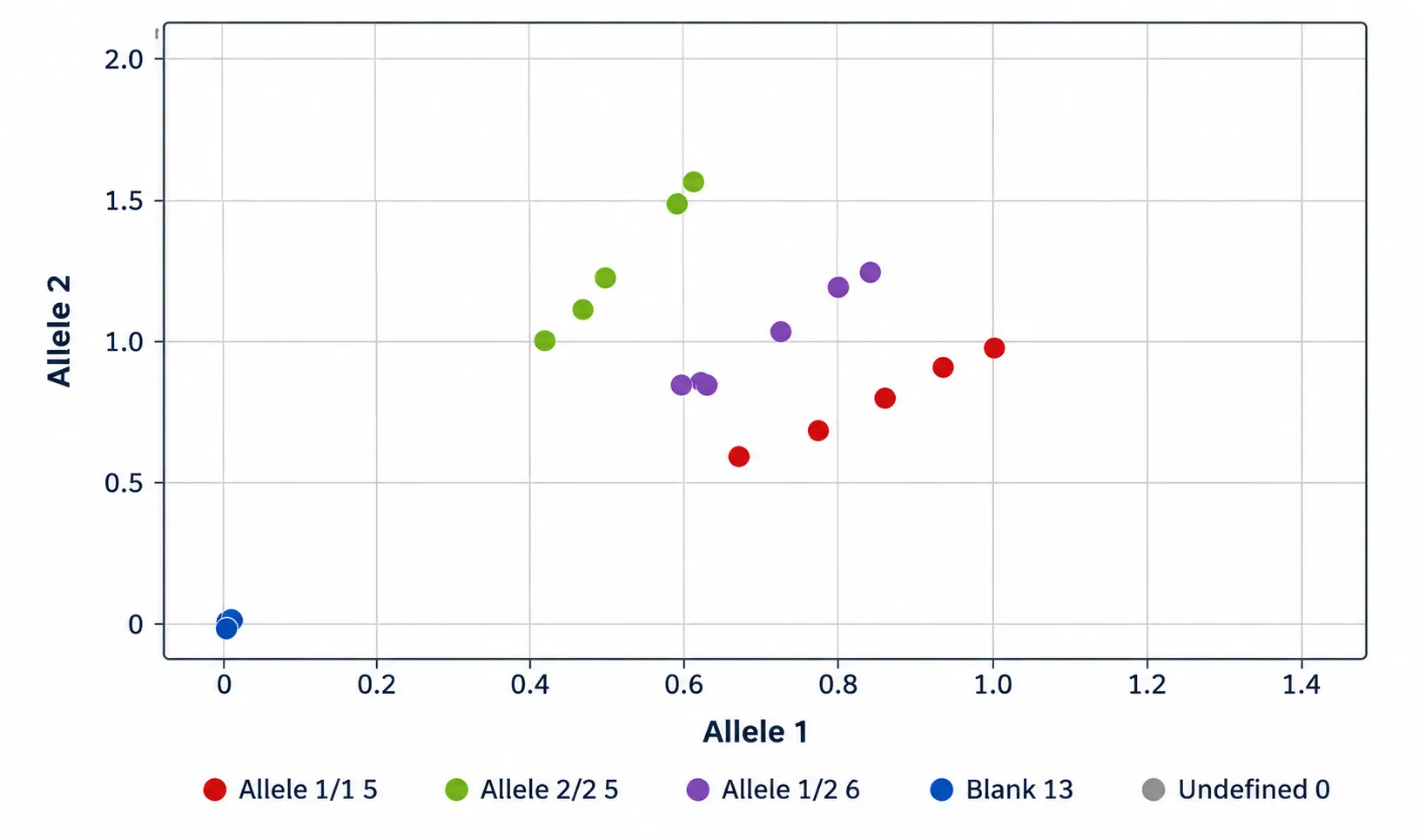
- Genotyping and SNP Detection: separates homozygous and heterozygous samples using two-dye allelic discrimination
- Multiplex Target Panels: detects up to six targets per well in one run, which saves sample volume and reagent
- Mutation and Methylation Analysis: screens for sequence variants and methylation status with probe-based and melting curve assays
- Cloning and Sequencing Workflows: verifies inserts and quantifies libraries before sequencing
- Medical and Clinical Research: supports viral load and biomarker quantification in research settings
- Forensic Analysis: quantifies trace DNA templates, with sensitivity down to a single copy
- Applied Science: handles high-volume screening in food, agricultural, and environmental testing
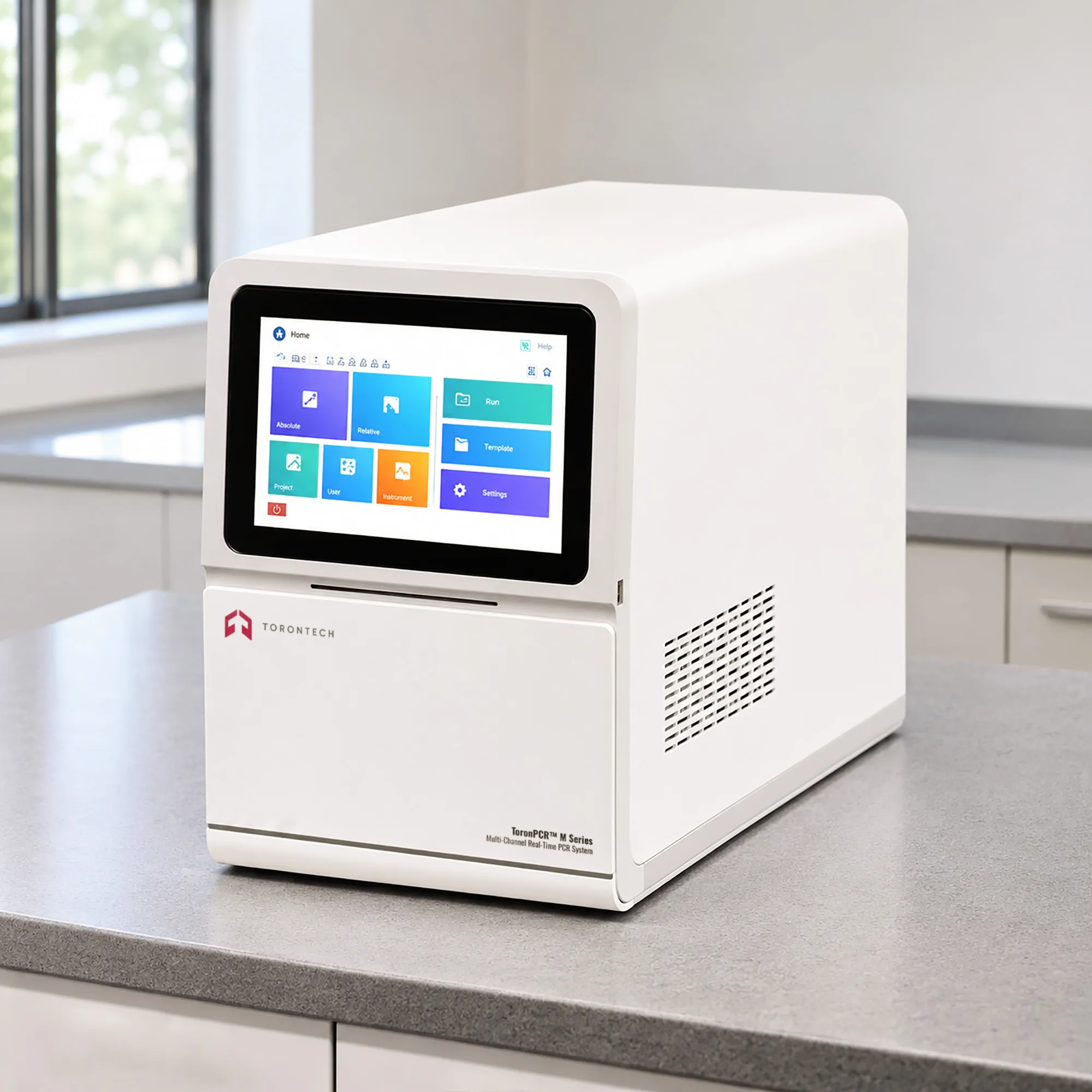
Multi-Channel Real-Time PCR System - ToronPCR™ M Series Key Features
The ToronPCR™ M Series combines simultaneous 96-well imaging, flexible multiplexing, and a stand-alone analysis workflow.
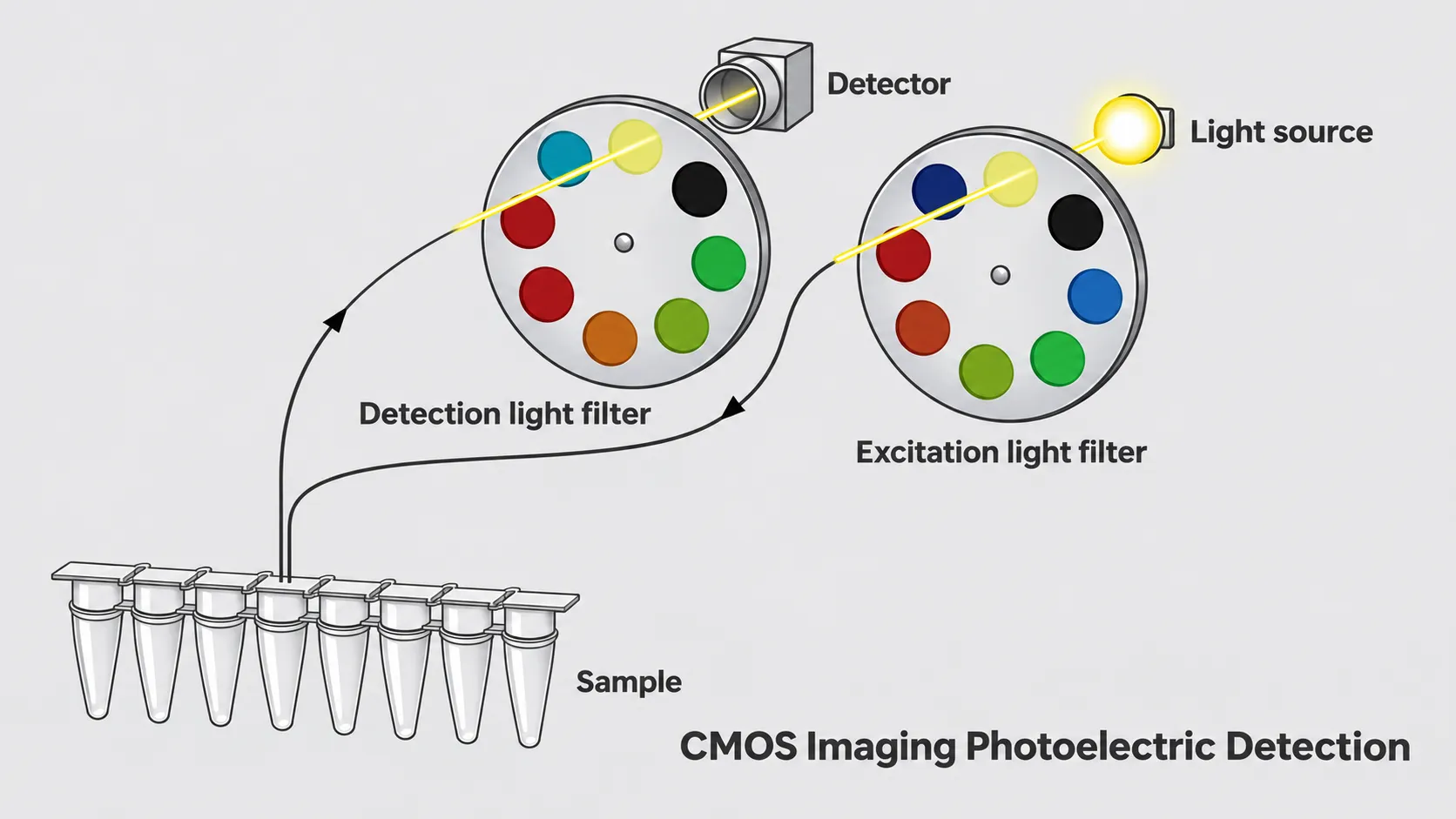
- Top Imaging Optics: captures all 96 wells at the same instant, with about 1 second per channel and no time lag between wells
- Fiber-Guided Light Path: raises fluorescence signal strength, lowers optical loss, and removes edge effects
- 4 or 6 Fluorescence Channels: covers FAM/SYBR Green I, HEX/JOE/VIC, ROX/Texas Red, and Cy5/Quasar-670, with Cy5.5 and a customizable channel on the 6-channel model
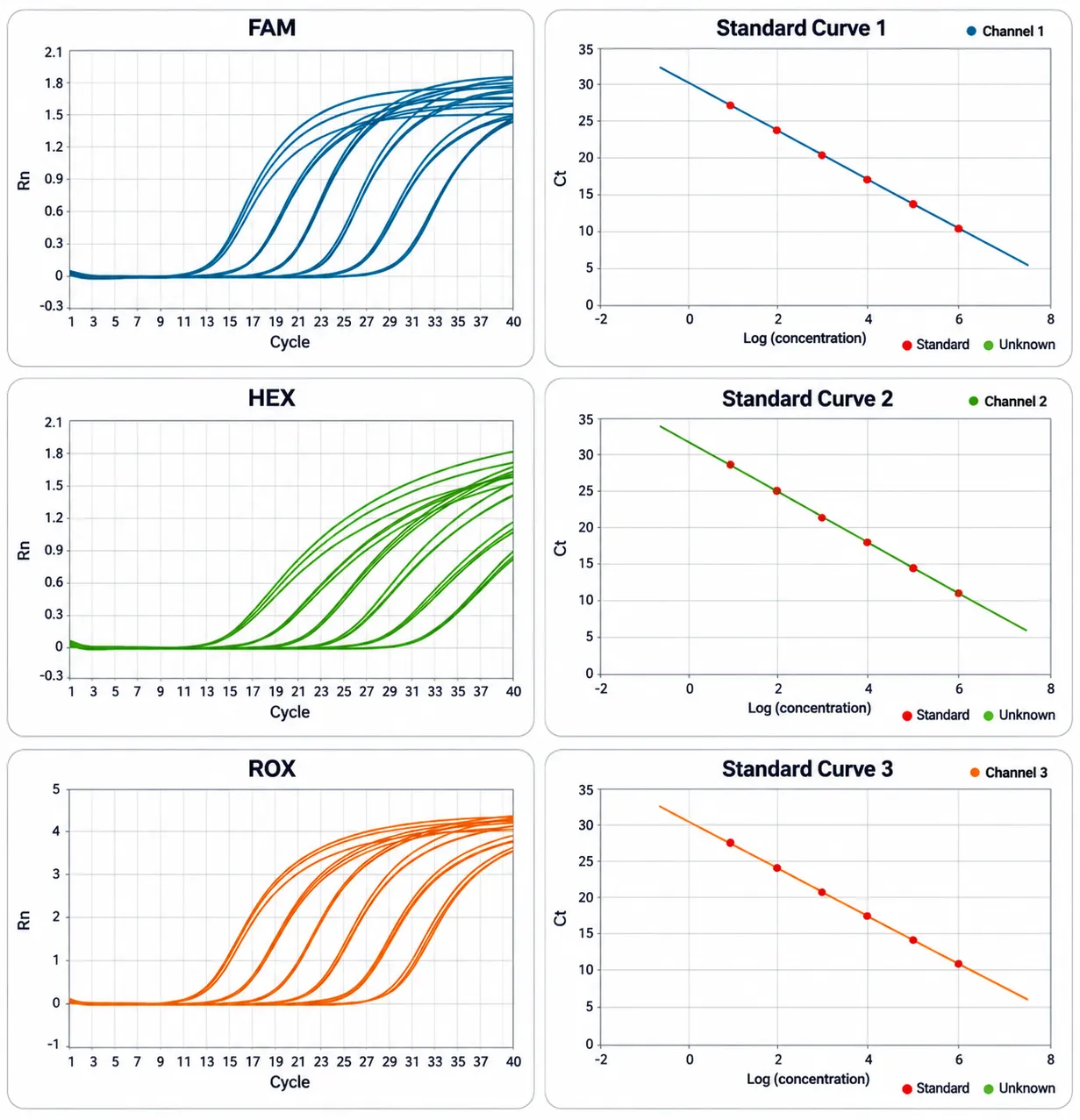
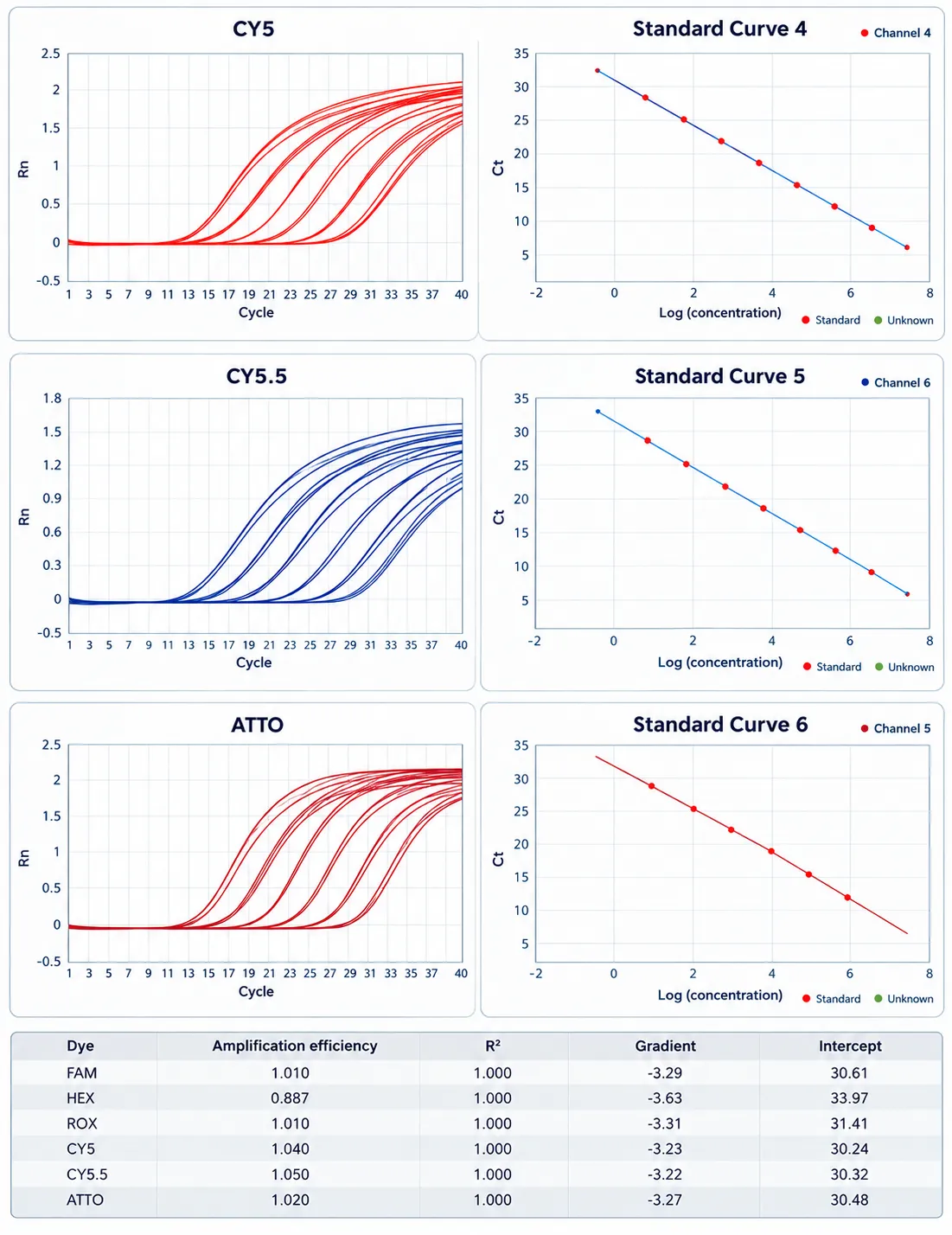
- Six-Target Multiplexing: showed no signal leakage or crosstalk between channels in six-channel scans, with amplification efficiency of 0.89 to 1.05 and R² of 1.000
- Multi-Zone Gradient Block: sets different reaction conditions across a 1 to 40 °C range, so one run optimizes annealing temperature
- Block Temperature Compensation: holds ±0.2 °C uniformity at 95 °C while heating at an average 3.5 °C/s
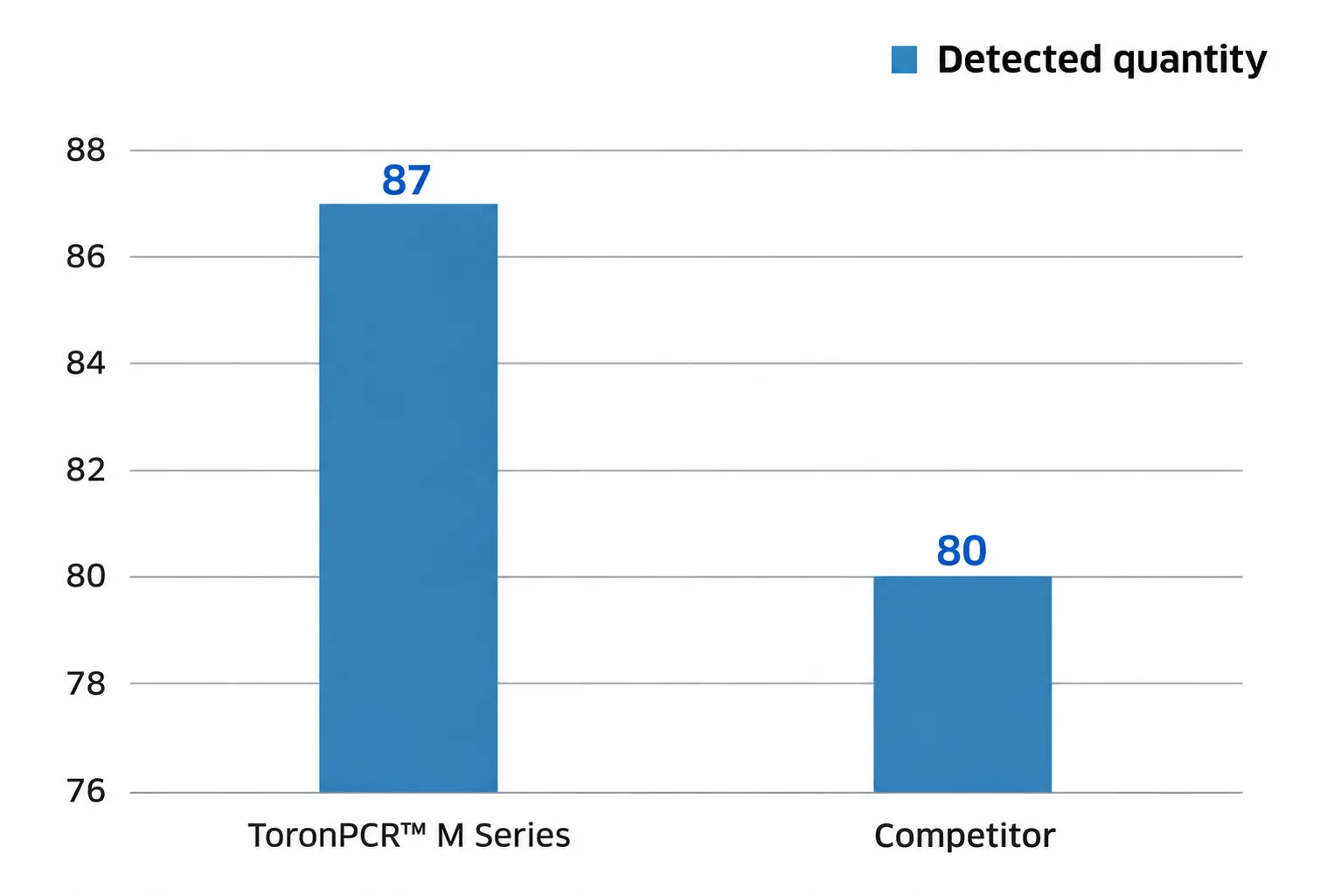
- Single-Copy Sensitivity: detects a minimum of 1 copy and reads linearly across 10 orders of magnitude
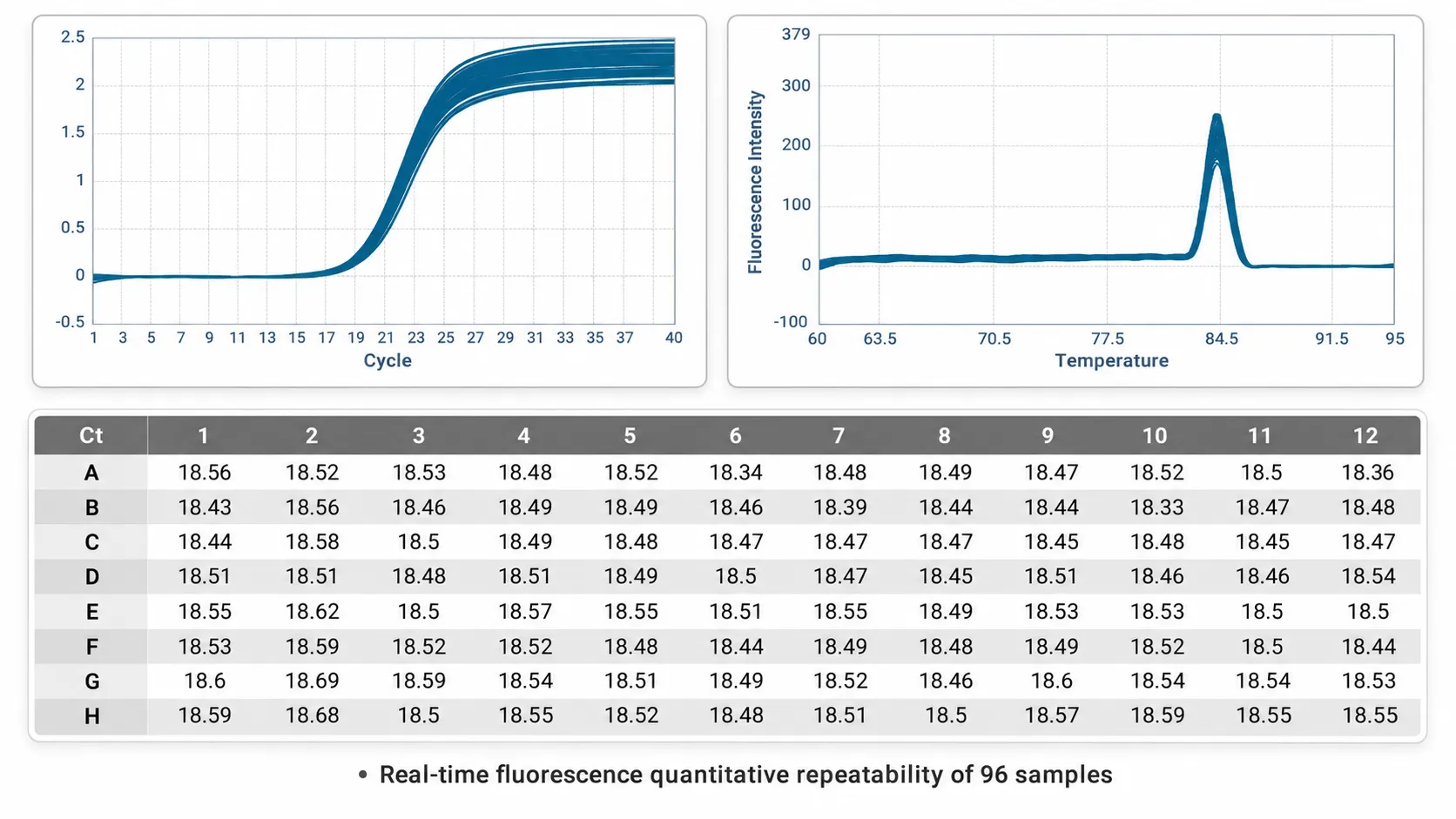
- Tight Well-to-Well Repeatability: returned an average Ct of 18.50 with a 0.3% CV across 96 plasmid replicates, with a melting temperature SD of 0.05 °C
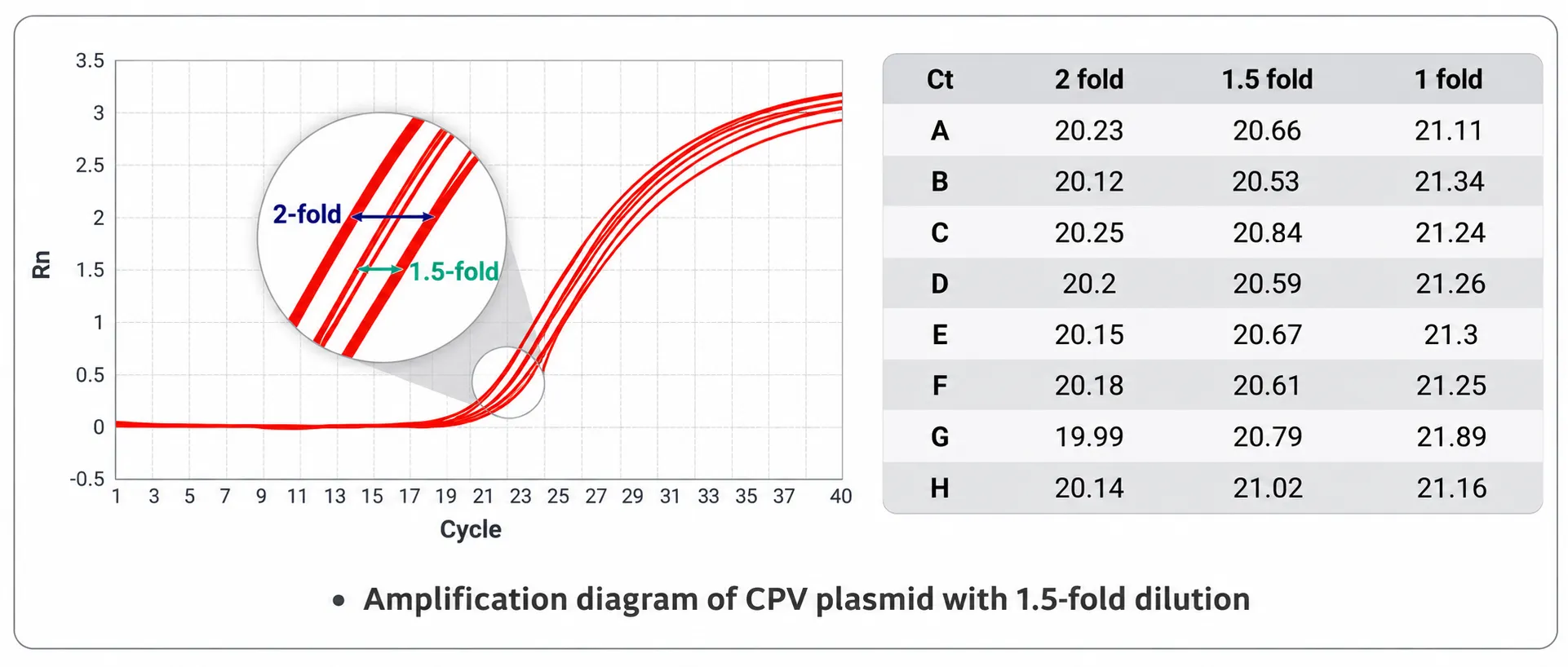
- Fine Fold-Change Resolution: distinguishes 2-fold and 1.5-fold template differences
- Reference-Dye-Free Ct Algorithm: fits multi-derivative feature points to calculate Ct without ROX normalization, which shortens reaction setup
- Automatic Result Interpretation: monitors amplification in real time and calls positive and negative results without manual calculation
- Stand-Alone 10.1-Inch Touchscreen: runs setup, detection, analysis, and saving on a Windows interface with no PC on the bench
- Sample Holding and Moisture Control: holds samples at 4 °C, and automatic dehumidification helps limit condensation around the plate
- Modular Configurations: lets buyers choose the channel count and the 0.2 mL or 0.1 mL tube format
- Flexible Connectivity: offers three USB ports, a LAN port, and expandable wireless transmission with LIS support
- Energy-Efficient Design: pairs thermoelectric cooling with a constant-current power supply to keep power consumption low
Theory and Method
Real-time PCR amplifies a target sequence through repeated cycles of denaturation, primer annealing, and polymerase extension. A fluorescent signal accompanies the amplification. SYBR Green I dye emits light when it binds double-stranded DNA, and hydrolysis probes release a fluorophore when the polymerase cleaves them. Because each cycle roughly doubles the target, fluorescence climbs exponentially before reaction components run short and the curve plateaus.
The threshold cycle (Ct) marks the point where fluorescence first exceeds the background baseline. Samples with more starting template cross the threshold earlier, so Ct falls in a straight line as the log of template amount rises. A dilution series of known standards builds that line, and its slope gives amplification efficiency: -3.32 corresponds to 100%. Multiplex assays place a different fluorophore on each target probe, and filters separate the emission wavelengths so each channel reads one target.
The ToronPCR™ M Series applies these principles with top imaging optics. A high-power white LED excites the plate through filters, optical fibers carry the light with low loss, and a CMOS sensor reads all 96 wells at once, about 1 second per channel. Simultaneous reading removes timing differences between wells and eliminates edge effects in the optical path. Multi-zone block control keeps temperature uniform at ±0.2 °C at 95 °C.
Multi-Channel Real-Time PCR System - ToronPCR™ M Series Technical Specifications
| Parameter | ToronPCR™ M4 (4-Channel Model) | ToronPCR™ M6 (6-Channel Model) |
|---|---|---|
| Applicable Tubes (0.2 mL version) | 0.2 mL 96-well plate, single tube, 8-strip tube | 0.2 mL 96-well plate, single tube, 8-strip tube |
| Applicable Tubes (0.1 mL "A" version) | 0.1 mL 96-well plate, single tube, 8-strip tube | 0.1 mL 96-well plate, single tube, 8-strip tube |
| Sample Volume | 10 to 100 μL | 10 to 100 μL |
| Number of Channels | 4 | 6 |
| Detection Channels / Applied Dyes | F1: FAM, SYBR Green I, etc.; F2: HEX, JOE, VIC, etc.; F3: ROX, Texas Red; F4: Cy5, Quasar-670 | F1: FAM, SYBR Green I, etc.; F2: HEX, JOE, VIC, etc.; F3: ROX, Texas Red; F4: Cy5, Quasar-670; F5: Cy5.5; F6: customizable (default ATTO 425) |
| Dynamic Range | 10⁰ to 10¹⁰ copies/μL | 10⁰ to 10¹⁰ copies/μL |
| Minimum Detection | 1 copy | 1 copy |
| Excitation Light Source | High-power white LED | High-power white LED |
| Detecting Element | High-performance CMOS | High-performance CMOS |
| Ct Repeatability | CV ≤ 1% | CV ≤ 1% |
| Sample Linearity (Ct) | |r| ≥ 0.999 | |r| ≥ 0.999 |
| Temperature Range | 4 to 99.9 °C | 4 to 99.9 °C |
| Temperature Control Mode | Block control / tube control | Block control / tube control |
| Average Heating Rate | 3.5 °C/s | 3.5 °C/s |
| Average Cooling Rate | 2.5 °C/s | 2.5 °C/s |
| Temperature Uniformity | ±0.2 °C at 95 °C | ±0.2 °C at 95 °C |
| Temperature Accuracy | ±0.15 °C | ±0.15 °C |
| Temperature Control Precision | 0.1 °C | 0.1 °C |
| Melting Temperature Resolution | Minimum differentiation 0.1 °C | Minimum differentiation 0.1 °C |
| Gradient Mode | 6-zone gradient temperature control | 6-zone gradient temperature control |
| Gradient Temperature Range | 1 to 40 °C | 1 to 40 °C |
| Heated Lid Temperature | 30 to 110 °C | 30 to 110 °C |
| Display | 10.1-inch touchscreen | 10.1-inch touchscreen |
| Dimensions (W × D × H) | 298 × 530 × 430 mm | 298 × 530 × 430 mm |
| Input Power | 100 to 240 V AC, 50 to 60 Hz | 100 to 240 V AC, 50 to 60 Hz |
| External Ports | USB (Type A) × 3, LAN × 1 | USB (Type A) × 3, LAN × 1 |
| Wireless Function | Expandable wireless transmission, LIS support | Expandable wireless transmission, LIS support |
| Data Export Format | Excel, PDF | Excel, PDF |