
Lithium-ion Battery Recycling System - ToronLi-ion™
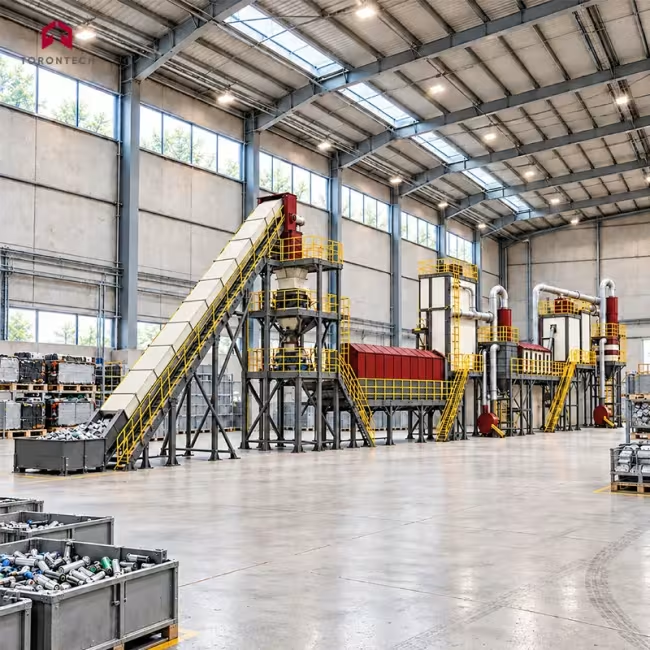
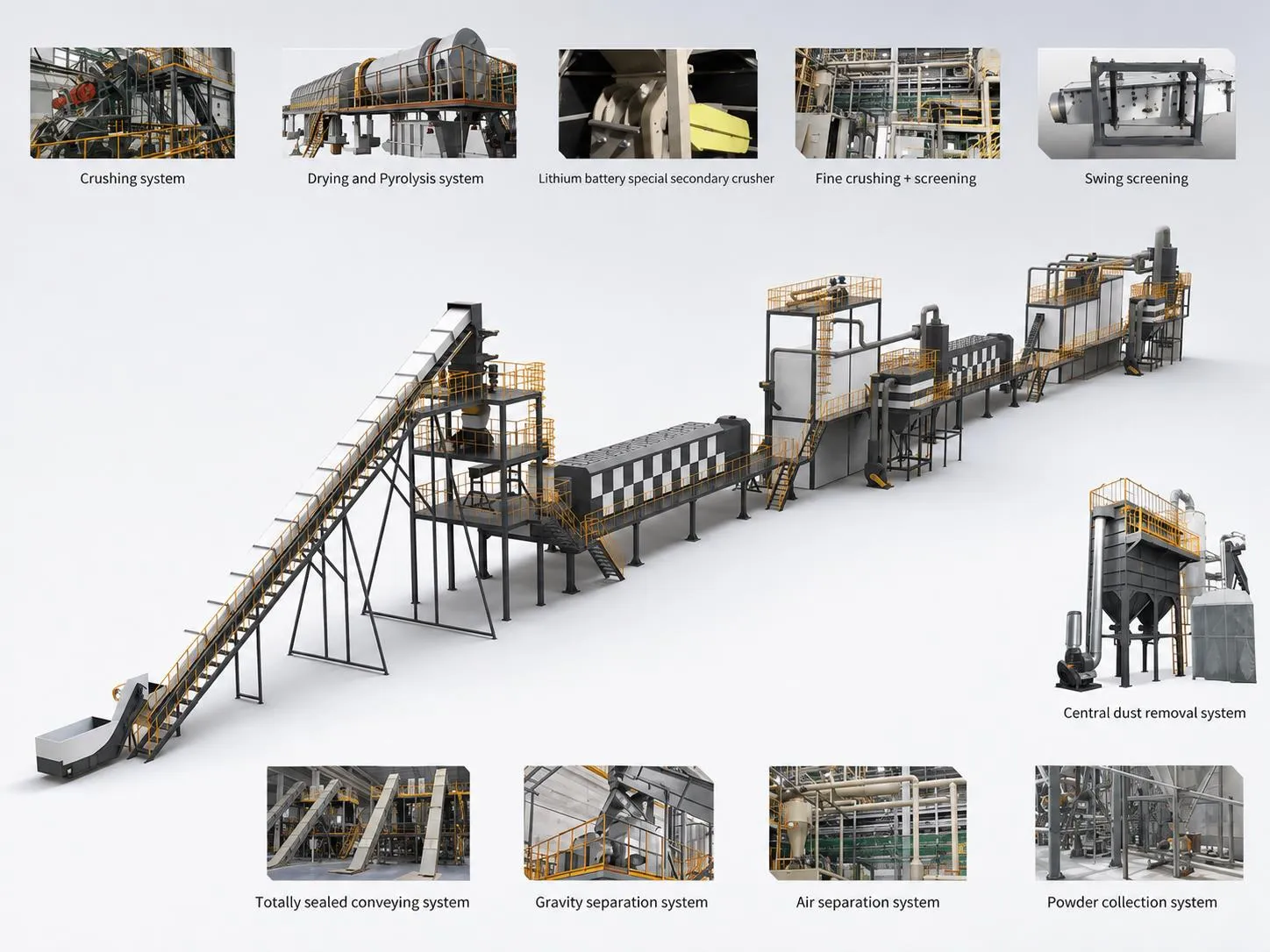
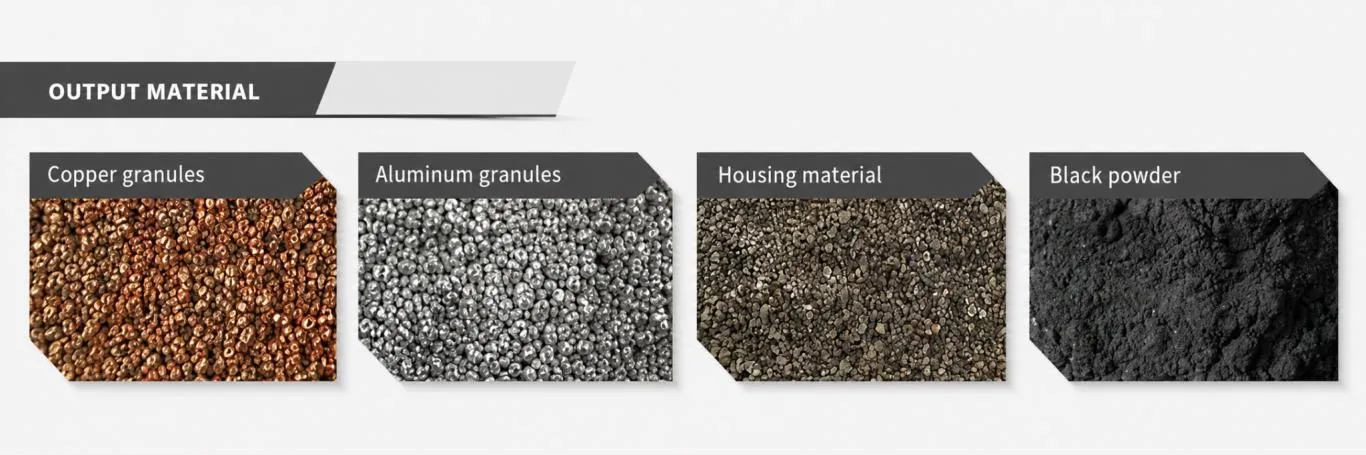
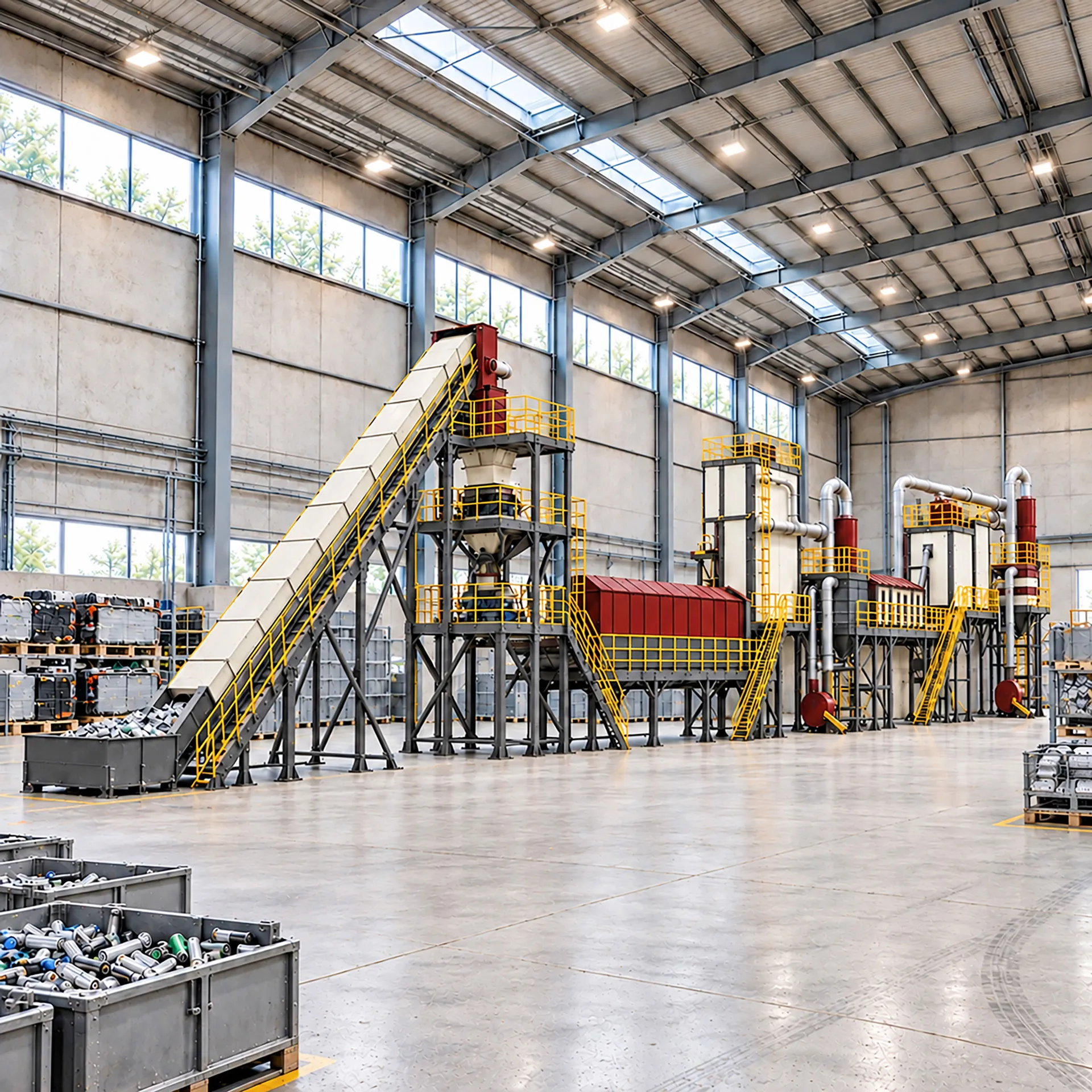
ToronLi-ion™ lithium-ion battery recycling system recovers black mass, copper granules, aluminum granules, separator film, and casing material from spent cells, modules, and electrode production scrap. Physical crushing, thermal treatment, multi-stage screening, air classification, and gravity sorting operate as one connected process under central control. Throughput runs from 500 to 2,000 kg/h, with annual line capacity configured between 500 and 20,000 tons. Every output stream leaves the line as a saleable material fraction.
Handling charged cells is the difficulty that separates battery recycling from ordinary metal recovery. The coarse crushing stage runs inside a sealed four-shaft chamber that accepts nitrogen filling, so the atmosphere around the cutting zone carries too little oxygen to sustain ignition. Multi-level protection measures cover the crushing of charged batteries, and the drive holds low speed and high torque to keep cell deformation controlled. Operators can therefore process material without a separate discharge step ahead of the line.
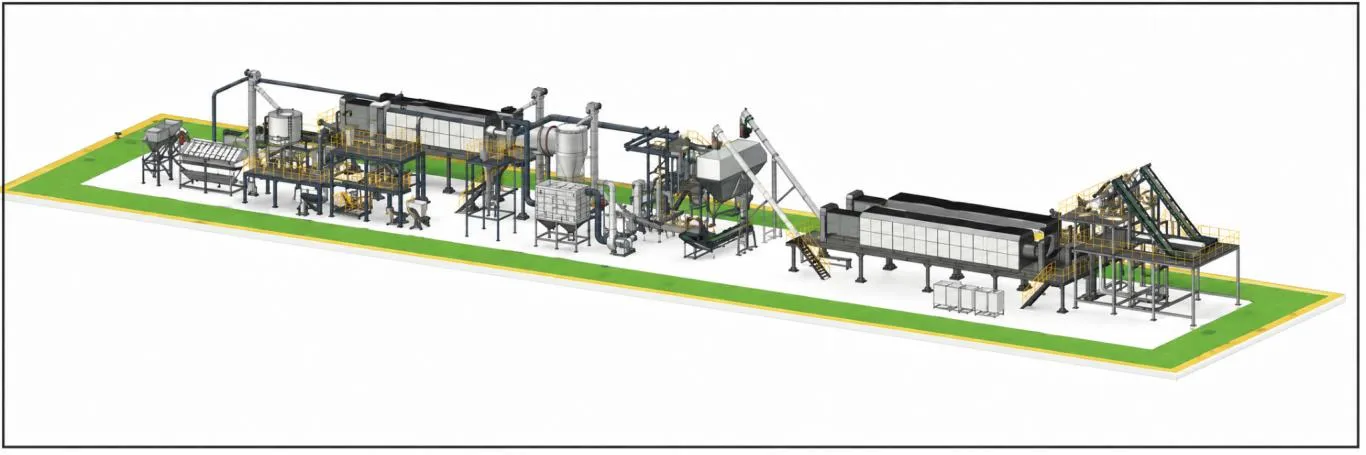
Modular construction lets each stage function on its own while remaining part of the sequence. A facility can commission the crushing and sorting section first, then add pyrolysis, aluminum granule refining, black powder carbonization, or separator washing as volumes grow. A PLC-based central control system coordinates the modules and reserves communication ports for plant-level DCS integration. Maintenance stays straightforward because each module is accessible independently.
Lithium-ion Battery Recycling System - ToronLi-ion™ Applications
The ToronLi-ion™ system serves recyclers producing black mass for refiners as well as manufacturers processing their own production scrap.
- Electric Vehicle Battery Recycling: processes end-of-life traction packs, modules, and cells into separated metal and black mass fractions ready for downstream refining
- Black Mass Production for Refiners: supplies hydrometallurgical and pyrometallurgical processors with screened cathode and anode powder at consistent particle size
- Consumer Electronics Battery Recovery: handles mobile phone, laptop, and portable device lithium cells arriving in mixed collection streams
- Battery Manufacturing Scrap: recovers material from positive and negative electrode sheets, laminates, and off-spec production output within gigafactory operations
- Electrode Pole Piece Processing: strips coating from copper and aluminum foil so both metals return to market as clean granules
- LFP Battery Recycling: treats lithium iron phosphate cells where separated powder and current collector foils each carry recovery value
- Energy Storage System Decommissioning: processes retired grid and commercial storage batteries reaching end of service life
- Copper and Aluminum Recovery: produces separated metal granules through combined air classification and specific gravity sorting
- Separator Film Recovery: recovers diaphragm material intact when the drying stage runs below the film damage threshold
- Automotive Dismantling Operations: adds battery processing capability alongside vehicle and component recovery activity
- Hazardous and Industrial Waste Contractors: brings lithium battery treatment in house rather than shipping cells to third-party processors
- Cathode Material Producers: closes the loop on internal scrap and returns recovered powder to the material supply chain
Lithium-ion Battery Recycling System - ToronLi-ion™ Key Features
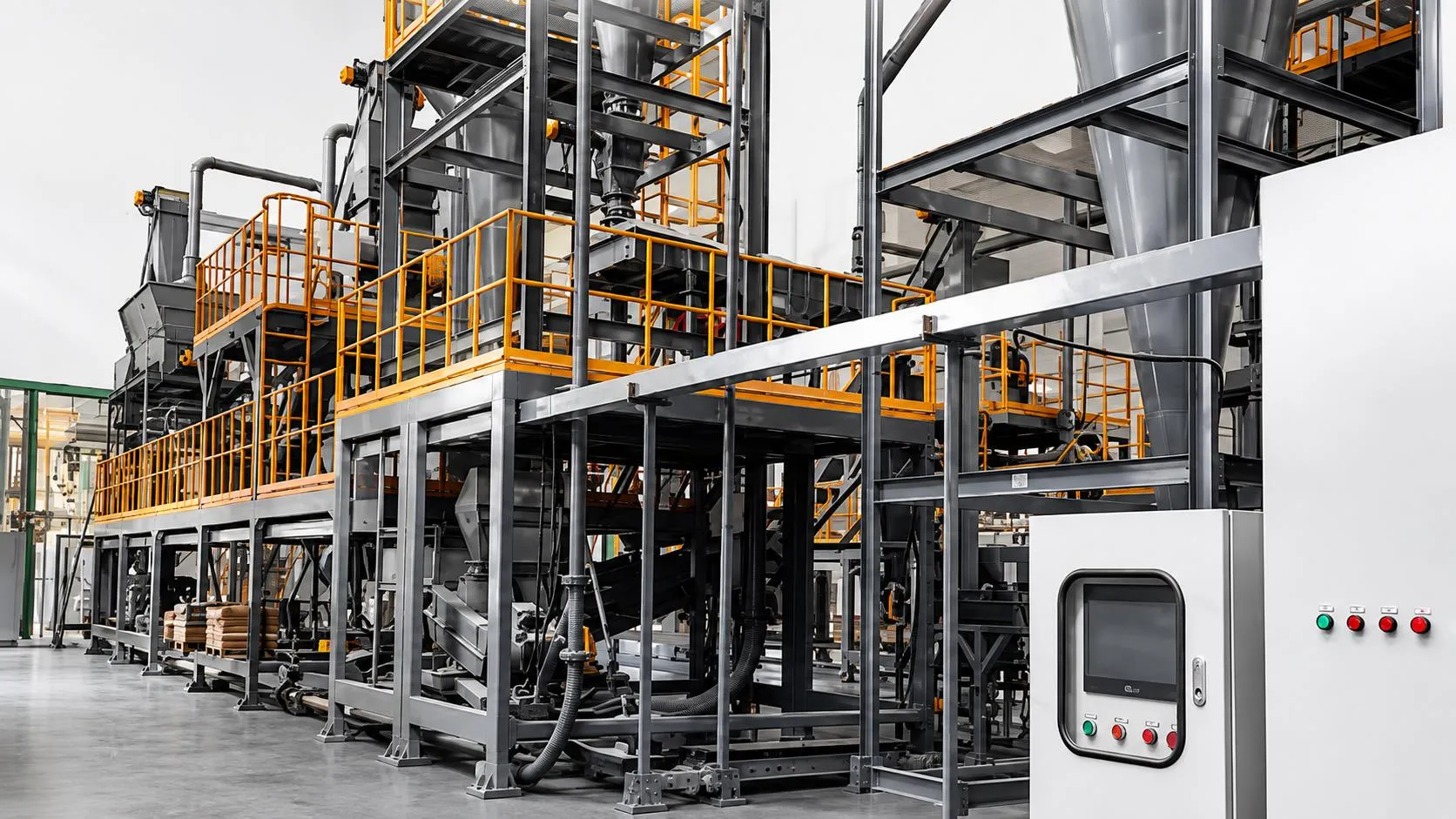
The ToronLi-ion™ system combines inert-atmosphere crushing with staged thermal treatment and three separate physical sorting principles, and each module can be specified or omitted to match the feedstock.
- Nitrogen-Protected Four-Shaft Crushing: the sealed cutting chamber accepts nitrogen filling so charged cells shred in an oxygen-poor atmosphere, holding fire risk down
- Processing Without Prior Discharge: cells enter the line charged, removing the discharge step and its handling time from the workflow
- Low-Speed High-Torque Shredder Drive: slow shaft rotation with high torque cuts modules and cells quietly and without the heat generation that faster cutters produce
- Automatic Reverse and Overload Protection: PLC-managed start, stop, reverse, and overload response clears jams without operator intervention in the cutting chamber
- Electrolyte Condensation and Recovery: drying between 100 and 150 degrees Celsius captures electrolyte as a recoverable product instead of releasing it to the exhaust stream
- Separator Film Preserved: the drying window stays below the film damage threshold, so diaphragm material remains sortable and saleable
- Low-Temperature Cracking Furnace: operation between 450 and 600 degrees Celsius decomposes binder and residual organics, raising the purity of recovered black powder
- Three-Stage Exhaust Treatment: catalytic combustion, alkali washing and spraying, and activated carbon polishing bring the gas stream to emission requirements
- Coating Stripping Fine Crusher: extended residence in the crushing cavity peels black powder from foil and converts copper and aluminum into granules for clean metal separation
- Static and Dynamic Screening Combined: linear screens, circular vibrating screens, swing screens, and airflow sorting screens work together to raise black powder recovery
- Air Sorting at 99 Percent: airflow classification splits light film from heavy metal fractions at a supplier-reported separation ratio of 99 percent
- Gravity Sorting at 99 Percent: specific gravity sieving parts copper from aluminum granules at a supplier-reported sorting ratio of 99 percent
- Fully Sealed Conveying: enclosed transfer between stages keeps dust contained and material accounted for across the line
- Negative Pressure Dust Extraction: central dust removal holds the process under negative pressure, keeping powder inside the system and the workspace clean
- Siemens PLC Central Control: one program governs the full process, with Ethernet, MODBUS TCP/IP, OPC, PROFINET, and DP interfaces reserved for DCS integration
- Branded Electrical Components: control cabinets are built with ABB, Schneider, and Siemens components for parts availability and service familiarity
- Modular Architecture: individual modules run independently, so a plant can phase installation and expand capability without rebuilding the line
Theory and Method
Lithium-ion cells separate well under mechanical treatment because their components respond differently to crushing. Cathode and anode coatings are brittle particulate layers bonded to ductile metal foil, so a crushing action that tears foil into granules simultaneously fractures the coating away as fines. That difference produces two populations with a wide size gap, which is what makes screening an effective separation method. Casings and pole lugs stay coarse and heavy, and they leave the stream early through size and density separation.
Thermal treatment addresses what mechanics cannot reach. Electrolyte is a volatile organic carbonate solution, and heating the crushed material to between 100 and 150 degrees Celsius drives it off as vapor for condensation and recovery. That window sits below the temperature at which separator film degrades, so the diaphragm survives intact for later sorting. Raising it to between 450 and 600 degrees Celsius in the cracking furnace then decomposes the polymer binder holding coating to foil, along with residual organics that would contaminate the powder.
Final separation works on density and aerodynamics. Air classification exploits terminal velocity: light separator film and plastic rise with the airstream while dense metal granules fall, and the supplier reports a separation ratio of 99 percent. Copper and aluminum then part on specific gravity, since copper sits near 8.96 grams per cubic centimeter against aluminum near 2.70. A gravity sieving machine fluidizes the granule bed so the denser copper migrates downward and stratifies away from aluminum, with a reported sorting ratio of 99 percent.
Lithium-ion Battery Recycling System - ToronLi-ion™ Technical Specifications
System Overview
| Parameter | Specification |
|---|---|
| System Type | Physical crushing, thermal treatment, and sorting line for lithium-ion batteries |
| Hourly Throughput | 500 to 2,000 kg/h |
| Annual Processing Capacity | 500 to 20,000 tons per year |
| Installed Power | 150 to 1,280 kW |
| Processable Feedstock | Power battery packs and modules, consumer electronics lithium cells, positive and negative electrode sheets, laminates, battery production scrap |
| Output Materials | Black mass powder, copper granules, aluminum granules, separator film, battery casing and shell material, recovered electrolyte |
| Coarse Crushing Atmosphere | Sealed chamber with nitrogen filling capability |
| Drying Temperature | 100 to 150 °C |
| Cracking Furnace Temperature | 450 to 600 °C |
| Air Separation Ratio | 99 percent (supplier stated) |
| Gravity Sorting Ratio | 99 percent (supplier stated) |
| Control System | Siemens PLC with central control cabinet |
| Communication Interfaces | Ethernet with independent IP address, MODBUS TCP/IP, OPC, PROFINET, DP |
| Electrical Components | ABB, Schneider, Siemens |
| Dust Control | Fully sealed conveying with negative pressure central dust removal |
| Layout | Modular, floor space customized to the site |
| Reference Installations | 1,000 kg/h, 1,500 kg/h, and 2,000 kg/h lines in operation |
Machine Line-Up
The system is assembled from the modules below. Each stage is described with its function, working method, and available parameters.
1. Sealed Conveying System
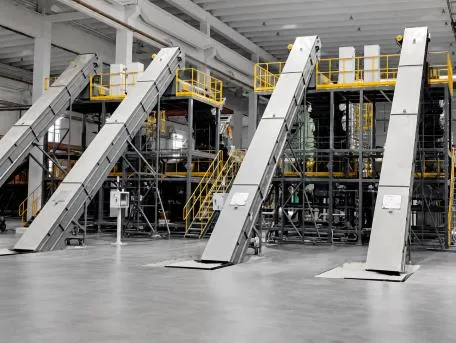 | Material moves between stages inside fully enclosed conveyors. Sealing keeps powder and vapor inside the process rather than releasing them into the building, and it works together with the negative pressure dust system to hold the workspace clean. |
| Parameter | Specification |
|---|---|
| Function | Enclosed material transfer between processing stages |
| Construction | Fully sealed conveying enclosure |
| Process Benefit | Contains dust and vapor, reduces material loss between stages |
| Integration | Operates under the negative pressure of the central dust removal system |
| Configuration | Routing and length set by plant layout |
2. Coarse Crushing System
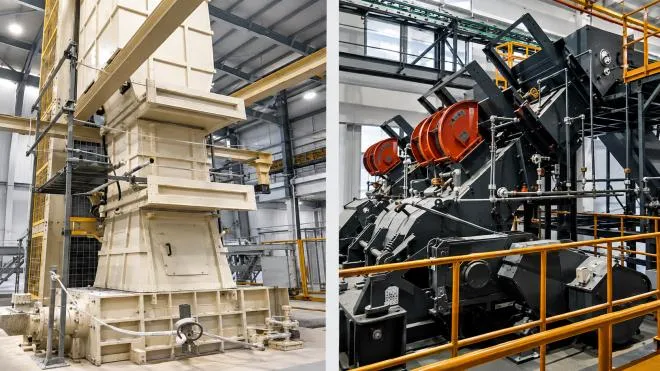 | The coarse crusher is a four-shaft shredder built for lithium battery duty. The box body carries four-fold sealing so the chamber can be filled with nitrogen, which lowers oxygen around the cutting zone and holds down the risk of ignition when charged cells are cut. Cells and modules reduce rapidly into flake material. Microcomputer control manages start, stop, reverse, and overload response automatically, and the drive runs at low speed with high torque and low noise. |
| Parameter | Specification |
|---|---|
| Function | Primary size reduction of lithium battery cells and modules into flake material |
| Rotor Configuration | Four-shaft shredder |
| Chamber Sealing | Four-fold tightness, suitable for nitrogen filling |
| Atmosphere Control | Gas protection design for crushing charged batteries |
| Safety Provision | Multi-level protection measures against fire risk |
| Drive Characteristics | Low speed, high torque, low noise |
| Control Functions | Automatic start, stop, reverse, and overload reverse |
| Electrical Control | Designed to align with European CE requirements (certificate number not supplied) |
| Output Form | Flake material for downstream thermal treatment |
3. Drying System
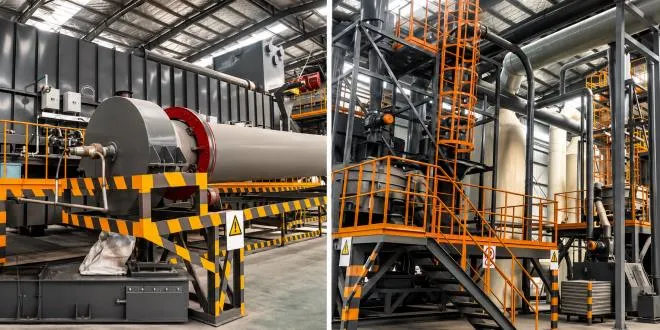 | Crushed material passes through a drying stage held between 100 and 150 degrees Celsius. Electrolyte and other organic matter volatilize at this temperature and are condensed for recovery. The range sits below the point at which separator film breaks down, so the diaphragm stays intact and can be sorted later as a recoverable fraction. |
| Parameter | Specification |
|---|---|
| Function | Volatilization and recovery of electrolyte and organic matter |
| Operating Temperature | 100 to 150 °C |
| Electrolyte Handling | Condensed and recovered as a product stream |
| Separator Condition | Diaphragm remains undamaged at this temperature |
| Process Purpose | Prepares material for sorting and reduces load on the exhaust system |
4. Cracking and Pyrolysis System
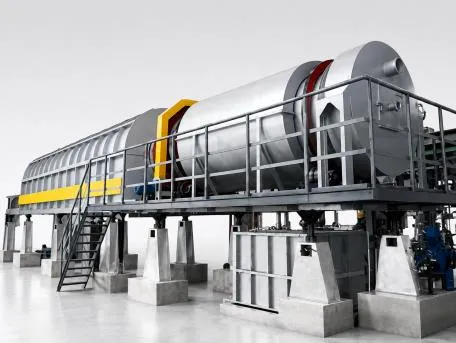 | The cracking furnace runs a low-temperature pyrolysis process between 450 and 600 degrees Celsius. Organic matter and impurities remaining in the crushed battery material decompose at this temperature, including the polymer binder that holds coating to the current collector foil. Removing that binder raises the purity of the black powder recovered downstream. |
| Parameter | Specification |
|---|---|
| Function | Thermal decomposition of organic matter and residual impurities |
| Furnace Temperature | 450 to 600 °C |
| Process Type | Low-temperature cracking |
| Target Material | Binder and organic impurities in crushed battery material |
| Process Benefit | Raises the quality of recovered black powder |
5. Exhaust Gas Treatment System
Gas from drying and cracking passes through a three-stage treatment train. Catalytic combustion destroys combustible organic content, alkali washing and spraying neutralizes acidic and harmful components, and activated carbon polishes the remaining stream before discharge.
| Parameter | Specification |
|---|---|
| Function | Removal of harmful substances from process exhaust gas |
| Stage 1 | Catalytic combustion |
| Stage 2 | Alkali washing and spraying |
| Stage 3 | Activated carbon purification |
| Discharge Condition | Treated to meet applicable emission requirements |
6. Secondary Crusher
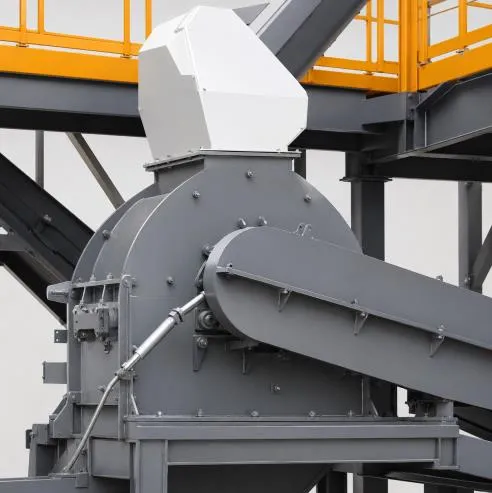 | A high-speed single-shaft hammer crusher handles intermediate size reduction. The hammer action breaks up bulk material remaining after thermal treatment, which prepares the stream for separation of heavy components such as steel shells and pole lugs by specific gravity. |
| Parameter | Specification |
|---|---|
| Function | Intermediate size reduction after thermal treatment |
| Crusher Type | High-speed single-shaft hammer crusher |
| Target Material | Bulk material remaining in the process stream |
| Process Purpose | Prepares heavy fractions such as steel shells and pole lugs for gravity sorting |
7. Fine Crusher
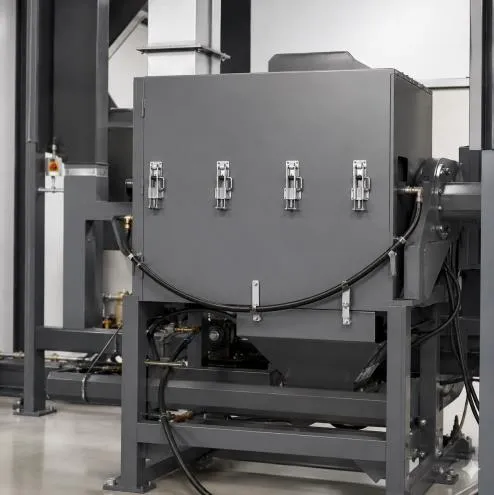 | The fine crusher completes the liberation of coating from foil. Material is held in the crushing cavity for an extended period rather than passing straight through, and repeated working peels black powder off the pole piece while turning copper foil and aluminum foil into granules. Granulating the foils is what allows copper and aluminum to be parted cleanly at the sorting stage. |
| Parameter | Specification |
|---|---|
| Function | Stripping of black powder from electrode foil and granulation of current collectors |
| Residence Behavior | Extended retention in the crushing cavity |
| Output Form | Copper granules, aluminum granules, liberated black powder |
| Process Purpose | Enables clean copper and aluminum separation downstream |
8. Screening System
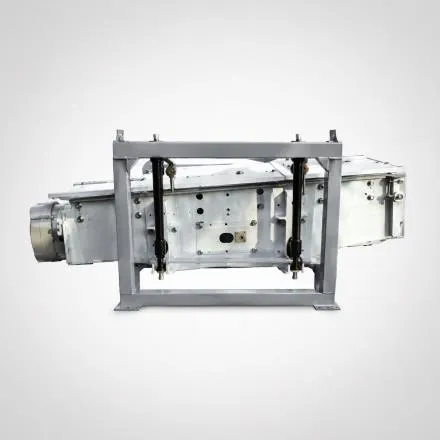 | Screening runs across several machine types selected by process route. Linear screens, circular vibrating screens, swing screens, and airflow sorting screens combine static and dynamic action so black powder is drawn out of the material thoroughly rather than in a single pass. |
| Parameter | Specification |
|---|---|
| Function | Separation of black powder from granule and coarse fractions |
| Screen Types | Linear screen, circular vibrating screen, swing screen, airflow sorting screen |
| Screening Method | Combined static and dynamic screening |
| Selection Basis | Screen type chosen according to the process route |
| Process Benefit | Raises the recovery rate of black powder |
9. Air Separation System
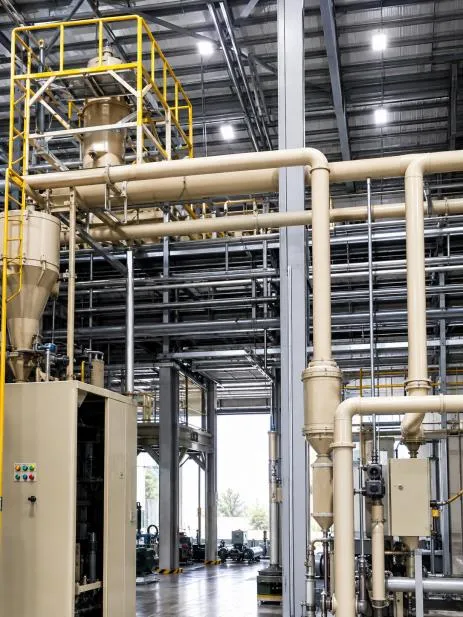 | The air separation system directs a controlled airstream through the material. Light material travels with the flow while heavy material resists it and falls, which splits film and plastic from metal granules and casing fragments |
.
| Parameter | Specification |
|---|---|
| Function | Separation of light material from heavy material |
| Working Principle | Airflow direction and terminal velocity difference |
| Separation Ratio | 99 percent (supplier stated) |
| Light Fraction | Separator film, plastic, lightweight residue |
| Heavy Fraction | Metal granules, casing and shell fragments |
10. Gravity Sorting System
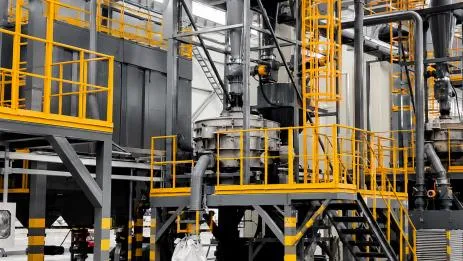 | Gravity sorting completes the metal separation. Residual black powder is first sieved out of the copper and aluminum granules, and a specific gravity sieving machine then parts the two metals using the density difference between them. |
| Parameter | Specification |
|---|---|
| Function | Separation of copper granules from aluminum granules |
| Working Principle | Specific gravity difference under sieving action |
| Preliminary Step | Sieving of residual black powder from the granule stream |
| Sorting Ratio | 99 percent (supplier stated) |
| Output Fractions | Copper granules, aluminum granules, recovered black powder |
11. Powder Conveying System
Recovered black powder moves through a dedicated conveying system rather than the general material route. Handling powder separately protects the product from contamination and keeps fine material contained.
| Parameter | Specification |
|---|---|
| Function | Dedicated transport of recovered black powder |
| Construction | Enclosed powder handling route |
| Process Purpose | Protects product purity and contains fine material |
| Discharge | To collection, packing, or further processing |
12. Central Dust Removal System
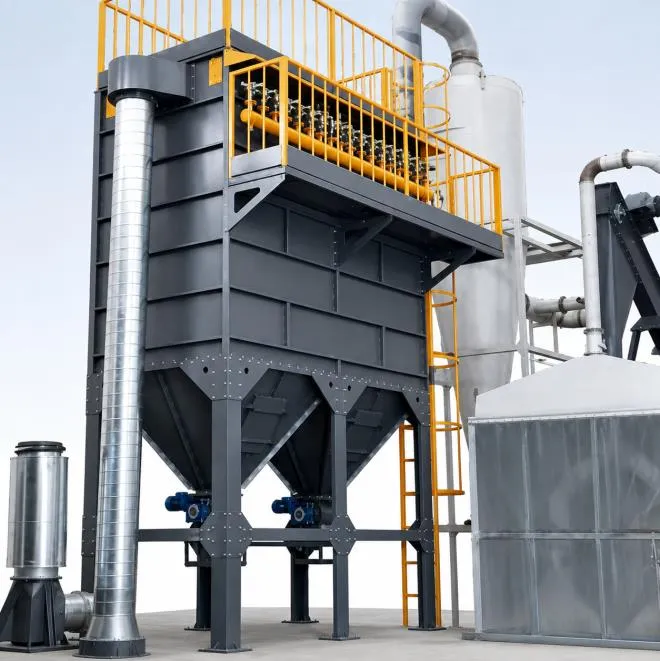 | A central dust extraction system holds the process under negative pressure. Drawing air inward at every transfer point prevents powder from escaping into the workspace and returns captured fines to the product stream. |
| Parameter | Specification |
|---|---|
| Function | Dust capture and workspace air quality control |
| Operating Principle | Negative pressure across the process line |
| Coverage | Transfer points, crushing, screening, and sorting stages |
| Process Benefit | Reduces dust escape and recovers captured fine material |
13. Central Control System
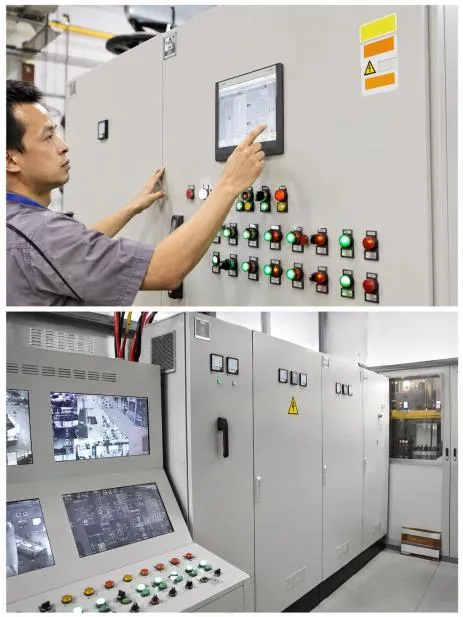 | Electrical design across the whole process runs under a Siemens PLC program. The controller reserves an Ethernet port with an independent IP address supporting MODBUS TCP/IP, OPC, and PROFINET, plus a DP communication interface, so the line integrates with a plant DCS and supplies the corresponding variable table. Control cabinets are built with ABB, Schneider, and Siemens components. |
| Parameter | Specification |
|---|---|
| Function | Process sequence control, monitoring, and plant integration |
| Controller | Siemens PLC |
| Network Interface | Ethernet port with independent IP address |
| Supported Protocols | MODBUS TCP/IP, OPC, PROFINET, DP |
| Plant Integration | DCS communication with variable table provided |
| Component Brands | ABB, Schneider, Siemens |
| Cable Management | Cable trays laid according to site requirements |
| Operation | Centralized automatic control across all modules |