
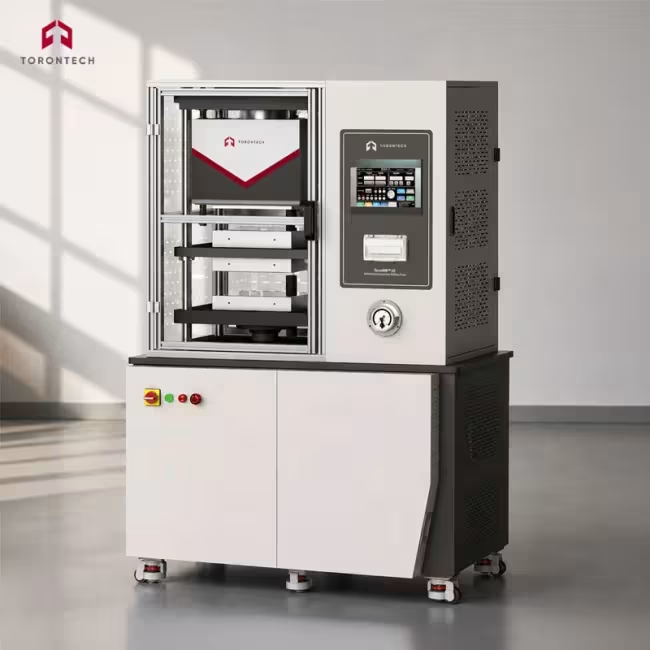
Laboratory Compression Molding Press
Laboratory Compression Molding Press - ToronMM™ LC
ToronMM™ LC laboratory compression molding press applies hydraulic force and programmed heat between flat heated platens to consolidate, cure, and form polymer materials into test specimens, sheets, and sample plaques. The press is available in 300kN and 500kN force configurations with platen sizes of 300×300mm or 400×400mm. Three configurations address different laboratory requirements: integrated heating and cooling platens, an upper-heat/lower-cool layout, and a vacuum variant for void-sensitive or moisture-sensitive applications. PLC touch screen control displays pressure, temperature, and time in real time throughout each molding cycle.
Temperature reaches 300°C or 400°C depending on platen specification, with ±0.5°C steady-state accuracy maintained by a linear pressure-modulating control module. The hydraulic system uses a closed-loop flow valve to hold programmed force from preloading through the constant-force cure stage. Water cooling is integrated into the platen design for rapid post-cure cooling without moving the mold from the press. Single-layer and double-layer platen configurations are available, with double-layer platens providing 75mm of opening per level and independent thermal management of each platen.
The PLC touch screen stores and recalls complete molding recipes, with settable parameters covering preheating time, preload force, exhaust cycle count (1–99), hold pressure, hold time, and cooling time. The press executes preheating, preloading, exhaust degassing, and constant-force hold sequentially without operator intervention after parameter entry. Extended functions add vacuum pumping (1–999 cycles), a mold push platform for safe mold transfer, and test method storage and recall for multi-product environments. A transparent safety door cuts all operating commands the moment it opens.
Laboratory Compression Molding Press - ToronMM™ LC Applications
The ToronMM™ LC laboratory compression molding press is used across polymer, rubber, and composites research for specimen production, material quality analysis, and formulation development programs.
- Rubber and Elastomer Vulcanization: curing natural and synthetic rubber compounds at programmable temperature, pressure, and cure time into flat sheet specimens, test plaques, gaskets, and other defined geometries
- Thermoplastic Compression Molding: pressing thermoplastic pellets or granules into uniform flat sheets, color plaques, and test specimens for mechanical, optical, and thermal property evaluation
- Thermoset and Composite Specimen Curing: consolidating fiber-reinforced polymer prepregs, laminate lay-ups, and thermoset compounds under controlled temperature and pressure for structural test specimen production
- Polymer Quality Control Plaque Production: pressing thin transparent plaques for visual detection of gel particles (fish eyes), black specks, and contamination stains in incoming raw polymer resin lots
- Color Matching and Compound Evaluation: pressing small batches of pigmented or additive-modified compounds into plaque samples for visual color uniformity assessment and formulation comparison
- Raw Material Blending and Verification: consolidating mixed or compounded polymer batches into uniform flat samples for physical property testing and formulation acceptance checks
- Polymer Film and Sheet Production: pressing thin polymer films and sheet specimens for tensile, optical transmittance, barrier property, or dielectric strength testing
- Material Research and Development: producing controlled compression-molded specimens from experimental formulations for comparative property evaluation during new material development programs
- Vacuum Compression Molding (vacuum variant): pressing moisture-sensitive polymers, voiding-prone laminates, and specialty composites under vacuum to eliminate air entrapment and surface defects in specimens
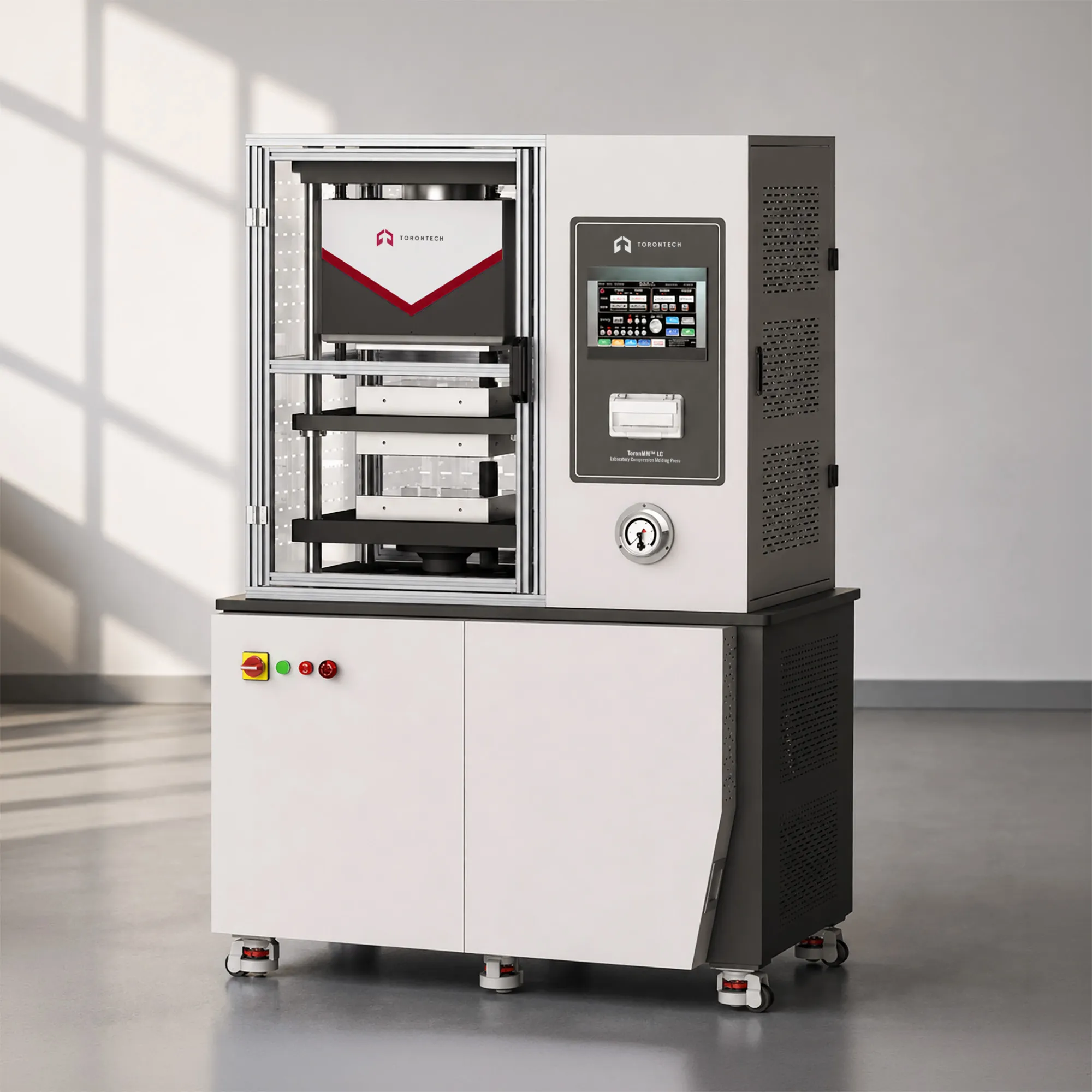
Laboratory Compression Molding Press - ToronMM™ LC Key Features
The ToronMM™ LC combines programmable hydraulic compression, precision temperature management, and a modular platen architecture to serve the full range of polymer and rubber compression molding needs in a laboratory setting.
- Three Physical Configuration Options: integrated heating and cooling platens (single unit heats and water-cools), upper-heat/lower-cool layout for asymmetric temperature programs, and a vacuum chamber variant for void-sensitive and moisture-sensitive compression applications
- 300kN and 500kN Force Configurations: selectable pressing force covers standard laboratory mold sizes through larger test plate formats; hydraulic force maintained by closed-loop flow valve control with an optional servo system for tighter force regulation
- 300°C and 400°C Temperature Options: two platen temperature grades accommodate standard thermoplastic and rubber processing (to 300°C) and high-temperature thermoset and specialty compound work (to 400°C)
- ±0.5°C Steady-State Temperature Accuracy: linear pressure-modulating PLC control module eliminates temperature overshoot during heating ramps, maintaining stable melt conditions throughout the cure stage
- 300×300mm and 400×400mm Platen Sizes (Customizable): two standard formats accommodate common laboratory mold footprints; custom platen dimensions available for non-standard specimen or production plate geometries
- Single and Double Layer Platen Options: single-layer with 150mm opening for standard use; double-layer with 75mm of opening per level for simultaneous dual-mold operation, increasing throughput in high-volume specimen programs
- Programmable Exhaust Degassing (1–99 Cycles): settable exhaust intervals partially open the platens at controlled points during cure to purge volatiles and trapped air, reducing void content and surface defects in pressed specimens
- PLC Touch Screen with Live Process Visualization: real-time display of pressure, temperature, and elapsed time throughout the cycle; Delta PLC, Delta thermostat, and Omron SSR components deliver reliable automated cycle execution
- Automated Multi-Stage Molding Sequence: programmed preheating, preloading, exhaust degassing, constant-force cure hold, and cooling stages complete in sequence automatically without manual intervention
- Extended Vacuum Pumping Function (1–999 Cycles): vacuum variant draws cavity pressure to the programmed level during compression, eliminating entrained air and moisture from sensitive composite and specialty polymer samples
- Test Method Storage and Recall: complete molding programs (pressure, temperature, time, exhaust count) stored by product or method name and recalled instantly for routine multi-product laboratory workflows
- Transparent Safety Door with Interlock: shielded viewing panel allows cycle monitoring while an interlock immediately cuts all operating commands when the door is opened
- Mobile, Compact Laboratory Frame: caster-mounted footprint of 1180×585×1460mm enables repositioning between laboratory workstations; approximately 738kg
Theory and Method
Compression molding converts polymer materials into flat specimens by applying simultaneous heat and hydraulic pressure between two opposing heated platens. Raw material placed in a mold cavity between the platens is compressed by the hydraulic ram to the programmed preload force. Heat conducted from the platens melts or softens the material, allowing it to flow and conform to the mold cavity. Thermosets and rubber compounds undergo chemical crosslinking or vulcanization during the hold stage; thermoplastics melt, flow, and re-solidify on cooling.
For materials that trap air or generate volatiles under heat and pressure, a programmable exhaust (degassing) cycle forms part of the molding sequence. During exhaust, the platens partially open at set intervals to release trapped gases before re-closing for the final cure pressure stage. This reduces void content, surface blistering, and delamination in finished specimens. The ToronMM™ LC supports up to 99 exhaust cycles in the basic configuration, with vacuum-assist degassing available in the vacuum variant.
The PLC program control executes the full molding sequence automatically once parameters are entered: preheating, preloading, exhaust cycling, constant-force cure hold, and controlled cooling. The closed-loop hydraulic system compensates for material volume reduction during crosslinking or solidification, maintaining the target force throughout the cure phase. After the hold stage, the water-cooled platen option initiates rapid cooling directly through the mold, reducing cycle time. Complete process parameters are stored and recalled for each product or test method, supporting consistent reproduction of specimen preparation conditions across multiple runs.
Laboratory Compression Molding Press - ToronMM™ LC Technical Specifications
| Parameter | Specification |
|---|---|
| Clamping Force | 300 kN or 500 kN (selectable) |
| Temperature Range | Up to 300°C or up to 400°C (platen specification dependent) |
| Temperature Control Accuracy | ±0.5°C (steady state) |
| Platen Size | 300×300 mm or 400×400 mm (customizable) |
| Platen Thickness | 60 mm |
| Platen Layers | Single or double (selectable) |
| Platen Spacing (single layer) | 150 mm |
| Platen Spacing (double layer) | 75 mm per level (customizable) |
| Heating/Cooling Mode | Electric heating + integrated water cooling |
| Exhaust Cycles (basic) | 1–99 (settable) |
| Vacuum Pumping Cycles (extended) | 1–999 (settable, vacuum variant) |
| Hydraulic System | Closed-loop flow valve control (servo system optional) |
| Hydraulic Medium | Mobil or Great Wall 46# anti-wear hydraulic oil |
| Power (single layer) | 11 kW |
| Power (double layer) | 20 kW |
| Protection Device | Transparent safety door with operating interlock |
| Overall Dimensions (L×W×H) | 1180 × 585 × 1460 mm |
| Weight | ~738 kg |
| Basic Functions | Programmable preheating, preloading, exhaust degassing, constant-force hold |
| Extended Functions | Vacuum pumping, mold push platform, test method storage and recall |
| Key Components | Delta PLC, Delta thermostat, Omron SSR, hydraulic power unit |