Guidewire Testing Equipment
Guidewire Testing | ISO 11070 & ASTM F2394 Mechanical Performance
Guidewire testing equipment evaluates the mechanical durability, flexibility, and push performance of intravascular guidewires before they support catheter delivery in vascular procedures. Torontech's range is built around ISO 11070 and ASTM F2394, the core standards covering fracture resistance, flexural fatigue, and trackability of sterile, single-use guidewires. Device manufacturers, R&D teams, and regulatory test labs use these instruments to confirm a guidewire holds up to the bending, twisting, and pushing it will experience during clinical navigation.
The range covers four distinct test methods, from simple manual fixtures that assess fracture and flexing resistance to motorized systems that measure push force, torque, and tip flexibility under simulated vessel conditions.
Why Choose Torontech for Your Guidewire Testing
Torontech supplies testing and measurement equipment to laboratories and manufacturers across North America and worldwide, backed by responsive technical support and calibration service. The Guidewire Testing range is built for reliable, standards-driven results, so you can standardize on one supplier as your testing needs grow. Our team helps you match the right configuration to your samples, applicable standards, and throughput, then supports you through installation and beyond.
Request a Quote
Tell us which guidewire performance characteristic you need to validate and the standards your program follows, and we will recommend the right instrument from this range. Contact the Torontech team for pricing and lead times.
Applications
Guidewire testing supports manufacturers and labs working on interventional and vascular access devices.
- Interventional Cardiology Devices: validates guidewires used to deliver balloon catheters and stents through coronary and peripheral vasculature.
- Neurovascular Guidewire Development: confirms tip flexibility and trackability for guidewires navigating smaller, more tortuous vessels.
- Guidewire Manufacturing QA: verifies batch-to-batch consistency in fracture resistance, flexing fatigue, and coating integrity.
- Regulatory and Contract Testing: provides independent compliance data against ISO 11070, ASTM F2394, and FDA guidance for 510(k) and other submissions.
Guidewire Testing Range
The range covers four guidewire-specific test methods, each addressing a different way a guidewire can fail in clinical use.
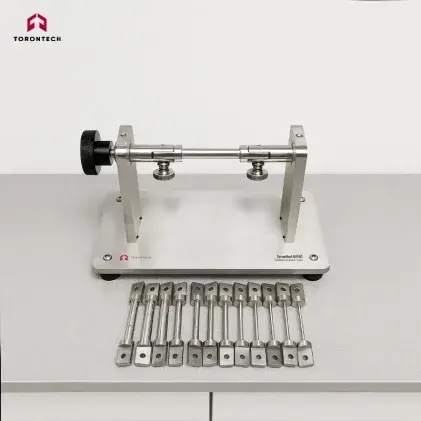
Guidewire Fracture Fixture
ToronMed™ GFF01 is a manual fixture built to ISO 11070 that winds the guidewire around a cylindrical former sized at ten times the wire's outer diameter, then unwinds it for visual inspection of fracture points or material fatigue. It gives manufacturers a low-cost, repeatable way to screen guidewire batches for structural integrity before moving to more involved mechanical testing.
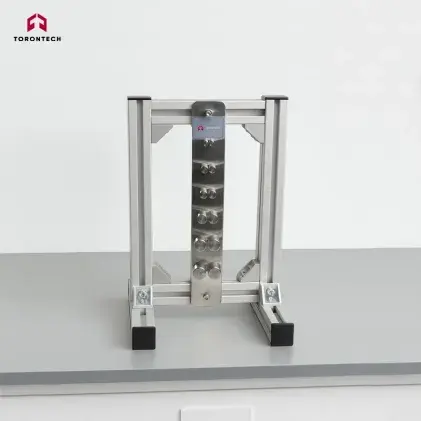
Guidewire Flexing Tester
ToronMed™ GFT01 subjects guidewires to repeated reverse bending between two rigid cylinders sized to ISO 11070, simulating the insertion and withdrawal cycles a guidewire experiences during navigation. After a set number of cycles, the sample is inspected for coating flaking, surface damage, or fracture, which makes it well suited to coated guidewire development.
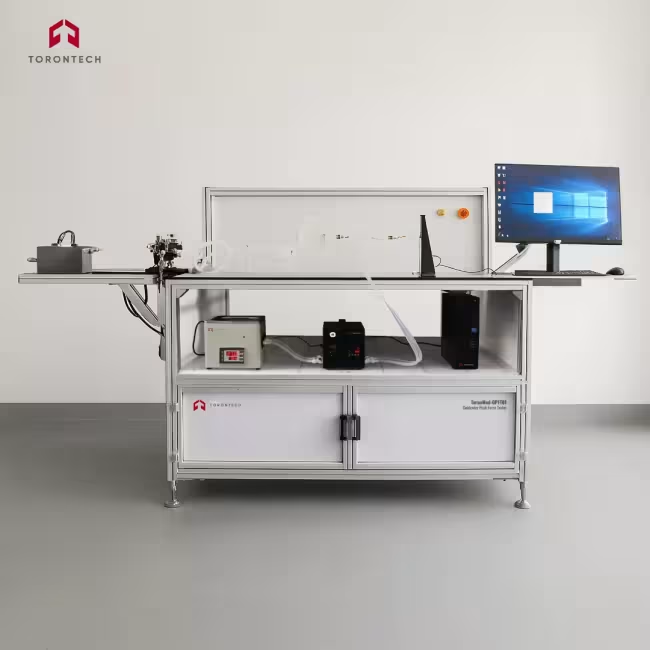
Guidewire Push Force Tester
ToronMed™ GPFT01 is a motorized system built to ASTM F2394-2007 that measures push force, torsional strength, and retraction performance as the guidewire advances through a temperature-controlled vessel model. The water bath and roller clamping system simulate physiological conditions, giving R&D and QC teams trackability data that closely mirrors clinical handling.
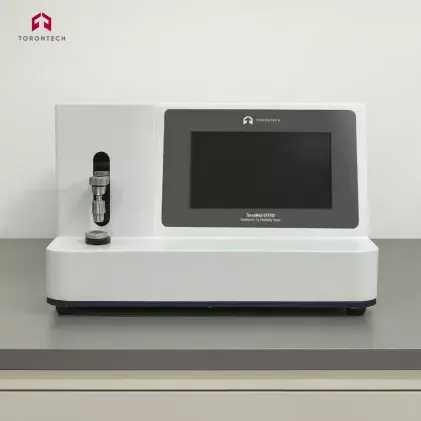
Guidewires Tip Flexibility Tester
ToronMed™ GTFT01 applies controlled force to the guidewire tip and measures displacement against ISO 11070 and FDA Guidance 16007, the standard reference for coronary, peripheral, and neurovascular guidewire performance testing. A transparent test base lets operators observe tip behavior directly during the test, which helps when correlating flexibility data with clinical feel.
How to Choose the Right Guidewire Tester
- For batch screening of structural integrity: choose the guidewire fracture fixture for a fast, low-cost fracture check before full mechanical testing.
- For coated guidewire development: choose the guidewire flexing tester to evaluate coating durability under repeated bending cycles.
- For trackability and handling data: choose the guidewire push force tester to measure push, torque, and retraction performance in a simulated vessel.
- For tip-specific performance: choose the guidewires tip flexibility tester when FDA Guidance 16007 compliance or detailed tip-bending data is required.