
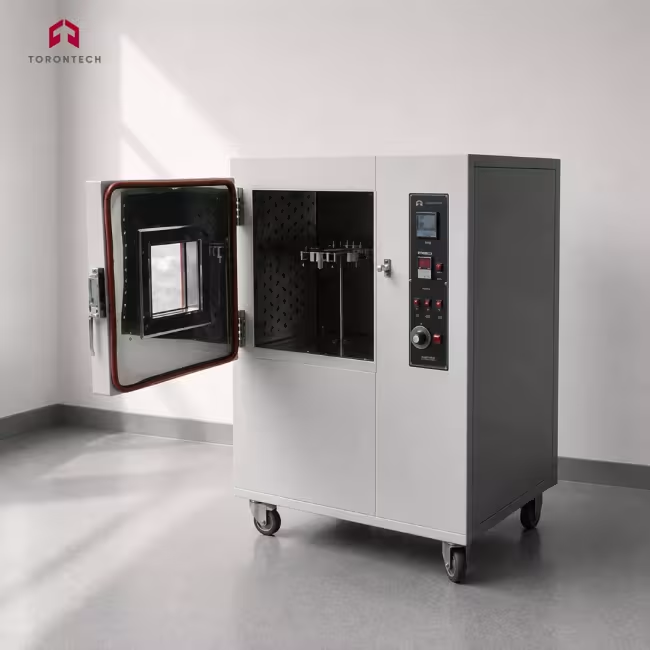
Fluid Resistance Test Chamber
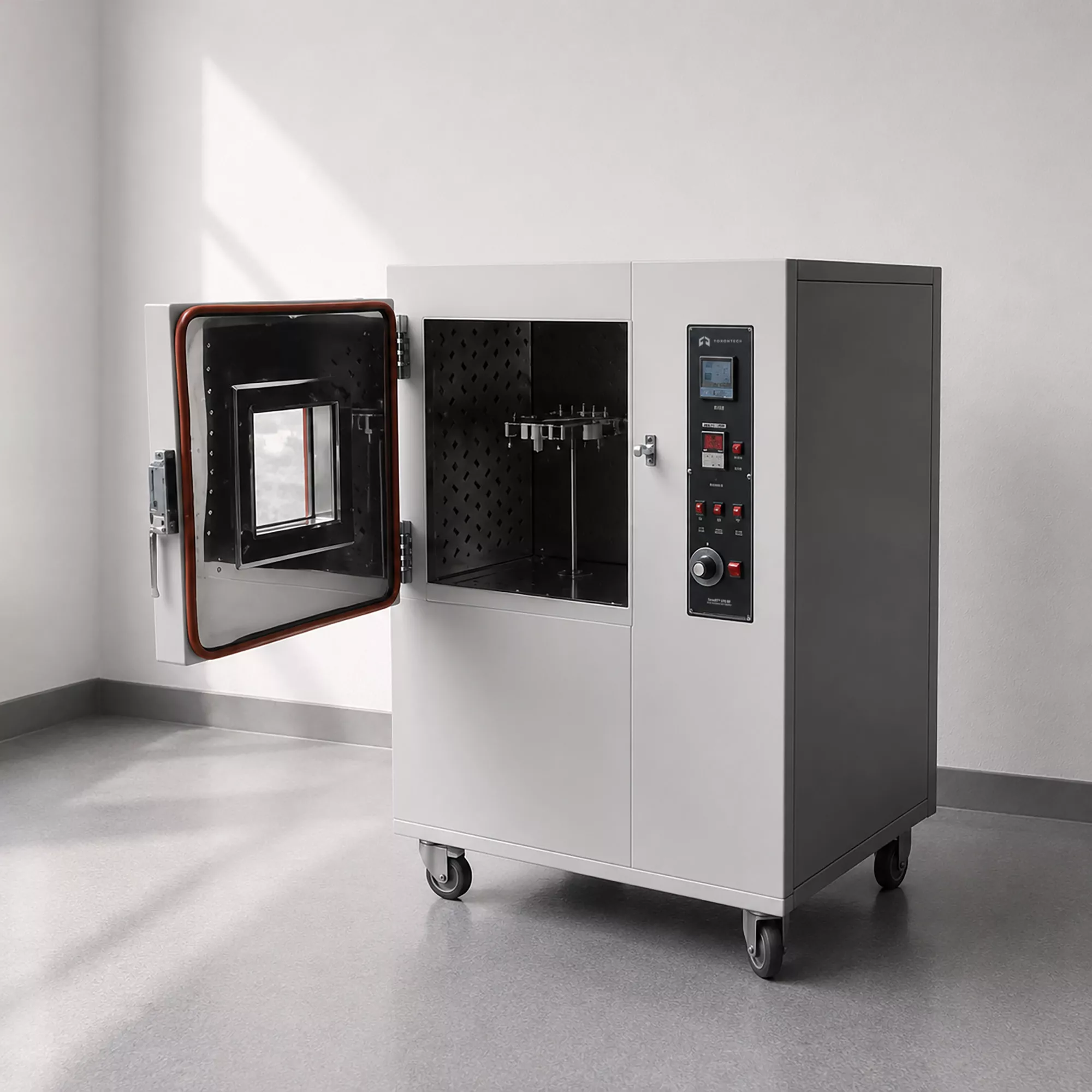
Fluid Resistance Test Chamber (n-Pentane Immersion) – ToronFT™ LPG-RP
ToronFT™ LPG-RP Fluid resistance test chamber is a precision laboratory instrument designed to evaluate the chemical resistance of non-metallic rubber components to liquefied petroleum gas. Rubber parts — including diaphragms, O-rings, valve seats, and seals — are critical components of LPG pressure regulators and associated fittings. Their resistance to swelling, dissolution, and mass change when exposed to LPG determines the long-term reliability and safety of the regulator assembly.
The ToronFT™ LPG-RP measures both the mass change rate and volume change rate of rubber specimens after immersion in n-pentane (used as a surrogate for LPG), providing quantitative data on the degree of LPG absorption and dimensional change. It complies with UL 144 and EN 12864 — the key international standards governing LPG pressure regulator rubber component qualification.
Fluid Resistance Test Chamber (n-Pentane Immersion) – ToronFT™ LPG-RP Applications
The ToronFT™ LPG-RP is applicable for LPG resistance testing of rubber and non-metallic components in the following applications:
- Diaphragm rubber materials for LPG pressure regulator chemical resistance qualification
- O-ring, gasket, and valve seat rubber compounds for LPG compatibility and swell resistance testing
- Non-metallic sealing materials used in LPG fittings, connectors, and hose assemblies
- Research and development of new rubber formulations for LPG service environments
- Quality assurance and incoming inspection of rubber components for LPG equipment manufacturing
- Certification and type-approval testing of rubber parts for compliance with UL 144 and EN 12864 LPG exposure requirements
Standards
The ToronFT™ LPG-RP is designed to comply with the following international standards:
- UL 144: Standard for LP-Gas Regulators (Underwriters Laboratories)
- EN 12864: Domestic, non-domestic, and industrial low-pressure regulators and associated pressure control equipment for butane, propane, and their mixtures
Fluid Resistance Test Chamber (n-Pentane Immersion) – ToronFT™ LPG-RP Key Features
- Uses n-pentane as the LPG surrogate test medium — a standardized and internationally accepted substitute for liquefied petroleum gas in rubber resistance testing per UL 144 and EN 12864
- Two packs of filter paper soaked in n-pentane create the saturated vapor environment required for accurate LPG resistance simulation of rubber parts
- Large 1000 mL container capacity accommodates multiple rubber specimens simultaneously, improving test throughput
- High-precision balance with a range of 0–100 g, accuracy of 1 mg, and resolution of 0.1 mg enables accurate mass change rate measurement of rubber specimens before and after LPG immersion exposure
- Wide thermostat temperature range from room temperature up to 200°C with ±2.5°C uniformity provides the controlled thermal environment required for LPG resistance testing at elevated temperatures
- Large internal volume of 500 mm x 450 mm x 500 mm accommodates a variety of rubber specimen sizes and configurations
- Reliable and repeatable test setup consistent with UL 144 and EN 12864 LPG rubber resistance test methods, supporting certification of rubber parts for LPG service
Theory and Method
The LPG resistance test for rubber parts measures the extent to which the rubber material absorbs LPG (simulated by n-pentane) during a defined immersion period. Absorption of LPG by rubber causes swelling, mass gain, and dimensional changes — all of which can degrade the mechanical performance of rubber seals and diaphragms in LPG pressure regulators.
In the ToronFT™ LPG-RP, rubber specimens are weighed on the high-precision balance (0.1 mg resolution) and their dimensions recorded before testing. The specimens are then placed in the 1000 mL container filled with n-pentane (the LPG surrogate) and maintained at the specified test temperature in the high thermostat (room temperature to 200°C range, ±2.5°C uniformity). After the prescribed immersion duration, specimens are removed, surface-dried, and immediately re-weighed and re-measured. Mass change rate and volume change rate are calculated and compared against the acceptance limits defined in UL 144 and EN 12864 to determine LPG resistance compliance of the rubber parts.
Fluid Resistance Test Chamber (n-Pentane Immersion) – ToronFT™ LPG-RP Technical Specifications
| Parameter | Specification |
|---|---|
| Model | ToronFT™ LPG-RP |
| Product Name | Resistance to LPG of Rubber Parts Test Apparatus — ToronFT™ LPG-RP |
| Test Medium | n-Pentane (LPG surrogate); 2 packs of filter paper soaked in n-pentane |
| Container Capacity | 1000 mL |
| Balance Range | 0–100 g |
| Balance Accuracy | 1 mg |
| Balance Resolution | 0.1 mg |
| Thermostat Temperature Range | Room temperature to 200°C |
| Thermostat Internal Volume (W x D x H) | 500 mm x 450 mm x 500 mm |
| Temperature Uniformity | ±2.5°C |
| Compliance Standards | UL 144; EN 12864 |