
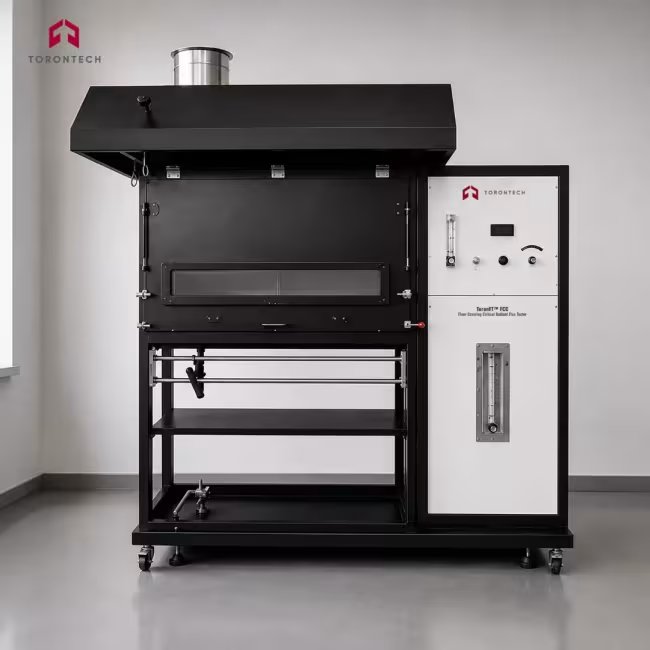
Floor Covering Critical Radiant Flux Tester
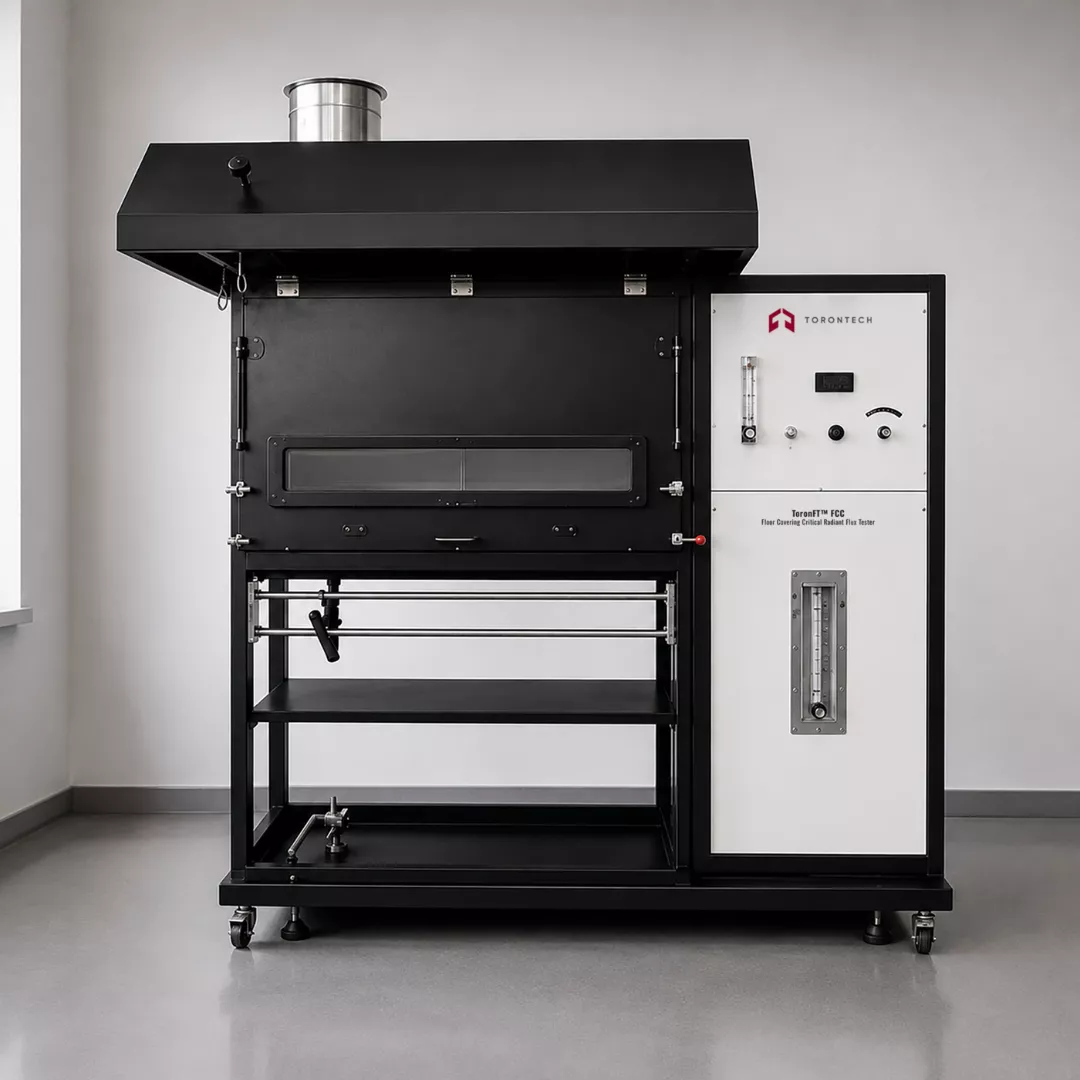
Floor Covering Critical Radiant Flux Tester — ToronFT™ FCC
ToronFT™ FCC Floor Covering Critical Radiant Flux Tester is a precision fire performance testing instrument designed to characterize the combustion behavior of floor covering materials when subjected to an inclined field of thermal radiation and ignited by a small pilot flame. Suitable for a comprehensive range of flooring materials — including textile carpets, cork boards, wooden boards, rubber and plastic floors, and floor spray materials — the ToronFT™ FCC provides the radiant flux spread data required for flooring material fire classification and qualification.
The radiant heat flux floor coverings tester not only evaluates the base material itself but also reflects how changes in the backing material, base material, or other aspects of the flooring system may affect the overall fire test result — making it an essential instrument for both material developers and quality assurance laboratories requiring comprehensive flooring fire performance characterization.
Floor Covering Critical Radiant Flux Tester — ToronFT™ FCC Applications
- Floor covering manufacturers: fire performance qualification of carpets, cork boards, wooden floors, rubber and plastic flooring, and spray-applied floor systems
- Third-party fire testing and certification laboratories: radiant heat flux testing per ISO 9239-1 and ASTM E648
- Building product specifiers and architects: verification of flooring fire performance for commercial, institutional, and residential projects
- R&D departments: evaluation of new flooring formulations, backing systems, and flame retardant treatments
- Quality assurance departments: incoming inspection and production-lot fire performance sampling of floor covering products
Standards
The ToronFT™ FCC supports radiant heat flux floor covering testing in compliance with internationally recognized fire performance standards, including:
- ISO 9239-1: Reaction to fire tests for floor coverings — Determination of the burning behaviour using a radiant heat source
- ASTM E648: Standard test method for critical radiant flux of floor-covering systems using a radiant heat energy source
Floor Covering Critical Radiant Flux Tester — ToronFT™ FCC Key Features
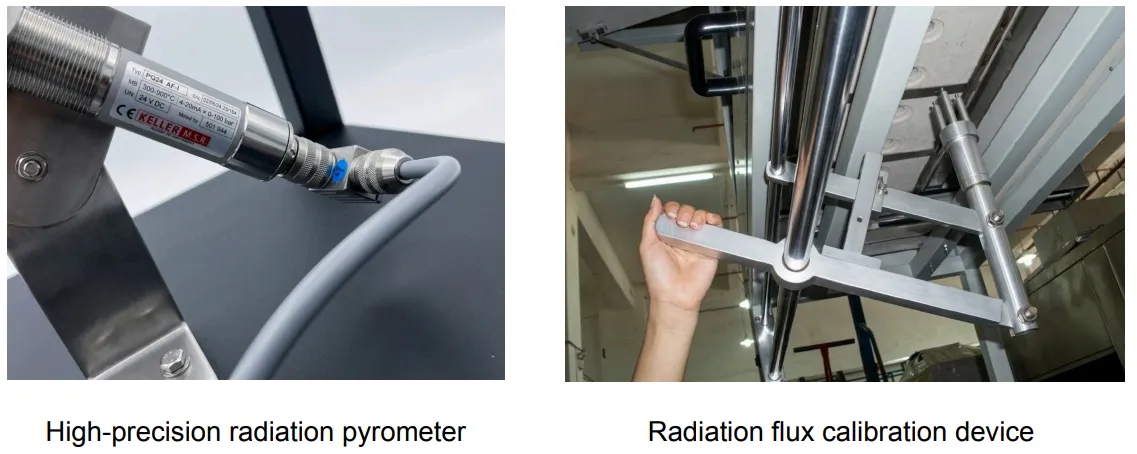
- Suitable for textile carpets, cork boards, wooden boards, rubber and plastic floors, and floor spray materials: broad flooring product coverage
- Evaluates the combined fire performance of the complete flooring system: base material, backing material, and adhesive effects all reflected in results
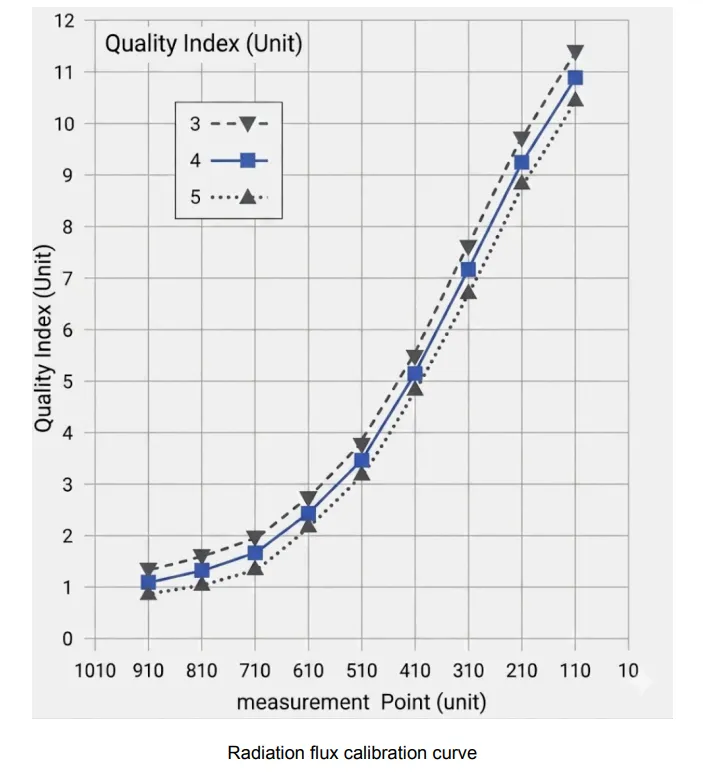
- Complete machine composition: test equipment, smoke density measurement device, radiation value calibration system, gas control system, and data acquisition system
- Structural material: calcium silicate board, thickness (13±1)mm, nominal density 650 kg/m³ — providing thermal stability and durability
- Fireproof observation glass: (110±10)mm × (1100±100)mm: allowing full visual monitoring of specimen combustion during the test
- Quartz high-temperature glass observation window: installed at the front of the test box for continuous specimen monitoring without chamber opening
- Metal protective layer on the outside of the test chamber for structural protection
- Tightly closed door below the observation window: allowing the specimen platform to be moved in or out without interrupting the chamber environment
- Panel material: 1.2 mm thick high-quality stainless steel – corrosion-resistant and thermally stable
- Compliant with ISO 9239-1 and ASTM E648: the two primary international radiant heat flux test standards for floor coverings
Theory and Method
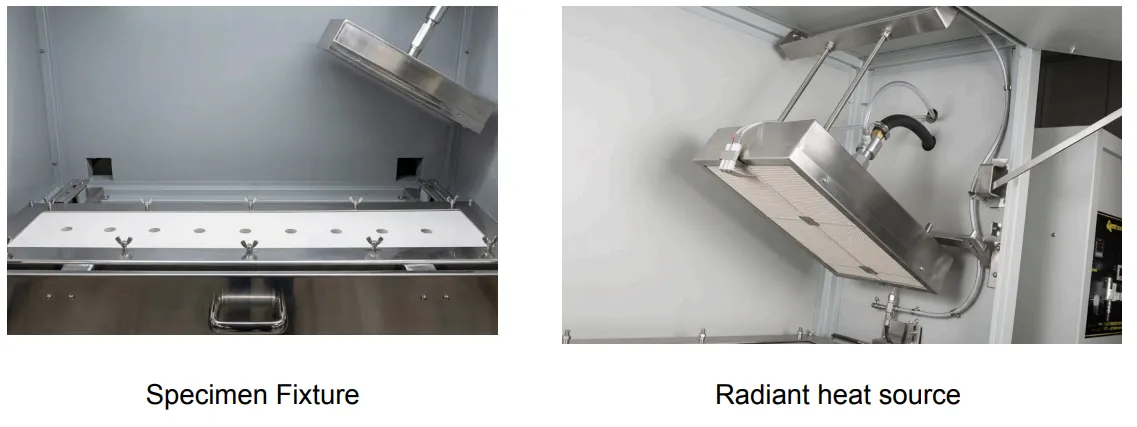
The radiant heat flux test ignites a small pilot flame at the hot end of a floor covering specimen that is placed horizontally and inclined beneath a gas-fired radiant panel. The radiant panel creates a gradient of thermal radiation across the specimen surface — highest at the specimen end nearest to the panel and decreasing progressively toward the far end. As the flame spreads across the specimen, it advances into zones of progressively lower radiant flux until it can no longer sustain propagation.
The critical radiant flux (CRF) (the minimum radiant heat flux at which the flame can continue to spread) is determined from the final flame front position on the specimen at the time self-extinguishment occurs. The ToronFT™ FCC instrument is composed of a smoke density measurement device, radiation value calibration system, gas control system, and data acquisition system. The structure uses calcium silicate board (thickness (13±1)mm, nominal density 650 kg/m³) and fireproof glass ((110±10)mm × (1100±100)mm). The quartz high-temperature glass observation window allows the operator to monitor specimen progress and combustion conditions throughout the test. A metal protective layer on the outside of the test chamber and a tightly closed door below the observation window protect the instrument and allow specimen movement.
Floor Covering Critical Radiant Flux Tester — ToronFT™ FCC Technical Specifications
| Component / Parameter | Specification Details |
|---|---|
| General Information | |
| Model | ToronFT™ FCC |
| Standard Compliance | ISO 9239-1; ASTM E648 |
| Applicable Materials | Textile carpets, cork boards, wooden boards, rubber/plastic floors, floor spray materials |
| Instrument Composition | Test equipment, smoke density measurement, radiation calibration system, gas control system, data acquisition system |
| Panel Material | 1.2 mm high-quality stainless steel |
| Test Chamber | |
| Structural Materials | Calcium silicate board (Thickness: 13±1 mm; Density: 650 kg/m³) with an external metal protective layer |
| Observation Window | Quartz high-temperature fireproof glass (located at the front of the test box) |
| Glass Dimensions | 1100±100 mm × 110±10 mm |
| Radiant Heat Source | |
| Materials | Stainless steel frame, porous refractory ceramic heat-radiating plate |
| Dimensions | 300±10 mm × 450±10 mm |
| Operating Temperature | Up to 900°C |
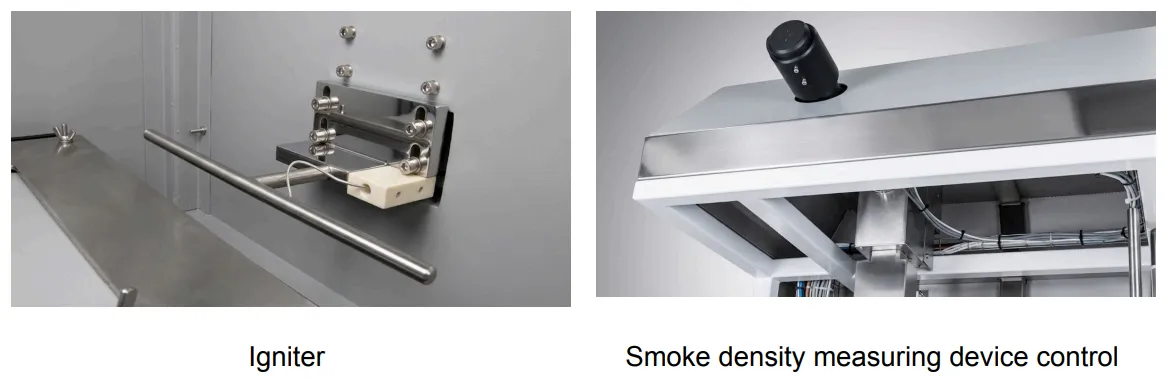
| Igniter | |
| Material | Stainless steel |
| Fuel & Flow Rate | Propane; Flow rate: 0.026±0.002 L/s |
| Flame Height | Adjustable from 60 to 120 mm |
| Smoke Exhaust System | |
| Flow Rate | 2.5±0.2 m/s |
| Exhaust Capacity | 39–85 m³/min |
| Radiant Pyrometer | |
| Measuring Range | 480–530°C |
| Accuracy | ±0.3°C |
| Smoke Density Measurement | |
| Light Source | Incandescent lamp, color temperature 2900±100K |
| Optical Density Range | 0 to 4.0 |
| Measurement Accuracy | ±1% |
| Data Acquisition System | |
| System Capabilities | Analog acquisition: 12 inputs, 16-bit accuracy, acquisition rate of 10 times/second |