
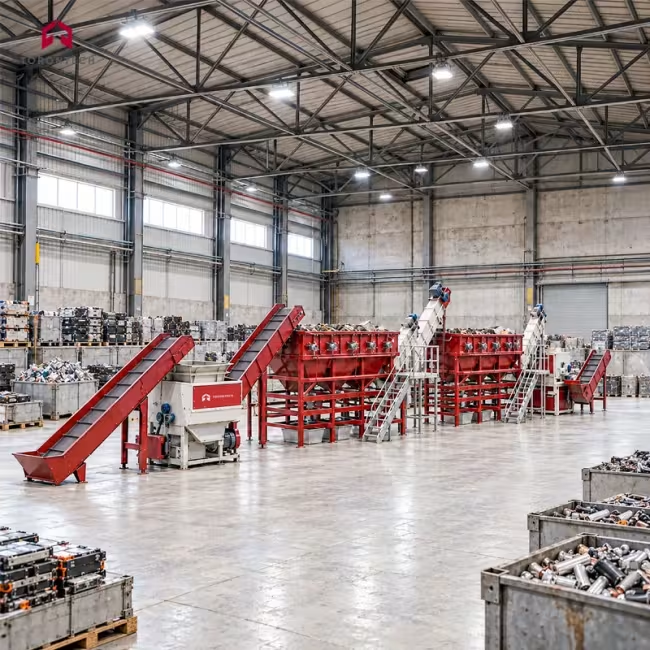
Battery Material Bulk Bag Recycling Line - ToronLi-ion™ MBB
ToronLi-ion™ MBB bulk bag recycling line processes used flexible intermediate bulk containers into two saleable outputs: recovered material powder and clean polypropylene fabric. Shredding, washing, dewatering, and packaging run as one automated sequence from infeed to discharge. Battery material plants generate these bags in volume because cathode precursor, graphite, and lithium salts all arrive in FIBCs, and the residual powder clinging to the weave carries real value. The line captures that powder instead of sending it to disposal with the bag.
Woven polypropylene resists shredding in ways that film and rigid plastics do not. The fabric is engineered for tear resistance, and loose material tends to wrap around rotating shafts rather than feed through a cutting chamber. The shredding stage handles this with a cutting action sized for multi-layer woven structures, reducing whole bags to fragments that downstream washing can work on. Opening the weave is what makes powder recovery possible at all.
Automation runs from the feed point through to discharge, which keeps operator contact with residual powder low and holds output consistent between shifts. The process stays contained and controllable across the full sequence. Facilities recovering battery raw materials value that containment because the powder they capture goes back into production rather than into a waste stream. Recovered polypropylene leaves the line ready for baling, sale, or onward extrusion into regranulate.
Battery Material Bulk Bag Recycling Line - ToronLi-ion™ MBB Applications
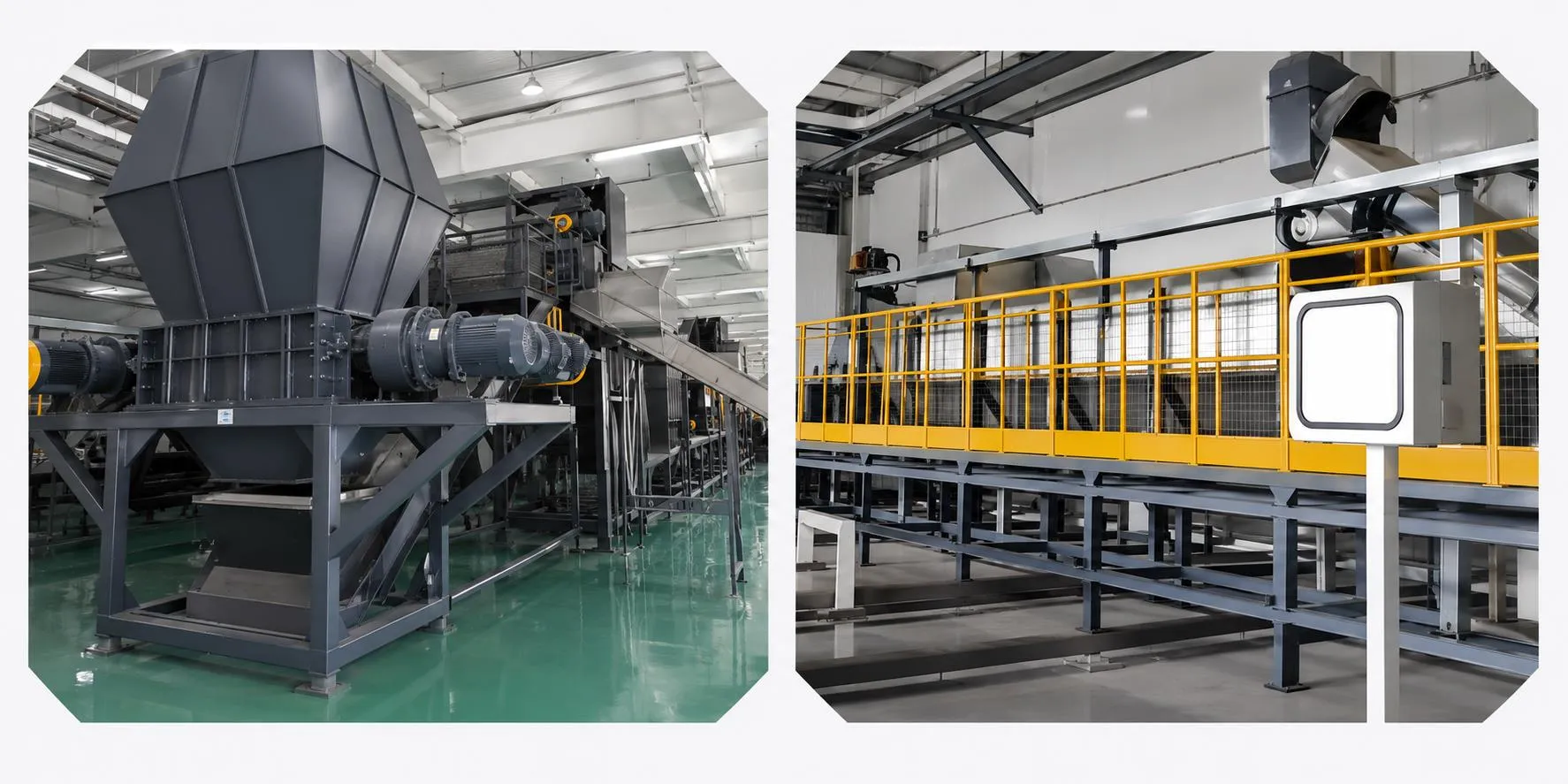
The ToronLi-ion™ MBB line suits any operation accumulating used FIBCs that still hold recoverable product in the fabric.
- Battery Material Manufacturing: recovers cathode precursor, graphite, and lithium salt residue from packaging that arrives across the raw material supply chain
- Cathode and Anode Material Producers: captures powder left in bags after decanting, returning it to the process rather than losing it with the packaging
- Gigafactory Packaging Waste: handles the FIBC volume a cell plant generates as a continuous stream instead of a periodic disposal contract
- Chemical and Mineral Processing: cleans bags that carried pigments, additives, catalysts, and mineral concentrates
- Fertilizer and Agrochemical Handling: processes bags holding fertilizer and treated product residue where powder recovery offsets disposal cost
- Cement and Building Materials: recycles packaging from cement, additives, and dry mix operations
- Mining and Mineral Concentrate Logistics: recovers concentrate residue from transport bags at ports, terminals, and processing sites
- Food and Feed Ingredient Plants: treats bags from dry ingredient handling where fabric recovery is the primary objective
- Plastic Recycling Operations: adds a woven PP stream to an existing recycling business, producing washed flake for regranulate
- FIBC Manufacturers: closes an internal loop on production offcuts, rejected bags, and returned containers
- Waste Management Contractors: brings bulk bag processing in house rather than routing the material to landfill or incineration
- Industrial Site Services: provides a recovery route for packaging accumulated across multiple client operations
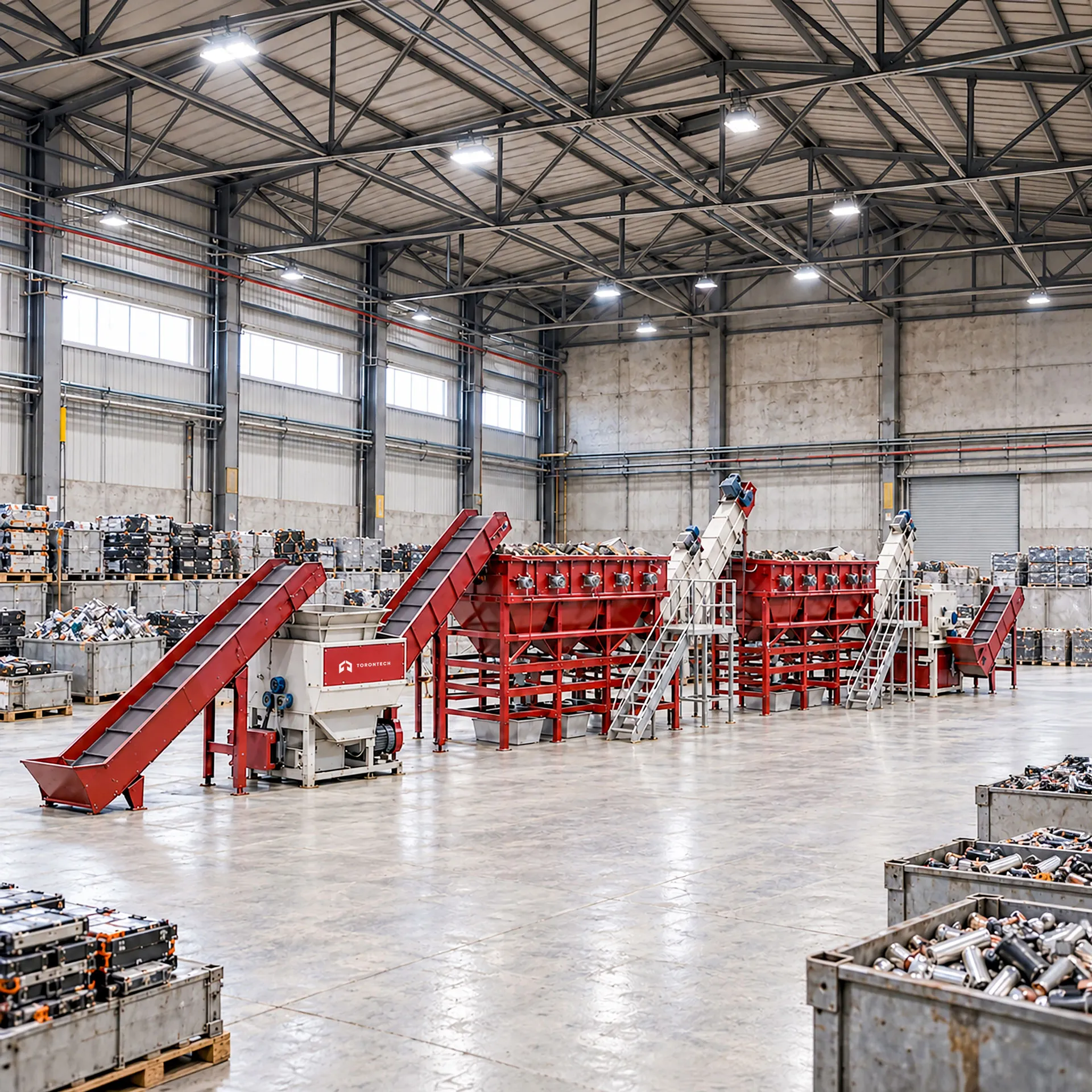
Battery Material Bulk Bag Recycling Line - ToronLi-ion™ MBB Key Features
The ToronLi-ion™ MBB line covers the full recovery route in one integrated system, with each stage matched to the bag type and contamination level a site handles.
- Dual Output Recovery: the line returns both recovered material powder and clean polypropylene fabric, giving two revenue streams from a single waste input
- Integrated Process Sequence: shredding, washing, dewatering, and packaging operate as one connected line rather than as separately managed machines
- Fully Automated Operation: the process runs from feeding to discharging under automatic control, lowering labor requirements and reducing handling of residual powder
- Continuous Throughput: the sequence runs continuously rather than in batches, which suits plants generating a steady FIBC volume
- Shredding Sized for Woven Fabric: the cutting stage is configured for multi-layer woven polypropylene rather than for film or rigid plastic
- Contained and Controllable Process: material stays within the system across the full route, supporting both product recovery and workplace conditions
- Powder Capture from Wash Water: residual material released during washing is recovered as a separate product fraction instead of leaving with effluent
- Mechanical Dewatering: water is removed by mechanical action, taking advantage of the hydrophobic nature of polypropylene to reduce drying load
- Integrated Packaging Stage: cleaned fabric is packed at the end of the line, ready for storage, transport, or sale without a separate handling step
- Resource Recovery Focus: capturing both fractions raises the share of incoming material converted into usable output
Theory and Method
Bulk bag recovery starts as a fabric problem. FIBCs are built from multi-layer woven polypropylene tape, a structure designed to carry a ton without tearing, and that toughness resists cutting. Loose fabric also tends to wrap around a rotating shaft instead of feeding into it, so bag processing calls for a cutting action rather than the impact approach used on rigid material. Reducing bags to fragments also opens the weave and multiplies the surface area washing can reach.
Washing works against two forms of adhesion. Powder lodges mechanically between woven tapes, and fine particles cling to fiber surfaces through electrostatic attraction. Water alone dislodges neither, so the wash stage combines immersion with agitation and friction between tumbling fragments. Released powder disperses and separates by settling, since mineral and battery material powders are far denser than the surrounding liquid. Polypropylene meanwhile floats, near 0.91 grams per cubic centimeter against water at 1.00, and that difference does much of the separation work.
Dewatering exploits a useful property of polypropylene: the polymer is hydrophobic and absorbs almost no water, so moisture sits on fragment surfaces as a film rather than soaking into the material. Mechanical action removes that film directly, whether through squeezing or centrifugal force, without the drying energy a water-absorbing polymer would demand. Low residual moisture matters downstream because it governs bale weight accuracy and determines whether flake can go straight to extrusion.
Battery Material Bulk Bag Recycling Line - ToronLi-ion™ MBB Technical Specifications
System Overview
| Parameter | Specification |
|---|---|
| System Type | Automated shredding, washing, dewatering, and packaging line for flexible intermediate bulk containers |
| Processable Feedstock | Used FIBCs, jumbo bags, ton bags, and woven polypropylene bulk packaging |
| Primary Material | Multi-layer woven polypropylene fabric |
| Output Materials | Recovered material powder, cleaned polypropylene fabric |
| Process Sequence | Feeding, shredding, washing, dewatering, packaging |
| Automation Level | Fully automated from feeding through discharging |
| Operating Mode | Continuous operation |
| Process Containment | Controlled and contained across the full material route |
| Layout | Modular line arrangement, configured to site footprint |
Machine Line-Up
The line is assembled from the modules below. Each stage is described with its function, working method, and available parameters.
1. Feeding System
Used bags are loaded onto an inclined infeed conveyor that carries them into the shredder hopper at a controlled rate. Metered feeding keeps the shredder inside its working load and prevents the surge that a bundle of bags dropped at once would cause.
| Parameter | Specification |
|---|---|
| Function | Meters used bags into the shredding stage at a controlled rate |
| Conveyor Type | Inclined belt conveyor |
| Feed Material | Whole FIBCs, jumbo bags, and woven bulk packaging |
| Discharge | Direct into shredder hopper |
| Configuration | Sized to line throughput and bag dimensions |
2. Shredding System
The shredder reduces whole bags to fragments. Woven polypropylene is built to resist tearing, so the cutting action is configured for multi-layer fabric rather than for film or rigid plastic. Beyond volume reduction, shredding opens the weave structure and exposes the trapped powder that the washing stage needs to reach.
| Parameter | Specification |
|---|---|
| Function | Size reduction of whole bags into washable fragments |
| Target Material | Multi-layer woven polypropylene fabric |
| Cutting Approach | Shearing action suited to tear-resistant woven structures |
| Process Purpose | Opens the weave and exposes trapped material for washing |
| Discharge | To washing stage |
3. Washing System
Washing separates residual product from the fabric. Fragments are immersed and agitated so that friction between tumbling pieces works powder out of the weave, and released material disperses into the water. Polypropylene floats while denser powder settles, so the density difference contributes directly to the separation.
| Parameter | Specification |
|---|---|
| Function | Removal of residual powder and contamination from fabric fragments |
| Method | Immersion combined with agitation and inter-fragment friction |
| Separation Basis | Density difference between floating polypropylene and settling powder |
| Stage Count | Set to contamination level and output specification |
| Output | Cleaned fabric fragments and powder-laden wash water |
4. Powder Recovery
Material released during washing is drawn out as a separate product stream. Recovering this fraction is what distinguishes a battery material bag line from general plastic washing, since the powder returning to the plant often carries more value than the fabric.
| Parameter | Specification |
|---|---|
| Function | Capture of residual material powder released during washing |
| Separation Basis | Settling of dense powder from the wash medium |
| Output Form | Recovered powder fraction for reuse or onward processing |
| Process Purpose | Converts residue that would otherwise leave with effluent into product |
5. Dewatering System
Washed fragments carry surface water that mechanical action removes. Polypropylene absorbs almost no water, so moisture sits as a film on the fragment surface and comes away without the energy a drying oven would consume on an absorbent polymer.
| Parameter | Specification |
|---|---|
| Function | Removal of surface water from washed fabric fragments |
| Method | Mechanical dewatering |
| Material Property Exploited | Hydrophobic polypropylene retains only surface moisture |
| Output Condition | Low residual moisture fabric ready for packing |
| Process Benefit | Reduces drying energy and stabilizes packed bale weight |
6. Packaging System
Cleaned and dewatered fabric is packed at the end of the line. Packing on the line removes a separate handling step and produces a consistent unit for storage, transport, or sale.
| Parameter | Specification |
|---|---|
| Function | Packing of recovered polypropylene fabric into transportable units |
| Position | Final stage of the process line |
| Output | Packed recovered fabric ready for storage, sale, or extrusion |
| Process Benefit | Removes separate downstream handling of loose material |
7. Control and Automation System
The line runs under automatic control from the feed point through to discharge. Centralized operation holds the sequence consistent across shifts and keeps the process contained, which matters where the recovered powder is a product rather than a waste.
| Parameter | Specification |
|---|---|
| Function | Sequence control and monitoring across the full line |
| Coverage | Feeding through discharging |
| Operating Mode | Automatic, continuous |
| Operator Involvement | Minimal manual intervention required |
| Process Benefit | Consistent output and controlled material containment |