

Automatic Lubricating Oils Oxidation Stability Tester
Automatic Lubricating Oils Oxidation Stability Tester – ToronRPVOT™
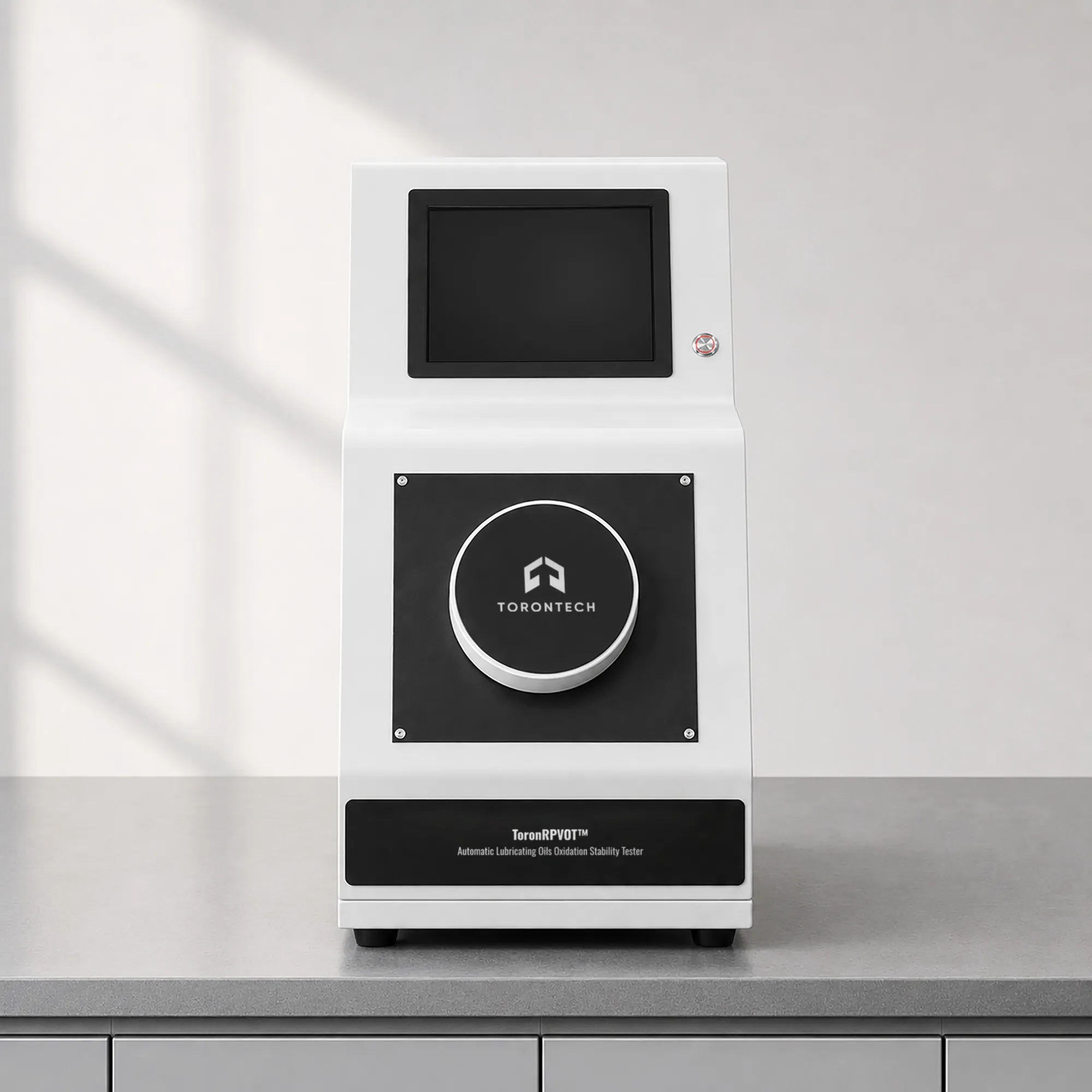
ToronRPVOT™ Automatic Lubricating Oils Oxidation Stability Tester is a precision, fully automated instrument designed to evaluate the oxidation stability of steam turbine lubricating oils, mineral insulating oils, and other petroleum-based lubricating oils using the rotating pressure vessel oxidation test (RPVOT) method. The instrument complies with ASTM D2272 — the internationally recognized standard for measuring the oxidation stability of steam turbine oils by the rotating pressure vessel method — and is the reference oxidation stability tester for North American turbine oil quality control, acceptance testing, and in-service oil condition monitoring programs.
The oxidation stability tester determines how long a lubricating oil sample can resist accelerated oxidative degradation under a standardized set of elevated temperature, pure oxygen atmosphere, and aqueous catalyst conditions. The result reported in minutes as the ToronRPVOT™induction time directly characterizes the remaining antioxidant reserve of the oil, enabling predictive maintenance programs to schedule lubricating oil change intervals before oxidative breakdown and sludge formation compromise turbine bearing and system performance.
The ToronRPVOT™ features a metal bath design that eliminates oil fume exposure hazards for the operator while simplifying the test setup. The glass sample pressure vessel (oxygen bomb) rotates smoothly at (100 ± 5) rpm with low vibration and noise, and the integrated air cooling system accelerates bath cool-down between consecutive tests to support high-throughput laboratory workflows. An industrial-grade touch screen computer interface with integrated automatic oxygen charge/discharge control enables the complete test cycle to be managed from a single, intuitive display — with temperature overheating protection and a high-precision pressure sensor providing continuous process safety monitoring throughout the oxidation stability test.
The instrument is also equipped with a built-in electric winding machine for catalyst coil preparation, consolidating all test consumable preparation within the instrument’s footprint and reducing pre-test setup time for routine lubricating oil oxidation stability testing programs.
RPVOT | 140 / 150°C | ±0.1°C | ±0.5% | 100±5 rpm |
Automatic Lubricating Oils Oxidation Stability Tester – ToronRPVOT™ Applications
The ToronRPVOT™ oxidation stability tester addresses the following lubricating oil and industrial testing applications across power generation, petroleum refining, and industrial maintenance sectors:
- Steam Turbine Oils: The primary application for the ASTM D2272 rotating pressure vessel oxidation test. The ToronRPVOT™ determines the RPVOT induction time of in-service and new steam turbine lubricating oils, quantifying the remaining antioxidant reserve and predicting remaining service life. Steam turbine operators use RPVOT data to implement condition-based oil change programs, avoiding both premature oil changes and the risks of running oxidatively degraded lubricating oil in critical turbine bearings and control systems.
- Gas Turbine Lubricating Oils: Evaluates the oxidation stability of gas turbine lubricating oils used in power generation and aviation ground support applications. Gas turbines operate at elevated temperatures that accelerate lubricating oil oxidation; RPVOT testing provides the quantitative antioxidant depletion data required for in-service oil condition monitoring and maintenance scheduling.
- Mineral Insulating Oils: Determines the oxidation stability of new and in-service mineral insulating oils containing 2,6-di-tert-butyl-p-cresol (2,6-BHT/DBPC) antioxidant, as used in power transformers, switchgear, and high-voltage electrical equipment. Oxidation of insulating oil generates acids and sludge that degrade dielectric performance and accelerate transformer aging; regular RPVOT testing of insulating oil supports transformer maintenance and life extension programs.
- Hydraulic Lubricating Oils: Measures the oxidative stability of anti-wear hydraulic lubricating oils used in industrial machinery, mobile equipment, and process hydraulic systems. RPVOT data supports hydraulic oil qualification, batch acceptance testing, and in-service condition monitoring to prevent varnish and sludge deposits that clog hydraulic valves and filters.
- Compressor Lubricating Oils: Tests the oxidation resistance of compressor lubricating oils used in rotary screw, reciprocating, and centrifugal compressors across oil and gas, petrochemical, and industrial applications. Compressor oil oxidation stability is critical for preventing carbon deposit formation on hot metal surfaces.
- New Oil Qualification & QC: Provides the ASTM D2272 RPVOT induction time result required for acceptance testing of new lubricating oil batches by lubricant manufacturers, blenders, and end-user quality control programs. Incoming lubricating oil quality verification using the oxidation stability tester confirms that the antioxidant package meets specification before the oil enters service.
- Lubricant R&D & Formulation: Supports lubricating oil formulation development and additive package optimization by quantifying the oxidation stability improvement contribution of individual antioxidant types, antioxidant concentrations, and base oil selection. The rotating pressure vessel method’s accelerated test conditions provide rapid comparative oxidation stability data across candidate formulations.
- Petroleum & Power Industry: Used by electric power utilities, petroleum refiners, lubricant manufacturers, and independent oil analysis laboratories as the reference oxidation stability tester for steam turbine lubricating oil quality programs, transformer maintenance oil testing, and industrial equipment lubricant condition monitoring.
Compliant Standards
The ToronRPVOT™ oxidation stability tester is designed, calibrated, and validated in accordance with the following internationally recognized test standards for lubricating oil oxidation stability determination.
- ASTM D2272: Standard Test Method for Oxidation Stability of Steam Turbine Oils by Rotating Pressure Vessel. The primary international standard implemented by the ToronRPVOT™. Defines the test procedure for measuring the induction time of steam turbine lubricating oils under 620 kPa (90 psi) oxygen pressure at 150°C (302°F) in the presence of water and a copper catalyst coil. The RPVOT result is the standard acceptance and in-service monitoring criterion for steam turbine lubricating oil antioxidant reserve across North American and international power generation industries.
Automatic Lubricating Oils Oxidation Stability Tester – ToronRPVOT™ Key Features
Here is the information formatted as a bulleted list:
- Integrated Desktop Design, High Integration: The ToronRPVOT™ combines all test functions — metal bath, rotation mechanism, oxygen pressure management, temperature control, pressure sensing, data acquisition, and cooling system — into a single compact desktop enclosure (280 × 500 × 510 mm). The fully integrated design minimizes laboratory bench space requirements and eliminates the cable and component management challenges of multi-unit test setups.
- Metal Bath Design — Fume-Free Operation: The oil bath assembly is fully enclosed within a metal bath chamber rather than an open oil bath, eliminating oil fume generation during the extended high-temperature oxidation stability test cycle. This design protects the laboratory operator from vapor exposure, reduces environmental contamination, and simplifies post-test cleanup compared to open-bath oxidation stability testers.
- Touch Screen Industrial Computer Control: The instrument is controlled through an industrial-grade touch screen computer that provides a clear, intuitive interface for all operating parameters, real-time test monitoring, and data management. Bath temperature, vessel pressure profile, elapsed test time, and RPVOT induction time result are all displayed on a single screen, eliminating the need for separate data recorders or external computers for standard lubricating oil oxidation stability testing.
- Built-In Electric Catalyst Coil Winder: An integrated electric winding machine for preparing the copper catalyst coil is built directly into the instrument. This eliminates the need for a separate coil-winding tool, ensures consistent coil geometry across all tests, and reduces pre-test preparation time in high-throughput lubricating oil testing laboratories.
- Smooth, Low-Noise Vessel Rotation: The pressure vessel rotation mechanism maintains the glass oxygen bomb at a 30° inclination angle and drives it at precisely (100 ± 5) rpm with low vibration and minimal acoustic noise. Smooth rotation ensures continuous and uniform wetting of the catalyst coil surface and the oil-water interface throughout the multi-hour oxidation stability test, improving test reproducibility and reducing endpoint scatter.
- Integrated Air Cooling System: A built-in forced-air cooling system rapidly reduces the metal bath temperature between consecutive tests, significantly improving the throughput of high-volume lubricating oil oxidation stability testing programs without the need for external cooling water connections. The cooling system reduces the total turnaround time between sequential RPVOT tests.
- Automatic Oxygen Charge & Discharge: The instrument automatically manages the oxygen pressurization and discharge cycle, with both automatic and manual override modes available. The automatic mode charges the vessel to the specified test pressure, monitors pressure stability prior to test start, and safely vents oxygen after test completion — reducing operator involvement, improving safety, and eliminating manual pressurization errors that would invalidate ASTM D2272 results.
- High-Precision Pressure & Temperature Sensing: A calibrated pressure sensor covering 0–1.6 MPa with ±0.5% accuracy provides continuous, high-resolution vessel pressure monitoring throughout the test cycle. The temperature control system maintains the metal bath at 140°C or 150°C with ±0.1°C accuracy, and the temperature overheating protection function automatically cuts heating power if the bath temperature exceeds the safe upper limit, protecting both the instrument and the test sample.
Theory & Test Method
The Rotating Pressure Vessel Oxidation Test (RPVOT) is an accelerated oxidation stability test based on the fundamental chemistry of lubricating oil oxidative degradation. Under normal service conditions, lubricating oils oxidize gradually through a free-radical chain reaction mechanism involving initiation, propagation, and termination stages. The rate of this oxidative chain reaction is controlled by the antioxidant additives present in the formulated lubricating oil. Antioxidants function either by scavenging the free radical intermediates generated during oxidation (radical scavengers / primary antioxidants) or by decomposing the hydroperoxide intermediates that propagate the chain reaction (hydroperoxide decomposers / secondary antioxidants). As the antioxidant package is consumed by reaction with oxidative intermediates, the residual antioxidant protection decreases until a critical threshold is reached, beyond which the oil undergoes rapid, autocatalytic oxidation resulting in viscosity increase, acid number rise, varnish and sludge deposit formation, and lubricant failure.
The RPVOT method accelerates this in-service oxidation process to a laboratory timescale of hours by subjecting the lubricating oil sample to simultaneously elevated temperature, pure high-pressure oxygen atmosphere, and metallic catalyst surface contact. The test conditions — standardized by ASTM D2272 — are:
- Temperature: 150°C (302°F) — or 140°C for insulating oil testing
- Oxygen pressure: 620 kPa (90 psi) pure O₂ at ambient temperature
- Catalyst: 3 m of 1.6 mm diameter bare copper wire wound into a coil
- Water: 5.0 mL distilled water in the reaction vessel
- Sample: 50 g of the lubricating oil under test
- Rotation: Vessel inclined at 30° from horizontal, rotating at (100 ± 5) rpm to continuously wet all catalyst surfaces
Under these conditions, the lubricating oil antioxidant package reacts rapidly with the dissolved oxygen, catalyzed by the copper surface. The oxygen pressure in the sealed vessel drops slowly as the antioxidants protect the base oil from oxidation. When the antioxidant reserve is exhausted, the base oil undergoes rapid autocatalytic oxidation, consuming oxygen at an accelerating rate and causing a sharp, measurable pressure drop in the vessel. The RPVOT result — the induction time in minutes — is defined as the time elapsed from the start of the test to the point at which the vessel pressure has dropped 25 kPa (approximately 175 kPa for most mineral oils) from the maximum recorded pressure, indicating onset of uninhibited autocatalytic oxidation.
The ToronRPVOT™ continuously monitors vessel oxygen pressure via a high-precision pressure sensor (±0.5% accuracy, 0–1.6 MPa range) throughout the test cycle. The integrated touch screen computer automatically captures the pressure-time profile, detects the 25 kPa drop endpoint, calculates the RPVOT induction time, and records the complete test dataset. The metal bath at 140°C or 150°C maintains the vessel temperature with ±0.1°C accuracy throughout the multi-hour test cycle, and the automatic oxygen charge/discharge system eliminates manual pressurization steps, reducing operator involvement and improving test reproducibility across consecutive lubricating oil oxidation stability tests.
Test Procedure Overview
- Catalyst Coil Preparation — Wind 3 m of 1.6 mm copper wire using the instrument’s built-in electric winding machine. Clean the coil per ASTM D2272 requirements and place it in the glass reaction vessel.
- Sample & Water Loading — Weigh 50 g of the lubricating oil sample into the glass vessel and add 5.0 mL of distilled water. Place the vessel in the rotating pressure vessel holder at the 30° inclined angle.
- Vessel Sealing & Oxygen Charging — Seal the pressure vessel. Use the automatic oxygen charge system to purge the vessel with oxygen and pressurize to the specified test pressure (620 kPa at ambient temperature) per ASTM D2272.
- Temperature Set & Test Start — Set the bath temperature to 150°C (or 140°C for insulating oil). The dynamic temperature control system brings the bath and vessel to the target temperature; the test timer starts when the set point is reached.
- Automated Pressure Monitoring — The high-precision pressure sensor continuously monitors vessel oxygen pressure throughout the test. The rotation of the vessel at (100 ± 5) rpm continuously agitates the oil-water-catalyst interface to maintain uniform reaction conditions.
- Endpoint Detection & Result Calculation — The instrument automatically detects the 25 kPa pressure drop endpoint and records the RPVOT induction time in minutes. The full pressure-vs-time profile is saved and displayed on the touch screen.
- Cooling & Oxygen Discharge — On test completion, the integrated air cooling system accelerates bath cool-down. The automatic oxygen discharge system safely vents the vessel to atmospheric pressure before the sample vessel is opened and removed.
Automatic Lubricating Oils Oxidation Stability Tester – ToronRPVOT™ Technical Specifications
| TEMPERATURE SYSTEM | |
| Oil Bath Temperature Set Points | 140°C and 150°C |
| Temperature Control Accuracy | ±0.1°C |
| Temperature Overheating Protection | Automatic cut-off on over-temperature |
| PRESSURE SYSTEM | |
| Pressure Sensor Range | 0 – 1.6 MPa |
| Pressure Accuracy | ±0.5% |
| Oxygen Charge Method | Automatic and manual modes |
| Test Oxygen Pressure (ASTM D2272) | 620 kPa (90 psi) at ambient temperature |
| MECHANICAL SYSTEM | |
| Vessel Rotation Speed | (100 ± 5) rpm |
| Vessel Inclination Angle | 30° from horizontal |
| Working Mode | Metal bath (enclosed, fume-free) |
| CONTROL & INTERFACE | |
| Control Interface | Touch screen industrial computer |
| Catalyst Coil Preparation | Built-in electric winding machine |
| Cooling System | Integrated air cooling (forced air) |
| ELECTRICAL & ENVIRONMENTAL | |
| Voltage | AC (220 ± 10%) V, 50 Hz (110V is also available) |
| Total Power Consumption | < 1,000 W |
| Working Temperature Range | 15°C – 28°C |
| Relative Humidity | ≤ 85% (non-condensing) |
| PHYSICAL | |
| Dimensions (L × W × H) | 280 mm × 500 mm × 510 mm |
| Net Weight | Approximately 30 kg |
| APPLICABLE STANDARDS | |
| Primary Standard | ASTM D2272 — Oxidation Stability of Steam Turbine Oils by Rotating Pressure Vessel |
| Additional Standards | ISO 4263-1, ISO 4263-4 |
The ToronRPVOT™ is the definitive ASTM D2272 rotating pressure vessel oxidation stability tester for North American steam turbine lubricating oil quality control, condition monitoring, and acceptance testing programs — combining full automation, metal bath safety, and integrated catalyst coil preparation in a single compact desktop instrument.