
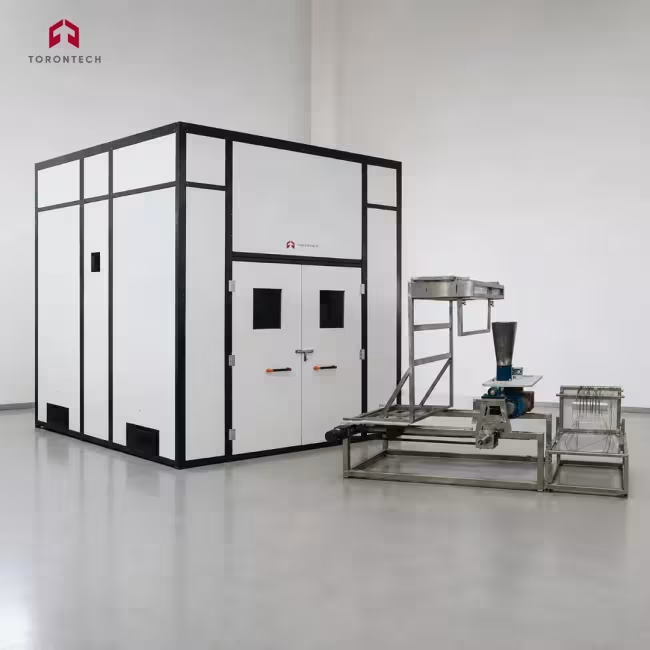
Aircraft Airborne Equipment Fire Resistance Tester
Aircraft Airborne Equipment Fire Resistance Tester — ToronFT™ AAE
ToronFT™ AAE Aircraft Airborne Equipment Fire Resistance Tester is a precision fire resistance and flammability testing instrument designed for the qualification of equipment installed on fixed-wing propeller aircraft, fixed-wing turbojet aircraft, turbofan aircraft, and helicopters. Fully compliant with RTCA DO-160G and CCAR25-R4 standard requirements, the ToronFT™ AAE provides the precisely controlled high-temperature flame exposure, real-time surface temperature monitoring, burner calibration, and heat flow density measurement infrastructure required for comprehensive aircraft airborne equipment fire resistance certification.
The aircraft airborne equipment fire resistance tester integrates Ni-Cr or Ni-Al type surface thermocouples (outer diameter ≤ 3 mm), a rake thermocouple burner assembly (minimum 7 channels, 100 mm from burner face), water-cooled copper tube Gardon heat flow density sensors (380 mm long, 12–13 mm diameter), a 16-bit high-precision microcomputer control board, and a triple-layer safety protection system — all operated at the standard burner temperature of 1100°C ± 80°C with a minimum three-minute pre-stabilization requirement.
Aircraft Airborne Equipment Fire Resistance Tester — ToronFT™ AAE Applications
- Aircraft equipment and avionics manufacturers: fire resistance and flammability qualification for airborne equipment across all aircraft type categories
- Aerospace OEM quality assurance departments: incoming material and component fire resistance verification for airborne equipment type certification programs
- Third-party aviation fire testing and certification laboratories: RTCA DO-160G Category F fire resistance testing for airborne equipment approval
- Aviation regulatory compliance programs: fire resistance qualification for FAA type certificate and EASA approval submissions
- R&D departments: evaluation of new avionics enclosure materials, fire-resistant coatings, and thermal protection systems under standardized high-temperature flame exposure
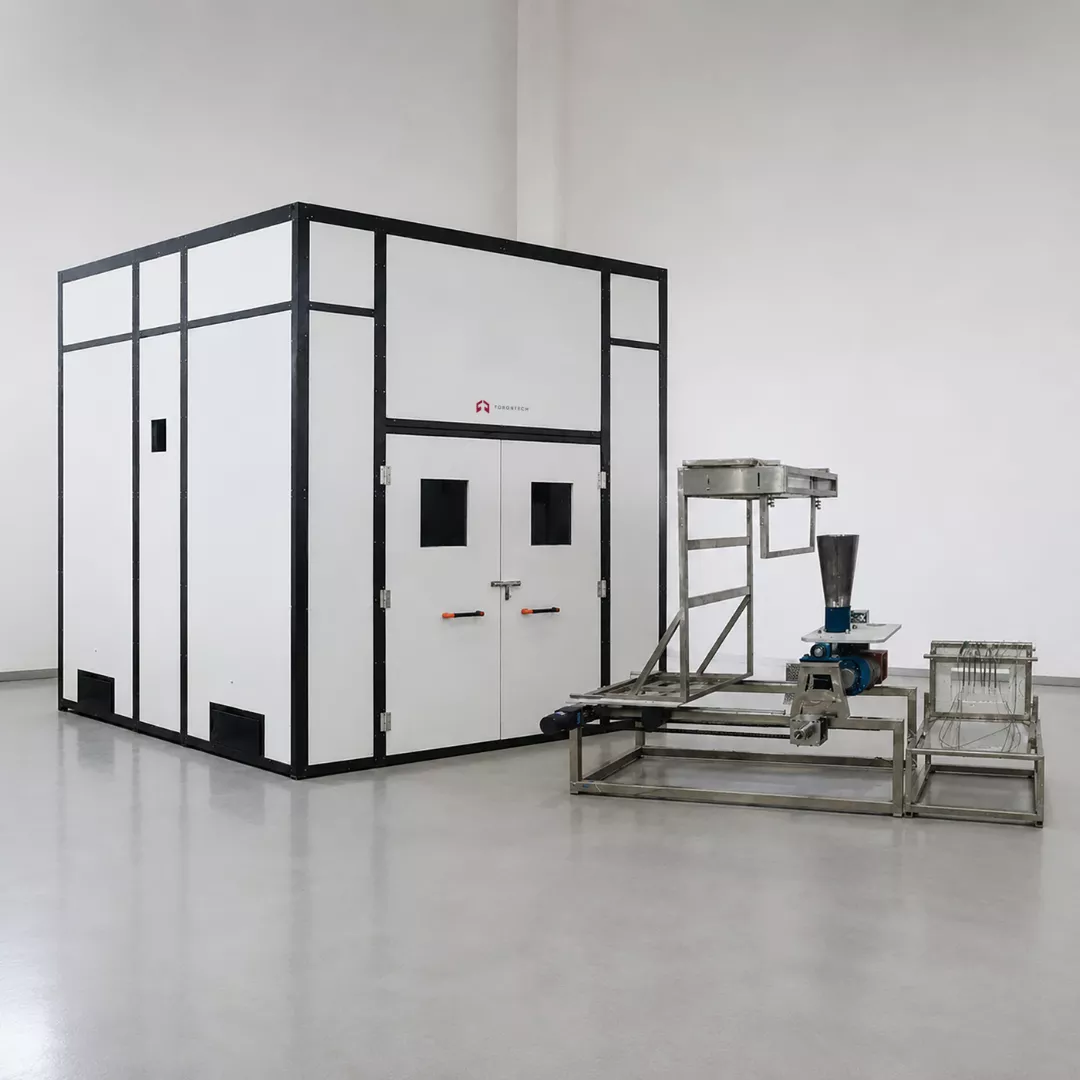
Standards
The ToronFT™ AAE supports aircraft airborne equipment fire resistance testing in compliance with internationally recognized aviation fire safety standards, including:
- RTCA DO-160G: Environmental conditions and test procedures for airborne equipment — Section 26: Fire flammability
- CCAR-25-R4: Civil aviation administration of China airworthiness standards (equivalent to FAR Part 25)
Aircraft Airborne Equipment Fire Resistance Tester — ToronFT™ AAE Key Features
- Suitable for fire resistance and flammability testing of airborne equipment on fixed-wing propeller, turbojet, turbofan aircraft, and helicopters
- Surface temperature measurement: Ni-Cr or Ni-Al thermocouples; outer diameter ≤ 3 mm; sensing wire diameter 0.6–1.0 mm — precise, minimally intrusive specimen surface temperature monitoring
- Rake thermocouple burner assembly: minimum 7 measurement channels; 100 mm from burner face — comprehensive burner temperature distribution verification
- Standard burner temperature: 1100°C ± 80°C; pre-stabilized with data collected every ≥ 30 s for minimum 3 minutes before test start
- Heat flow density measurement: water-cooled copper tube Gardon sensor; 380 mm long, 12–13 mm diameter; adjustable cooling water flow; steel wool pre-cleaning of water path before calibration
- Triple-layer safety protection: power overload protection, short circuit protection, control loop overload protection
- 16-bit high-precision microcomputer control: stable performance, reasonable structure, easy operation
- Real-time result display during test; dynamic performance curve drawn continuously; data permanently saved, retrievable, printable, and report-ready
- Compliant with RTCA DO-160G Section 26 and CCAR25-R4 — the primary aviation authority fire resistance standards for airborne equipment
Theory and Method
Aircraft airborne equipment fire resistance testing subjects the equipment specimen to direct flame from a standardized hydrocarbon burner at 1100°C ± 80°C — replicating the fire zone thermal attack specified by RTCA DO-160G Section 26. The surface temperature of the specimen is continuously monitored using Ni-Cr or Ni-Al type thermocouples (outer diameter ≤ 3 mm; temperature-sensing wire diameter 0.6–1.0 mm), which can monitor specimen surface temperatures throughout the exposure period without interfering with the flame.
The rake thermocouple assembly (minimum 7 channels, positioned 100 mm from the burner face) measures the burner temperature distribution to verify that the 1100°C ± 80°C flame condition is achieved and maintained across the full flame cross-section. Temperature data is collected at intervals of at least every 30 seconds for a minimum of three minutes before the test begins, confirming that steady-state burner conditions are fully established. Heat flow density is measured using water-cooled copper tube Gardon sensors (380 mm long, 12–13 mm diameter); high-quality steel wool cleans the copper tube cooling water path before calibration; cooling water flow is adjustable. Sensor geometric specifications and installation configurations follow Figures 5 and 6 of the applicable standard.
Aircraft Airborne Equipment Fire Resistance Tester — ToronFT™ AAE Technical Specifications
| Parameter | Specification |
|---|---|
| Applicable Aircraft Types | Fixed-wing propeller, turbojet, turbofan, helicopter |
| Surface Thermocouple Type | Ni-Cr or Ni-Al; OD ≤ 3 mm; sensing wire 0.6–1.0 mm |
| Rake Thermocouple Channels | Minimum 7; positioned 100 mm from burner face |
| Standard Burner Temperature | 1100°C ± 80°C |
| Pre-Test Stabilization | Data every ≥ 30 s for minimum 3 minutes before test |
| Heat Flow Sensor Type | Water-cooled copper tube Gardon sensor |
| Copper Tube Dimensions | 380 mm long, 12–13 mm diameter |
| Safety Protections (3 layers) | Power overload, short circuit, control loop overload |
| Control System | 16-bit high-precision microcomputer |
| Data Output | Real-time display; dynamic curve; permanently saved; printable; report-ready |
| Standard Compliance | RTCA DO-160G Section 26; CCAR25-R4 |