
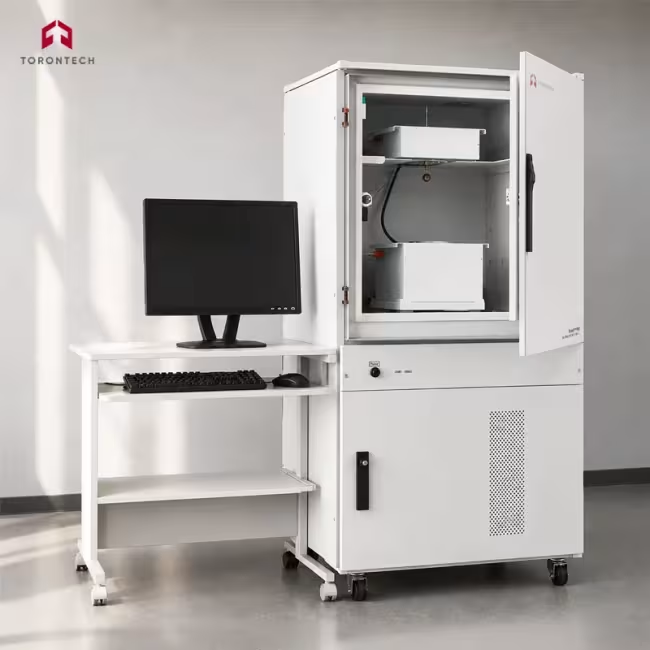
Accelerating Rate Calorimeter (ARC)
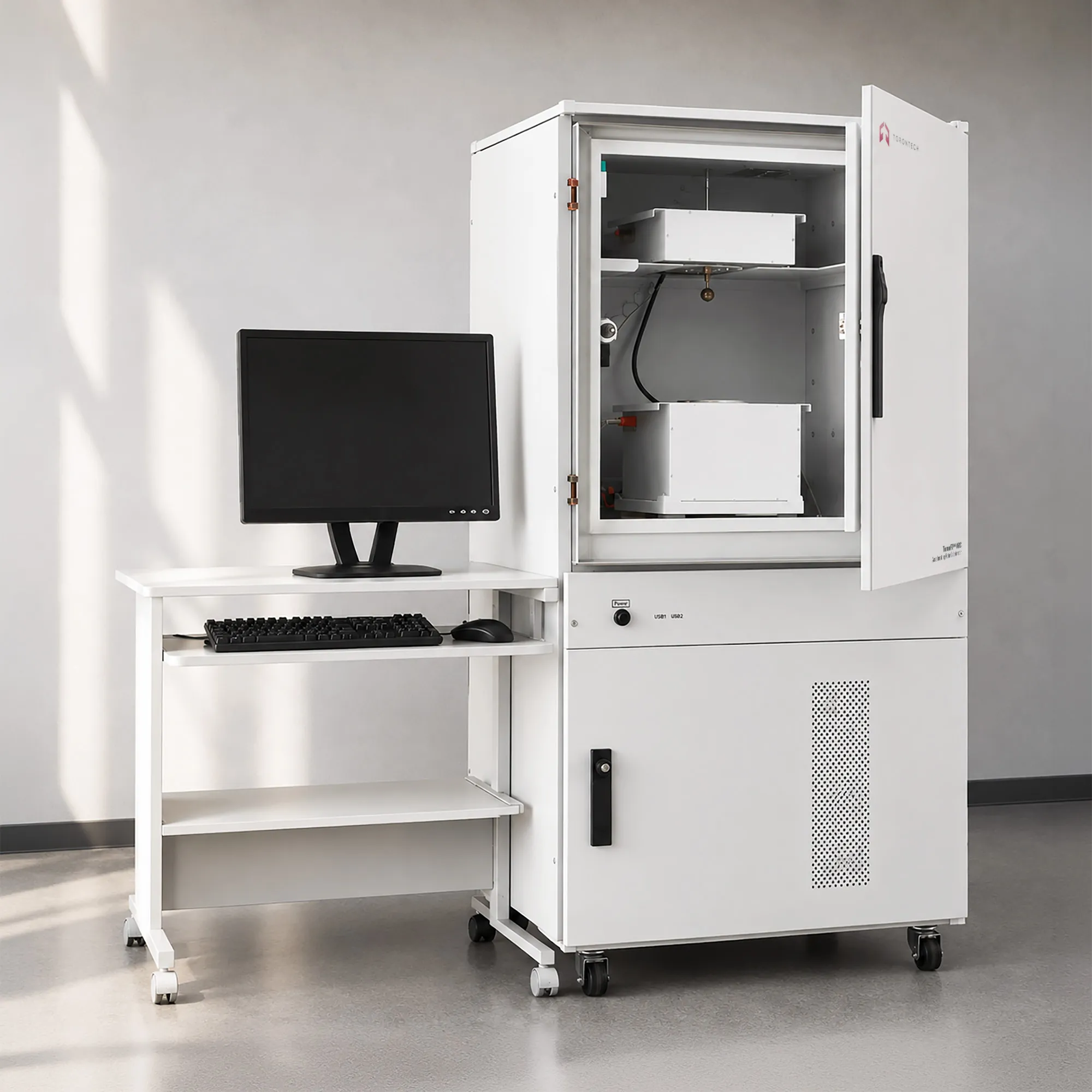
Accelerating Rate Calorimeter (ARC) — ToronFT™ ARC
ToronFT™ ARC Battery Adiabatic Accelerating Rate Calorimeter is a critical safety testing instrument designed for the detection and characterization of lithium battery thermal safety — specifically the adiabatic temperature rise behavior of lithium-ion battery cells and modules. By maintaining true adiabatic (zero heat loss) conditions around the battery specimen throughout the test, the ToronFT™ ARC enables the most accurate measurement of self-heating behavior, thermal runaway initiation temperature, and heat generation rates available from any laboratory instrument.
The ToronFT™ ARC can simulate the thermal runaway process of lithium batteries under extreme conditions — including extreme temperature exposure, short circuit events, and overcharge conditions — under highly adiabatic test environments. The instrument meets the adiabatic temperature rise characteristic test requirements of international lithium-ion battery thermal safety standards, providing battery developers, manufacturers, and safety researchers with the quantitative thermal runaway data needed for battery design optimization, safety qualification, and hazard assessment.
Accelerating Rate Calorimeter (ARC) — ToronFT™ ARC Applications
- Lithium-ion battery manufacturers: thermal safety qualification and thermal runaway characterization for cells, modules, and pack-level assemblies
- Electric vehicle battery system developers: adiabatic calorimetry for battery pack thermal management system design and validation
- Energy storage system manufacturers: thermal runaway onset temperature and heat generation rate characterization for BESS safety certification
- Battery R&D departments: evaluation of new cell chemistries, electrode materials, and electrolyte formulations for thermal stability
- Third-party battery safety testing laboratories: adiabatic accelerating rate calorimetry per IEC 62619, UL 9540A, and related international battery safety standards
- Regulatory compliance programs: thermal runaway data generation for transportation safety authority battery certification submissions
Standards
The ToronFT™ ARC supports lithium battery thermal safety testing in compliance with internationally recognized battery safety standards, including:
- IEC 62619: Secondary cells and batteries containing alkaline or other non-acid electrolytes — Safety requirements for secondary lithium cells and batteries for use in industrial applications
- UL 9540A: Standard test method for evaluating thermal runaway fire propagation in battery energy storage systems
- IEC 62133-2: Secondary cells and batteries containing alkaline or other non-acid electrolytes — Safety requirements for portable sealed secondary lithium cells and batteries
- UN 38.3: Recommendations on the transport of dangerous goods — Manual of tests and criteria (lithium battery safety tests)
- SAE J2464: Electric and hybrid electric vehicle rechargeable energy storage system (RESS) safety and abuse testing
Accelerating Rate Calorimeter (ARC) — ToronFT™ ARC Key Features
- True adiabatic test environment — jacket temperature tracks specimen temperature precisely, eliminating heat loss and providing the most accurate thermal runaway onset and heat generation rate data available
- Simulates thermal runaway under extreme temperature, short circuit, and overcharge conditions under highly adiabatic conditions
- Complete test procedure automation: initial temperature set, temperature rise step, termination temperature, data sampling period, hold time, and self-heating detection — all managed by the instrument control system
- Incremental heating with constant-temperature hold steps — precisely locates the onset temperature of self-heating and thermal runaway
- Self-heating detection mode: automatically transitions to adiabatic tracking when temperature rise rate exceeds the defined threshold
- Post-test safety observation recording: swelling, leakage, smoke, fire, explosion, shell rupture location
- Critical safety data output: adiabatic temperature rise profile, thermal runaway onset temperature, maximum temperature rise rate, total heat generated
Theory and Method
The adiabatic accelerating rate calorimeter determines the self-heating characteristics of a battery by maintaining the temperature of the calorimeter jacket at exactly the same temperature as the specimen surface — eliminating any temperature gradient and therefore any heat transfer between the specimen and its surroundings. Under these true adiabatic conditions, any heat generated by exothermic reactions within the battery is retained entirely within the specimen, producing a measurable temperature rise that is directly proportional to the heat generation rate.
The ToronFT™ ARC test procedure begins by placing the initially charged battery specimen in the adiabatic simulation test device and connecting temperature data acquisition lines. The initial temperature, temperature rise step, termination temperature, and data sampling period are set. The specimen is heated until the surface temperature reaches the first set-point and held for the specified time while temperature and time are recorded. Heating continues incrementally, with the temperature rise rate calculated at each constant-temperature step. Once self-heating is detected (temperature rise rate exceeds a defined threshold), the system enters fully adiabatic mode and tracks the battery's self-generated temperature rise automatically until thermal runaway occurs or the test terminates. After the test, observations are recorded including swelling, leakage, smoke, fire, explosion, and shell rupture location.
Accelerating Rate Calorimeter (ARC) — ToronFT™ ARC Technical Specifications
| Parameter | Specification |
|---|---|
| Model | ToronFT™ ARC |
| Test Principle | Adiabatic calorimetry (jacket temperature tracks specimen temperature) |
| Applicable Specimens | Lithium-ion battery cells, modules, and sub-assemblies |
| Test Conditions Simulated | Extreme temperature, short circuit, overcharge |
| Procedure Mode | Step-heat (heat-wait-search) with automatic self-heating detection and adiabatic tracking |
| Data Recorded | Temperature vs. time; temperature rise rate; thermal runaway onset temperature |
| Post-Test Observations | Swelling, leakage, smoke, fire, explosion, shell rupture location |
| Standard Compliance | IEC 62619; UL 9540A; IEC 62133-2; UN 38.3; SAE J2464 |