

Notched Constant Ligament Stress Tester - ToronNCLS™
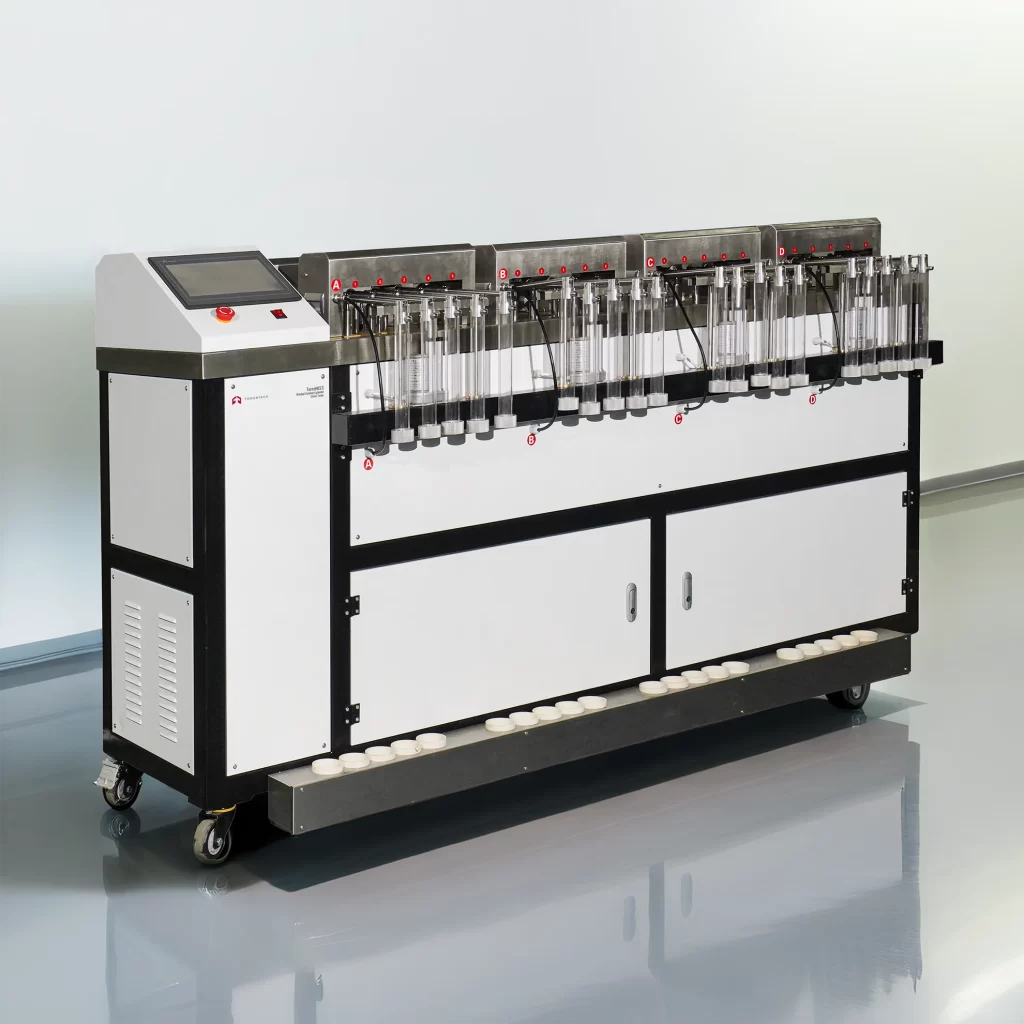
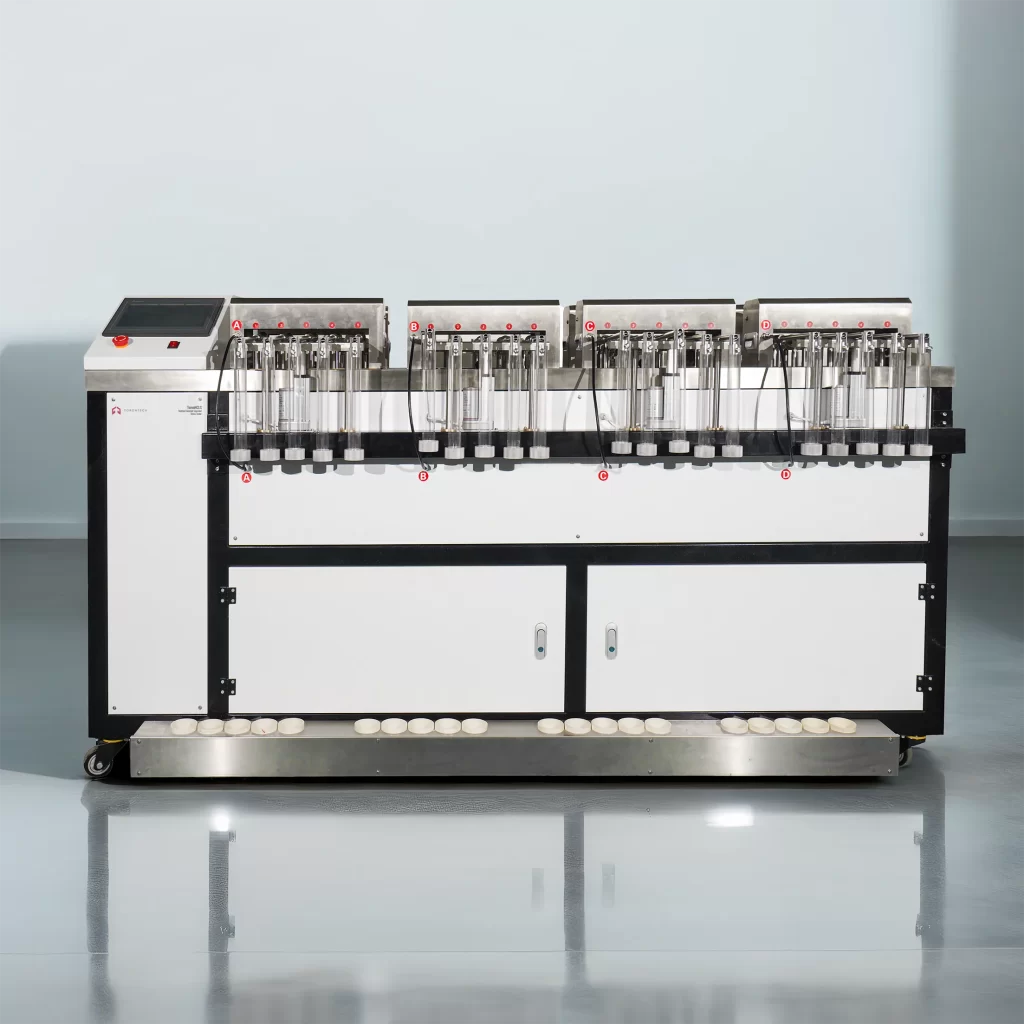
The Notched Constant Ligament Stress Tester (NCLS tester) delivers precise slow-crack-growth (SCG) resistance evaluation for high-density polyethylene (HDPE) resins and corrugated pipe used in drainage, culvert, and infrastructure applications. The ToronNCLS™ runs up to 30 test stations simultaneously, making it a high-throughput solution for production quality control and resin qualification laboratories. Each station operates independently, allowing multiple specimens at different stress levels or test conditions to run concurrently without cross-interference.
Designed to perform both the Notched Constant Ligament Stress test (ASTM F2136) and the Un-Notched Constant Ligament Stress Crack test (ASTM F3181), the ToronNCLS™ accommodates the full range of HDPE SCG evaluation requirements in a single instrument. The system automatically heats and maintains a temperature-controlled bath, loads specimens pneumatically, records failure times per station, and continues operation after a station failure without manual intervention. Power-loss protection preserves all timing data and bath parameters, ensuring test continuity after unexpected power interruptions.
The ToronNCLS™ is engineered for laboratories that require consistent, auditable SCG data on HDPE corrugated pipe, virgin resin plaques, or post-consumer recycled HDPE blends. A 316L stainless steel and PTFE bath construction resists corrosion from the surfactant solution used in ASTM F2136 testing. The integrated load calculation tool automatically determines the required dead-weight load for each station based on specimen geometry and target ligament stress, reducing setup errors and accelerating test preparation.
Applications
The ToronNCLS™ GT-UCLS-30 serves laboratories and quality departments wherever HDPE pipe material performance must be verified before field installation or certification. Typical users include pipe manufacturers, resin producers, transportation agencies, and third-party testing labs working to AASHTO M294 procurement requirements.
- HDPE Corrugated Pipe Manufacturing: incoming and in-process quality control of pipe liner material for storm drainage, highway culverts, and sanitary sewer applications per ASTM F2136 and AASHTO M294
- Virgin HDPE Resin Qualification: resin supplier approval testing to confirm SCG resistance of compression-molded plaques before production release
- Post-Consumer Recycled HDPE Evaluation: assessment of PCR-HDPE blends in corrugated pipe per ASTM F3181, which uses the same apparatus as F2136 but with un-notched specimens and water immersion
- Transportation Infrastructure Agencies: independent verification that corrugated HDPE drainage pipe meets AASHTO M294 SCG requirements prior to highway and municipal project acceptance
- Geomembrane and Geosynthetics Testing: evaluation of polyethylene geomembrane liners alongside the related ASTM D5397 notched constant tensile load (NCTL) method, using the same bath and loading frame
- Polymer Research and Development: comparative SCG characterization of experimental HDPE grades, additives, and processing conditions in academic and industrial R&D laboratories
- Third-Party and Accreditation Laboratories: ASTM F2136 and F3181 reference testing for pipe producers, specifying agencies, and certification bodies requiring independent SCG data
Standards
- ASTM 5397–99: Test Method for Evaluation of Stress Crack Resistance of Polyolefin Geomembranes Using Notched Constant Tensile Load Test
- ASTM F2136-18: Notched, Constant Ligament-Stress Test to Determine Slow-Crack-Growth Resistance of HDPE Resins or HDPE Corrugated Pipe
Test Methods
- Brittle Transition Time Determination
This method assesses whether a specimen breaks within a predefined time. A broken specimen is deemed unfit, while an intact one is considered acceptable. The test automatically stops and provides a prompt upon reaching the set time. - Brittle Transition Time Measurement
This method measures the duration under a constant load until the specimen breaks. The loading time is automatically recorded during the test.
Notched Constant Ligament Stress Tester ToronNCLS™ Features
The ToronNCLS™ combines high-capacity parallel testing with automatic load management, corrosion-resistant construction, and built-in data integrity features for demanding laboratory environments.
- 30-Station Capacity with Independent Control: each of the 30 stations loads, times, and stops independently, enabling simultaneous tests at different stress levels or specimen types without mutual interference
- Dual Test Mode Operation: supports both brittle transition time determination (pass/fail) and failure time measurement mode, covering the full scope of ASTM F2136 and related SCG protocols
- Automatic Pneumatic Loading and Unloading: each sample holder group of five stations loads from the front panel with a single button press; the system applies load gradually and starts timing automatically
- Power-Loss Data Protection: on unexpected power interruption, the system saves all test timing and bath parameters automatically; after power restoration, heating resumes and timing continues from the saved state
- Precision Level Control: immersion solution level is maintained to within 2 mm accuracy, preserving surfactant concentration throughout the test run
- 316L Stainless Steel and PTFE Wetted Surfaces: all components in contact with the surfactant solution are fabricated from 316L stainless steel or polytetrafluoroethylene (PTFE) to resist chemical attack from the Igepal test environment
- Partitioned Station Racks: physical dividers between test racks reduce bath vapor loss and limit cross-contamination between stations, maintaining consistent surfactant concentration
- Integrated Automatic Load Calculator: on-screen tool calculates the required dead-weight load for each station from specimen dimensions and target ligament stress, minimizing operator setup errors
- Sloped Bottom Drain Design: the center-located sloped drain removes condensate or solution from failed stations promptly, preventing liquid accumulation that could affect remaining test stations
- Automatic 13% Elongation Stop for ASTM F3181: for UCLS testing, the system detects and stops the test automatically when a specimen reaches 13% elongation (final gauge length 7.35 in.), per the F3181 specimen requirement
- Maximum 9,999-Hour Timer with 10-Second Resolution: timing range covers the full duration of extended SCG tests while delivering sufficient resolution for failure time reporting to the nearest 0.1 hour
Theory and Method
Notched Constant Ligament Stress Tester ToronNCLS™
Slow crack growth (SCG) in HDPE occurs when sustained tensile stress causes brittle cracks to initiate at a stress concentration and propagate incrementally through the material over time, well below the short-term yield strength. This failure mode is the primary long-term durability concern for buried corrugated HDPE drainage pipe. Because SCG progresses over decades under service conditions, accelerated laboratory tests apply elevated temperature and an active surfactant environment to reproduce the same brittle fracture mechanism in hours to hundreds of hours rather than years.
The NCLS test method (ASTM F2136) prepares a dumbbell-shaped specimen from a compression-molded plaque of HDPE resin or pipe liner material, then cuts a precise notch across the narrowed gauge section. This notch acts as a controlled stress concentration that defines where crack initiation will occur. The specimen is immersed in a 10% Igepal CO-630 surfactant solution held at 50°C and loaded with a dead weight calibrated to produce a specified net ligament stress on the cross-section below the notch. The surfactant plasticizes the amorphous polymer phase and reduces the energy required for craze fibril rupture, accelerating the brittle SCG mode that would otherwise dominate at ambient temperature over long service periods.
The ToronNCLS™ GT-UCLS-30 applies load through a lever-arm mechanism with pneumatic loading and unloading. Each station starts timing automatically at load application and stops when the specimen fails, recording the failure time to within 10 seconds. For brittle transition time determination (pass/fail mode), the system compares elapsed time against the user-set target and stops automatically when the threshold is reached. For failure time measurement mode, each station continues independently until fracture occurs, logging the time-to-failure without disturbing adjacent stations. The ASTM F3181 UCLS variant uses the same apparatus but with a larger un-notched dumbbell specimen immersed in deionized water, targeting evaluation of contaminant-induced cracking in PCR-HDPE.
Notched Constant Ligament Stress Tester ToronNCLS™ Technical Specifications
Instrument Specifications
Parameter | Specification |
Number of Test Stations | 30/20 |
Test Temperature Range | Room temperature (RT) to 95°C |
Temperature Control | Automatic heating with temperature maintenance |
| Max load | 1.5 kg (load on specimen is up to 4.5kg) |
| Lever rasio | 1.3 |
Timing Range | 0 to 9,999 hours |
Timing Accuracy | ±10 seconds |
Standards Compliance | ASTM F2136, ASTM F3181 |