
Precision Viscosity Measurement for Every Fluid and Application
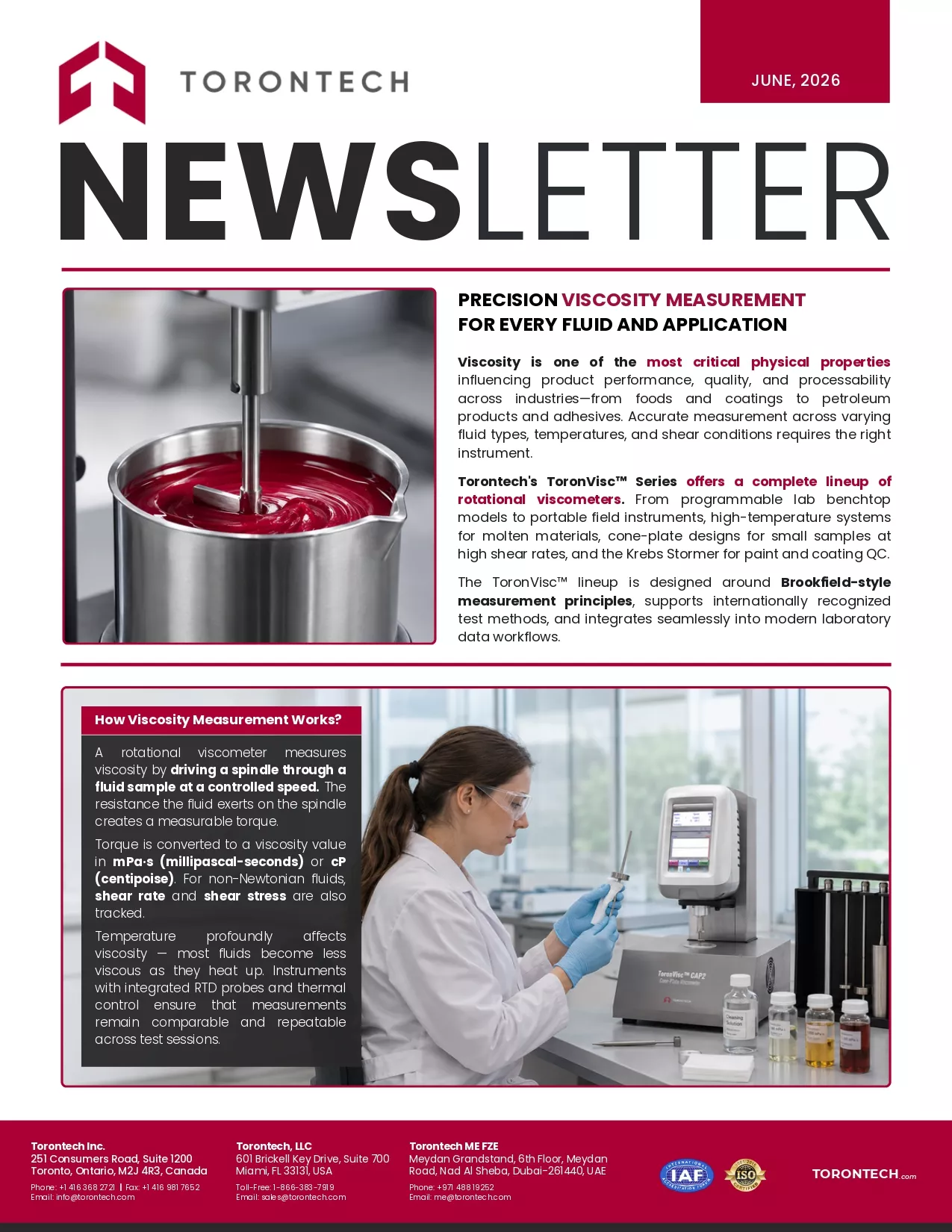
Viscosity can shift with temperature, shear conditions, formulation changes, and material handling, affecting product consistency and processing behavior. A method that works for a thin oil may not suit a coating, adhesive, food emulsion, molten polymer, or asphalt sample. Torontech’s June newsletter reviews the ToronVisc™ Series across routine rotational measurement, high-temperature testing, defined-shear analysis, coating QC, portable inspection, and laboratory data management.
Programmable coaxial models display viscosity, torque, temperature, shear rate, and shear stress for detailed laboratory work. High-temperature systems extend testing to molten or semi-molten materials, while cone-and-plate configurations use small samples under controlled shear conditions. Krebs Stormer instruments report coating consistency in KU, and portable models move testing closer to production and field locations. Temperature probes, programmable ramps, motorized positioning, spindle options, USB or Ethernet export, and selected LIMS connectivity help laboratories maintain comparable methods across sample types and testing environments.
Match viscosity methods to the fluid, temperature, shear condition, and reporting requirement. Subscribe to the Torontech Newsletter for updates on viscometry, spindle selection, rheological measurement, thermal control, data handling, and instrument configuration for laboratory and production QC teams.