Reliable Spectrophotometers for Canadian Manufacturing and Quality Control
A single batch of off-color product can trigger a supplier rejection, a brand complaint, or a regulatory hold. For Canadian manufacturers working across automotive coatings, plastics, food packaging, and pulp and paper, subjective visual checks are no longer enough to protect production schedules or customer relationships.
A spectrophotometer in Canada gives quality teams objective, repeatable color data tied to international standards like ASTM D2244 and ISO 7724. Torontech, headquartered in Toronto, supplies both benchtop and portable spectrophotometer configurations built for the measurement demands Canadian facilities face daily.
How Color Spectrophotometry Supports Canadian Industry
A color spectrophotometer measures the wavelengths of light reflected or transmitted by a sample, then translates that spectral data into numerical color coordinates. The CIE Lab* color space is the standard framework: L* defines lightness, a* represents the red-green axis, and b* captures the yellow-blue axis.
The resulting Delta E value quantifies the difference between a sample and a reference standard. This eliminates the guesswork of visual evaluation, where lighting conditions, observer fatigue, and individual perception introduce inconsistency.
For Canadian operations managing multi-site supply chains or exporting to U.S. and international buyers, instrument-based color measurement ensures every shipment matches the approved specification.
Automotive and EV Manufacturing in Ontario
Ontario's automotive corridor is undergoing a major transformation. NextStar Energy's 4.23-million-square-foot battery plant in Windsor began production in late 2025 and has already produced over one million battery cells. Volkswagen's PowerCo gigafactory in St. Thomas, a $7 billion investment, is on track for 2027 production.
This expansion creates significant demand for color quality control. Automotive OEM coatings require tight Delta E tolerances across primer, basecoat, and clearcoat layers. Interior plastics, dashboard components, and trim pieces must match across suppliers and production runs.
A spectrophotometer in Canada configured with d/8 integrating sphere geometry handles both high-gloss painted panels and matte-finish plastic parts. Waterborne basecoat systems, now standard across North American OEM paint lines, demand precise spectral verification to confirm color consistency between robotic spray stations.
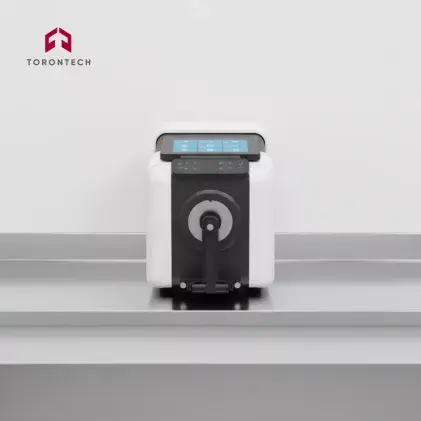
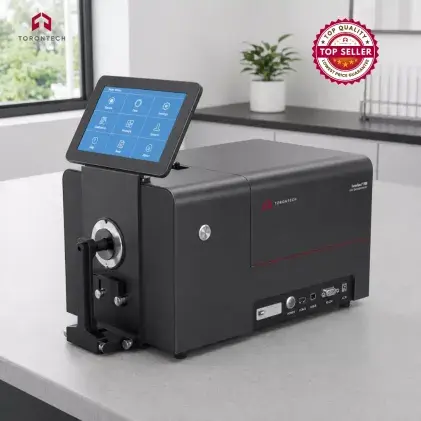
Torontech's ToronSpec benchtop models support reflectance and transmittance measurement, making them suitable for both opaque body panels and translucent lens covers used in lighting assemblies.
Coatings, Plastics, and Packaging Color Control
Canada's industrial coatings market generated approximately $1.58 billion in revenue in 2024 and continues to grow. Coating manufacturers need spectrophotometers to formulate new colors, verify batch consistency, and document compliance with customer specifications.
Plastics processors face their own color challenges. Raw material variation, processing temperature shifts, and colorant lot differences all affect final part color. Key applications include:
- Extruded pipe and profile for construction
- Injection-molded consumer product housings
- Blown film for food packaging
- Compounded masterbatch for color matching
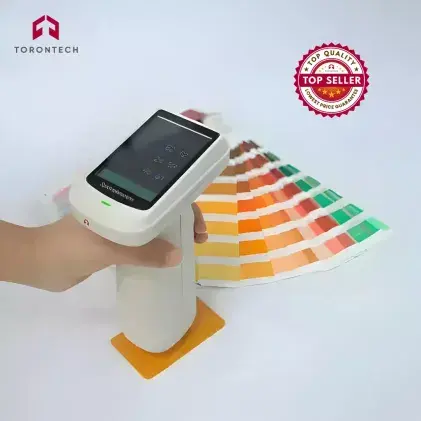
Portable spectrophotometers allow QC technicians to measure color directly on the production floor, catching deviations before they become full-run rejects. The ToronSpec 700D offers field-ready portability with lab-grade accuracy for these applications.
Pulp, Paper, and Food Processing Standards
Canada's forest sector contributed roughly $33.4 billion to the national GDP in 2022, and pulp and paper remains a significant manufacturing segment. Paper brightness, opacity, and color are assessed against TAPPI and PAPTAC standards. Spectrophotometers configured for diffuse reflectance geometry measure these optical properties consistently across production runs.
In food processing, color serves as both a quality indicator and a regulatory consideration. Health Canada and the Canadian Food Inspection Agency (CFIA) require that packaging materials, including color concentrates used in food-contact plastics, meet safety assessments. Beverage producers, dairy processors, and grain handlers across the Prairies and Ontario also rely on colorimetric data to grade raw materials and verify finished product appearance. Spectrophotometric data provides the objective documentation these programs demand.
| Industry | Key Color Parameters | Relevant Standards |
|---|---|---|
| Automotive coatings | Delta E, gloss, metallic appearance | ASTM D2244, ISO 7724 |
| Plastics | Color difference, opacity, haze | ASTM D2244, ASTM E308 |
| Pulp and paper | Brightness, whiteness, color | TAPPI T452, TAPPI T524 |
| Food packaging | Color of contact materials, print consistency | CFIA guidelines, ASTM E308 |
Choosing the Right Spectrophotometer Configuration
Selecting between a benchtop and portable spectrophotometer depends on your application, sample type, and workflow. Consider these factors:
- Measurement geometry: d/8 sphere geometry suits most solid and coated samples; 45/0 geometry is preferred for textured surfaces and printed materials
- Aperture size: larger apertures average color over a wider area, which benefits textured or non-uniform samples
- Wavelength range: standard visible range (400 to 700 nm) covers most industrial color work; extended UV range supports optical brightener detection in paper and textiles
- Repeatability: look for instruments with Delta E repeatability of 0.04 or better for tight-tolerance applications
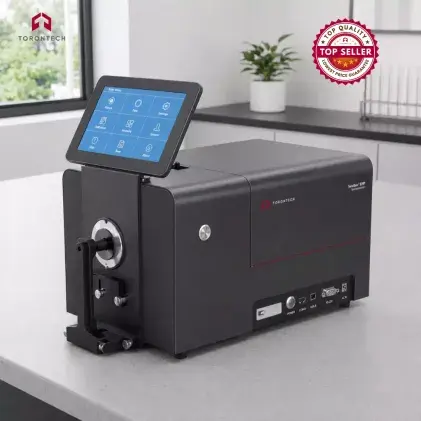
Torontech's high-precision benchtop spectrophotometer and reflectance-transmittance benchtop model cover the full range of laboratory and production QC requirements.
Get the Right Color Measurement Setup for Your Facility
Whether your operation supplies coated components to Ontario's automotive plants, produces plastics for Western Canada's construction sector, or runs a pulp and paper quality lab in Quebec, accurate color data protects your product and your reputation.
Contact the Torontech team to discuss your sample types, measurement standards, and throughput requirements. You can also reach Torontech directly at +1 416 368 2721 or sales@torontech.com from their Toronto headquarters at 251 Consumers Road, Suite #1200, Toronto, Ontario, M2J 4R3.