On-Site Fuel Grade Checks: Portable Octane and Cetane Tester in Qatar
Qatar sells two gasoline grades and one diesel at fixed national prices, so a mislabeled tank or a contaminated delivery is hard to spot by price or appearance. Fleet managers and terminal operators often find out only when engines knock or misfire.
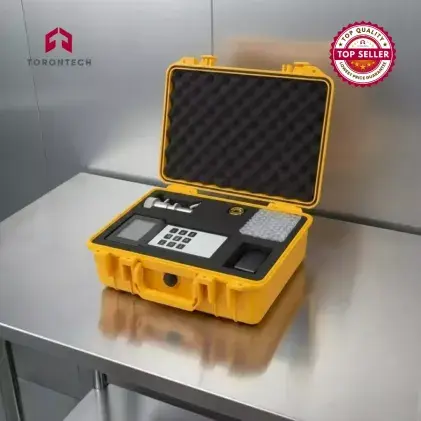
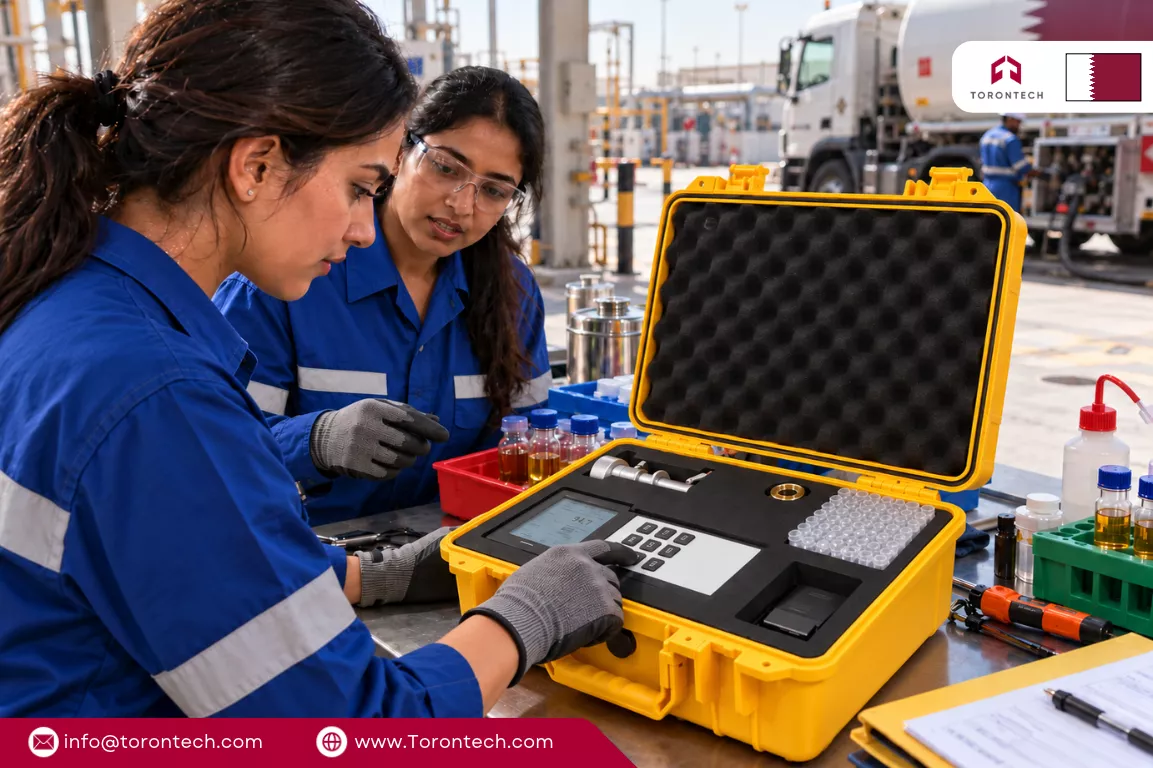
A portable octane and cetane tester in Qatar closes that gap at the point of receipt. The Torontech Portable Octane and Cetane Tester TT-131 reads gasoline octane and diesel cetane values in minutes, without consuming the sample, in the lab or at a depot.
What Qatar's Fuel Specifications Ask You to Verify
The Gulf standard GSO 2196 sets requirements for unleaded gasoline at 91 RON and 95 RON. Qatar aligned its grades in 2016, when Premium moved from 90 to 91 octane and Super dropped from 97 to 95.
Today, QatarEnergy publishes monthly prices for Premium Gasoline 91, Super Gasoline 95, and diesel. On the supply side, the Laffan Refinery complex processes about 292,000 barrels per day of condensate into products that include ultra-low-sulfur diesel.
Meanwhile, Pearl GTL in Ras Laffan Industrial City produces GTL gasoil alongside naphtha, kerosene, and base oils. Each fuel stream raises a different verification question:
| Fuel Stream | Typical Field Check | TT-131 Mode |
|---|---|---|
| Premium Gasoline 91 | Screens deliveries against the 91 grade | Gasoline octane mode |
| Super Gasoline 95 | Flags downgrading or mixing with 91 | Gasoline octane mode |
| Ultra-low-sulfur diesel | Screens ignition quality on receipt | General diesel mode |
| GTL gasoil blends | Screens blended diesel before fleet use | Blended diesel mode |
| Imported or specialty diesel | Screens biodiesel and nonstandard blends | Biodiesel or custom modes |
Where a Portable Octane and Cetane Tester in Qatar Pays Off
Field screening delivers the most value to buyers who handle fuel volume every day, not only to central laboratories:
- Fuel distribution and storage: terminal and depot staff can screen incoming and outgoing loads and catch grade mix-ups between 91 and 95 before product reaches storage tanks.
- Construction and contractor fleets: contractors running generators and heavy equipment on major sites, such as the North Field LNG expansion at Ras Laffan, can test diesel deliveries before fueling.
- Logistics and transport operators: trucking and bus fleets can spot-check fuel when engines show knock, hard starting, or rough running, then rule fuel in or out quickly.
- Refining and blending teams: quick checks on production and blending streams give operators an early read before samples go to the full laboratory.
- Inspection and quality teams: field inspectors and third-party surveyors can carry the instrument in its case and test samples on site.
How the TT-131 Reads a Sample
The TT-131 combines integrated circuit electronics with precision inductive components to measure the fuel sample. It then converts that reading into an octane or cetane value through dedicated gasoline and diesel modes.
Calibration drives the quality of every reading. Operators run one-point, two-point, or three-point corrections with standard oil, and the instrument adjusts automatically for system error. A temperature adjustment function also lets the operator correct the octane value for test conditions.
These readings work as fast screening, not as a replacement for reference engine methods. Laboratories rate gasoline with ASTM D2699 (research octane) and ASTM D2700 (motor octane), and rate diesel with ASTM D613 or ISO 5165.
As a result, a field reading that looks off-spec tells you which samples to send for referee testing. Other features that help in daily use include:
- Multiple fuel modes: gasoline, methanol gasoline, ethanol gasoline, aromatic gasoline, general diesel, blended diesel, and biodiesel, plus five custom modes on each side
- EL backlit display: stays readable in dim tank farms and on night shifts
- Data storage and printing: stores results and prints reports on the manufacturer's designated micro printer
- Power management: battery level indicator, automatic sleep, and auto power-off
- Rugged build: compact body resists vibration, impact, and electromagnetic interference
Planning Field Use Around Qatar's Heat
This section matters most for buyers in Qatar. According to Torontech's published specifications, the TT-131 operates within these conditions:
- Ambient temperature: -5°C to +30°C
- Relative humidity: 80% (at 25°C or below)
- Atmospheric pressure: 84 to 106 kPa
- Power supply: 6V DC from AA batteries
Qatar's summer daytime heat runs well above that 30°C ceiling. For that reason, plan to run tests inside an air-conditioned site cabin, vehicle, or laboratory, and let hot samples settle toward room temperature before measuring.
Keep spare AA batteries in the carry case, since depots and remote sites rarely offer convenient charging points. In addition, set a regular standard oil calibration routine, and repeat it after moving the instrument between very different environments.
Source the TT-131 Through Torontech's Gulf Office
Qatar's fuel chain runs from Ras Laffan refineries to depots and contractor yards, and each handoff gives off-spec product a chance to slip through. Fast on-site screening gives buyers evidence before fuel goes into engines or storage.
Torontech supports Gulf customers from Torontech ME FZE in Dubai. The team can help you select fuel modes, set up a standard oil calibration routine, and confirm printer options for documented reports. Review the full octane and cetane tester specifications before you request a quote.
Reach out to the Torontech Gulf team to discuss a portable octane and cetane tester in Qatar for your depot, fleet, or laboratory. You can also call +971 488 19252 or email me@torontech.com. Torontech ME FZE is located at Meydan Grandstand, 6th floor, Meydan Road, Nad Al Sheba, Dubai, UAE.