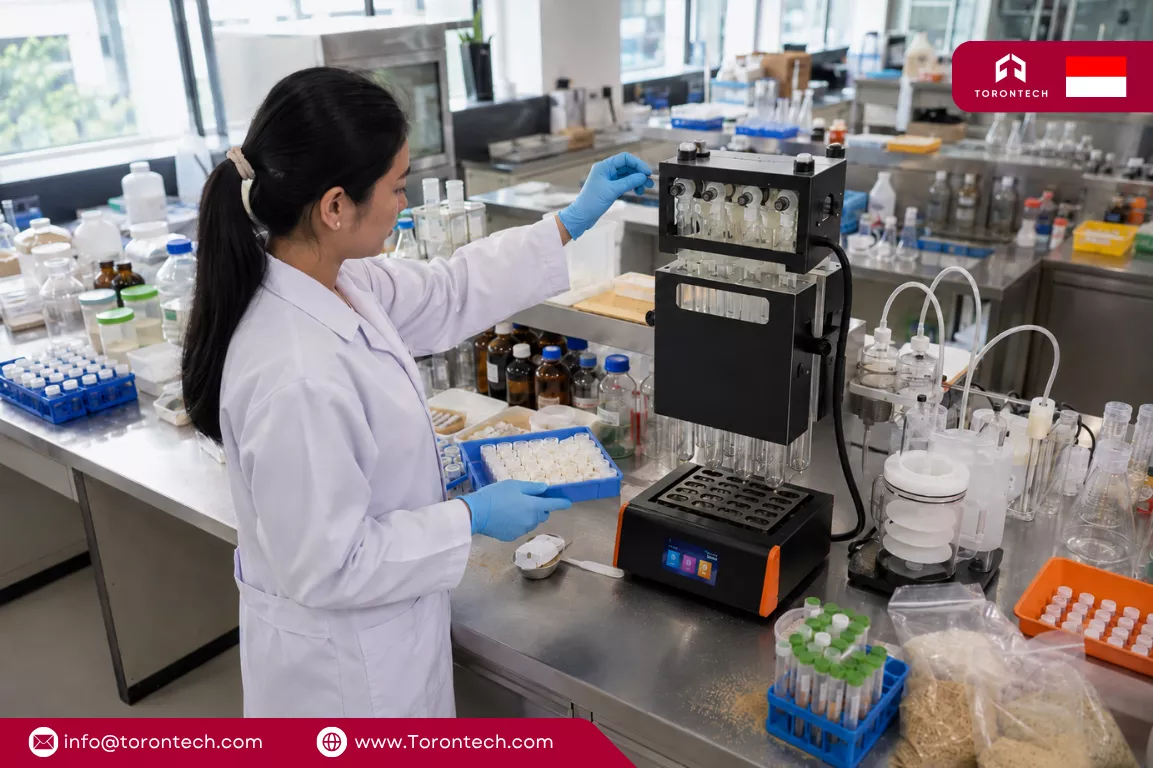
Clear Protein Testing Backlogs With a Kjeldahl Digestion System in Indonesia
Feed mill laboratories in Java run hundreds of crude protein checks every week. When a digestion block holds only six tubes and each run takes two hours, results land after the delivery truck has already left the yard.
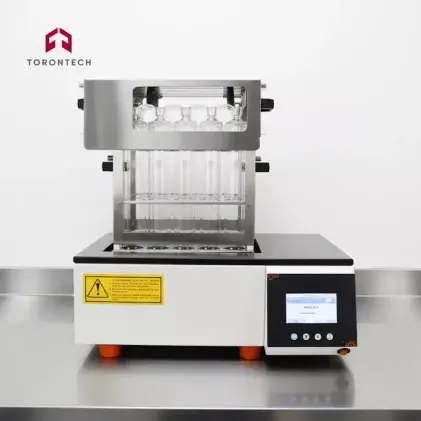
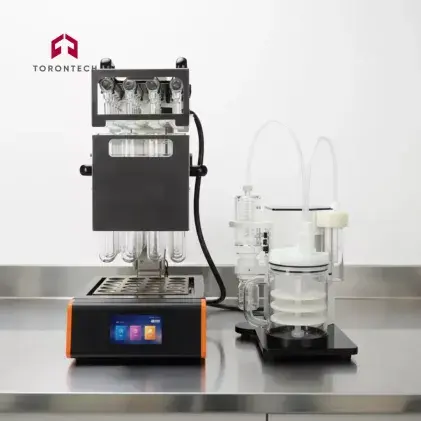
A modern Kjeldahl digestion system in Indonesia removes that bottleneck. Torontech supplies block digestors that process 20 tubes per batch, hold temperature to within 1 degree C, and route acid vapor through a matched scrubber instead of the room.
Why Nitrogen Testing Volume Keeps Climbing
Indonesia's Free Nutritious Meals program (Makan Bergizi Gratis) entered 2026 with roughly 55 million beneficiaries. That demand travels straight down the poultry, egg, and dairy supply chains, and every link verifies protein.
Feed production carries the load. GPMT, the Indonesian Feedmills Association, counts around 100 member plants with combined capacity above 29 million tons per year. USDA reporting places national feed output near 22.5 million tons for 2025/26.
Fertilizer adds a second driver. Pupuk Indonesia operates roughly 14.6 million tons of annual capacity, and mandatory SNI rules tie urea release directly to a verified nitrogen figure.
Sample volume concentrates in a handful of sectors:
- Poultry and aquaculture feed mills across Java, Lampung, and South Sulawesi
- Dairy, meat, and processed food plants filing nutrition labels with BPOM
- Urea and NPK producers confirming total nitrogen before shipment
- Palm kernel meal and copra exporters documenting protein on contract specs
- Provincial environmental laboratories measuring nitrogen in wastewater and sludge
Matching Equipment to Indonesian Laboratory Conditions
Power supply deserves an early check. PLN distributes at 220 V, 50 Hz, which matches the standard build of Torontech digestors. Units ship at 220 VAC plus or minus 10 percent, with 110 V available when specified at order.
Acid fume control is the harder constraint. Many regional and campus laboratories lack the fume hood capacity that open Kjeldahl work demands, so an integrated scrubber does the job the building cannot.
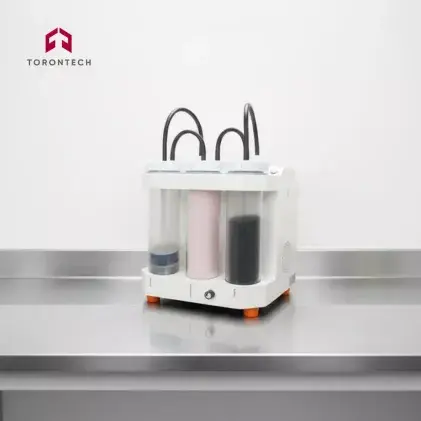
The S402 scrubber runs a three-stage path: water condensation, alkali neutralization, then activated carbon filtration. PTFE piping and an anti-corrosion vacuum pump keep sulfuric acid vapor away from operators and bench electronics.
Humidity and salt air shorten equipment life in coastal industrial zones. Teflon-coated housings and ceramic air duct insulation on the Kjeldahl digestor range address both corrosion and heat loss.
Import planning belongs in the same conversation. Instruments reach buyers through Jakarta and Surabaya, and delivery dates often hinge on customs clearance rather than production lead time.
Order consumables alongside the instrument. Digestion tubes, PFA sealing caps, and scrubber reagents all move on the same import cycle, so a missing spare can idle a bench for weeks.
Sizing a Kjeldahl Digestion System in Indonesia
Throughput and staffing decide the configuration more than price does. The four digestor models cover very different laboratory profiles.
| Model | Positions | Heating Method | Typical Fit |
|---|---|---|---|
| TT-SH220F | 20 | Graphite block with PID control | Universities and small QC labs |
| TT-SH420F | 20 | Infrared with graphite conduction | Food and feed labs with heavy daily runs |
| TT-SH508 | 8 | Electric heating tube, auto lifting | Pharmaceutical and R&D laboratories |
| TT-SH520 | 20 | Electric heating tube, auto lifting | High-throughput mills and service labs |
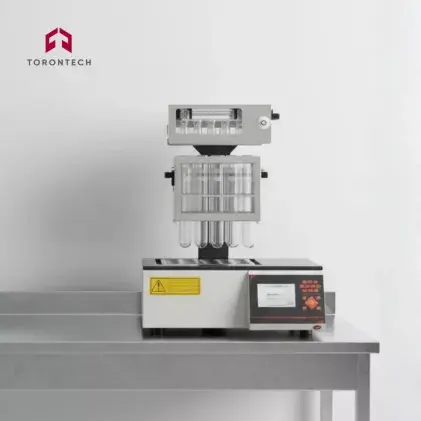
The TT-SH420F digestor stores 500 digestion programs of up to 25 segments each, which suits laboratories juggling feed, food, and soil matrices on one bench. The TT-SH220F keeps things simpler with 10 programs and five temperature gradients.
Automation changes the staffing math. The TT-SH520 and TT-SH508 raise the tube rack automatically after digestion, so nobody stands by waiting to lift hot tubes. Both run an Android interface with WiFi and USB transfer, and both comply with 21 CFR Part 11 audit trail requirements.
Test Methods Indonesian Laboratories Work To
Local method references shape how a laboratory programs its runs. Knowing which document your customer or regulator cites determines sample weight, acid volume, and ramp profile.
- SNI 01-2891-1992: protein in food and beverages, using sulfuric acid digestion followed by distillation and titration
- SNI 2801:2010: urea fertilizer, minimum 46.0 percent nitrogen, referencing AOAC 955.04 for the Kjeldahl determination
- SNI 01-2970-2006: milk powder, minimum 34 percent protein
- ISO/IEC 17025: laboratory competence framework accredited in Indonesia by KAN
These standards describe the procedures laboratories follow. They are not certifications carried by the instrument, so confirm calibration records and traceability requirements with your KAN assessor before an accreditation audit.
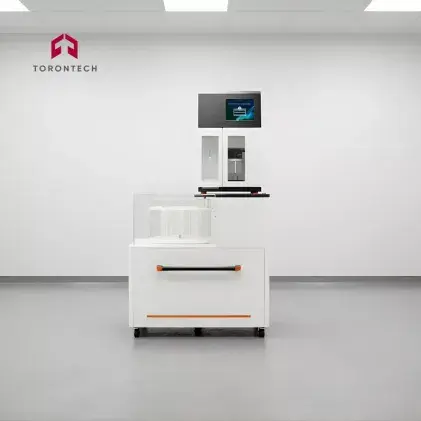
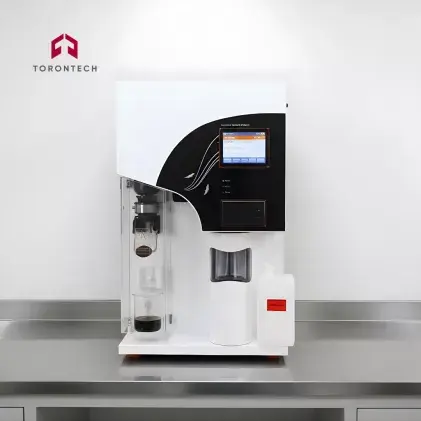
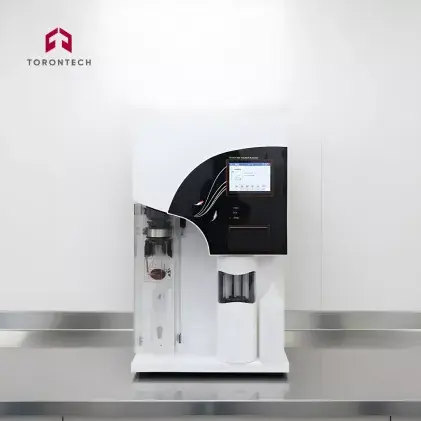
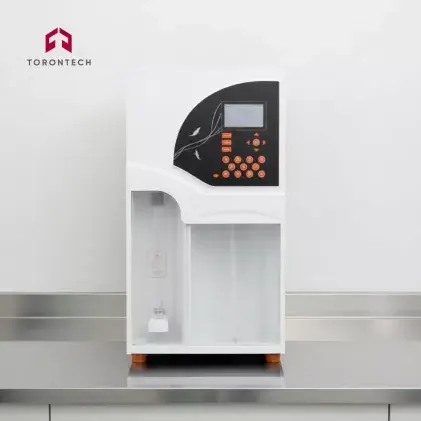
Digestion is only the first stage. Pair the digestor with a distillation unit and titration setup to close out the full nitrogen determination in one workflow.
Configure the Right Setup With Torontech
Weekly sample count, fume infrastructure, and audit obligations point toward different builds. A campus teaching lab and a feed mill clearing 300 samples a week should not buy the same configuration.
Torontech supplies digestors, distillation units, and scrubbers as matched sets, with sales and service coverage across Asia Pacific. Specify voltage at order, and decide early whether the scrubber ships with the unit or arrives later.
Send your sample volume, matrix types, and available bench length, then reach out to the Torontech team to size a Kjeldahl digestion system in Indonesia around how your laboratory actually runs.