Densimeters in Mexico for Energy, Spirits, and Industry
A fuel blend that drifts off-spec. A tequila batch that fails its alcohol declaration. A polymer lot that molds inconsistently. Each problem traces back to one uncontrolled variable: density. Mexican producers cannot afford to guess.
A densimeter in Mexico delivers the fast, traceable density and specific gravity data that quality teams need to release product with confidence. Torontech supplies digital density meters configured for ASTM D4052 and local standards.
Industries Driving Densimeter Demand in Mexico
Mexico's industrial base spans several sectors where density is a release criterion, not a convenience. Strong demand comes from energy, spirits, automotive, mining, and pharmaceuticals.
Petroleum and Refining
Pemex anchors the energy sector. Its 2025 to 2030 plan funds 18 new fields, 15 platforms, and refinery upgrades, while the Olmeca refinery at Dos Bocas ramps toward full operation in 2026.
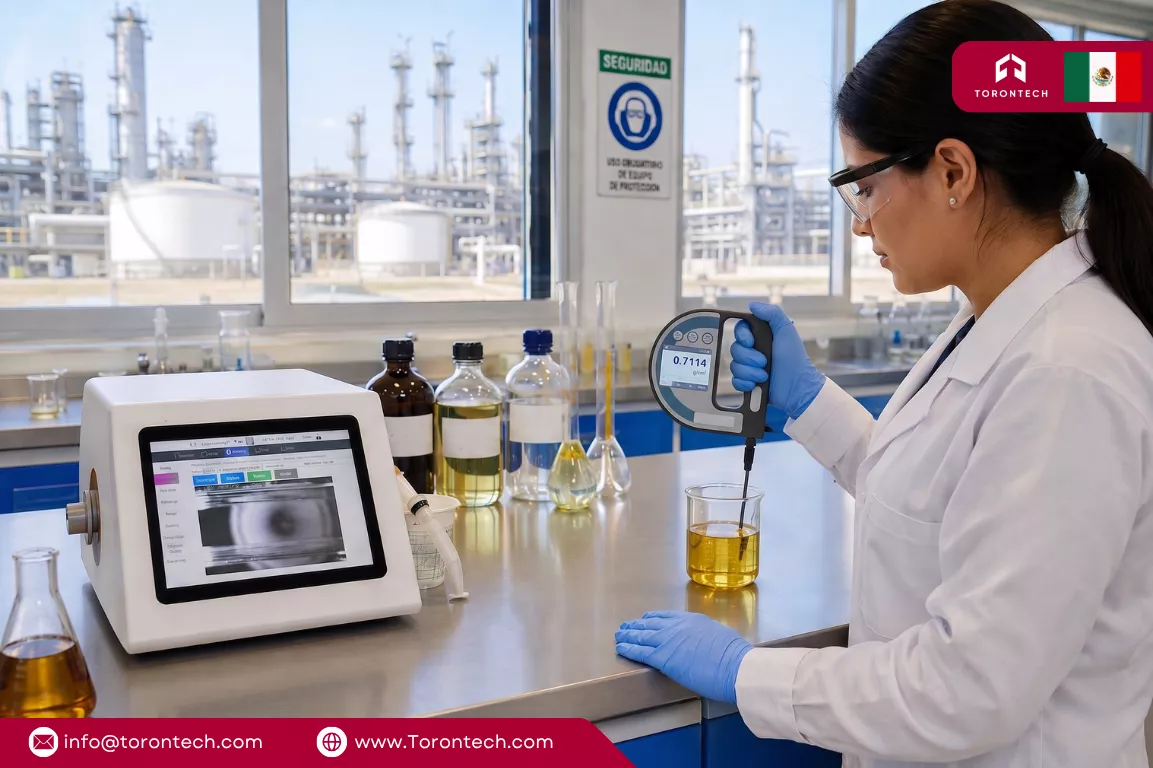
Every fuel and crude stream needs density and API gravity verification under ASTM D4052. Refineries and terminals confirm grade, blend gasoline and diesel, and convert measured volumes to the 15 degrees C reference temperature.
Tequila and Spirits
Tequila is a protected denomination of origin governed by NOM-006-SCFI-2012. Producers verify alcohol content through density at 20 degrees C, the method defined in NMX-V-013-NORMEX, before the Consejo Regulador del Tequila certifies a batch.
A digital density meter gives distilleries a repeatable alcohol-by-volume reading that hydrometers cannot match for throughput. Mezcal and other regional spirits rely on the same measurement principle.
Automotive, Mining, and Pharma
Nearshoring pushed Mexico toward fifth place among global vehicle producers, with roughly 4 million units built in 2024. Plants test coolants, lubricants, and polymer feedstock for density before components reach the line.
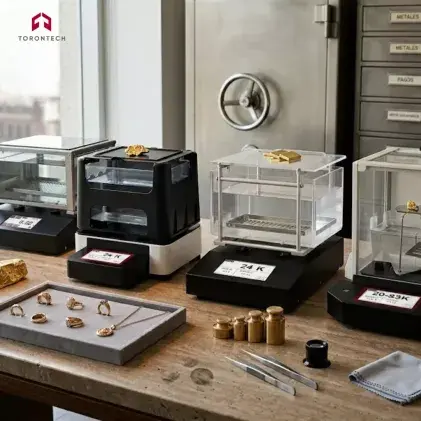
Mining matters too. As the world's largest silver producer, Mexico runs assay labs that depend on density for slurry control and metal verification. The gold purity density tester supports precious-metal authentication across Zacatecas and Sonora.
Pharmaceutical plants near Mexico City and Guadalajara round out the picture. Quality teams verify the density of solvents, syrups, and active ingredients during incoming-material control, tying each result back to a documented specification.
Density connects directly to the value at stake in each sector:
| Sector | What Density Reveals | Suited Densimeter |
|---|---|---|
| Petroleum and refining | API gravity, fuel grade, blend ratio | Automatic digital density meter |
| Tequila and spirits | Alcohol by volume, dilution accuracy | Benchtop digital density meter |
| Automotive and chemicals | Coolant, lubricant, polymer consistency | Liquid or solid density tester |
| Mining and precious metals | Slurry concentration, metal purity | Gold purity density tester |
Meeting Mexico's Standards and Accreditation Requirements
Buyers in Mexico work inside a layered framework: mandatory Normas Oficiales Mexicanas (NOM), voluntary NMX test methods, and international standards adopted across export-facing industries. Density equipment must satisfy all three at once.
The standards that matter most for density measurement include:
- ASTM D4052: density, relative density, and API gravity by digital density meter, the backbone of petroleum quality control
- ISO 12185: oscillating U-tube density of crude oil and petroleum products
- NMX-V-013-NORMEX: alcohol content of beverages measured by density at 20 degrees C
- ISO/IEC 17025: laboratory competence required for formal accreditation
Laboratories pursuing accreditation through the Entidad Mexicana de Acreditación (EMA) need instruments with documented calibration and traceable measurement uncertainty. Pharmaceutical producers under COFEPRIS oversight also map raw-material density checks to USP methods.
Consequently, a densimeter in Mexico that ships with calibration records shortens the path to an accredited, audit-ready laboratory. Documentation should travel with the instrument, not arrive months later.
Selecting the Right Densimeter in Mexico
The correct instrument depends on sample type, testing volume, and whether the work happens in a lab or in the field. Torontech's range covers liquids, solids, powders, ceramics, and precious metals.
Before specifying a model, weigh these factors:
- Sample state: liquids call for an oscillating U-tube meter, while solids, ceramics, and rubber need a buoyancy-based tester
- Location: field inspection favors a portable unit, whereas high-volume release suits a benchtop or automatic model
- Temperature control: built-in compensation keeps results stable across Mexico's varied operating climates
- Compliance: confirm the model lists the exact ASTM or NMX method your auditor expects
For mobile work, such as verifying crude grade on a receiving dock, the portable ToronDDM P100 brings laboratory accuracy to the field under ASTM D7777-24. Benchtop and automatic models then handle routine batch release at scale.
Sample volume deserves attention as well. Low-volume meters conserve costly reagents, while automatic sample changers raise throughput for busy release laboratories that test dozens of batches each shift.
Equip Your Mexican Operation with the Right Densimeter
From Olmeca refinery fuel blending to tequila batch certification, Mexican producers need density data they can defend in an audit. The right instrument turns a compliance risk into a routine, repeatable measurement.
Torontech configures densimeters around your samples, standards, and throughput. We back each instrument with North American support and calibration documentation that aligns with EMA accreditation expectations.
To match a digital density meter, solid density tester, or portable analyzer to your application, reach out to the Torontech team and share your samples, target standards, and production volume.