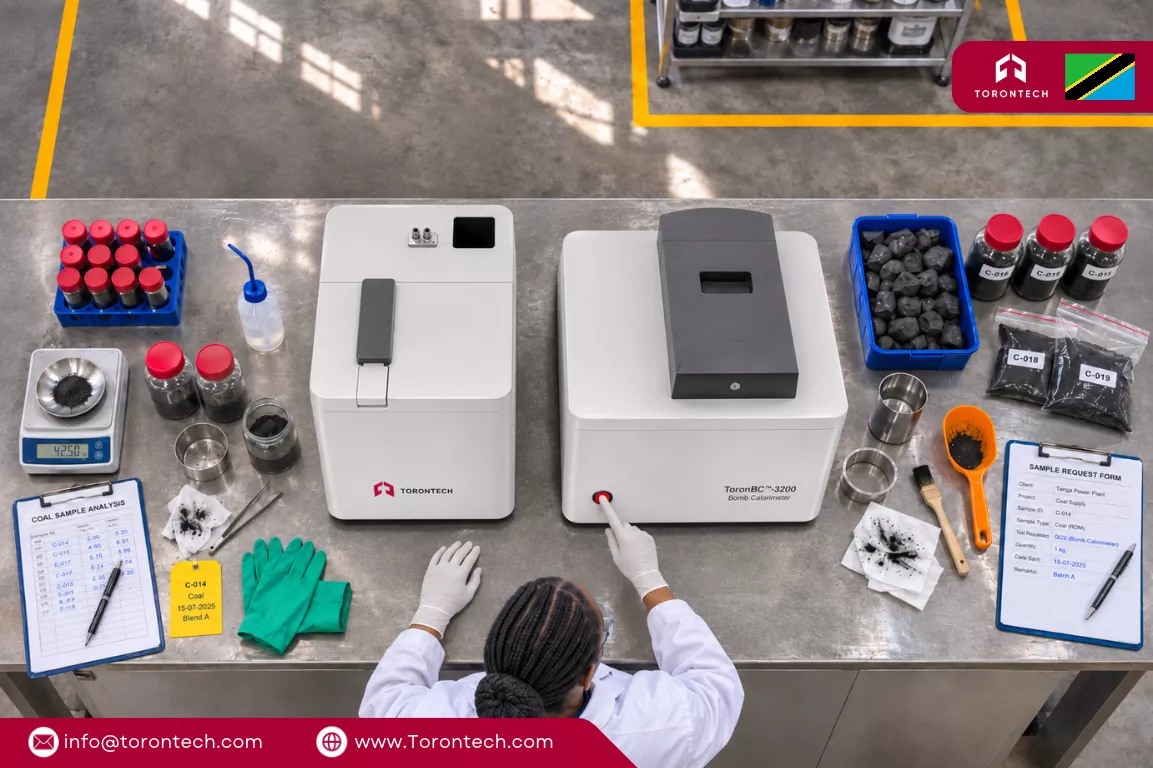
Know What Every Tonne Delivers: Bomb Calorimeter in Tanzania
A coal shipment that misses its contracted energy value can stall a sale or inflate a cement plant's fuel bill. Tanzanian producers, plants, and laboratories need calorific data they can defend at the weighbridge, in the kiln, and in the contract.
A bomb calorimeter in Tanzania delivers that data by measuring the heat of combustion of coal, biomass, and liquid fuels. Torontech supplies the ToronBC bomb calorimeter series for labs ranging from mine sites to university benches.
Why Calorific Value Drives Decisions in Tanzania
Coal Mining and Regional Export
Estimates put Tanzania's coal reserves near 1.9 billion tonnes, with operations and projects at Ngaka, Kiwira, Rukwa, and Mchuchuma. Tancoal Energy, the largest producer, has exported coal to Kenya, Uganda, Rwanda, and Burundi.
Kenya alone imports about 2 million tonnes of coal each year, and Tanzania supplied 38% of it in 2024. Buyers price coal by energy content, so every lot needs a verified gross calorific value.
In 2019, Edenville Energy signed a contract to supply 6,000 tonnes a month of washed coal from its Rukwa project to an expected cement producer in Rwanda. The deal could open a Lake Tanganyika route toward Rwanda and Burundi.
Cement and Clinker Fuel
Tanzania produced 10.9 million tonnes of cement in 2024, above domestic demand of 8.5 million tonnes. Exports of the surplus reached Rwanda, Burundi, the DRC, and other neighbors.
The 2016 coal import ban pushed plants, including Dangote's Mtwara facility, toward domestic supply. Plants that buy local coal can check each delivery in-house with an automated unit like the ToronBC-3200, which reports results in 14 minutes or less.
Biomass and Briquettes
Tanzania's National Clean Cooking Strategy (2024 to 2034) targets 80% clean cooking adoption by 2034. STAMICO and the Rural Energy Agency now promote Rafiki Briquettes as a charcoal alternative.
Each briquette blend, whether coal-based or biomass-based, carries a different energy content. A calorimeter that lists ISO 18125 for solid biofuels and ISO 1928 for coal lets producers grade both blends before they reach market.
How Gross Calorific Value Testing Works
A technician weighs roughly one gram of sample, ignites it in pressurized pure oxygen inside a sealed steel bomb, and records the temperature rise of the surrounding water. Calibration with benzoic acid sets the instrument's heat capacity, and that value converts the temperature rise into gross calorific value.
All four ToronBC models list a temperature resolution of 0.0001 degrees. Regular benzoic acid checks keep results consistent between your laboratory and a buyer's laboratory across the border.
Standards That Shape Calorific Testing in Tanzania
The Tanzania Bureau of Standards (TBS) operates an accredited fuel testing laboratory in Dar es Salaam. In late 2025, TBS also circulated a draft Tanzania Standard that adopts ISO 1928:2020 for gross calorific value by the bomb calorimetric method.
TBS drafts also cover proximate analysis (ISO 17246) and total sulfur (ISO 334). Labs often pair calorific results with moisture, ash, and sulfur data, so the calorimeter sits inside a wider coal testing workflow.
The ToronBC series lists conformance to these international methods:
- ASTM D5865: gross calorific value of coal and coke
- ISO 1928: gross calorific value of solid mineral fuels
- ASTM D240: heat of combustion of liquid hydrocarbon fuels
- ISO 18125: calorific value of solid biofuels
- DIN 51900: gross and net calorific value of solid and liquid fuels
Labs should confirm any national requirements directly with TBS.
Choosing a Bomb Calorimeter in Tanzania: ToronBC Model Guide
Model choice depends on sample volume, bench space, and automation level. All four models use an isoperibol jacket and offer 110 V as an option alongside 220 V.
| Model | Analysis Time | Stated Precision | Distinguishing Feature |
|---|---|---|---|
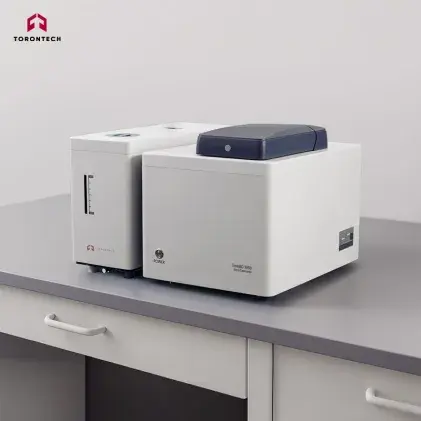
| ToronBC-3200 | ≤14 min | ≤0.15% RSD | Automatic bucket filling, RS232 network link |
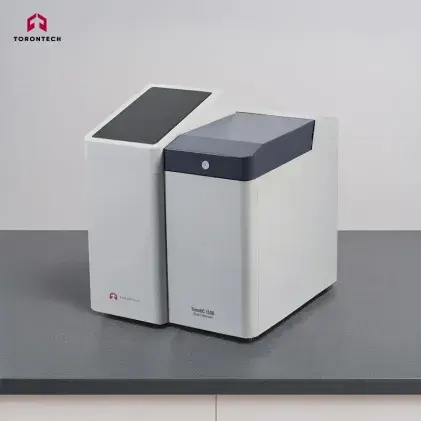
| ToronBC-1500 | 7.5 min | ≤0.05% RSD | Compact touchscreen unit, 54 kg |
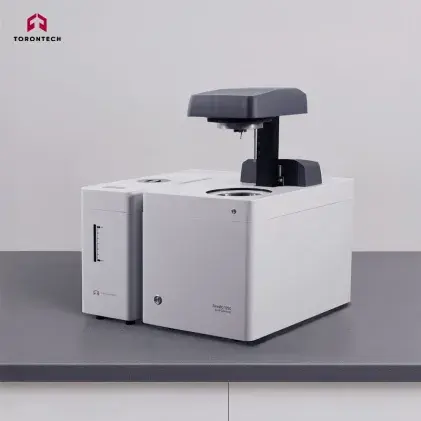
| ToronBC-1200 | <10 to <14 min by mode | ≤0.05% RSD | Automatic oxygen filling and bomb handling |
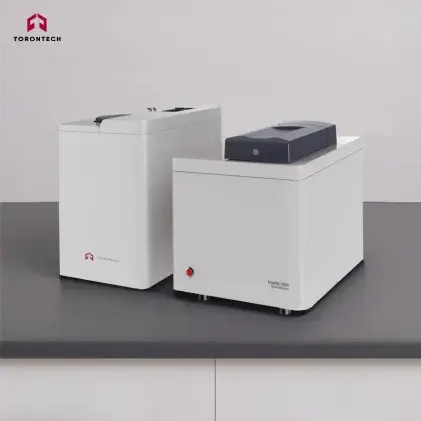
| ToronBC-1000 | ≤14 min | ≤0.1% heat capacity | Helix Tube isothermal technology |
Labs with limited bench space can start with the ToronBC-1500, which needs no external water tank. Throughput differs too: the ToronBC-1500 finishes a run in 7.5 minutes, while the ToronBC-3200 lists two to four tests per hour.
The ToronBC-1000 and ToronBC-1200 both use Helix Tube Multi-Point Isothermal technology to hold temperature variation under 0.05 °C, and both accept nickel wire or cotton thread ignition. Warm sites should check ambient conditions against the 10 to 35 °C range listed for the ToronBC-1200.
Labs that buy a bomb calorimeter in Tanzania should also plan for consumables. The ToronBC-3200 and ToronBC-1200 specifications call for 99.5% oxygen and distilled water.
Plan Your Calorimeter Setup for Tanzanian Fuels
Coal graders, cement laboratories, and briquette producers each face different sample volumes and turnaround needs. Matching the instrument to daily throughput avoids both idle capacity and testing bottlenecks.
The Torontech team can match a ToronBC configuration to your fuel types, test methods, and available utilities, including 110 V or 220 V supply.
Reach out to the Torontech team to request a quotation for your Tanzanian laboratory.
Torontech ME FZE Phone: +971 488 19252 E-mail: me@torontech.com Mailing/Shipping Address: Meydan Grandstand, 6th floor, Meydan Road, Nad Al Sheba, Dubai-261440, UAE