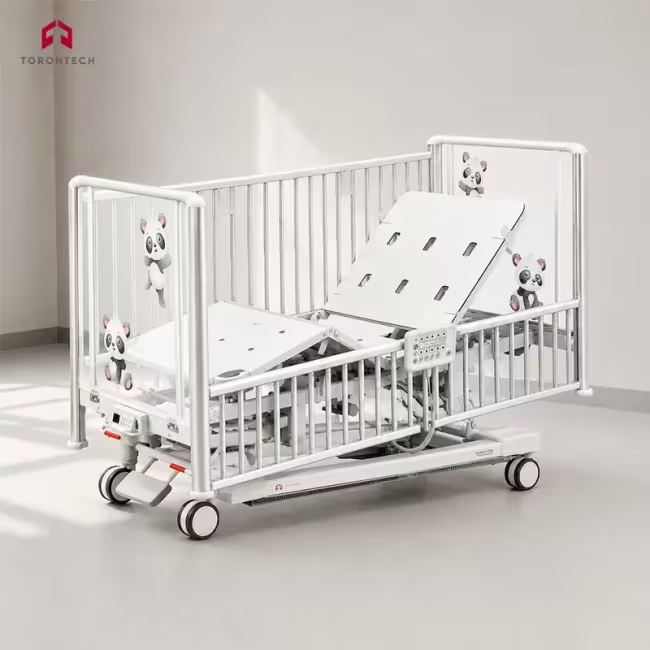
Pediatric Hospital Bed - ToronCare™ 6100
Pediatric hospital bed ToronCare™ 6100 gives PICU teams a platform sized for children rather than adapted from an adult frame. The mattress platform measures 1,725 by 780 mm, small enough to support a child's body accurately. An adult-sized platform leaves gaps that reduce comfort and positioning control. Nursing staff, respiratory therapists, and pediatric physicians use the bed across general pediatric care, post-surgical recovery, and intensive care settings. The bed suits patients under 1,525 mm in height and under 135 kg in weight.
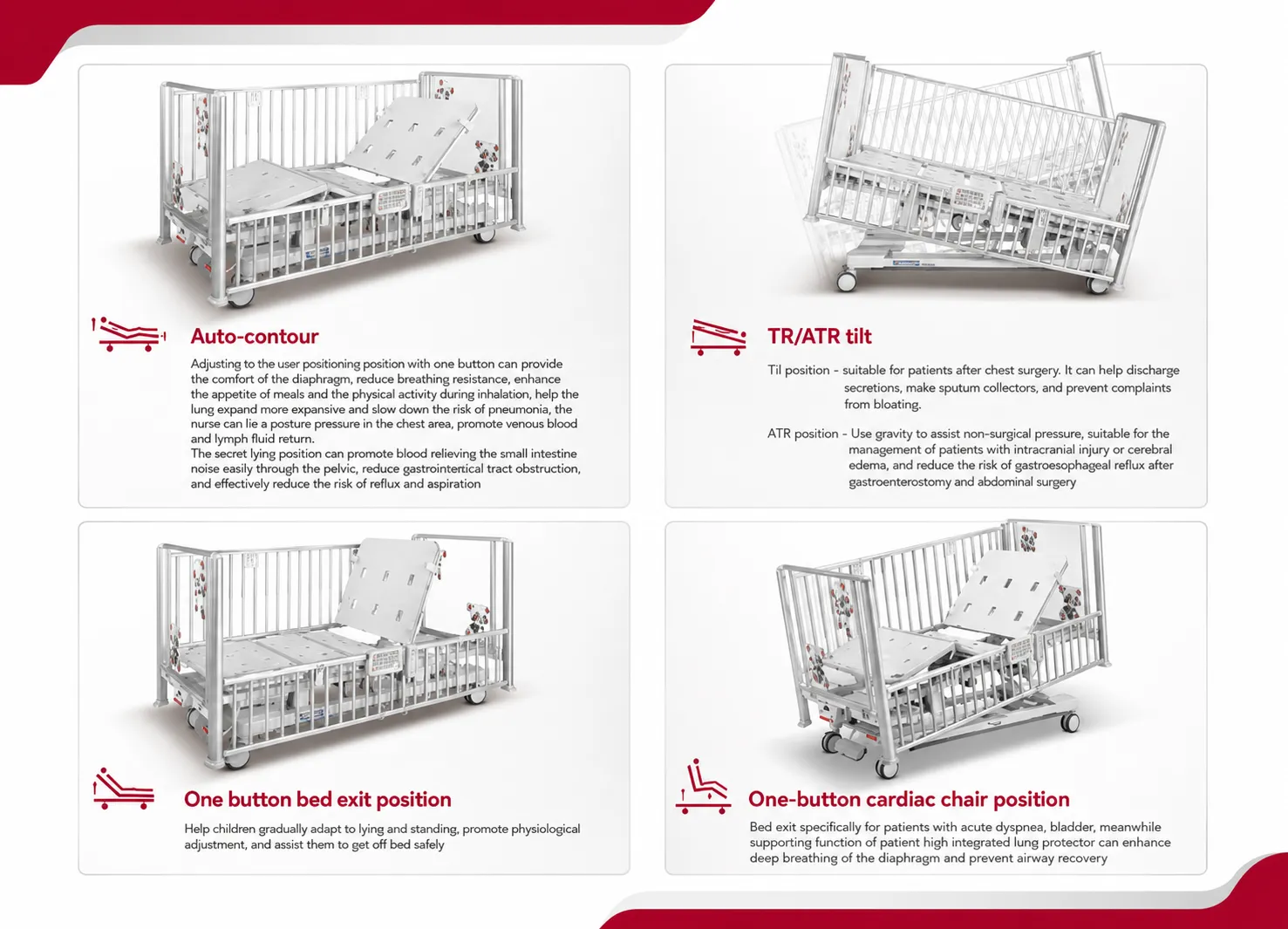
Power height adjustment moves the bed from 445 mm to 745 mm, letting a child get on and off independently at the low setting and giving staff a comfortable working height at the high setting. Backrest lift reaches 0 to 70 degrees, thigh rest lifts 0 to 30 degrees, and an auto-contour button combines both into one semi-reclining position. Trendelenburg and reverse Trendelenburg tilt run from 0 to 12 degrees. Siderails reach 620 mm, and the bed carries a 220 kg safe working load.
Adult hospital beds are not sized or equipped for pediatric patients, and this creates real gaps in care. Standard siderail height and headboard spacing on adult beds were not designed around a child's smaller body. This raises the risk of falls or limb entrapment. Adult beds may also lack the fittings pediatric equipment needs, and can feel intimidating to a frightened child. The ToronCare™ 6100 addresses these gaps directly, from siderail height to child-friendly visual design.
Pediatric Hospital Bed - ToronCare™ 6100 Applications
The ToronCare™ 6100 supports pediatric care teams managing patients from routine ward stays through serious, life-threatening conditions.
- Pediatric Intensive Care (PICU): continuous positioning and monitoring support for severely ill infants, children, and teenagers
- Post-Chest-Surgery Recovery: Trendelenburg positioning to assist secretion drainage and support respiratory tract clearing after thoracic procedures
- Craniocerebral Injury and Cerebral Edema Management: reverse Trendelenburg positioning that uses gravity to help reduce intracranial pressure
- Gastroenterology and Abdominal Surgery Recovery: reverse Trendelenburg and semi-reclining positioning to reduce gastroesophageal reflux risk
- Respiratory Support and Dyspnea Management: cardiac chair positioning to ease diaphragm work for children with breathing difficulty
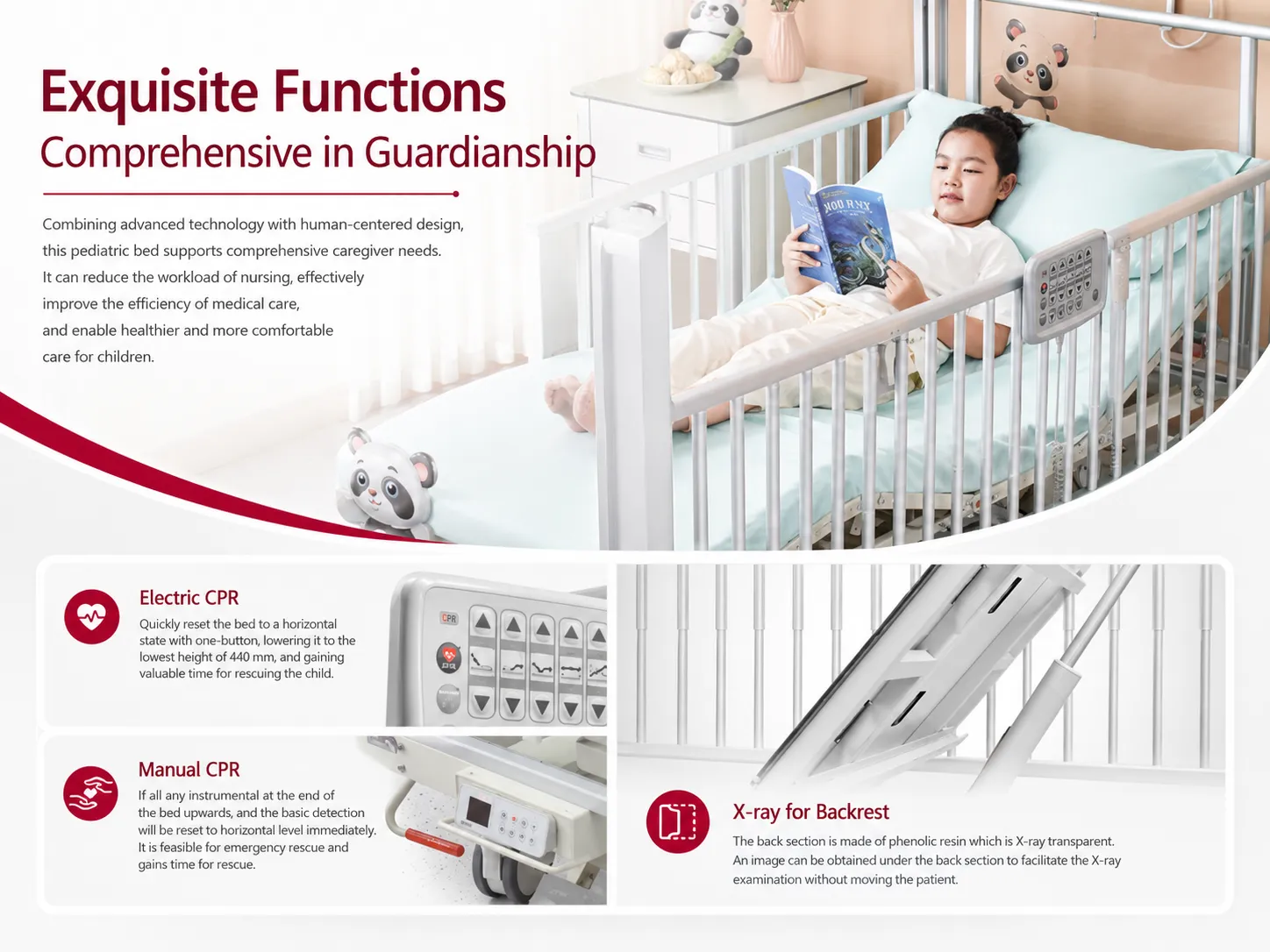
- Emergency Response and Resuscitation: electric and manual CPR functions for rapid flattening during a code
- General Pediatric Ward Care: child-sized platform, alarms, and locked controls for day-to-day nursing on general pediatric units
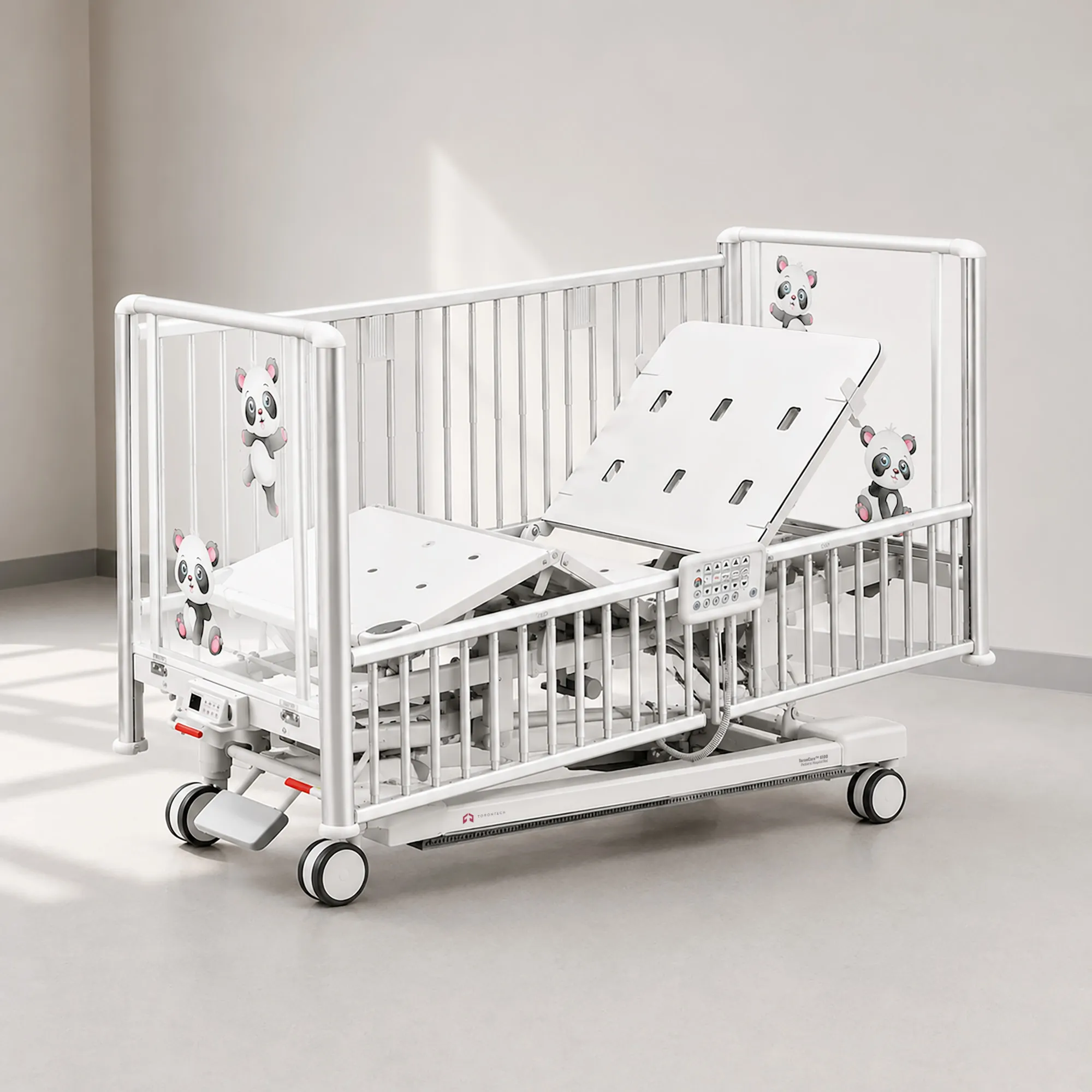
Pediatric Hospital Bed - ToronCare™ 6100 Key Features
The ToronCare™ 6100 combines child-specific sizing with a full set of PICU-grade safety and monitoring functions.
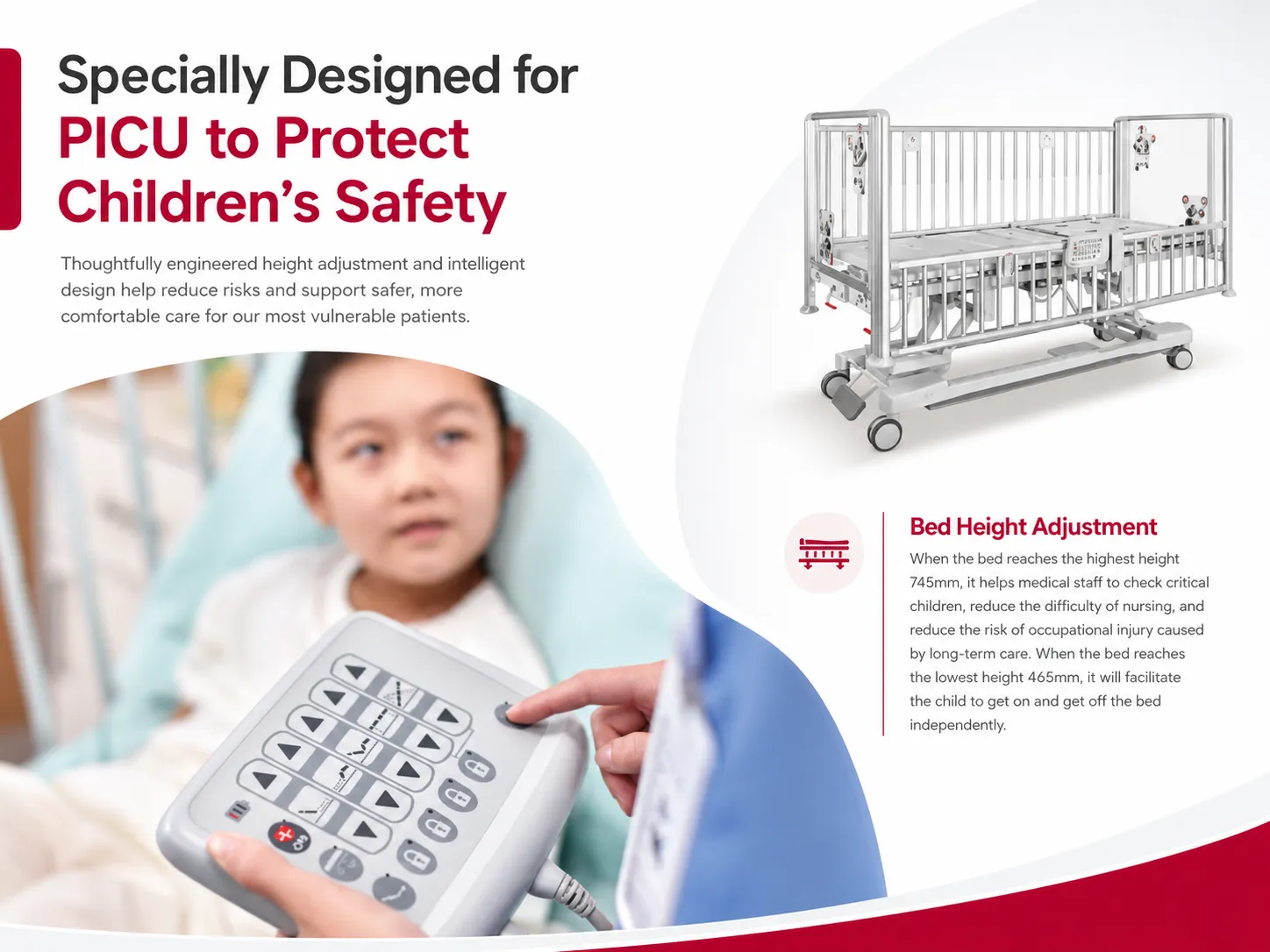
- Power Height Adjustment (445-745 mm): the low setting lets a child get on and off the bed independently, and the high setting reduces bending and back strain for staff
- One-Button Auto-Contour Position: combines a 70-degree backrest with a 30-degree thigh rest to ease breathing and reduce reflux risk in one motion
- Trendelenburg and Reverse Trendelenburg Tilt (0-12°): supports secretion drainage after chest surgery and helps manage intracranial pressure in brain injury cases
- One-Button Bed Exit Position: helps a child transition gradually from lying to sitting to standing before getting out of bed
- One-Button Cardiac Chair Position: raises the child to a high-sitting posture that eases diaphragm work during episodes of breathing difficulty
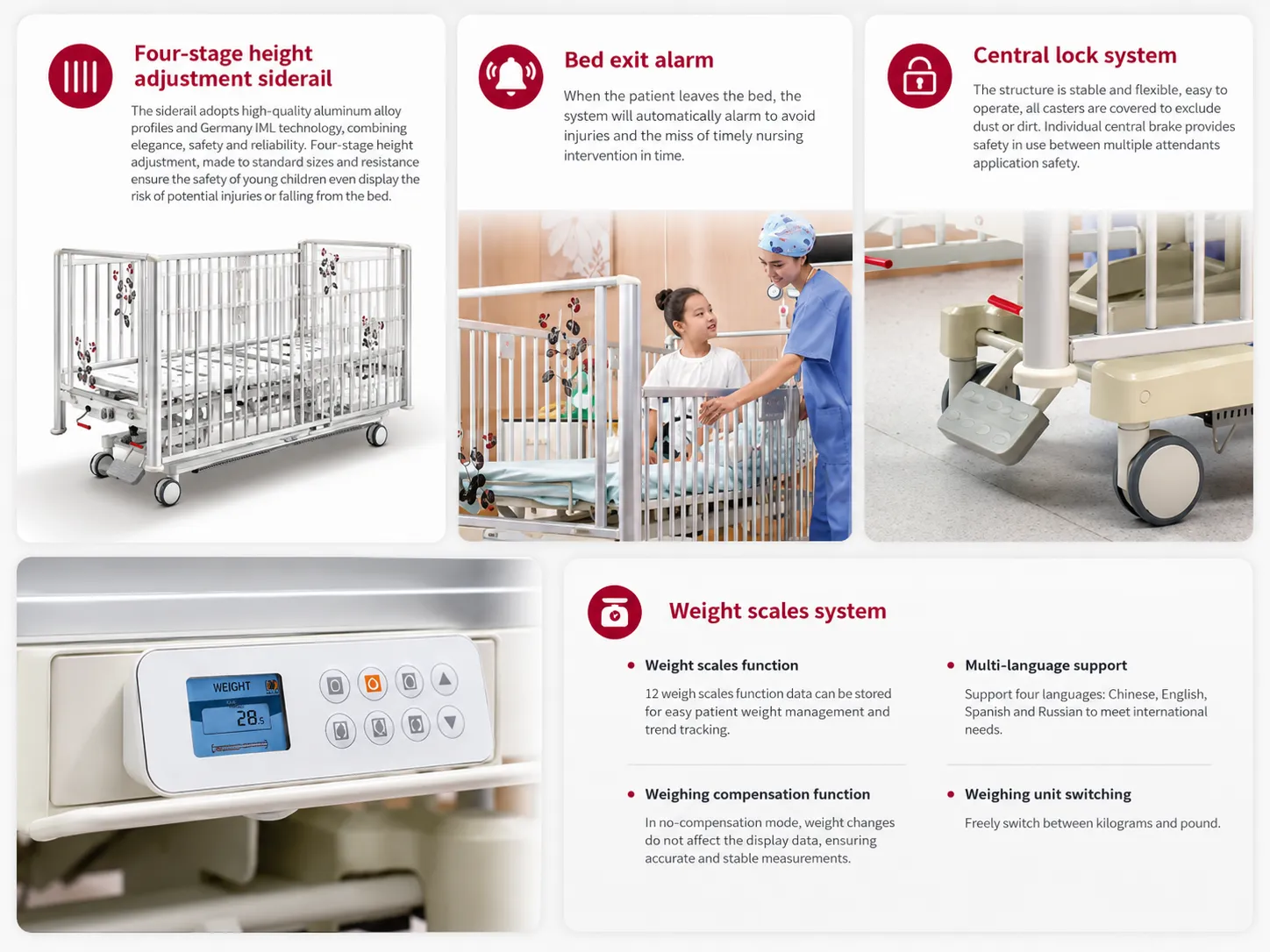
- Integrated Weight Scale with Trend Tracking: records and stores a child's weight over time to support dosing and nutrition decisions
- Weighing Compensation Mode: keeps weight readings accurate even as the backrest or X-ray tray shifts under the patient
- Switchable Weight Units: toggles between kilograms and pounds for the care team's preference
- Four-Stage Height-Adjustable Siderails: aluminum alloy rails at 620 mm reduce the risk of a child falling or a limb becoming trapped
- Bed Exit Alarm: sounds automatically if a child leaves the bed unsupervised
- Electric CPR: drops the bed to its lowest height at the press of a button to gain time during resuscitation
- Manual CPR Release: a red wrench at the foot of the bed resets the backrest to horizontal instantly if power is unavailable
- X-Ray Translucent Backrest: a phenolic resin backrest with a built-in image box supports bedside X-ray imaging without moving the child
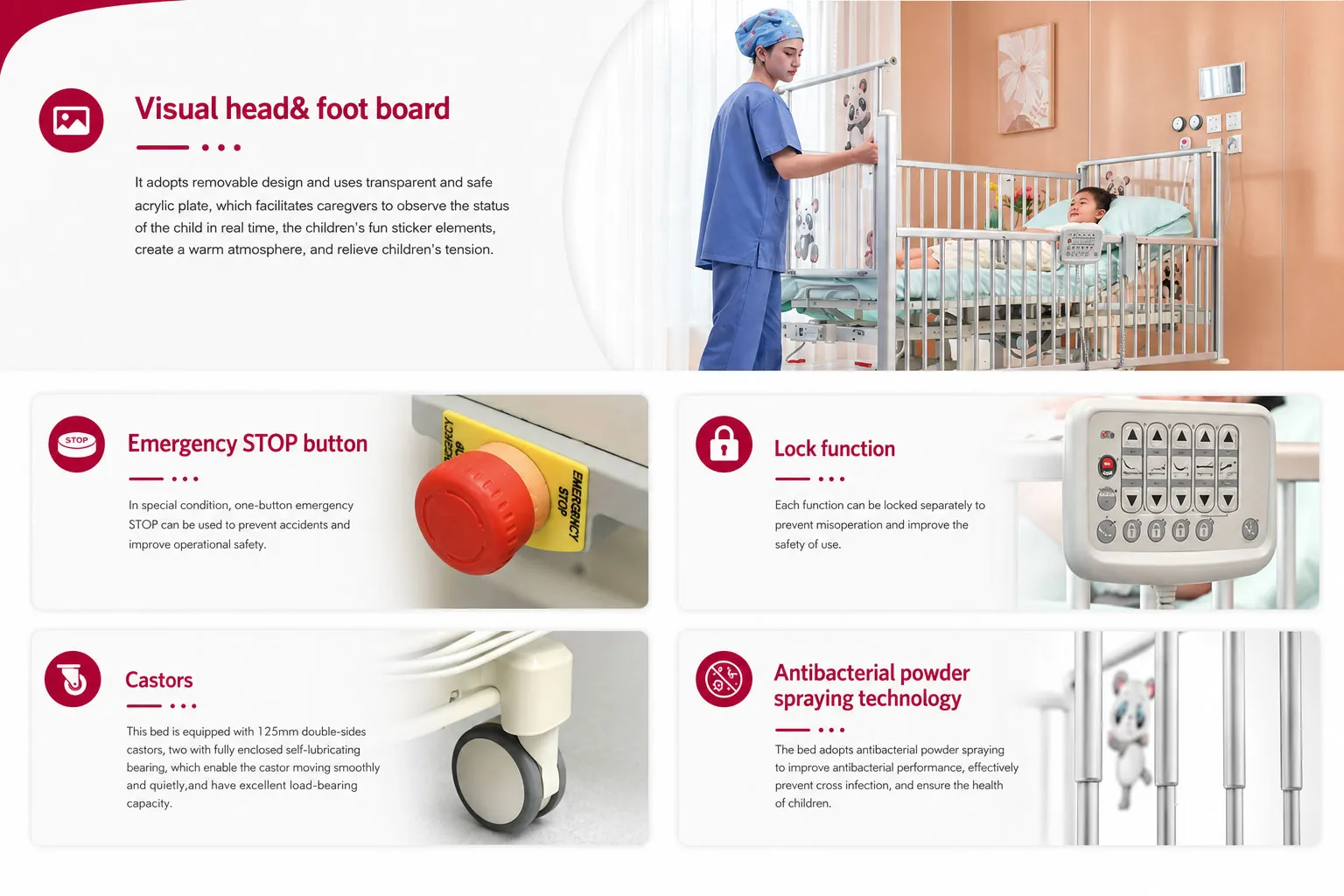
- Removable Visual Head and Foot Boards: transparent acrylic panels with child-friendly graphics let caregivers observe the child while easing anxiety
- Central Lock System: a single stable locking mechanism suited to fast-paced or complex care scenarios
- Individually Locked Functions: each bed function locks separately to prevent accidental operation
- Emergency STOP Button: halts bed motion immediately in urgent situations
- Multi-Language Interface: supports Chinese, English, Spanish, and Russian
- Antibacterial-Coated Frame: a sprayed antibacterial finish helps reduce cross-infection risk
- Enclosed Self-Lubricating Castors (125 mm): roll quietly and smoothly while supporting the bed's full working load
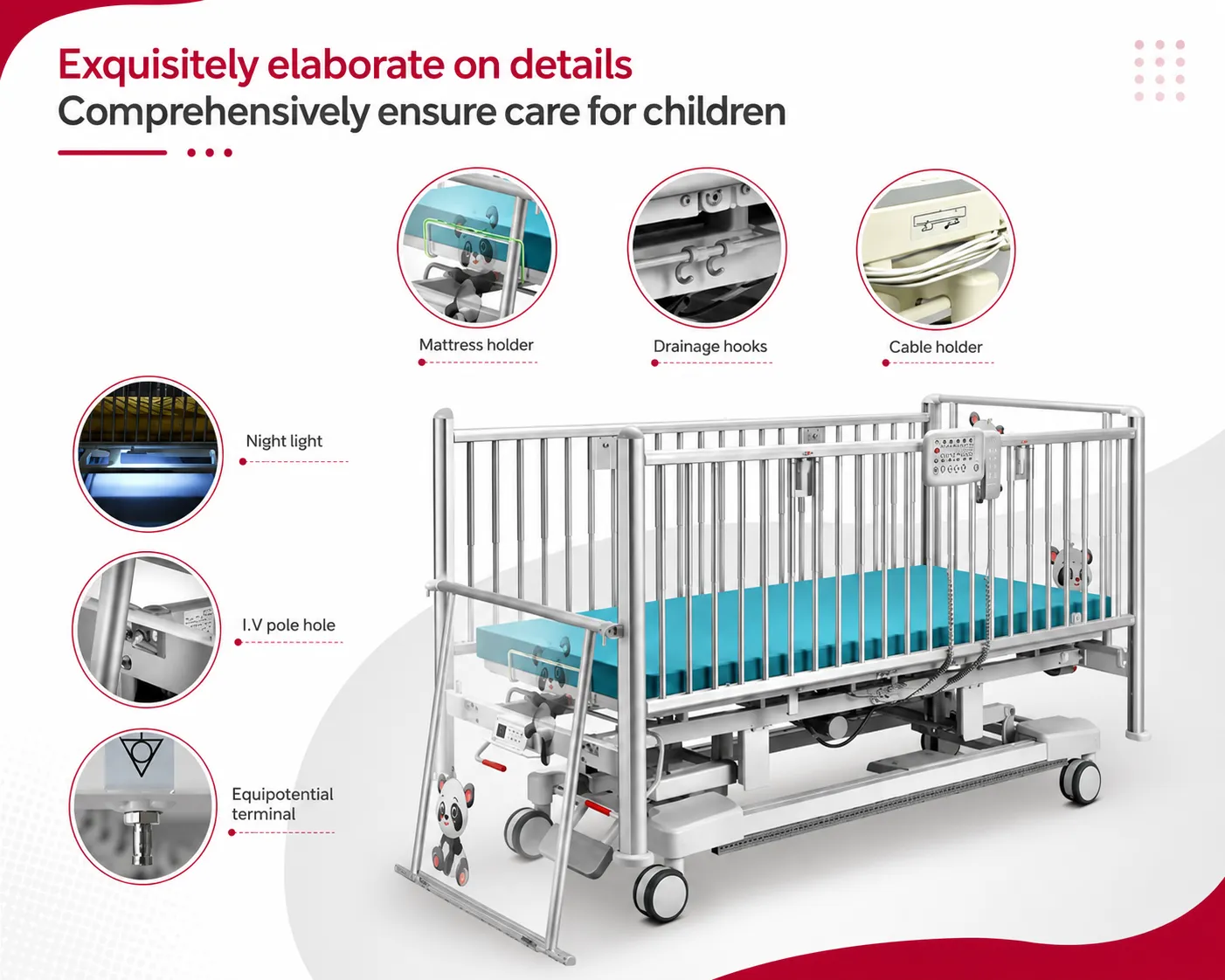
- IV Pole Holes: built-in mounting points hold IV poles without a separate stand
- Equipotential Grounding Terminal: equalizes electrical potential with other connected medical equipment for electrical safety
Theory and Method
Positioning a child's upper body changes intrathoracic pressure and the mechanics of breathing. Raising the backrest lowers the diaphragm and reduces the resistance the lungs work against, which expands lung volume and improves ventilation. The same elevation increases negative pressure inside the chest during inhalation, which helps draw venous and lymphatic fluid back toward the heart. A semi-reclined posture also lets stomach contents pass through the pylorus more easily, lowering the risk of reflux and aspiration.
Trendelenburg and reverse Trendelenburg tilt apply gravity to two different clinical problems. Tilting the whole bed head-down helps loosen and drain secretions after chest surgery, supporting airway clearance during recovery. Tilting the bed head-up shifts blood volume away from the head, which can help lower intracranial pressure in patients with brain injury or cerebral edema. Both positions work because gravity acts directly on fluid and blood volume, beyond the effect of posture alone.
Continuous weight monitoring matters more in pediatric care than in adult care because drug dosing, fluid resuscitation, and nutritional support are calculated per kilogram of body weight. A child's weight can also shift quickly during a serious illness. The bed's integrated scale tracks weight changes over time. Its compensation mode keeps readings accurate even when the backrest or an X-ray tray moves under the patient. This lets clinical staff trust the reading without pulling the patient off the bed to re-weigh them.
Pediatric Hospital Bed - ToronCare™ 6100 Technical Specifications
| Parameter | Specification |
|---|---|
| External Dimensions | 1,980 mm (L) x 980 mm (W) x 445-745 mm (H) (±10 mm) |
| Mattress Platform Size | 1,725 mm (L) x 780 mm (W) |
| Bed Height Range | 445 mm to 745 mm |
| Backrest Lift | 0° to 70° |
| Thigh Rest Lift | 0° to 30° |
| Auto-Contour Position | Backrest 70°, thigh rest 30° (simultaneous) |
| Trendelenburg / Reverse Trendelenburg Tilt | 0° to 12° |
| Height of Siderails | 620 mm |
| Safe Working Load | 220 kg |
| Bed Weight | 132 kg |
| Ingress Protection Rating | IP54 (water and dust) |
| Castor Diameter | 125 mm |
| Applicable Patient Height | Below 1,525 mm |
| Applicable Patient Weight | Below 135 kg |