
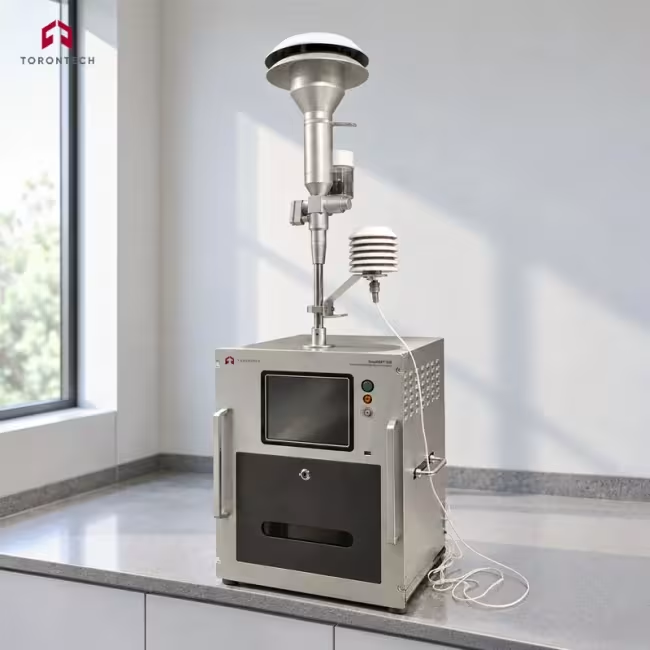
Ambient Air Heavy Metals Monitor and Analyzer
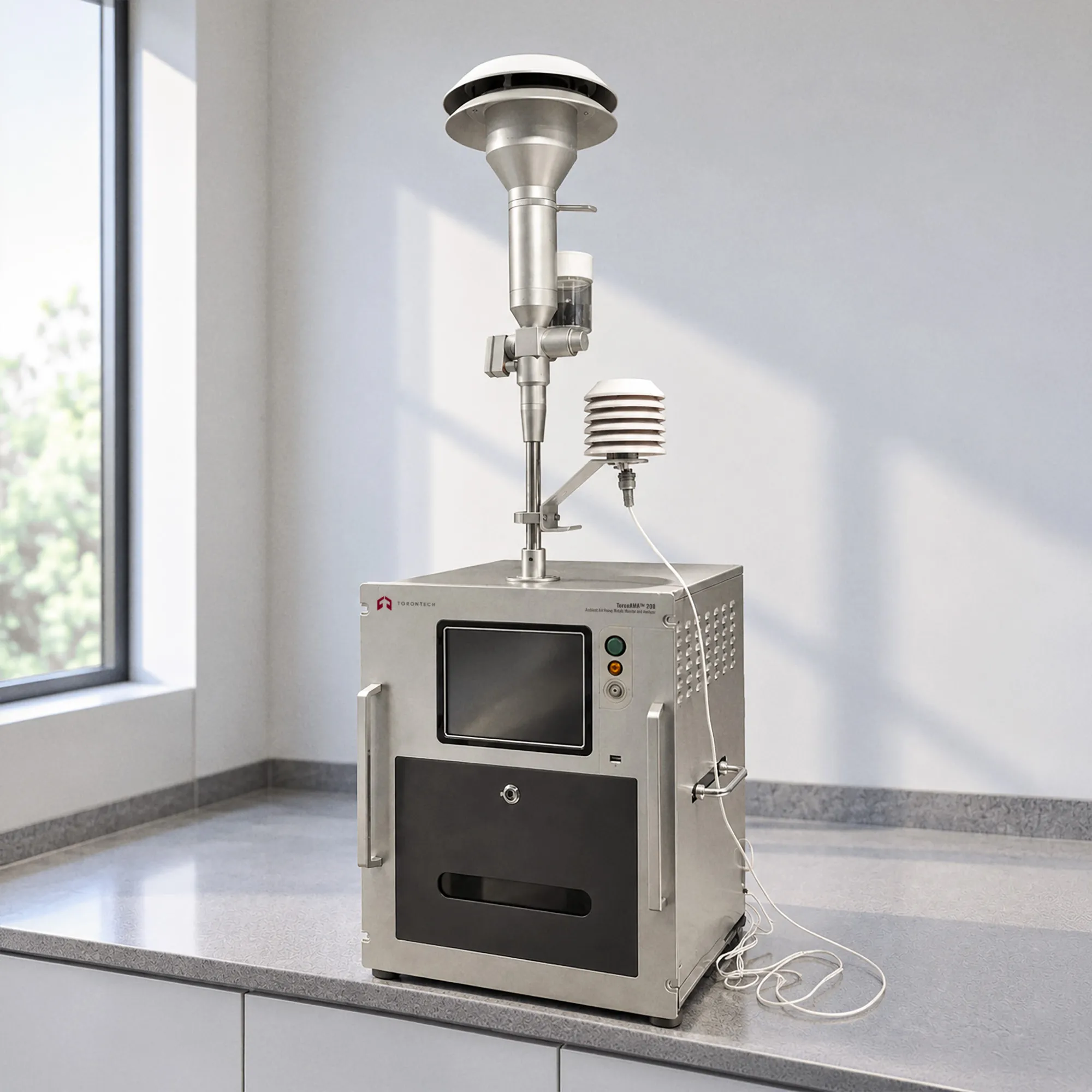
Ambient Air Heavy Metals Monitor and Analyzer - ToronAMA™ 200
Continuous XRF Ambient Air Monitor for Up to 30 Heavy Metals at 10 pg/m³
The ToronAMA™ 200 ambient air heavy metals monitor measures particulate mass and up to 30 airborne metals in one unattended instrument. Environmental agencies, industrial facilities, and research teams use it to replace slow filter-and-laboratory workflows with hourly data. The analyzer pairs energy-dispersive X-ray fluorescence (XRF) with beta-ray attenuation on a single filter tape. Both measurements come from the same particulate deposit, so metal concentrations and PM mass stay time-aligned. Operators see how much particulate the air carries and what that particulate contains.
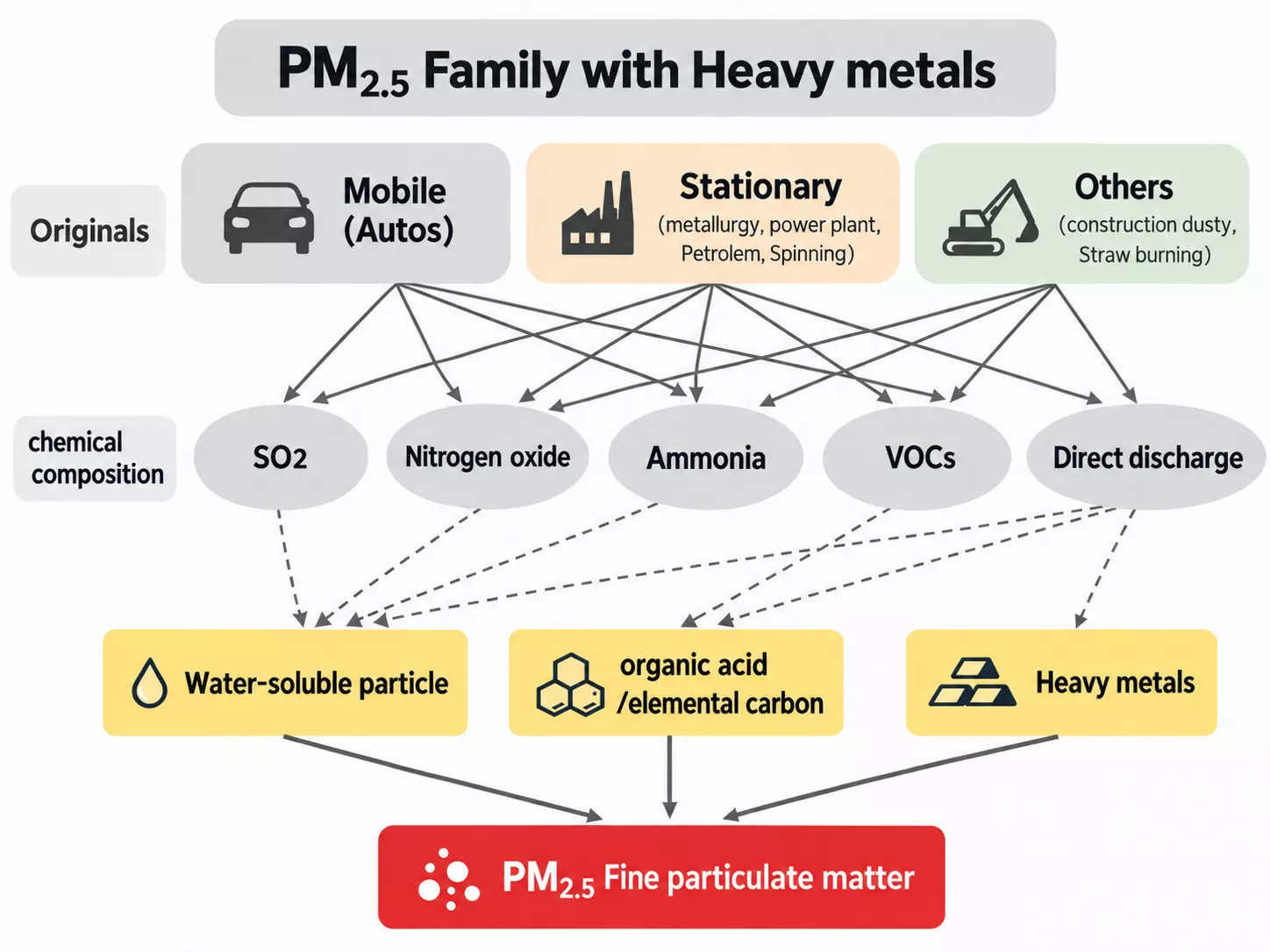
Interchangeable TSP, PM10, and PM2.5 inlets let users target the particle size fraction their program requires. The ToronAMA™ 200 quantifies lead, cadmium, arsenic, chromium, mercury, nickel, and other elements, with a lowest detection limit of 10 pg/m³ under 4-hour sampling. Its XRF measurement is designed to align with EPA Compendium Method IO-3.3. The 19-inch rack-mount host fits standard monitoring shelters and mobile monitoring vehicles. Data stays on board for more than ten years and streams to remote networks through multiple interfaces.
Torontech builds the ToronAMA™ 200 for long-term, around-the-clock service with automatic calibration and self-diagnostics. A dynamic heating system manages sample humidity before the deposit reaches the analyzers. Multi-layer radiation shielding and a door interlock protect technicians during routine service. One PTFE filter roll lasts about a month at hourly cycles, which keeps consumable costs and site visits low. The result is a continuous airborne metal analyzer that supports compliance reporting, source tracing, and research from one platform.
Ambient Air Heavy Metals Monitor and Analyzer - ToronAMA™ 200 Applications
The ToronAMA™ 200 serves programs that need both the mass and the elemental makeup of airborne particulate. Typical deployments include:
- Ambient Air Quality Monitoring Networks: continuous measurement of particle-bound metals and PM mass at fixed stations for regional and national air quality reporting
- Industrial Fenceline Monitoring: tracking lead, cadmium, arsenic, and other metals at the boundary of smelters, metallurgical plants, and battery recycling facilities
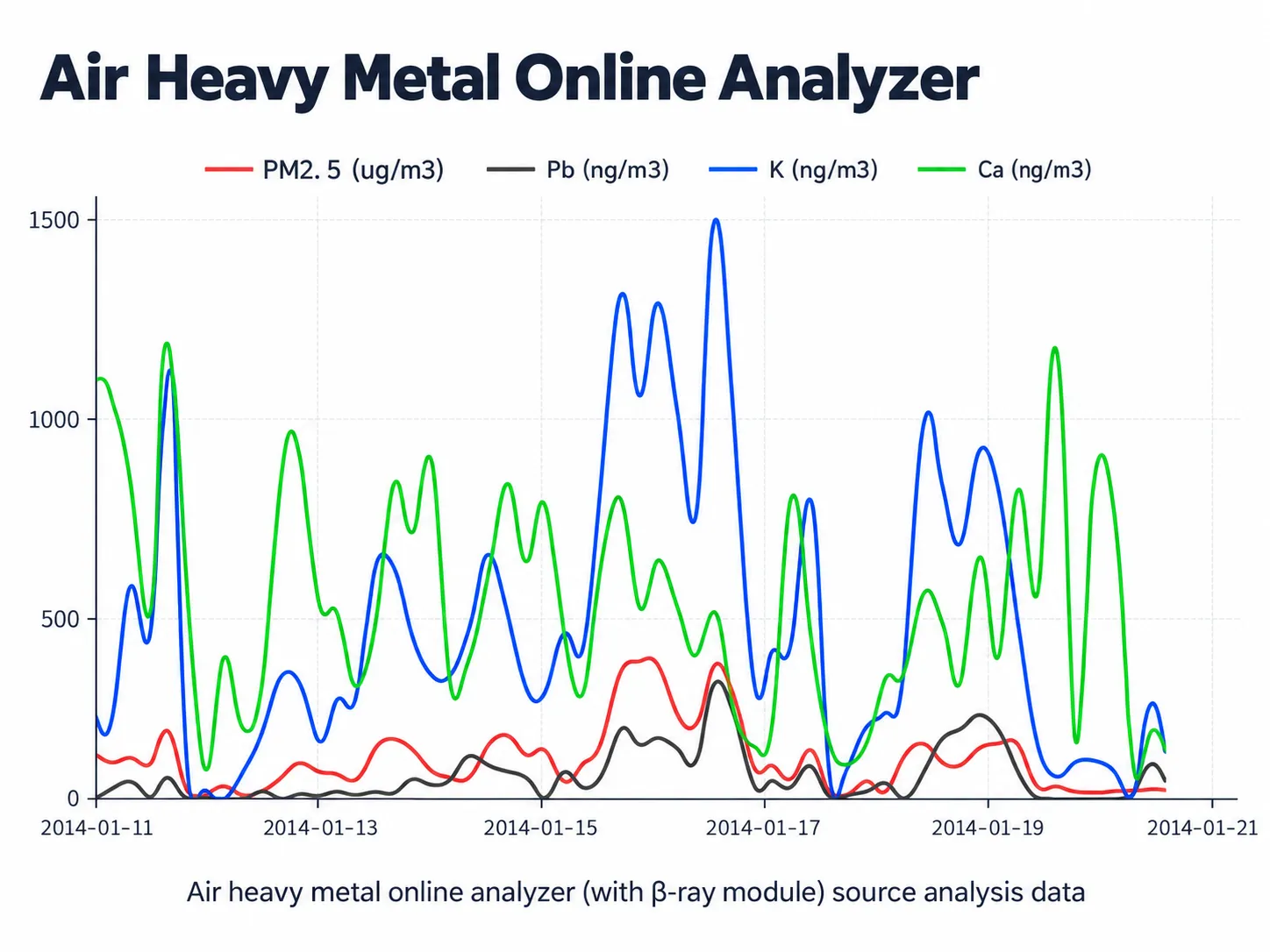
- Pollution Source Apportionment: elemental fingerprints combined with principal component analysis and wind data to separate contributions from combustion, metallurgical emissions, and road dust
- Environmental Impact Assessment and Permitting: baseline and post-construction monitoring to support permit applications and compliance verification
- Mobile and Emergency Surveys: vehicle-mounted operation for hot-spot mapping, incident response, and short-term campaigns
- Background and Regional Monitoring: long-term trend measurement at rural and background sites where metal concentrations stay at trace levels
- Pollution Forecasting and Early Warning: real-time concentration data feeding alarm thresholds and forecasting models for public notification
- Public Health Exposure Studies: time-resolved inhalation exposure data for carcinogenic and non-carcinogenic metals in health risk assessments
- Atmospheric and Aerosol Research: university and government laboratories studying particle composition, transport, and chemistry
Standards
The heavy metal measurement in the ToronAMA™ 200 is designed to align with the U.S. EPA procedure for XRF analysis of metals in ambient particulate matter. Users should confirm the method and quality-assurance requirements of their regulatory program before deployment.
- EPA Compendium Method IO-3.3 - Determination of Metals in Ambient Particulate Matter Using X-Ray Fluorescence (XRF) Spectroscopy
Ambient Air Heavy Metals Monitor and Analyzer - ToronAMA™ 200 Key Features
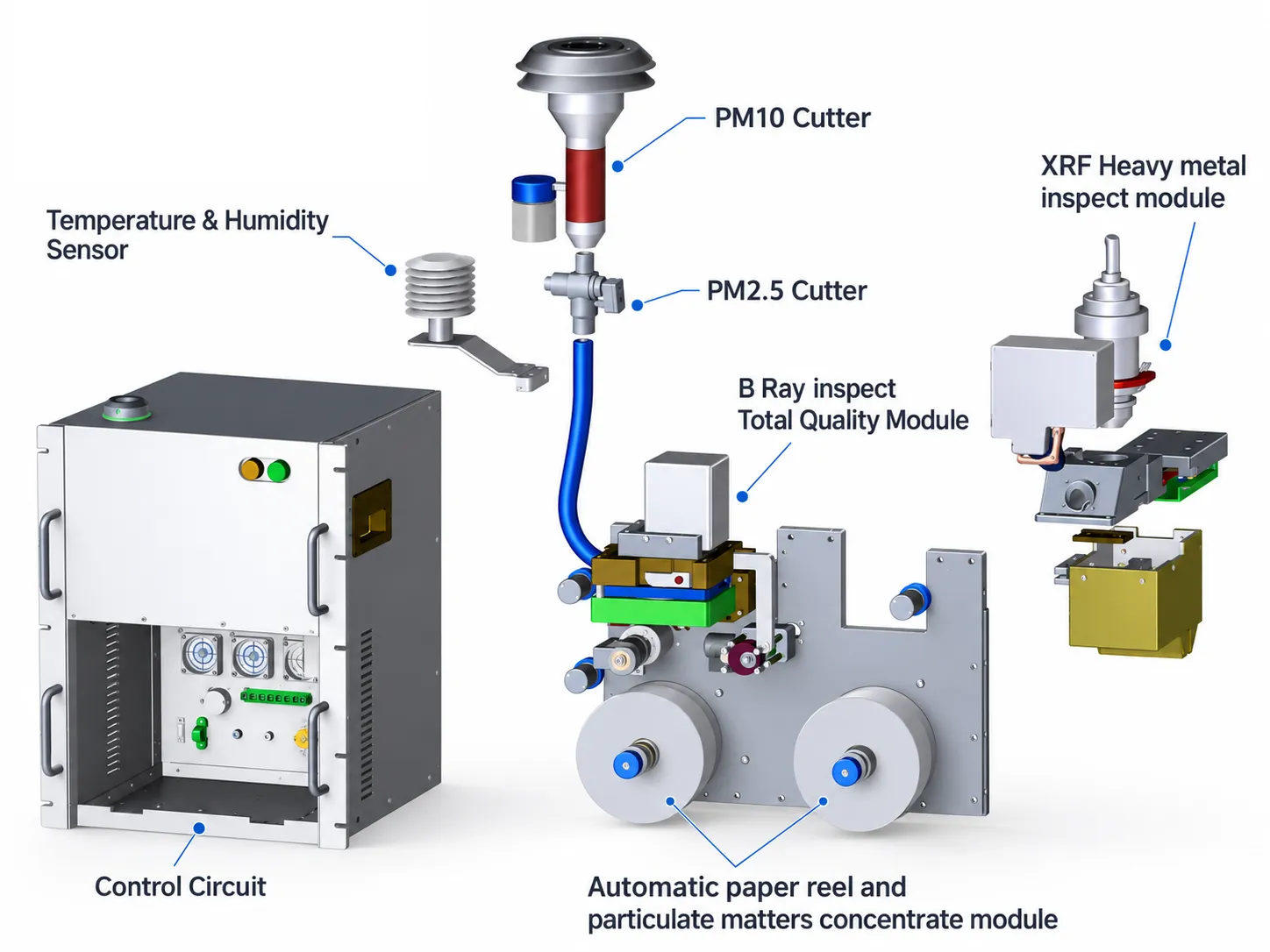
The ToronAMA™ 200 combines particulate and elemental analysis with automation designed for unattended field service. Highlights include:
- Two-in-One PM and Metals Measurement: reports particulate mass and elemental concentrations from the same deposit, giving time-matched data for source apportionment
- Up to 30 Elements, Expandable: quantifies Pb, Cd, As, Cr, Hg, and other metals, with additional elements available on request
- 10 pg/m³ Lowest Detection Limit: resolves trace metals at background levels with 4-hour sampling at 16.7 L/min
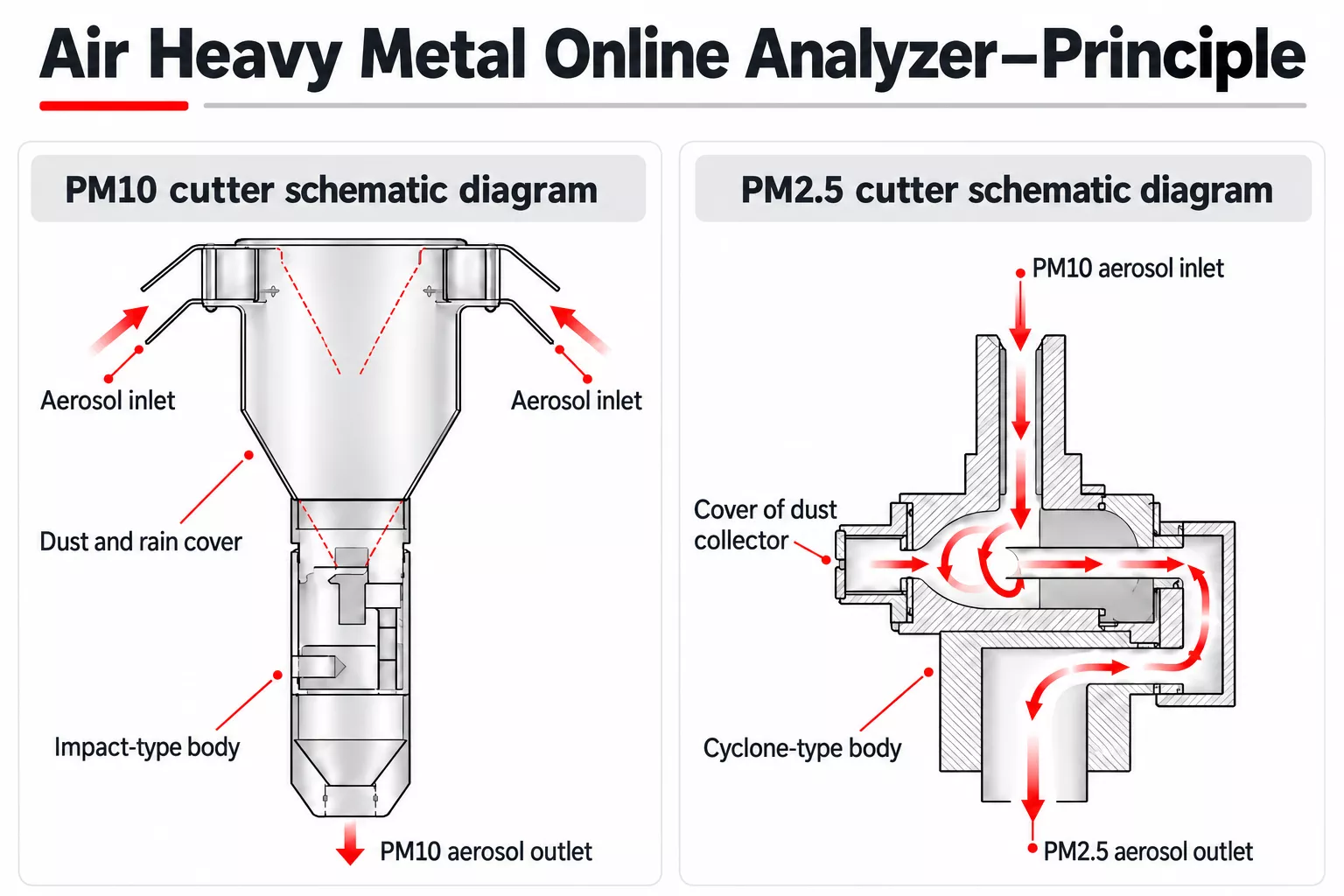
- Interchangeable TSP, PM10, and PM2.5 Inlets: shows how metals distribute across particle sizes; each inlet carries an outdoor temperature sensor, louvered shield, and lightning protection isolator
- Roof and Vehicle Mounting: a waterproof roof flange secures the inlet on station roofs, and an optional vehicle platform supports mobile surveys
- Dynamic Heating System (DHS): adjusts sample air temperature to control humidity and limit moisture effects on results
- Low-Background Optical Design: interference-free optics and automatic switching among built-in filters lower the background beneath trace-level peaks
- Automatic Spectrum Calibration and QC: a built-in multi-element reference calibrates energy and intensity scales on a user-set schedule and raises an alarm when quality-control checks fail
- Mass Flow Control with Auto Calibration: a mass flow controller works with temperature and pressure sensors to hold sampling flow steady and recalibrate it automatically
- High-Capacity Diaphragm Pump: delivers up to 168 L/min with a lowest vacuum of 60 Torr for stable sampling
- Forced-Air X-Ray Tube Cooling: a high-pressure fan routes filtered air through the host to stabilize the X-ray tube and extend its service life
- Self-Diagnosis and Fault Recovery: monitors instrument status in real time and recovers from faults automatically during long unattended runs
- Flexible Connectivity: RS232/485, USB, Ethernet, GPRS, ADSL, 4-20 mA, and TTL I/O support remote monitoring, control, and data retrieval
- Touchscreen Software with Data Export: an English touchscreen interface displays flow, sampling time, status, and concentration trends; data exports to TXT or Excel, and every spectrum is archived for review
- Multi-Level User Permissions: protects calibration curves, spectra, and settings with role-based access
- Open Integration Interface: a reserved software interface connects results to forecasting, early-warning, and source-tracing platforms
- Multi-Layer Radiation Protection: shielding holds the dose rate below 2.5 µGy/h at 5 cm from the enclosure, and an interlock shuts off the X-ray tube when the door opens
Theory and Method
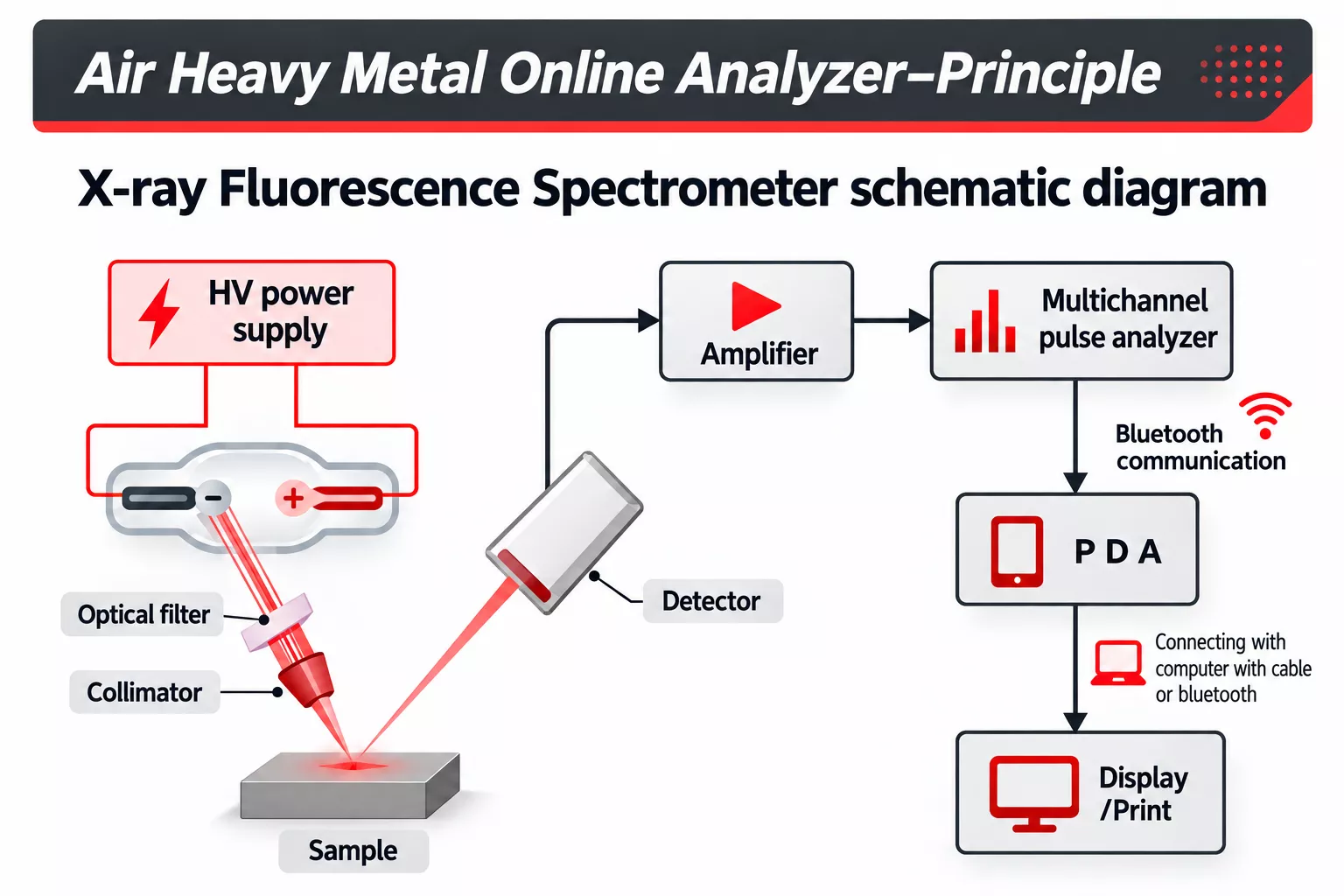
X-ray fluorescence identifies elements through the characteristic energy each atom emits after excitation. A 50 W X-ray tube irradiates the particulate deposit and ejects electrons from the inner K and L shells of the atoms present. Outer-shell electrons drop into these vacancies and release fluorescent X-rays at energies unique to each element. A silicon drift detector (SDD) and digital multichannel analyzer sort these photons into an energy spectrum. Peak position identifies each element, and peak intensity scales with its mass on the filter.
Beta-ray attenuation measures particulate mass on the same spot. A beta source sends electrons through the filter before and after particle collection. The loaded deposit absorbs more radiation, and the mass per unit area equals the natural logarithm of the intensity ratio divided by the mass absorption coefficient. The software multiplies this areal mass by the deposit area and divides by the sampled air volume. Temperature and pressure readings correct that volume, so the instrument reports PM concentration in µg/m³.
Each cycle runs automatically. The pump draws ambient air through the size-selective inlet at a controlled 16.7 L/min, and particles collect on a spot of PTFE filter tape. The tape then indexes the loaded spot to the measurement position for beta and XRF analysis. Fundamental parameters (FP) software converts net peak intensities into element concentrations, while switchable primary filters lower the spectral background for trace elements. The thin, uniform deposit keeps matrix effects small, which suits accurate XRF quantification.
Ambient Air Heavy Metals Monitor and Analyzer - ToronAMA™ 200 Technical Specifications
| Parameter | ToronAMA™ 200 |
|---|---|
| Measurement Principle | X-ray fluorescence (heavy metals); beta-ray attenuation (particulate mass) |
| Particle Size Fractions | TSP, PM10, PM2.5 (interchangeable inlets) |
| Standard Elements (30) | Pb, Cd, Hg, As, Cr, Cu, Zn, Ni, Ba, Fe, Ag, Se, Br, Te, Sb, Sn, Ti, Co, Mn, Pd, Tl, Sc, Mo, V, Cs, Ga, Ca, K, Sr, Cl |
| Additional Elements | Available on request |
| Heavy Metal Measuring Range | 0 to 100 µg/m³ |
| PM Measuring Range | 0 to 10 mg/m³ |
| Lowest Detection Limit (Metals) | 10 pg/m³ (4 h sampling at 16.7 L/min) |
| Detection Limit (PM) | < 0.5 µg/m³ (24-hour average) |
| Accuracy (Metals) | < 15% for Pb versus reference laboratory methods (sampling time ≥ 1 h) |
| Accuracy (PM) | ± 5 µg/m³ or better (24-hour average) |
| Analysis Sampling Flow | 16.7 L/min |
| X-Ray Source | 50 W high-power X-ray tube |
| Detector | Silicon drift detector (SDD) |
| Spectrum Processing | Digital multichannel analyzer with fundamental parameters (FP) software |
| Primary Filters | Built-in, automatically switched |
| Calibration | Automatic energy and intensity calibration with internal multi-element reference; user-set frequency |
| Flow Control | Mass flow controller with temperature and pressure sensors; automatic flow calibration |
| Sampling Pump | Diaphragm pump, 168 L/min maximum flow, 60 Torr lowest vacuum |
| Sample Conditioning | Dynamic heating system (DHS) for humidity control |
| Filter Media | PTFE filter tape roll with low elemental background |
| X-Ray Radiation Safety | < 2.5 µGy/h at 5 cm from enclosure; X-ray tube shuts off when door opens |
| Beta Module Radiation | Near ambient background levels |
| Working Mode | Continuous automatic monitoring; rated for one year of trouble-free operation with fault self-recovery |
| Control System | Embedded touchscreen industrial PC; external PC optional |
| Data Storage | More than 10 years of monitoring data |
| User Interface | English touchscreen; real-time flow rate, sampling time, status, concentration (standard or actual conditions), and trend curves |
| Data Export | TXT, Excel; spectrum archive after each measurement and calibration |
| Communication | RS232/485, USB, Ethernet, GPRS, ADSL, 4-20 mA, TTL input/output |
| Host Format | 19-inch rack-mount; all modules except inlet and pump in one enclosure |
| Installation | Fixed monitoring station cabinet or mobile monitoring vehicle |
| Ambient Temperature (Sampling) | -40 °C to 50 °C |
| Ambient Humidity (Sampling) | 0 to 90% RH |
| Host Operating Temperature | 5 °C to 40 °C |
| Host Operating Humidity | 30 to 60% RH |
| Voltage | 220 V AC ± 10%, 50 Hz ± 1 Hz (110V is also available) |
System Configuration
| Item | Description |
|---|---|
| Analyzer Host | Particle enrichment system, filter tape transport, beta-ray module, XRF analysis system, and control system |
| Particle Inlet | TSP, PM10 (impactor type), or PM2.5 (cyclone type) with outdoor temperature sensor, louvered shield, and lightning isolator |
| Dynamic Heating System | Temperature-controlled sample line for humidity management |
| Sampling Pump | High-efficiency diaphragm pump |
| Cooling Fan | High-pressure fan with air filter for X-ray tube cooling |
| Workstation | Embedded touchscreen industrial PC with control and analysis software |
| Optional Items | Vehicle mounting platform, external industrial PC |
Consumables
| Item | Description | Replacement Interval |
|---|---|---|
| PTFE Filter Tape Roll | Low-background filter media for particle collection and analysis | Approximately 1 month at hourly sampling |
| Fan Air Filter | Protects the high-pressure cooling fan and host interior | Monthly (recommended) |