Melt Flow Index Testers Built for Saudi Arabia's Polymer Industry
A resin lot leaves Jubail with one melt flow value and reaches a converter's extruder behaving differently. Pipe walls vary, film gauge drifts, and scrap piles up before anyone finds the cause. Fast incoming-lot checks prevent that.
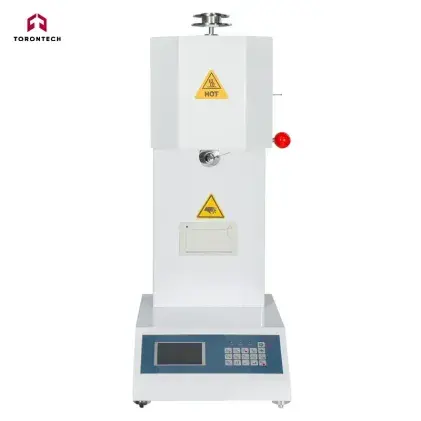
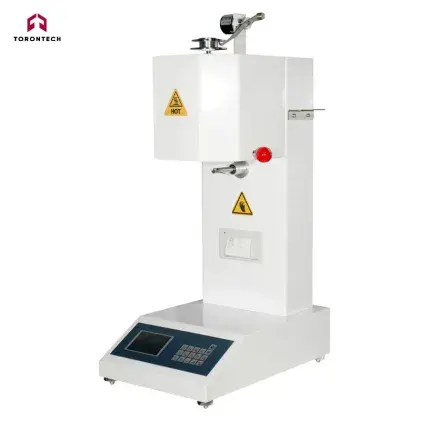
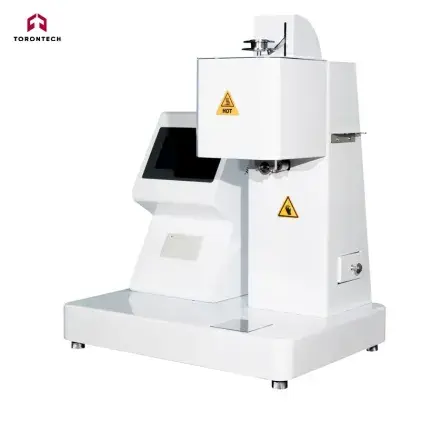
A Melt Flow Index Tester in Saudi Arabia gives quality teams that check in minutes. Torontech supplies the ToronMFI series of melt flow indexers, which measure melt mass-flow rate (MFR) and melt volume-flow rate (MVR) under ASTM D1238 and ISO 1133.
Why Melt Flow Data Matters From Jubail to the Converter Floor
Saudi Arabia's polymer chain starts with scale. SABIC runs its main industrial bases at Jubail on the Arabian Gulf and Yanbu on the Red Sea, producing polyethylene and polypropylene for export and for domestic converters.
Capacity keeps growing. Sipchem has targeted the fourth quarter of 2026 for adding 150,000 tonnes per year of polypropylene at its Al-Waha complex. Meanwhile, the Ministry of Energy approved feedstock for two new Jubail petrochemical complexes in early 2025.
Downstream, the National Industrial Strategy targets more than 8.8 million tonnes of additional plastics and rubber conversion capacity. Every new extrusion, molding, and film line needs resin verified against its grade sheet, and melt flow rate is the quickest way to confirm it.
Key Applications for a Melt Flow Index Tester in Saudi Arabia
Resin chemistry differs by sector, yet the lab question stays the same: does this lot flow the way the process expects?
Water and Pipe Systems
The Kingdom's water distribution network spans roughly 127,500 km, and HDPE holds nearly 63% of the polyethylene pipe market. In April 2025, the National Water Company started 16 water and wastewater projects in Qassim, including 579 km of water pipelines.
Pipe plants need consistent extrusion. MFR checks on incoming granules catch lot-to-lot shifts before they change wall thickness. SASO's technical regulation for water, electricity, and gas network pipes then sets the requirements the finished product must meet.
Packaging and Food Containers
Packaging is a priority segment in the National Industrial Strategy. Polypropylene and polyethylene food containers must also satisfy SASO and SFDA requirements.
MVR adds value here. It compares filled and unfilled compounds, so teams can see how additives and masterbatch loadings change flow.
Automotive Plastics and Recycling
Saudi Arabia is building a domestic automotive industry, including the Lucid Motors electric vehicle factory. That growth raises demand for automotive-grade polymers.
Recycling adds variability too. The National Industrial Strategy plans about 540,000 tonnes per year of recycling capacity, and recycled streams vary more than virgin resin. Regular MFR screening helps labs set blend ratios with confidence.
Standards and Compliance in the Kingdom
Saudi buyers work with two layers of requirements. The first is the test method, which defines how a lab measures melt flow. The second is the product regulation, which defines what a finished pipe or container must meet.
Every ToronMFI model lists ASTM D1238 and ISO 1133 as its test standards. SASO and SFDA rules apply to your products, not to the tester. Labs therefore use MFR data as supporting evidence in their own quality files.
| Standard | Scope | Role in Saudi Labs |
|---|---|---|
| ASTM D1238 | Flow rates of thermoplastics by extrusion plastometer | Test method the ToronMFI series follows |
| ISO 1133 | MFR and MVR of thermoplastics | Test method the ToronMFI series follows |
| SASO Technical Regulation, Building Materials Part 5 | Pipes for water, electricity, and gas networks | Product regulation (market context only) |
| SFDA.FD 1863 | General requirements for plastic food packages | Product requirement (market context only) |
Choosing the Right ToronMFI Model
Four models cover the range from basic MFR checks to full MFR and MVR analysis. Start with the question your lab must answer, then match the instrument. The ToronMFI-A suits routine MFR lot checks.
| Model | Measures | Control | Best Fit |
|---|---|---|---|
| ToronMFI-A | MFR | LCD panel | Routine incoming-lot checks |
| ToronMFI-B | MFR and MVR | Panel with built-in printer | QC labs that need printed results |
| ToronMFI-D | MFR, MVR, melt density | 7-inch touchscreen and PC | Compounders and higher-volume labs |
| ToronMFI-V | MFR, MVR, density, apparent viscosity | Tablet computer | Labs that need shear stress and shear rate data |
Compounders working with filled grades often favor the ToronMFI-D. Its MVR function compares filled and unfilled materials, and its software exports test data.
Confirm these points before you order:
- Temperature range: all four models cover 50°C to 450°C.
- Measurement range: MFR from 0.1 to 100 g/10 min, and MVR from 0.01 to 350 cm³/10 min on the MVR-capable models.
- Supply: Torontech lists 220V with a 110V option, so confirm your site's power supply at order.
- Data handling: the ToronMFI-B prints results, while the -D and -V connect to software for parameter setup and export.
Configure Your Melt Flow Tester With a Gulf-Based Team
Saudi converters, compounders, and testing labs share one need: resin data they can trust on the day a lot arrives. Matching the model, supply, and software to your site avoids delays at commissioning.
Torontech ME FZE serves the GCC region from Dubai (Meydan Grandstand, 6th Floor, Meydan Road, Nad Al Sheba, Dubai-261440, UAE). Questions on configuration, power supply, and delivery therefore go to a regional team rather than a distant call center.
Reach out to the Torontech team with your resin grades, test temperatures, and sample volumes. You can also call +971 488 19252 or email me@torontech.com. We will recommend the ToronMFI model that fits your Melt Flow Index Tester in Saudi Arabia project.