
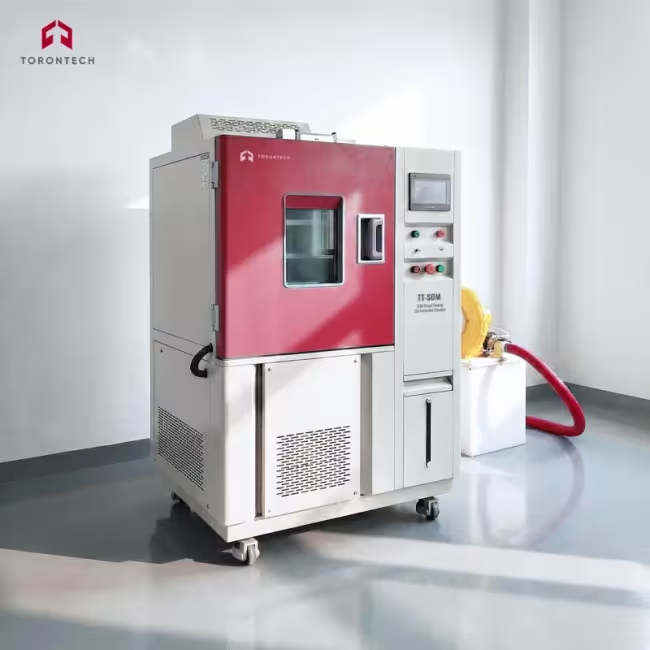
Mixed Noxious Gas Chamber
Mixed Noxious Gas Chamber
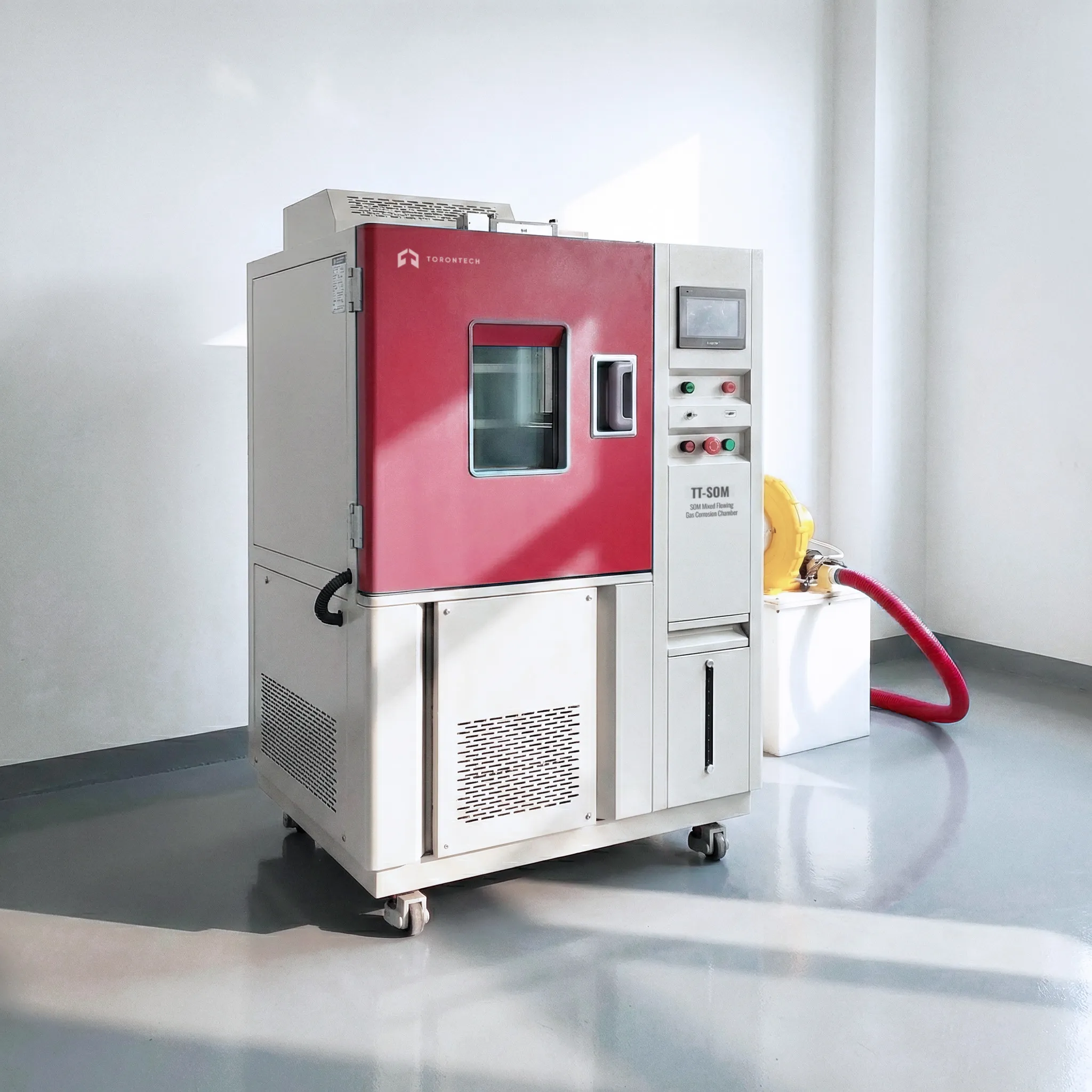
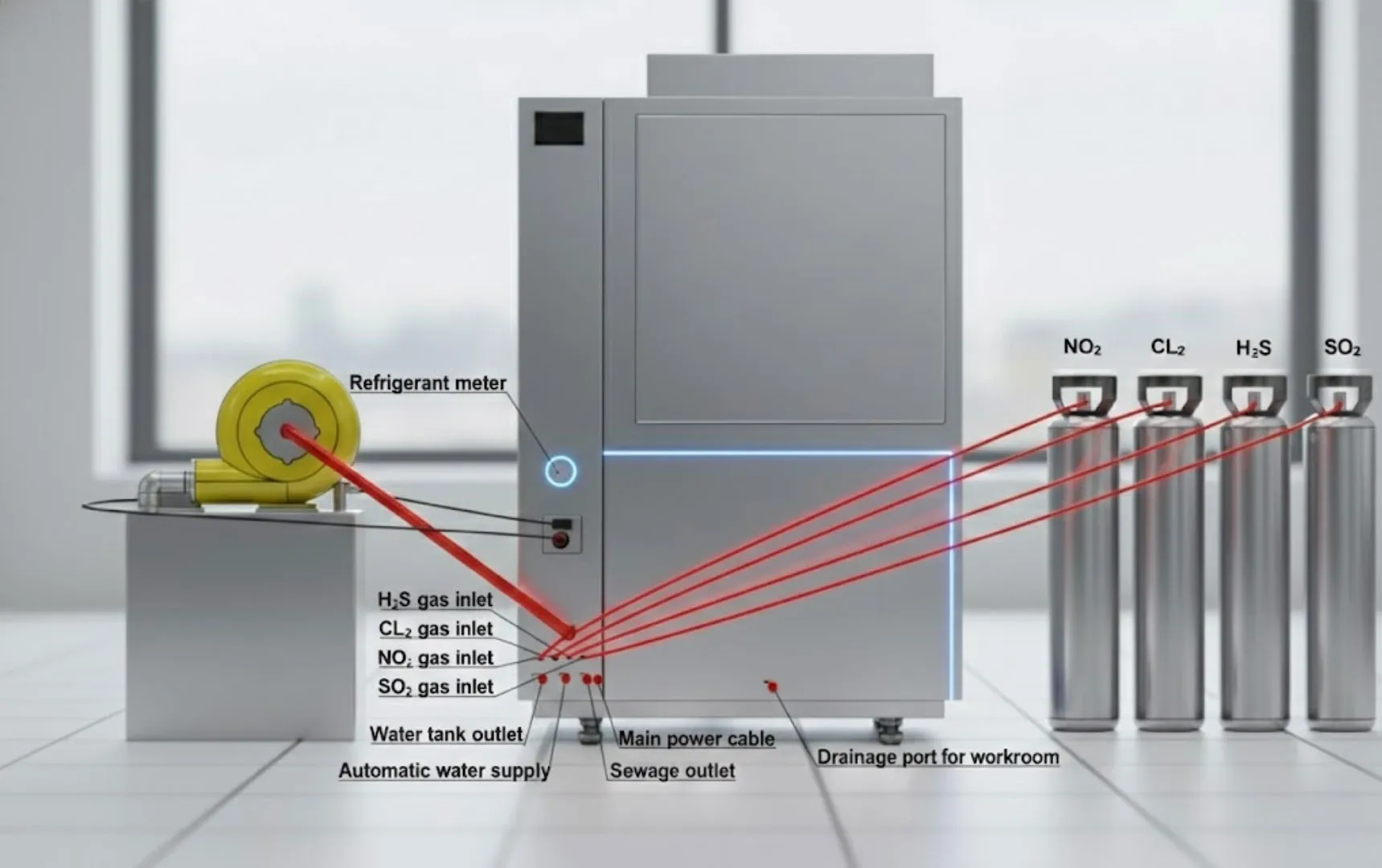
TT-SOM Mixed Noxious Gas Chamber is designed to perform controlled mixed flowing gas (MFG) corrosion testing under precisely regulated temperature, humidity, and gas concentration conditions. This mixed noxious gas chamber exposes materials, components, and assemblies to corrosive gas environments including H₂S, NO₂, Cl₂, and SO₂ to evaluate corrosion resistance and material degradation behavior.
The system creates a stable and repeatable test environment by combining accurate gas injection, uniform air circulation, and closed-loop temperature and humidity control. It is engineered for long-term reliability, corrosion resistance, and compliance with internationally recognized mixed gas corrosion test methods, making it suitable for qualification, comparison, and reliability testing programs.
Mixed Noxious Gas Chamber Applications
TT-SOM Mixed Noxious Gas Chamber is used across industries where materials and electronic components must withstand corrosive atmospheric conditions.
- Electronic Components and Assemblies
- Used to assess corrosion susceptibility of connectors, circuit boards, contacts, and electronic housings exposed to sulfur- and chlorine-based gases.
- Automotive and Transportation Parts
- Evaluates corrosion resistance of sensors, terminals, fasteners, and coated components operating in polluted or industrial environments.
- Telecommunications Equipment
- Supports reliability testing of network hardware, base station components, and communication modules under mixed gas exposure.
- Aerospace and Defense Materials
- Verifies material stability and surface degradation behavior of critical components exposed to aggressive atmospheric conditions.
- Material Research and Quality Control
- Provides accelerated corrosion data for material selection, coating validation, and comparative performance analysis in R&D and production environments.
Standards
- IEC 60068-2-42: Environmental testing method focused on SO₂ corrosion testing (commonly used for assessing sulfur dioxide effects).
- IEC 60068-2-60: Mixed flowing gas corrosion testing method used for accelerated corrosion evaluation under controlled gas/temperature/RH conditions.
- ISO 9227: Salt spray (fog) corrosion testing reference often used alongside gas corrosion methods in corrosion qualification programs.
- ASTM B117: Salt spray testing reference widely used for comparative corrosion performance checks.
- JIS Z2371: Japanese salt spray testing reference used for corrosion evaluation and comparisons.
Mixed Noxious Gas Chamber Key Features
- Multi-Gas Corrosion Testing Capability
- Supports controlled exposure to H₂S, NO₂, Cl₂, and SO₂ gases with adjustable concentrations for flexible test configurations.
- Precise Environmental Control
- Maintains stable temperature, humidity, and gas concentration using PID-controlled systems and high-accuracy sensors.
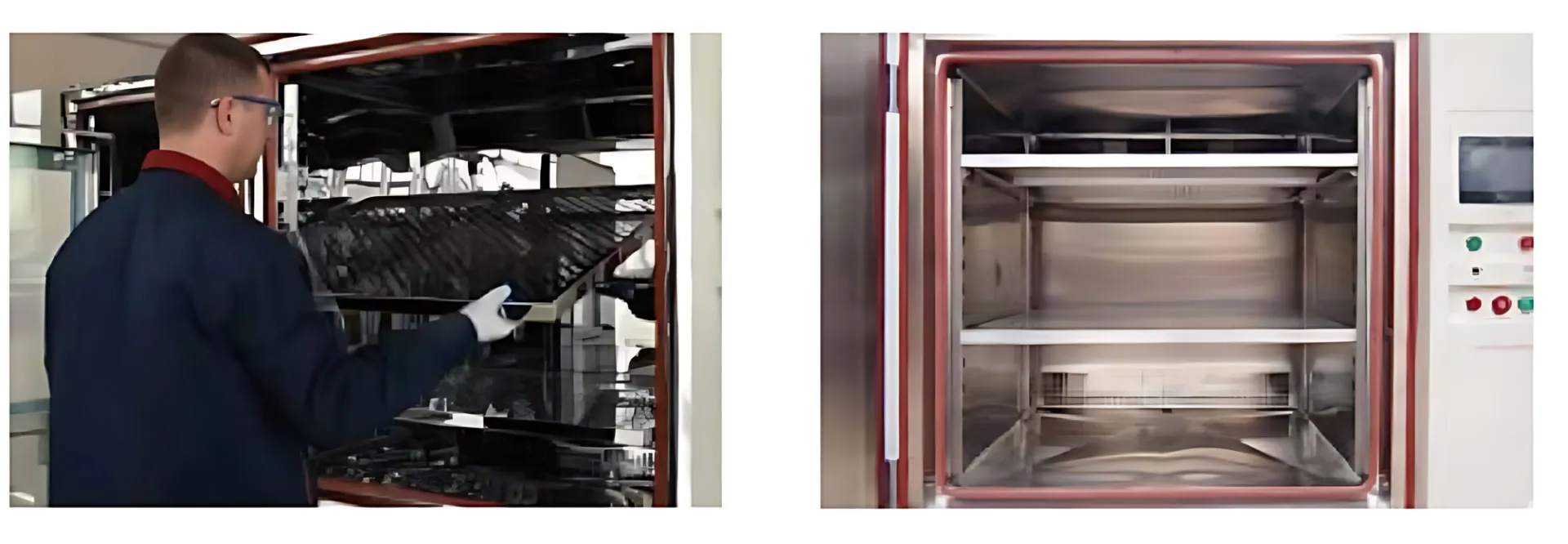
- Corrosion-Resistant Construction
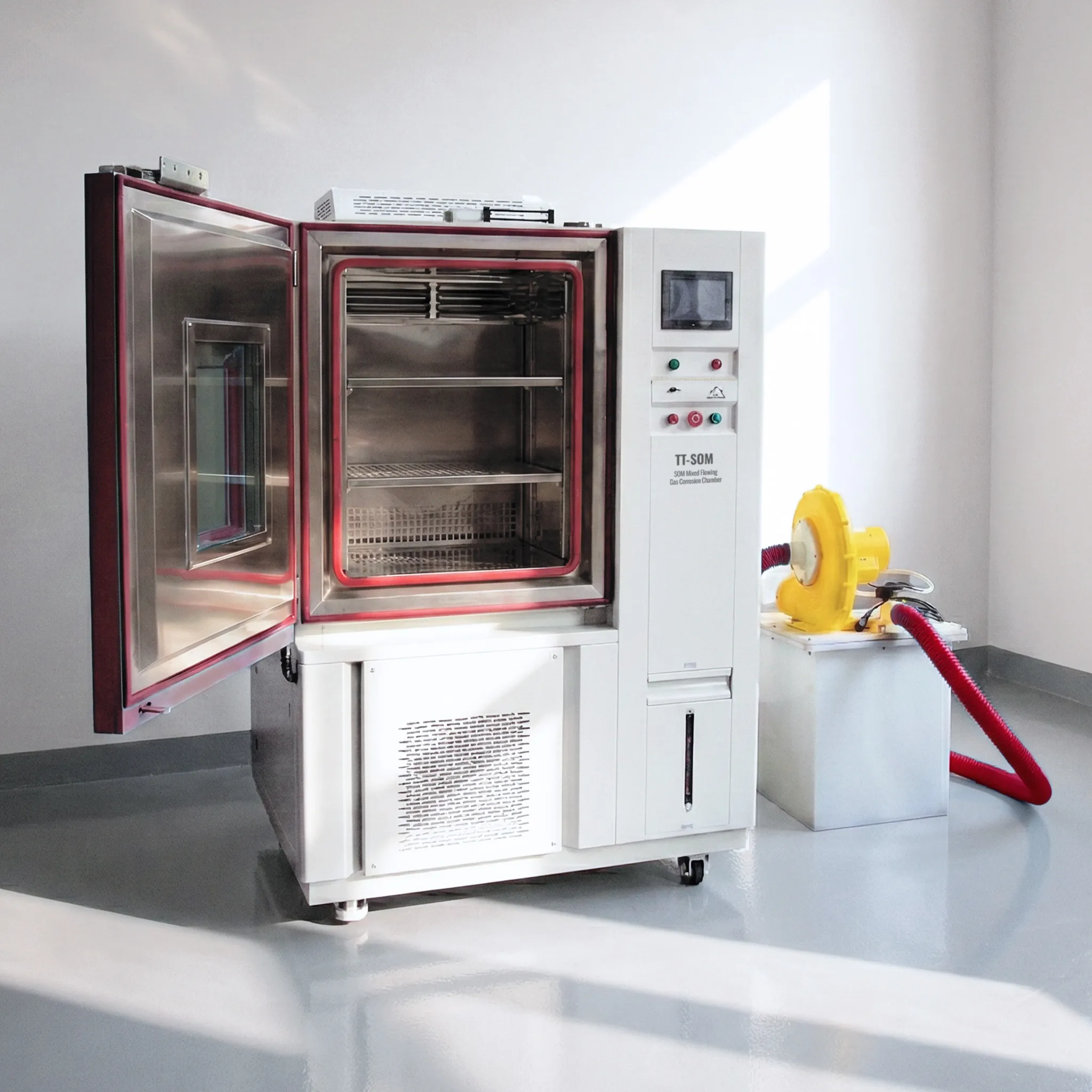
- The test chamber interior is manufactured from SUS316 stainless steel, providing excellent resistance to chemical corrosion and long service life.
- Uniform Air Circulation
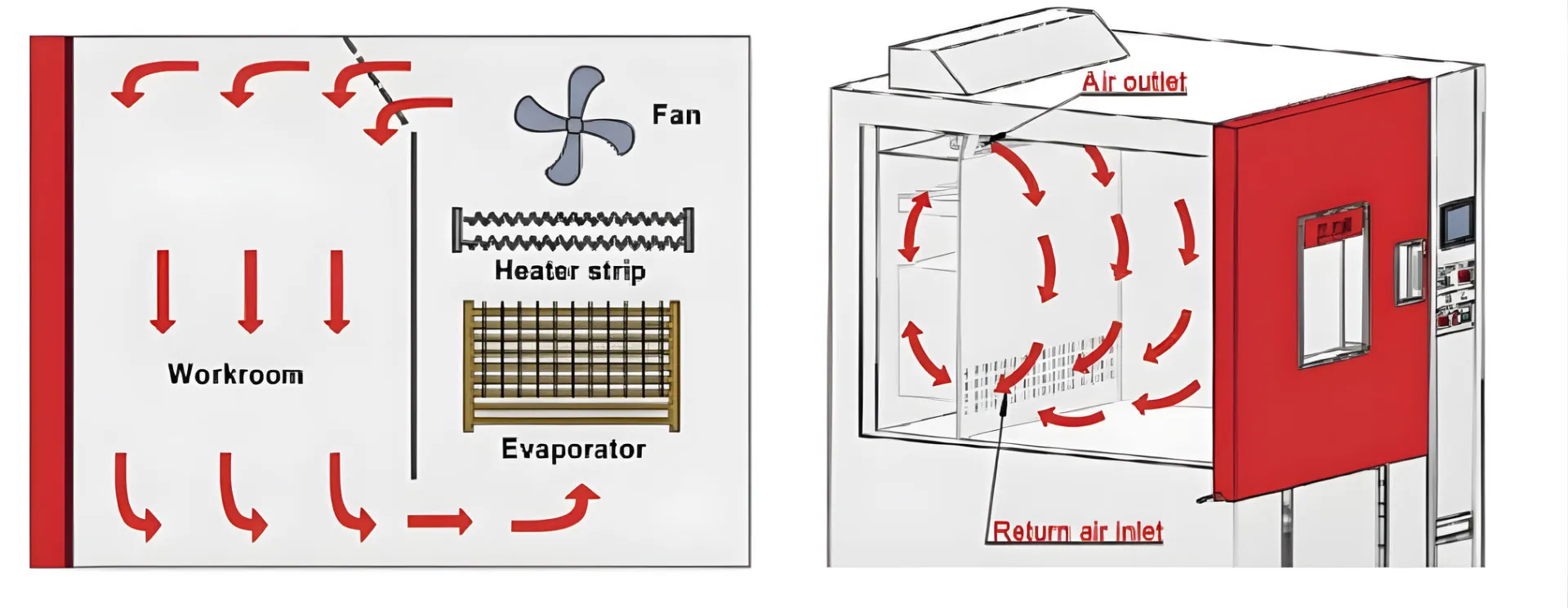
- A high-performance centrifugal fan ensures even gas distribution and consistent environmental conditions throughout the working volume.
- Advanced Safety Design
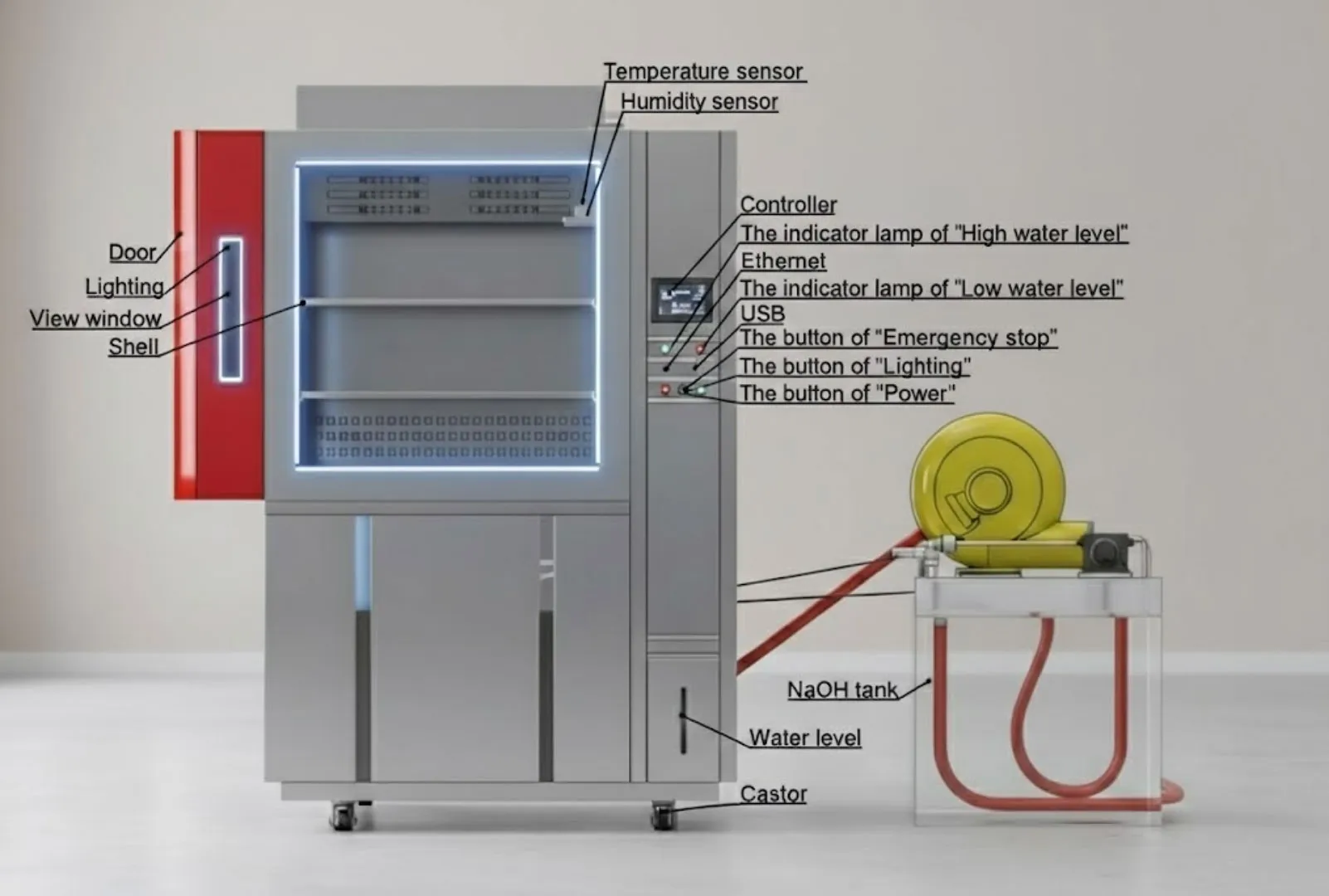
- Integrated exhaust neutralization system with NaOH solution reduces harmful gas emissions and improves operator safety.
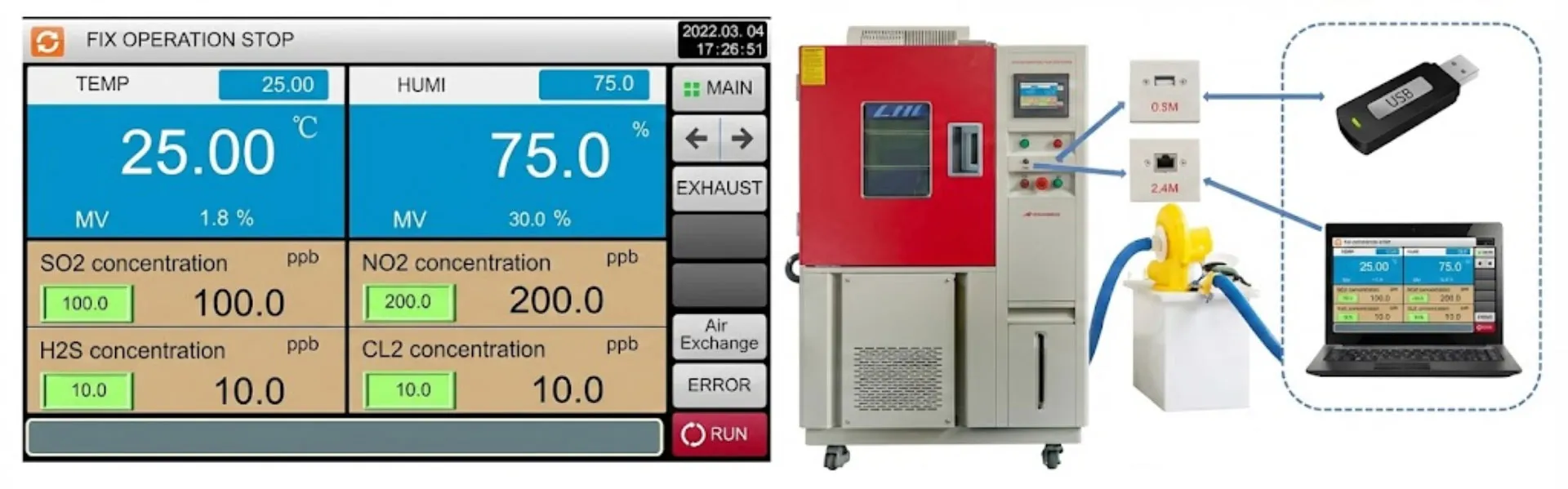
- Intuitive Control and Data Management
- Programmable color touchscreen controller supports fixed and programmed test modes, Ethernet communication, USB data export, and real-time parameter monitoring.
Core Principles: Gas Dynamics and Concentration Control
Getting a handle on how these test boxes behave is the only way to grab results that carry real weight. The logic behind the TT-SOM Mixed Noxious Gas Chamber series is really about keeping a firm, unwavering grip on reactive, Mixed Flowing Gas (MFG) clouds.
This includes aggressive agents like H&₂S, NO&₂, Cl&₂, and SO&₂. The way it stays reliable is based on a few clear-cut rules:
- The "Total-Uniformity" Rule: We push air to cycle 3 to 10 times per hour using a high-performance centrifugal fan to eliminate stagnant spots. This perfectly even blend ensures your numbers end up being spot-on rather than just rough guesses.
- Tracking the In-and-Out Flow: Our TT-SOM gadgets handle the heavy lifting of watching exactly what enters the box versus what leaves it. By comparing concentrated incoming clouds to the thinned-out exiting air, your laboratory team can see exactly what the sample is doing.
- Guiding the Swirl: To prevent damage to standard electronic components, we use highly accurate computer models to predict how the air twirls inside. This guarantees the gas blends quickly and stays that way.
Engineering Standards and System Integrity
Torontech builds equipment that makes high-level scientific theories feel totally straightforward without draining your budget dry. We follow strict guidelines to keep your research simple:
Corrosion-Resistant SUS316 Construction
To stop the interior from soaking up your expensive gas, we manufacture the inside of every Mixed Noxious Gas Chamber using premium SUS316 stainless steel. It stays clean, bright, and completely corrosion-resistant against any chemical cocktail.
Precision Environmental Regulation
A heavy-duty French TECUMSEH compressor and highly sensitive PT100Ω sensors let you adjust the heat (ranging from 15°C to 100°C) and the moisture (between 30% and 98% RH). You control this tiny slice of a harsh environment right from a programmable color touchscreen.
Integrated Operator Safety Systems
Handling high concentrations of sulfur and chlorine can be risky. We focus on perfectly sealed boxes featuring an integrated exhaust neutralization system with a built-in NaOH solution. This setup ensures nasty fumes are disarmed far away from your breathing air.
Mixed Noxious Gas Chamber Technical Specification
Available Models: TT-SOM-100 / TT-SOM-225 / TT-SOM-500 / TT-SOM-800 / TT-SOM-1000
Model-Dependent Dimensions & Volume
| Parameter | TT-SOM-100 | TT-SOM-225 | TT-SOM-500 | TT-SOM-800 | TT-SOM-1000 |
|---|---|---|---|---|---|
| Interior Volume (L) | 100 | 225 | 500 | 800 | 1000 |
| Internal Dimensions (mm) | 400×500×500 | 500×600×750 | 700×800×900 | 800×1000×1000 | 1000×1000×1000 |
| Overall Dimensions (mm) | 860×1050×1620 | 960×1150×1860 | 1180×1350×2010 | 1530×1550×2140 | 1750×1550×2140 |
Common Performance & System Specs
| Parameter | Specification |
|---|---|
| Temperature Range | 15°C to 100°C |
| Temperature Fluctuation | ±0.5°C |
| Temperature Deviation | ±2.0°C |
| Humidity Range | 30% to 98% RH |
| Humidity Deviation | ±1% RH |
| H2S Concentration | 10–100 ppb ±20 ppb (Adjustable) |
| NO2 Concentration | 200 ppb ±20 ppb (Adjustable) |
| Cl2 Concentration | 10–20 ppb ±5 ppb (Adjustable) |
| SO2 Concentration | 100–500 ppb ±20 ppb (Adjustable) |
| Air Change Rate | 3–10 times/h |
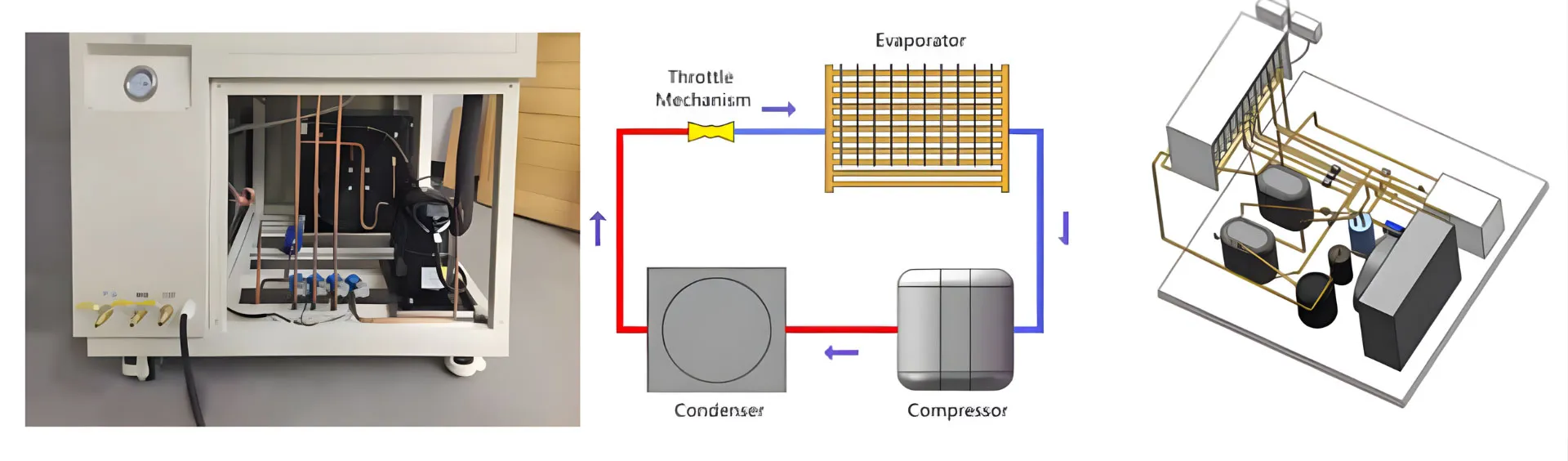
| Cooling System | Mechanical compression refrigeration system |
| Refrigerating Unit | French TECUMSEH compressor |
| Refrigerant | R449A |
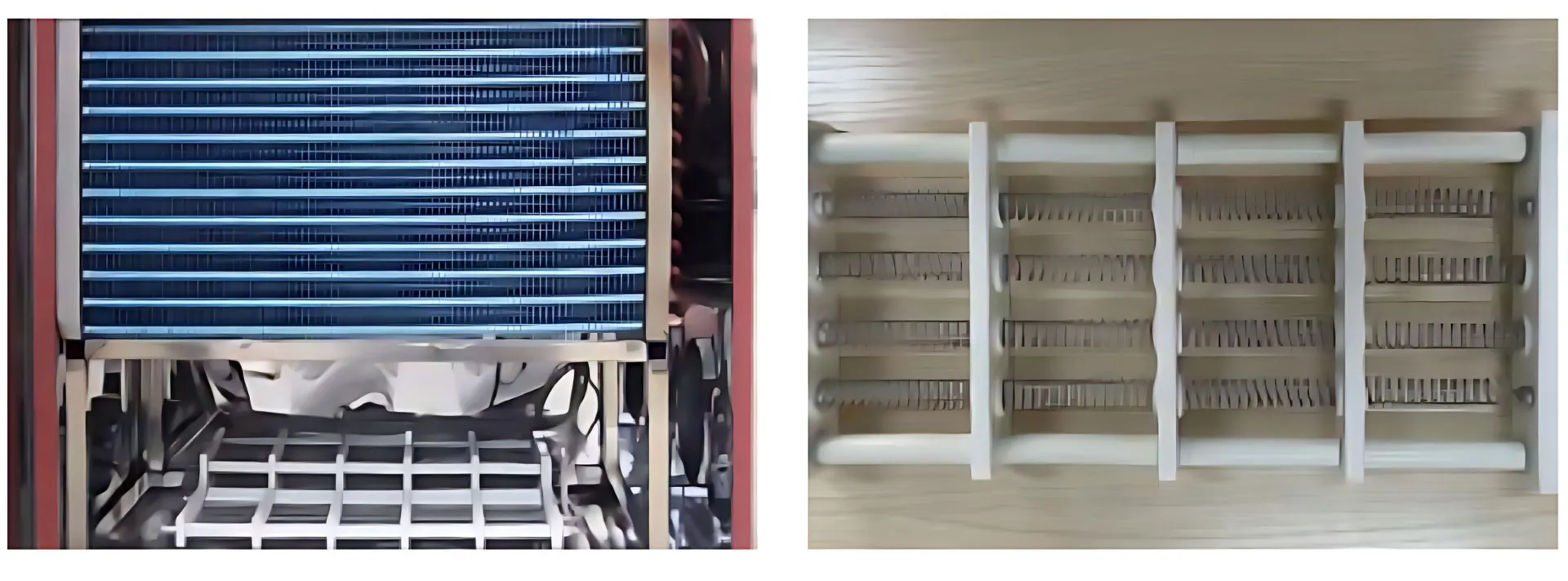
| Heating Element | Nichrome heater |
| Humidifier | External isolation, stainless steel surface evaporation humidifier |
| Water Supply System | Water purification system; automatic water supply |
| Dehumidification | Evaporator |
| Controller | Programmable color LCD touch screen controller; Ethernet connection, PC link |
| Temperature Sensor | PT100Ω / MV A-class |