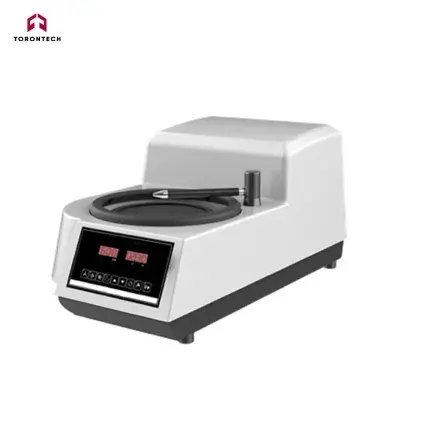
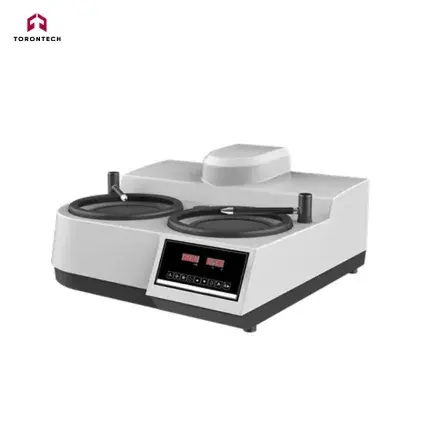
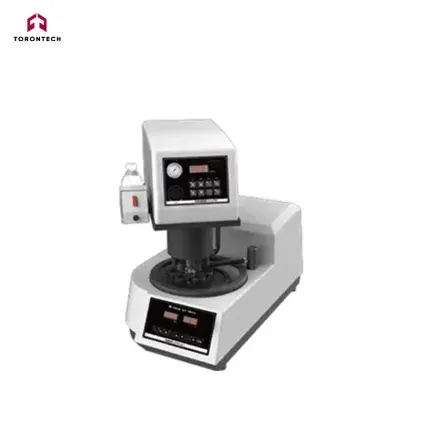
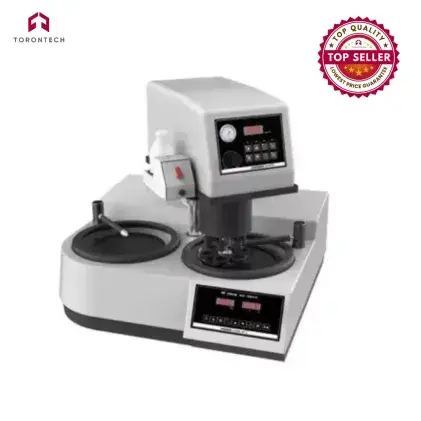
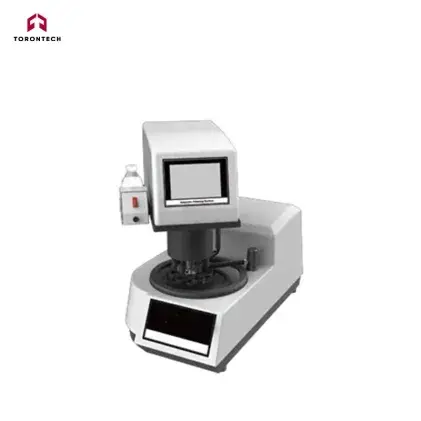
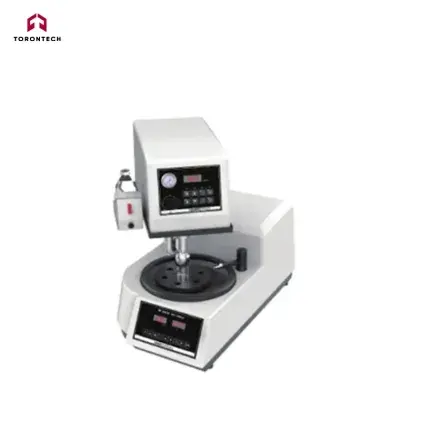
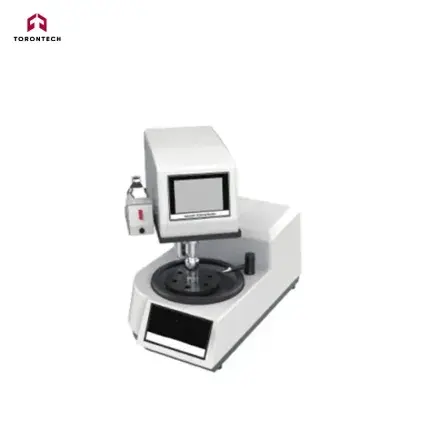
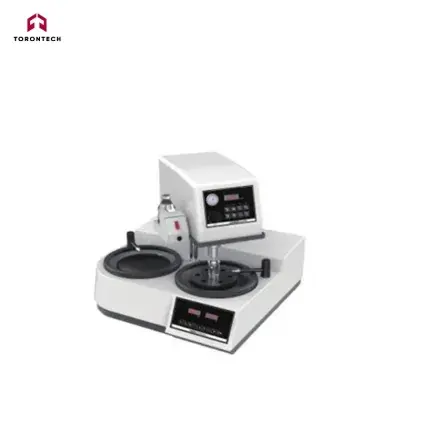
Metallography Polishers and Grinders – Grinding / Polishing Equipment
Metallography Polishers and Grinders – Grinding / Polishing Equipment
Metallographic polishers and grinders play an important role in the field of metallography by preparing and refining specimens for analysis of metals structure and properties. Metallography Grinding and Polishing equipment are specifically engineered to produce surfaces that enable detailed inspection under microscopes—a necessity in disciplines such material science and research and development. Polishing and grinding are indispensable for removing scratches and imperfections, from surfaces while unveiling the materials microstructure accurately for examination purposes.
Metallographic polishers and grinders find use across a range of industries such as automotive, aerospace manufacturing electronics and metallurgy labs. These fields depend on metallography for examining parts and materials to guarantee they adhere to quality and durability requirements. The processes of polishing and grinding experts to examine the intricate aspects of a samples grain structure inclusions phase distribution and other features.
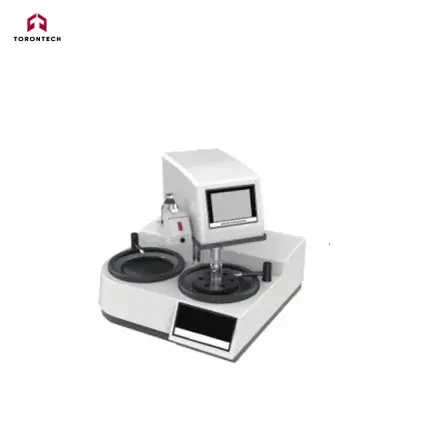
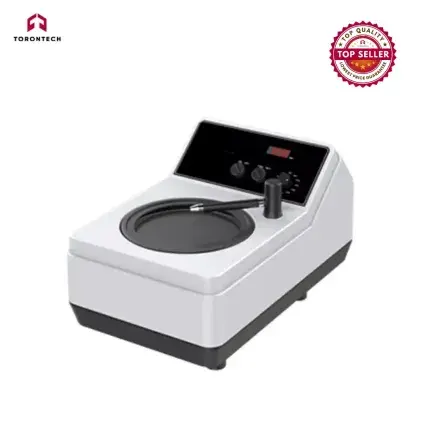
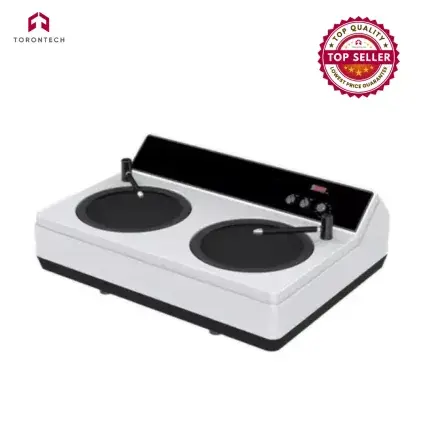
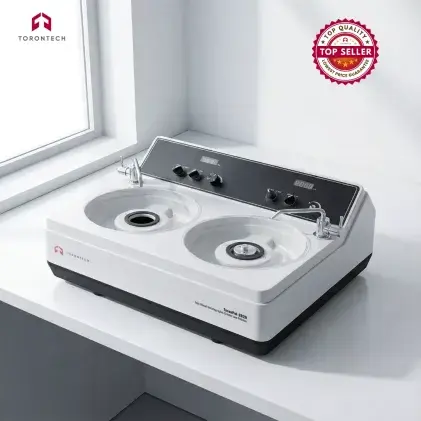
Torontech offers a selection of metallographic grinders and polishers that includes the ToronPol Series Polishing and Grinding Equipment to cater to various metallography requirements efficiently. The ToronPol Series features state of the art polishers and grinders crafted for top notch performance user convenience and longevity making them ideal for tasks ranging from polishing to advanced material examination. Whether you require a grinder for rough grinding or a delicate polisher for achieving flawless finishes, Torontech’s diverse range ensures dependable and accurate sample preparation, for metallographic studies and quality assurance purposes.
Compare Metallography Grinders and Polishers
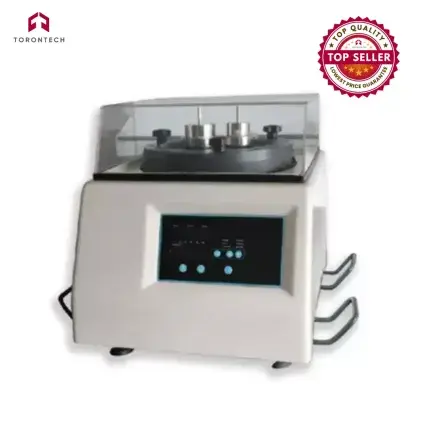
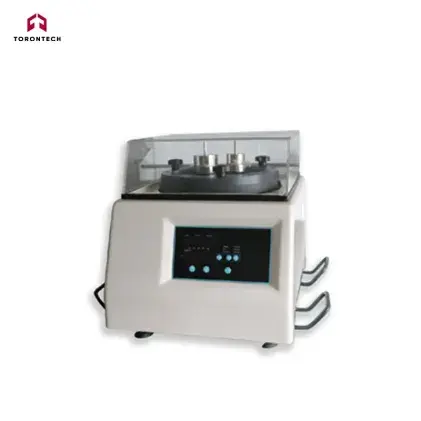
Side-by-side overview of ToronPol metallographic grinding and polishing equipment, plus supporting finishing and filtration systems.
Manual Bench Grinders and Polishers
| Feature | ToronPol™ GP-1 (Single Wheel) | ToronPol™ GP-2 (Twin Wheel) | ToronPol™ 201/251/301 Series (Single Wheel) | ToronPol™ 202/252/302 Series (Twin Wheel) |
|---|---|---|---|---|
| Primary purpose | General metallographic grinding and polishing for specimen preparation | Higher throughput prep with two wheels for faster workflow switching | Single-wheel bench prep for routine grinding and polishing workflows | Twin-wheel bench prep for multi-step grinding and polishing workflows |
| Best for | Labs that want a straightforward single-wheel station for daily use | Labs that want a twin-wheel setup to reduce changeover time | QC and metallurgy labs needing dependable single-wheel bench capacity | Teams needing twin-wheel convenience for faster sample turnaround |
| Wheel configuration | Single wheel | Twin wheel | Single wheel | Twin wheel |
| Automation level | Manual / operator controlled | Manual / operator controlled | Manual / operator controlled | Manual / operator controlled |
| Typical workflow | Rough grind to polish steps (operator managed) | Two-step or multi-step prep with less wheel swapping | Routine prep with consistent bench operation | More efficient multi-step prep for higher sample volume |
| How to choose | Choose when you want a simple single-wheel station for standard prep | Choose when you want faster transitions between grinding and polishing | Choose when you want a series option for routine single-wheel workflows | Choose when you want a series option optimized for twin-wheel workflows |
| Selection tip | If your volume is moderate and your steps are simple, this is a solid baseline | If wheel swapping slows you down, twin wheel usually pays off quickly | If you want a bench series lineup for standard daily prep, start here | If you run multiple steps per specimen and need speed, go twin wheel |
Twin Wheel with Independent Wheel Speeds
| Feature | ToronPol™ 202D/252D/302D Series (Individual Wheel Speeds) |
|---|---|
| Primary purpose | Twin-wheel grinding and polishing with added control via independent wheel speeds |
| Best for | Labs that run diverse materials and want more flexibility per preparation step |
| Why it matters | Different grinding and polishing steps often benefit from different wheel speeds |
| Decision driver | Need extra process control without moving to a fully automatic platform |
| Selection tip | If you frequently adjust speed by step or material, this series is the natural upgrade |
Automatic Metallographic Grinders and Polishers
| Feature | ToronPol™ GP-1A Series | ToronPol™ GP-2A Series | ToronPol™ GP-1AT Series | ToronPol™ GP-1C |
|---|---|---|---|---|
| Primary purpose | Automated grinding and polishing for repeatable specimen preparation | Automated grinding and polishing with twin-wheel workflow efficiency | Automated grinding and polishing with higher control and throughput focus | Automatic prep platform focused on consistency and workflow efficiency |
| Best for | Labs that want consistent results with less operator variability | Higher volume labs that benefit from twin-wheel automation | Teams that run frequent prep cycles and need robust automation routines | QC labs needing dependable automated prep for recurring methods |
| Wheel configuration | Single-wheel automatic platform (series) | Twin-wheel automatic platform (series) | Single-wheel automatic platform (series) | Single-wheel automatic platform |
| Typical workflow | Programmed grinding and polishing steps for consistent finishes | Automated multi-step prep with reduced changeover time | Automated routines for repeatable surface quality across materials | Automated prep to standardize quality and reduce rework |
| Decision driver | Need repeatability and reduced dependence on operator skill | Need speed and repeatability across multiple prep steps | Need stronger automation for sustained high-volume prep | Need a stable automatic solution for routine metallography methods |
| Selection tip | If consistency is your biggest pain point, moving to automatic is the fastest fix | If you run a lot of samples daily, twin-wheel automation helps throughput | If you want an automatic series that supports demanding lab routines, choose this | If you want a straightforward automatic platform for daily QC, this is a strong fit |
Automatic Platforms for Higher Throughput Workflows
| Feature | ToronPol™ GP-1CT | ToronPol™ GP-2C Series | ToronPol™ GP-2CT Series |
|---|---|---|---|
| Primary purpose | Automatic grinding and polishing focused on consistent, repeatable finishes | Automatic twin-wheel grinding and polishing for higher throughput labs | Automatic twin-wheel grinding and polishing for demanding throughput workflows |
| Best for | Labs that want reliable automation and consistent surface quality | Teams that want twin-wheel automation to speed up multi-step prep | Programs running frequent prep cycles that value speed and repeatability |
| Wheel configuration | Single-wheel automatic platform | Twin-wheel automatic platform (series) | Twin-wheel automatic platform (series) |
| Decision driver | Need consistent preparation results with less rework | Need faster multi-step workflows with automation benefits | Need a dedicated high-throughput automatic twin-wheel lineup |
| Selection tip | If repeatability is the priority and you want a single-wheel automatic route, start here | If you need twin-wheel speed for larger volumes, this series is a strong match | If your lab is throughput-driven and runs many specimens daily, choose this lineup |
Vibratory Polishers
| Feature | ToronPol™ V0900 | ToronPol™ V1200 |
|---|---|---|
| Primary purpose | Vibratory polishing for fine finishing and surface refinement | Vibratory polishing for fine finishing and higher-capacity finishing workflows |
| Best for | Final polishing steps where surface quality is critical | Final polishing steps with a focus on throughput or larger workflow needs |
| Typical workflow stage | After grinding and standard polishing, for final finish | After grinding and standard polishing, for final finish |
| Decision driver | Need improved surface finish for microscopy and microstructure visibility | Need improved surface finish with more capacity for finishing workflows |
| Selection tip | Choose if your analyses demand a cleaner final finish and reduced surface artifacts | Choose if you want vibratory finishing with added capacity for more samples |
High Material Removal and Support Systems
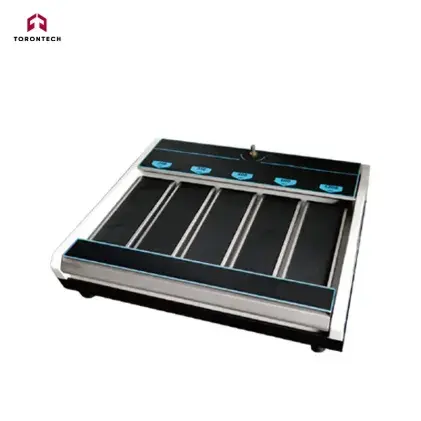
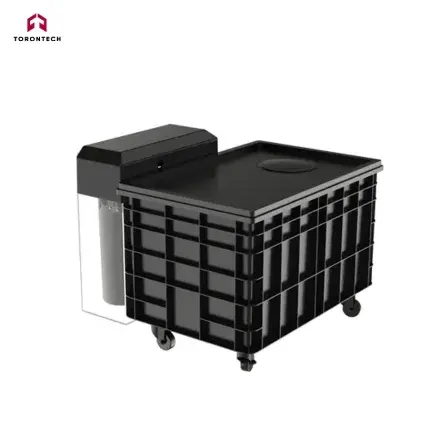
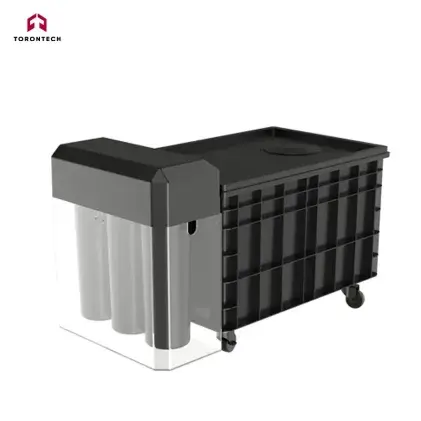
| Feature | ToronBelt™-5000 (5-Station Belt Grinder) | ToronGPTank™-070 (Filtration & Recirculation) | ToronGPTank™-070A (Filtration & Recirculation) |
|---|---|---|---|
| Workflow stage | Early stage preparation (aggressive grinding and rapid material removal) | Support system (coolant management and cleaner operation) | Support system (coolant management and cleaner operation) |
| Primary purpose | Fast, belt-based grinding for high removal needs and prep efficiency | Filter and recirculate fluids to support grinder/polisher workflows | Filter and recirculate fluids to support grinder/polisher workflows |
| Best for | High volume labs or tough materials needing quick rough grinding | Labs that want cleaner coolant, reduced waste, and better shop cleanliness | Labs that want cleaner coolant, reduced waste, and better shop cleanliness |
| Decision driver | Need speed in rough grinding before moving to polishing steps | Need to improve cleanliness, extend fluid life, and stabilize prep conditions | Need to improve cleanliness, extend fluid life, and stabilize prep conditions |
| Selection tip | Choose if your bottleneck is early material removal or high specimen volume | Choose if you want more consistent prep conditions and less maintenance hassle | Choose if you want more consistent prep conditions and less maintenance hassle |