Metallography Equipment
ToronTech’s Metallography equipment offers its customers value and accuracy at an affordable price. Our range of Metallography machines and instruments includes Cutting, Grinding & Polishing machines, Metallurgical Microscopes and Mounting press machines.
Metallography
Metallography is the study of the physical structure and components of metals, typically using microscopy.
The surface of a metallographic specimen is prepared by various methods of cutting, grinding, polishing, and etching. After preparation, it is often analyzed using optical or electron microscopy. Using only metallographic techniques, a skilled technician can identify alloys and predict material properties.
Mechanical preparation is the most common preparation method. Successively finer abrasive particles are used to remove material from the sample surface until the desired surface quality is achieved. Torontech offers a complete line of machines for mechanical sample preparation for metallography analysis to meet different demands for quality, capacity, and reproducibility.
Metallographic specimens are typically "mounted" using a hot compression thermosetting resin. When specimens are very sensitive to temperature, "cold mounts" may be made with a two-part epoxy resin. Mounting a specimen provides a safe, standardized, and ergonomic way by which to hold a sample during the grinding and polishing operations.
After mounting, the specimen is wet ground to reveal the surface of the metal. The specimen is successively ground with finer and finer abrasive media. After grinding the specimen, polishing is performed. After polishing, certain microstructural constituents can be seen with the microscope, otherwise, the microstructural constituents of the specimen are revealed by using a suitable chemical or electrolytic etchant.
Spectroscopy
Spectroscopy and spectrography is the measurement of radiation intensity as a function of wavelength. Spectral measurement devices are referred to as spectrometers, spectrophotometers, spectrographs or spectral analyzers.
Optical emission spectrometry (OES) and X-Ray fluorescence are the most commonly used techniques for the analysis of metals and solid samples. It is crucial to have the sample properly prepared. The sample needs to be both representatives, homogeneous and with an even surface in order to eliminate factors that can influence the results.
The surface spectroscopy sample is prepared by various methods of cutting, grinding and polishing, Successively finer abrasive particles are used to remove material from the sample surface until the desired surface quality is achieved. Torontech offers a complete line of machines for mechanical sample preparation for spectroscopy analysis to meet different demands for quality, capacity, and reproducibility.
Petrography
Petrography is the study of origin, composition, distribution and structure of rocks. The mineral content and the textural relationships within the rock are described in detail. The classification of rocks is based on the information acquired during the petrographic analysis with petrographic microscope.
The detailed analysis of minerals by optical mineralogy in thin section and the micro-texture and structure are critical to understanding the origin of the rock. Electron microprobe analysis of individual grains as well as whole rock chemical analysis by instruments such as atomic absorption analyzers and X-ray fluorescence analyzers.
The surface of a rock specimen is prepared by various methods of cutting, grinding and polishing, Successively finer abrasive particles are used to remove material from the sample surface until the desired surface quality is achieved. Torontech offers a complete line of machines for mechanical sample preparation for Petrography analysis to meet different demands for quality, capacity, and reproducibility.
Compare Metallography Equipment Categories
Side-by-side overview of Torontech metallography equipment to help you choose the right tool for your workflow.
| Feature | Metallurgical Microscopes (ToronMM™ Series) | Metallurgical Image Analysis Software (ToronMat+™) | Metallography Abrasive & Precision Cutters | Grinding & Polishing Equipment | Metallography Mounting Presses |
|---|---|---|---|---|---|
| Workflow stage | Inspection and microstructure observation | Measurement, documentation, and reporting | Sectioning and sample cutting | Surface preparation before microscopy | Specimen mounting for safe handling and edge retention |
| Primary purpose | Reveal microstructural constituents using metallurgical optics | Quantify features and standardize analysis results | Prepare specimens with controlled cutting for metallography | Grind and polish specimens to achieve analysis-ready surfaces | Encapsulate specimens using hot or cold mounting workflows |
| Best for | QC labs, failure analysis, R&D, materials characterization | Consistent image analysis, grain/phase quantification, documentation | Metals, ceramics, composites, and hard materials sectioning | Repeatable surface prep for microscopy and analysis | High-throughput labs or delicate samples needing stable mounting |
| Typical output | Microscope images and visual microstructure evaluation | Measurements, annotations, and analysis reports | Sectioned specimens ready for grinding/polishing | Polished specimens ready for microscopy or etching | Mounted specimens ready for grinding/polishing |
| Common decision driver | Need reliable metallographic imaging and observation | Need repeatable measurement and documentation of microstructure | Need controlled, clean cuts to preserve sample integrity | Need reproducible surface finish and throughput | Need consistent mounts, edge retention, and safer handling |
| Selection tip | Choose if your priority is microstructure observation | Choose if you want standardized measurement and reporting | Choose if you need the right cutter for your specimen type | Choose if surface preparation is your bottleneck | Choose if mounting quality impacts your final results |
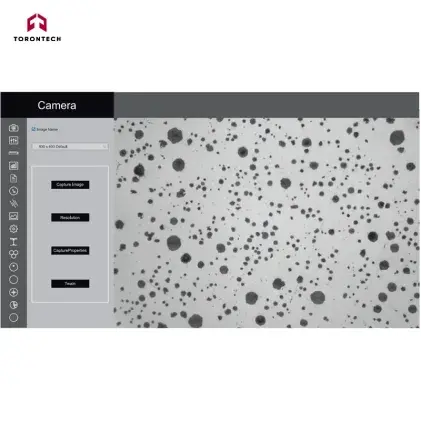
Metallography equipment prepares and examines the microstructure of metals and other materials. Studying microstructure reveals how a material was processed and how it will perform, which makes metallography essential to quality control, research, and failure analysis.
Quality Control and Material Verification
Confirm grain size, phase distribution, and coating thickness against specification. Microstructural checks support material certification and incoming inspection under standards such as ASTM E3.
Failure Analysis
Examine cracks, fractures, and defects to find the root cause of a component failure. Prepared cross-sections show how and where a part began to fail.
Weld and Heat-Treatment Inspection
Evaluate weld penetration, heat-affected zones, and case depth from surface hardening. These measurements confirm that processes were carried out correctly.
Research and Development
Study new alloys, composites, and surface treatments by linking microstructure to mechanical performance during material development.
1. Complete Sample Preparation Workflow
The equipment range covers each stage of preparation, from sectioning and mounting to grinding, polishing, and etching, so a laboratory can build a full metallography lab from one source.
2. Precision Sectioning
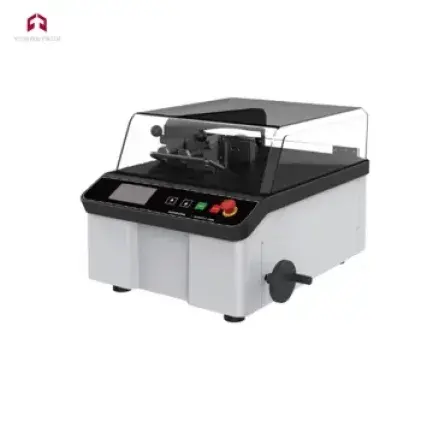
Abrasive and precision cutters remove a representative sample while limiting heat and deformation, which protects the true microstructure for analysis.
3. Hot and Cold Mounting
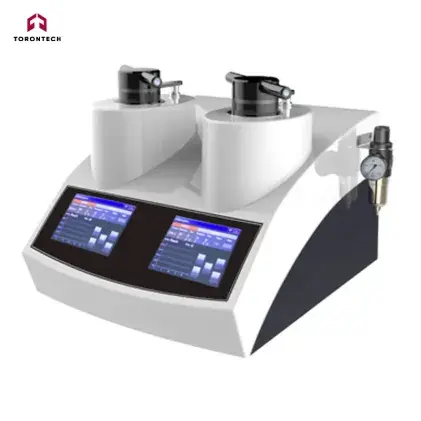
Mounting presses and cold-mount options encase specimens for safe, repeatable handling during grinding and polishing.
4. Controlled Grinding and Polishing
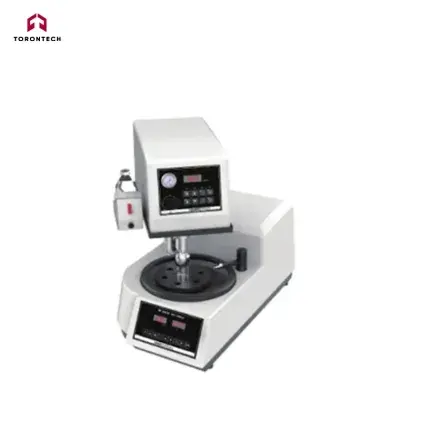
Grinder-polishers produce flat, scratch-free surfaces through a staged sequence, which is the key to clear microstructure imaging.
5. Manual and Automatic Options
Manual units suit lower volumes and teaching, while automatic systems deliver consistent results and higher throughput for busy laboratories.
6. Standards-Based Preparation
The workflow supports recognized methods such as ASTM E3 for metallographic specimen preparation, which keeps results comparable and defensible.