High Vacuum vs Low Vacuum Sputter Coaters Comparison
Selecting the right equipment to coat your samples is a critical decision for any research facility. When you are setting up a lab for high-precision analysis, every technical detail matters. One of the primary considerations we see teams balancing is the choice between high-vacuum vs low-vacuum sputter coaters. We’re going to pull apart the pros and cons of both paths so you can pick the right gear for your long-term research goals.
Key Takeaways
- Deep vacuum environments deliver flawlessly clean and exceptionally smooth finishes for advanced imaging, while standard vacuum setups provide rapid results for everyday specimen preparation.
- Your pumping setup dictates your material choices. Deep vacuums allow you to work with metals that react quickly with air, whereas standard vacuums work brilliantly with noble metals like gold and platinum.
- Your long term financial plan plays a major part in this choice. Standard units keep your daily operating expenses low and require very little upkeep, but investing in a deep vacuum system gives your facility the exact precision required for high stakes materials research.
The Role of Vacuum in Sputter Coating
Before we get into the nuts and bolts of high vacuum vs low vacuum sputter coaters, we should talk about why a vacuum is necessary. Sputter coating involves bombarding a target material with ionized gas to eject atoms that then coat a substrate.
High-vacuum and low-vacuum sputter coaters differ primarily in the vacuum level during deposition, which significantly affects the final coating quality and properties.
A vacuum environment is required to:
- Enable the generation of a stable plasma.
- Provide a clear path for sputtered atoms to reach the sample without gas interference.
- Prevent contamination and oxidation of both the target and the sample.
We reckon that getting a firm grip on this science is a big deal. While it’s tempting to save costs on vacuum depth, the physical limitations of a shallow vacuum are real. You simply won't achieve that ultra-clean, high-definition finish required for advanced imaging.
Performance Comparison: At a Glance
If you’re in a rush, here’s the bottom line on how these two technologies stack up. While high-vacuum sputtering is preferred for high-quality, functional coatings, low-vacuum sputtering offers advantages in speed, cost, and convenience for less demanding applications.
| Feature | Low-Vacuum Sputter Coaters | High-Vacuum Sputter Coaters |
|---|---|---|
| Pumping Mechanism | Rotary vane pump | Turbo-molecular + backing pump |
| Operating Pressure | 10^-2 to 10^-3 mbar | 10^-5 mbar or better |
| Target Materials | Noble/Non-oxidizing metals (Au, Pt, Pd) | Noble AND Oxidizing metals (Al, Cr, Ti, ITO) |
| Imaging Resolution | Standard SEM | High-res FE-SEM, TEM, EBSD |
| Cycle Time | Rapid (minutes) | Extended (requires deeper vacuum) |
| Capital Investment | Economical | Higher upfront expenditure |
Low-Vacuum Sputter Coaters: Efficient & Practical
These standard setups typically operate in the 10^-2 to 10^-3 mbar range, relying on a double-stage rotary pump that stays quiet and consistent.
Primary Applications
These machines act as the absolute heavy lifters for everyday Scanning Electron Microscopy (SEM) work. If you have non-conductive samples, you have to add a thin layer of metal to avoid "charging" effects from the electron beam. Low-vacuum units are perfect for spraying on noble metals like Gold (Au) or Platinum (Pt).
Low-vacuum sputtering produces coatings that are generally more porous and contain more defects, but they are still perfectly acceptable for routine applications such as carbon film coatings for electron microscopy.
To give you a practical idea, think about a geology laboratory that needs to check dozens of rock slices quickly. They simply need a rapid gold spray to grab a clear picture without spending hours waiting for the chamber to empty out completely.
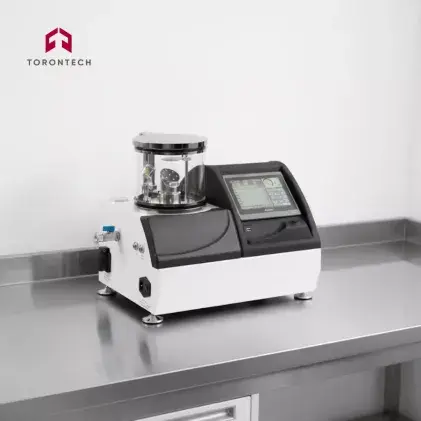
If your team also frequently prepares samples for X-ray microanalysis, we often suggest looking at a dual-purpose machine like our Desk Sputter & Carbon Coater - DSCR or adding a standalone Desk Carbon Coater - DCR to handle those non-metallic layer needs efficiently.
Technical Advantages
- High Throughput: These systems reach operating pressure quickly, reducing downtime between runs.
- Simplified Maintenance: With fewer complex mechanical parts, these units stay in good shape for the long haul.
- Budget Optimization: They offer excellent performance at a fraction of the cost of high-end versions.
From where we’re sitting, if your lab focuses on routine checks of biological or geological samples, a low-vacuum system is usually the smartest move. It skips the extra baggage of fancy pumps while delivering a crisp, clear coating every time.
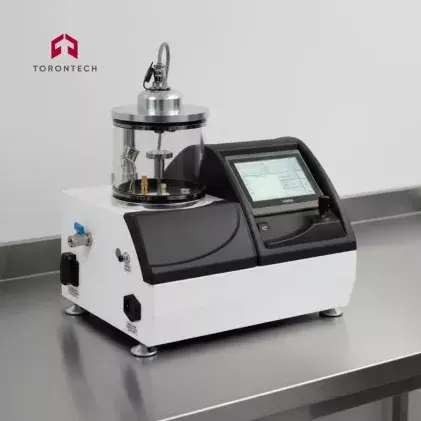
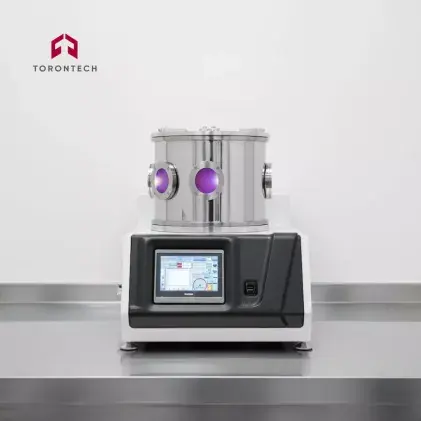
At Torontech, our Desk Sputter Coater - DSR1 is a perfect example of a clever, small machine that gets your noble metal coatings done without any trouble. It’s a total win for labs needing a cost-effective way to get samples ready.
High-Vacuum Sputter Coaters: Precision & Purity
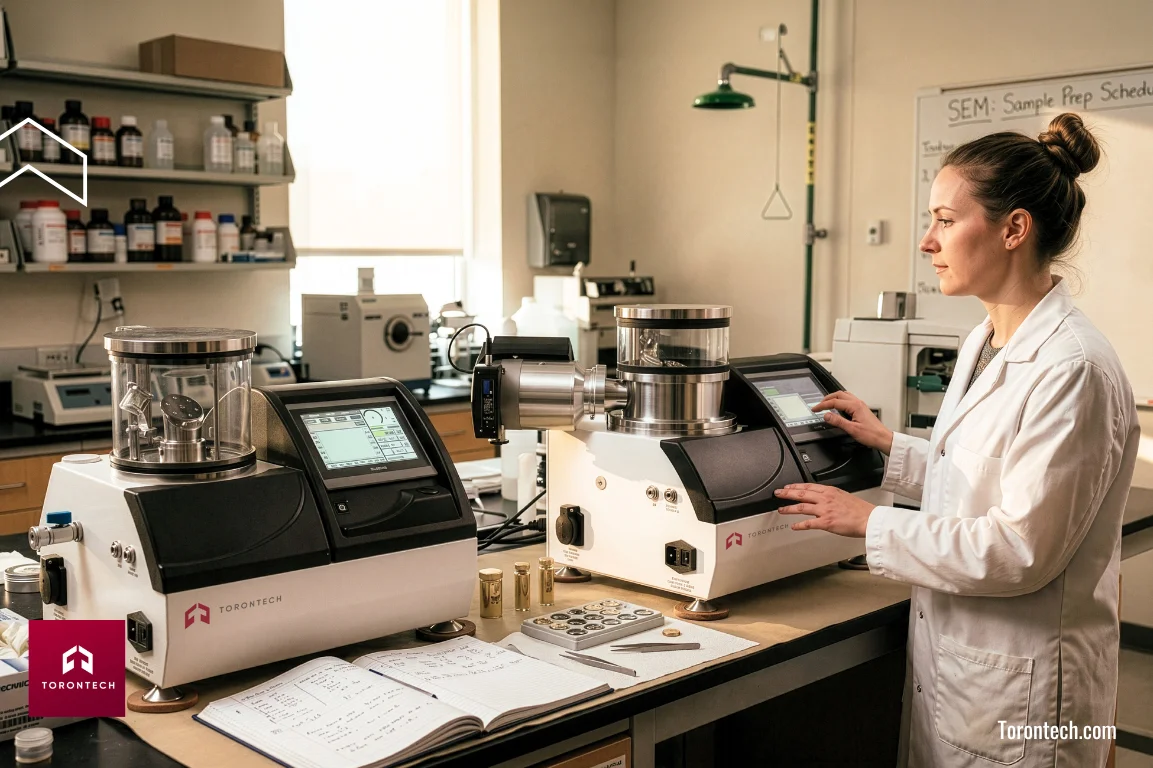
These deep-vacuum setups hit 10^-5 mbar or better by utilizing a high-speed turbo-molecular pump.
Primary Applications
If your team handles high-end analysis, like FE-SEM, TEM, or EBSD, a high-vacuum system is a hard requirement. Furthermore, if you plan to use oxidizing metals like Aluminum or Titanium, you definitely need that deep, oxygen-free environment.
Picture a research group attempting to deposit pure titanium layers for experimental solar panels. A single stray oxygen molecule ruins the entire batch, meaning that an ultra-deep, flawlessly clean void is absolutely necessary.
Technical Advantages
- Ultra-Fine Grain Size & Adhesion: High-vacuum sputtering leads to denser, less porous coatings with better corrosion resistance and adhesion due to reduced defects and more efficient substrate etching by ion bombardment.
- Superior Film Purity: Total removal of air and water vapor ensures your metal deposition stays pure. Just be aware that excessively high vacuum can sometimes induce internal stresses that may reduce adhesion strength if parameters are not carefully managed.
- Multi-Target Versatility & Advanced Control: Many high-vacuum setups can hold several different targets for complex thin-film work. These systems often incorporate advanced features like automated controls and biasing to enhance plasma density and film properties, enabling precise control over microstructure and composition, including gradient coatings.
In our book, the best part of these systems is the future-proofing they offer. While they require a higher initial investment, we feel they are a must-have for any lab that anticipates moving into advanced high-resolution research.
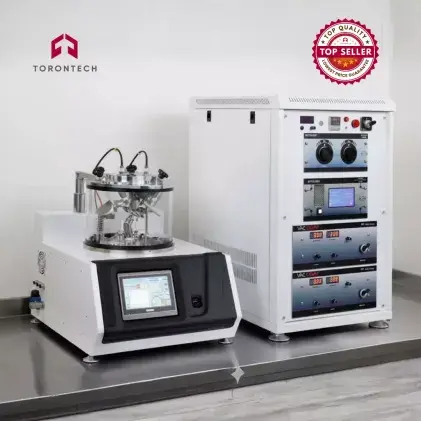
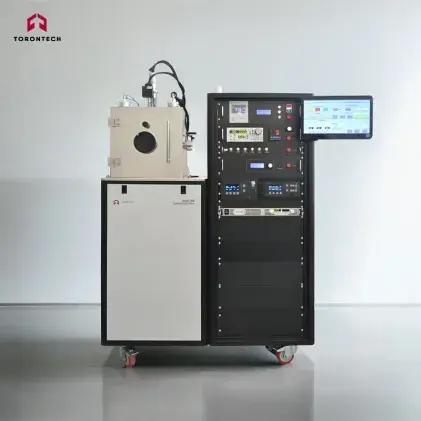
For labs that need that extra level of perfection, our High Vacuum setups, like the High Vacuum, Triple Magnetron Target Desk Sputter Coater-DST3-A/S or the highly versatile High-Vacuum, Double-Magnetron Target Sputter Coater/ ThermalEvaporator-DST2-TG, are packed with smart technology that keeps your work at the top of its game.
Industry Use Cases
The choice between low-vacuum vs high-vacuum sputter coaters is often dictated by the specific requirements of your field:
Semiconductor & Electronics
You absolutely need high-vacuum gear here. The demand for ultra-pure thin films and high-resolution failure analysis on silicon wafers means low-vacuum simply won't cut it.
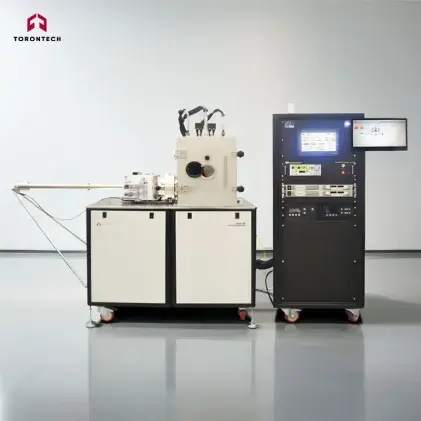
For heavy-duty processing in this sector, we frequently see facilities relying on larger-scale setups like our Load-Lock Equipped Coating System ToronTS-450 or the Magnetron Sputtering System ToronSP-400 to maintain pristine environments during high-volume runs.
Medical Devices & Implants
Coating artificial joints or stents requires absolute purity to ensure biocompatibility. High-vacuum systems are required for this work, particularly when applying reactive metals intended for long-term use in the human body.
Life Sciences & Pharmaceuticals
Most biological labs are well-served by low-vacuum systems. They are quick, efficient, and provide the image quality needed for standard morphological studies of tissue or pollen.
Forensic Science
When examining trace evidence like fibers or paint chips, investigators need quick results without compromising the sample. Low-vacuum units do a brilliant job of providing rapid conductive coatings for high-volume evidence processing.
Earth Sciences & Mining
Mining teams checking mineral structures or fractures often process a heavy stack of samples daily. A low-vacuum system is usually the best fit for this pace, providing rapid imaging for core sample analysis.
Advanced Materials Research
These labs often utilize both systems. We’ve noticed the most versatile setups use low-vacuum units for daily screening and high-vacuum systems for mapping complex atomic structures or crystallography.
For teams pushing the absolute limits of material science, incorporating advanced tech like the PLD Pulsed Laser Deposition System - PLD-T handles those highly specialized, exact layer depositions perfectly.
Operational Considerations: Total Cost of Ownership
For B2B procurement, the initial price is only half the story. We reckon you’ve got to look at the total cost over the years.
- Low-vacuum machines are highly economical to run. The rotary pumps are sturdy and only need simple oil changes. We see these as the "set it and forget it" choice for high-volume labs.
- High-vacuum machines are a larger investment and require more attentive upkeep. Turbo pumps are high-performance instruments that need careful handling. However, we still think the super-accurate data they produce is worth the extra effort for high-stakes research.
Choose Torontech for Cost-Effective Sputter Coater Tech
Picking between a deep vacuum and a shallow one depends on your specific coating materials and your long-term research roadmap. Having the right gear is the secret to getting repeatable, high-quality results.
Ready to upgrade your laboratory? Torontech has been a trusted North American supplier for universities and industrial labs for over two decades. We’re all about bringing you clever and innovative technology that stays cost-effective, because we believe great research shouldn't be limited by equipment costs.
Explore our Sputter Coaters and Vacuum Coating Systems or contact our experts to find the perfect, budget-friendly fit for your team.
References:
- Cavaleiro, A., Vieira, M., Ramos, F., & Dias, J. (1996). The ultimate vacuum pressure and the characteristics of sputtered coatings. Thin Solid Films, 238-242.
- Febvrier, L., Landälv, L., Liersch, T., Sandmark, D., Sandström, P., & Eklund, P. (2020). An upgraded ultra-high vacuum magnetron-sputtering system for high-versatility and software-controlled deposition. Vacuum, 187, 110137.
- Namork, E. (1985). Preparation of carbon films from evaporated fibers and rods at fore‐vacuum pressure. Journal of Electron Microscopy Technique, 2, 45-51.
- Suzuki, K. (1999). State of the art in large area vacuum coatings on glass. Thin Solid Films, 351, 8-14.
- Zhang, Y., Zheng, D., Song, G., Han, L., & Fu, D. (2019). Effect of vacuum degree on adhesion strength and corrosion resistance of magnetron sputtered aluminum coating on NdFeB magnet. Materials and Corrosion, 70, 1230 - 1241.
- Zhao, P., Shen, M., Gu, Y., Zhu, S., & Wang, F. (2015). High vacuum arc ion plating NiCrAlY coatings: Bias effect and approach to preparation of functional gradient coatings. Surface & Coatings Technology, 281, 44-50.