Sieve Analysis & Particle Size Distribution Test
Grabbing a massive advantage in the market begins with ensuring every last crate of product leaves your facility in a state of sheer perfection. We are convinced that pinning down those tricky numbers on your material sizing is a remarkably clever path to take for a satisfyingly smooth production rhythm.
This guide highlights why the right mechanical setup keeps your finance team remarkably cheerful while making sure your final output hits the mark every single time. Take a look at how getting your testing gear sorted out brings a massive sense of relief to your entire team.
Key Takeaways
- Pinning down the exact physical measurements of your powder bits is a remarkably clever way to keep your daily manufacturing tasks running flawlessly and dodge horribly expensive ruined batches.
- Sticking closely to the highly required physical checking guidelines guarantees your building sails through stressful inspections with flying colors and gives you zero unpleasant surprises.
- Choosing a sturdy mechanical shaker over an outrageously high priced laser contraption is an insanely smart move that keeps the accounting department perfectly happy while delivering data that is sheer perfection.
- Bringing high quality sorting machines into your workspace completely removes the frustrating physical labor, easily breaking apart those annoying nubbly clumps and highly fragile chunks so your people can simply focus on the final numbers.
Defining Particle Size Distribution Analysis
Let’s talk about what this actually involves. Basically, a stack of sieves with decreasing aperture sizes is shaken, and the mass retained on each level computes the average fragment measurement.
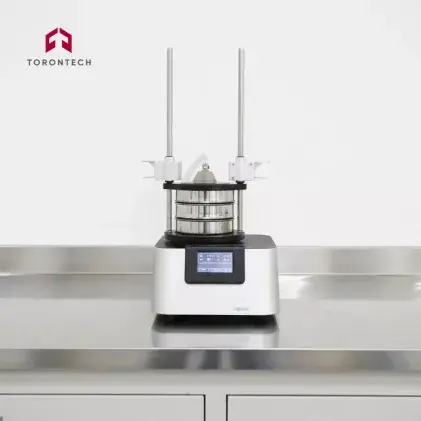
It is all about getting the real numbers on the spread of different sized bits in your sample, whether you are dealing with ultra fine 5 µm specks or chunky 25mm rocks. Incidentally, handling that incredibly wide spread of sizes is exactly the kind of heavy lifting our Vibratory Sieve Shaker SS2000 is built to tackle on a daily basis.
In our opinion, a material sample is never just a uniform pile. Seasoned production pros know exactly the kind of mess we mean when things start to stick together or fail to flow! These tiny variations decide if your material behaves perfectly or causes a massive clog in the system. We have seen that getting a firm grip on these tiny quirks is a big deal in plenty of spots:
- Pharma: Where we believe getting active pharmaceutical ingredients to dissolve at just the right speed is the difference between a high performing product and a total failure.
- Additive Manufacturing & Biomass: A spot where the way tiny metal grains or fibrous milled biomass pack together dictates your success. Irregular or fibrous shapes often need careful checking since passage depends entirely on particle orientation. For extremely irregular or needle like bits, studies propose using vision and image processing as an incredibly effective backup method to verify your physical sieve data, often yielding 95 percent or higher similarity.
- Mining: Figuring out how to sort the raw crushed ore coming out of the ground so it is ready for the next processing step.
- Construction: Ensuring your crushed limestone and sand are exactly right so your builds stay solid and give you zero unpleasant surprises.
Standardizing Your Testing Protocols
Setting up a proper particle size distribution test is entirely about staying on the right side of the rules and avoiding massive headaches. Tweaking your agitators, time, or shaker type can actually shift your geometric average size by a full 100 µm.
Think about the heavy construction sector, for example. A massive batch of concrete failing a load bearing test simply because the sand was poorly sorted can cost an operation thousands of dollars in redos.
We see these tests as the main thing standing between your team and a very frustrated auditor. If your facility needs to follow the ASTM E11 rules or the ISO 3310 guidelines, you need tools that are satisfyingly spot on every single time.
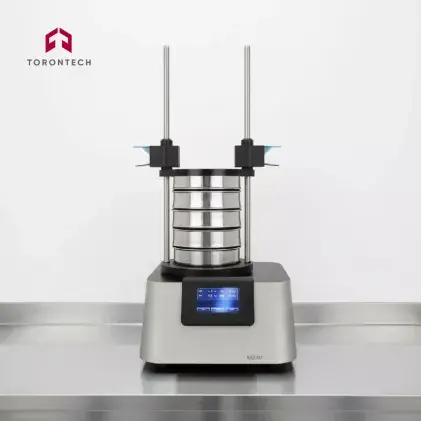
That is exactly why highly accurate units like our Sieve Shaker Electromagnetic Type exist, bringing quiet, repeatable precision directly to your testing benches. Honestly, who has the time to deal with the shaky, unreliable results you get from old school manual methods? It is time to move to something that actually delivers.
Methodology Comparison: Sieving vs. Laser Diffraction
We are calling it right now. Those outrageously high priced laser machines are often a lot more trouble than they are worth. They cost a small fortune to buy, they are frustratingly sensitive to changes, and you need a dedicated specialist just to keep them from breaking down.
Studies even show that wet sieving actually yields the lowest variation compared to highly sensitive laser data. Why drop fifty thousand dollars on a laser setup just to pass a routine quality check on a batch of cocoa powder or baking soda?
On the flip side, a solid mechanical shaker gives you the physical truth of your material. We stand by the idea that sieving is the smart, budget friendly path to getting your data.
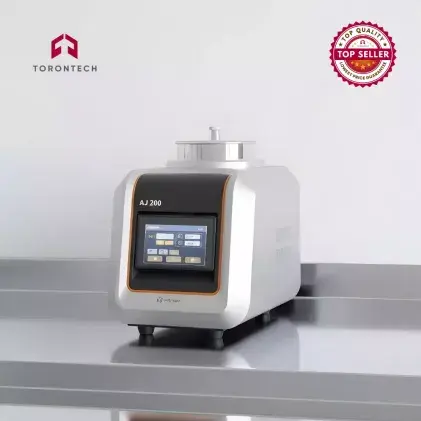
For instance, testing a highly specific 0.3g pinch of tricky, sticking cement dust using our Air Jet Sieving Machine AJ200 gets the job done perfectly without a price tag that makes the CFO wince. Wet sieving, specifically, gives more accurate and consistent results than dry mechanical sorting for fine soils and minerals. It is a financially sensible way to get the job done without all the unnecessary bells and whistles.
Achieving High-Accuracy Measurement
After selecting your method, achieving a truly accurate particle size distribution measurement means you need to stop the guesswork.
Typical lab practice uses 10 to 15 minutes of shaking with mechanical units to ensure the smallest fragments reach the lower sieves. You need a setup featuring programmable digital controls, like a highly precise 1 to 99 minute time setting, that operates with a steady, relentless mechanical consistency.
Why is the timer so critical? If you leave highly fragile and friable substrates shaking for too long, the physical agitation actually shatters the pieces, creating artificial fine dust and completely ruining your test data. Furthermore, dealing with stubborn, cohesive flours or sticky grains requires utilizing dispersion agents or sieve agitators to help those tiny fragments actually push through the lower meshes.
Sample moisture also completely alters measured sizing, so keeping the entire process locked down is critical. Your equipment also requires routine vibration calibration to maintain absolute accuracy. In our view, you need a machine that handles the hard work so your team can focus on the numbers instead of the physical labor.
Related article: Sieve Shaker Calibration Procedure & Lab Care
Laboratory Sieve Shaker Solutions
Sieve Shaker: Electromagnetic Type
Think of this as the incredibly quiet, high precision choice specifically engineered for the Pharmaceutical Industry.
It offers highly repeatable particle size analysis for maintaining strict standards while checking fine medicinal powders. It is remarkably silent but gives you a level of steady, dependable results that we think is just unbeatable for medical manufacturing environments.
Vibratory Sieve Shaker SS2000
This is the absolute workhorse for the facility floor, designed perfectly for bulk sorting of solid materials.
It easily tackles a wide measuring range from tiny 20μm specks of soil to heavy 25mm chunks of crushed rock and gravel. It is built incredibly tough and just keeps chugging along day after day, batch after batch.
Air Jet Sieving Machine AJ200
If your material is prone to sticking together, dispersion agents alone might not fix the problem. Our Air Jet Sieving Machine AJ200 uses a powerful blast of air to tear those nubbly clumps apart.
It is sheer brilliance for the really fine stuff, like talcum powder, flour, or cement dust, that usually causes a major headache. With an impressive measuring range of 5 µm to 5mm and a max loading capacity of 0.3g to 100g, it gets the sorting done flawlessly.
Related article: Air Jet Sieve Machine: A Guide to Precise Powder Sizing
Strategic Benefits for Production Quality
Having a firm grip on your material specs separates top tier operations from the rest. We believe that securing your testing procedures with tools that stand the test of time helps you make a significantly better product and completely stops the worry over wasted batches.
As a dedicated North American supplier, Torontech provides cost-effective solutions and innovative technologies that hit the mark without draining your bank account. Our gear is remarkably easy on your bottom line but still delivers the precision you need.
Ready to stop guessing and start knowing? Take a look at our full stack of Laboratory Sieve Shakers right here or give our team a shout for a quote. We are ready to help you get your material testing sorted once and for all!
References (Click to expand)
- Li, S., Song, Y., Liu, J., Kang, X., & Yue, Z. (2023). Extended wet sieving method for determination of complete particle size distribution of general soils. Journal of Rock Mechanics and Geotechnical Engineering.
- Allen, T. (2003). Particle size analysis by sieving. 208-250.
- Aydin, M., & Kurnaz, T. (2022). An alternative method for the particle size distribution: Image Processing. Turkish Journal of Engineering.
- Bartley, P., Fonteno, W., & Jackson, B. (2022). A Review and Analysis of Horticultural Substrate Characterization by Sieve Analysis. HortScience.
- Chaloupková, V., Ivanova, T., & Havrland, B. (2016). SIEVE ANALYSIS OF BIOMASS: ACCURATE METHOD FOR DETERMINATION OF PARTICLE SIZE DISTRIBUTION.
- Damon, C. (2005). SCOPING STUDIES TO DEVELOP A METHOD TO DETERMINE PARTICLE SIZE IN SIMULANT SLUDGE SLURRIES BY SIEVING.
- Dishman, K. (2006). Sieving in Particle Size Analysis.
- El-Sayed, S., & Mostafa, M. (2014). Analysis of Grain Size Statistic and Particle Size Distribution of Biomass Powders. Waste and Biomass Valorization, 5, 1005-1018.
- Fahrenholz, A., Mckinney, L., Wurth, C., & Behnke, K. (2010). The importance of defining the method in particle size analysis by sieving. Kansas Agricultural Experiment Station Research Reports, 261-264.
- Idowu, K., Agoro, N., Danlang, A., Nwakor, N., & Bashiri, G. (2025). Design and Fabrication of Sieve-Shakers for Particle Size Analysis. UNIABUJA Journal of Engineering and Technology.
- Iyasara, A., Nduka, J., & Irogbele, G. (2023). Design and Fabrication of Mechanical Sieve Shaker for Particle Size Analysis of Ceramics. Journal of Engineering Research and Reports.
- Kalivoda, J., Jones, C., & Stark, C. (2017). Impact of varying analytical methodologies on grain particle size determination. Journal of animal science, 95 1, 113-119.
- Kononoff, P., Heinrichs, A., & Buckmaster, D. (2003). Modification of the Penn State forage and total mixed ration particle separator and the effects of moisture content on its measurements. Journal of dairy science, 86 5, 1858-63.
- Krawczykowski, D. (2024). Unification of particle size analysis results, part 1 − comparison of particle size distribution functions obtained by various measurement methods. Measurement.
- Patwa, A., Malcolm, B., Wilson, J., & Ambrose, K. (2014). Particle Size Analysis of Two Distinct Classes of Wheat Flour by Sieving. Transactions of the ASABE, 57, 151-159.
- Pradhan, S., & Das, S. (2023). Comparison of Sieving Techniques in Size Distribution and Estimation of Particle Size of a Bulk Sample. Journal of Scientific Research.
- Prasasti, N., Palupi, M., Putri, C., Dwisetyo, B., Hermawanto, D., & Utomo, F. (2025). A point-symmetrical position for vibration measurement of analytical sieve shakers. Journal of Physics: Conference Series, 3139.
- Putri, R. (2025). Differential and Cumulative Particle Size Distribution Analysis using Home Made Sieving Equipment. Journal of Energy, Material, and Instrumentation Technology.
- Sharma, S., Shukla, R., Chauhan, R., & Bhawsar, A. (2023). Experimental analysis of particle size distribution using electromagnetic sieves shaker. International Journal of Applied Research.
- Xia, Y., Bhattacharjee, T., Klinger, J., Fillerup, E., Aston, J., & Thompson, V. (2023). Defining Particle Size Distribution of Milled Biomass: Sieve Diameter versus Surface Area. 2023 Omaha, Nebraska July 9-12, 2023.