How Laboratory Mortar Grinders Prevent Contamination
Still preparing laboratory samples by hand? Let’s be straightforward: it is a deeply inefficient, manual chore and a major bottleneck for your testing consistency.
In this guide, we explain why automated laboratory mortar grinders are now the standard for high-accuracy analysis, helping you find the perfectly matched configuration for your specific materials. Read on to discover exactly how to completely eliminate human variability, pick the exact right grinding bowl materials, and streamline your entire testing workflow down to a beautifully tiny 5μm.
Key Takeaways
- Standardizing Consistency: Manual sample preparation introduces unacceptable human physical variability. Transitioning to automated grinding systems ensures exceptionally consistent, highly reproducible batch results for analytical testing.
- Processing Versatility: Motorized mortar grinders handle highly diverse physical properties, processing hard, paste-like, or cryogenic samples without damaging your materials.
- Preventing Contamination: Choosing the correct grinding set material is a critical step in avoiding cross-contamination and preventing unwanted chemical reactions during your daily laboratory workflow.
- Engineered Compliance: The Torontech MG200 accommodates feed sizes up to 15mm and delivers final particles under 5μm, fully aligning with mandatory CE safety standards and ISO testing guidelines.
Overcoming Sample Variability and Cross-Contamination Risks
From our perspective, preparing raw materials for highly sensitive analytical instruments is an exceptionally demanding part of the laboratory daily routine that is frequently underestimated. Raw materials behave in highly unpredictable ways. Some are extremely hard and prone to shattering, others are sticky and paste-like, and some are highly sensitive to heat buildup.
While crushing samples manually using a traditional mortar bowl remains common in some facilities, we frequently observe that it introduces unacceptable human variability. Doing this work by hand leaves you with irregular particles and poor reproducibility.
Research actively backs this up, noting that manual processing is time-consuming, labor-intensive, and generates airborne dust. Furthermore, manual methods can leave you with unacceptable homogeneity rates in challenging food samples, whereas automated cryogenic processing tightens those error margins beautifully.
Think about what happens when a laboratory technician tries to manually mash up a highly sticky pharmaceutical ointment or a stubbornly stretchy synthetic plastic. The entire process usually ends in poor sample recovery, with half the raw material firmly adhering to the ceramic walls and producing highly variable, unreliable analytical data. Even seemingly mild manual grinding can accidentally trigger permanent microstructural changes and phase transformations in sensitive ceramics.
Plus, rushing from one substance to the next without a thorough cleaning is a surefire recipe for cross-contamination, which completely renders your analytical results unreliable.
What is an Automated Laboratory Mortar Grinder?
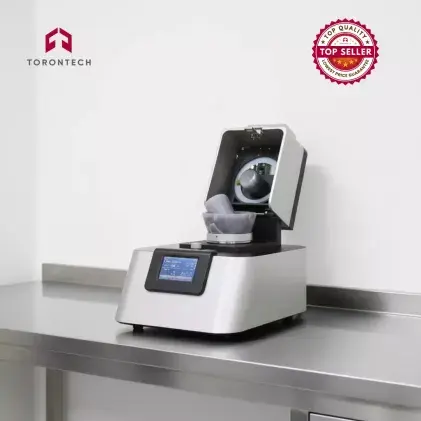
We view this highly efficient system as a hands-free, automated upgrade to the classic bowl and pestle. The fundamental mechanical concept is exactly the same, but this motorized setup eliminates manual physical effort from the equation.
By utilizing spinning mechanical parts and letting you accurately dial in the crushing pressure, this setup grinds down both organic compounds and hard minerals until they are exceptionally uniform and finely powdered.
Operational Mechanism: Friction, Pressure, and Continuous Scraping
The entire grinding process relies on two fundamental physical forces: friction and pressure. We work incredibly hard to get those two specific forces balanced just right so your precious samples are processed without being damaged.
The raw material is placed inside the rotating bowl, causing a heavy, off-center pestle to rotate freely through direct friction with the sample. Adjustable spring-loaded pressure presses the pestle down firmly against the mortar walls and base, reducing the size of any material in its path.
Simultaneously, an adjustable scraper continuously redirects loose material back under the pestle, ensuring the entire sample is reduced to a satisfyingly even, completely lump-free powder.
Key Operational Benefits of Automated Sample Preparation
Moving from manual grinding to a fully motorized setup delivers clear operational advantages for high-volume facilities. We have highlighted the primary ways this equipment simplifies your daily laboratory workflow below:
Exceptional Batch-to-Batch Reproducibility
Because the machine applies identical forces and run times for every single batch, your finished powders are highly reproducible. You get a processed sample where every single grain is practically the same size, which ensures highly reliable performance on your downstream analytical instruments.
It entirely removes the unpredictable variability of manual human effort. Studies on chemical analysis prove that maintaining a strictly consistent mechanical processing method is the most important factor for securing reliable, matching results across a testing series.
Highly Versatile Material Compatibility
The system easily processes hard, soft, crumbly, or paste-like samples without difficulty. Furthermore, it does not merely crush materials; it is exceptionally effective at blending multiple different ingredients together into a single, uniform compound.
To paint a highly accurate picture of this flexibility, a testing facility can effortlessly swap from pulverizing bone-dry, highly chalky chunks of construction limestone right over to using cryogenic agents like liquid nitrogen to safely shatter intensely oily cocoa beans or highly delicate, temperature-sensitive plant roots.
Improved Operator Safety and Laboratory Efficiency
The fully closed processing chamber keeps hazardous airborne dust, loose fragments, and moving parts completely isolated from laboratory technicians.
By letting the machine automate this highly repetitive, labor-intensive task, your skilled technicians can focus on high-value analytical procedures. Plus, digital screens allow your team to adjust the run time and position the scraping tool with minimal effort.
Industrial Applications of Automated Mortar Grinding
Because these machines use gentle friction and pressure rather than violent impact, they fit perfectly into highly sensitive processes. For instance, consider a food safety testing facility. When they must perfectly blend a mixed batch of hard nuts and oily seeds for critical allergy testing, these grinding units guarantee that every single scooped portion holds the exact same biological profile.
We frequently see them adopted across a wide range of industrial sectors:
- Pharmaceutical Manufacturing: For triturating active drug ingredients, blending fine powders, and preparing smooth medicinal creams.
- Food and Beverage Testing: Milling spices, grains, seeds, and nutritional additives for quality testing.
- Forensic Testing: Processing hard bone and teeth fragments for automated DNA extraction, where capturing every single speck of powder is highly critical.
- Chemical Processing: Homogenizing industrial salts, synthetic resins, and agricultural fertilizers.
- Materials Science and Metallurgy: Grinding ceramics, tough glass, metal alloys, and composites.
- Geological and Mining Operations: Pulverizing hard minerals, silicates, and soil samples for elemental profiling.
- Academic Research: Providing a highly versatile and dependable tool for diverse experimental protocols.
- Nutraceutical and Herbal Processing: Crushing dried roots, tough leaves, and botanical extracts into fine, highly uniform herbal powders.
- Cosmetic Formulations: Blending bright color pigments and smooth cream bases to ensure an exceptionally smooth texture on the skin.
- Construction Materials Quality Control: Preparing clinker, limestone, and concrete samples for quality compliance. Research consistently shows that proper mechanical processing perfectly boosts the surface area and filler activity of cement composites right up to the optimal processing time.
Equipment Comparison: Mortar Grinders vs. Ball Mills
When consulting with facilities on equipment selection, a common question we encounter is whether to select a mortar grinder or a ball mill.
While both machines are designed to crush materials, their mechanical approaches are entirely different. Mortar grinders rely on gentle friction and pressure for sticky, paste-like, or temperature-sensitive materials, whereas ball mills use high-energy impact forces to shatter extremely hard, brittle minerals. Choosing the incorrect technology can easily compromise your delicate samples or damage expensive instrumentation.
We have written a complete, head-to-head comparison guide on Mortar Grinders vs. Ball Mills that walks you through exactly how to pick the correct crushing machine for your specific materials. Read more: Mortar Grinder vs Ball Mill: Best Lab Prep Equipment
Grinding Set Material Selection Matrix
To prevent cross-contamination and avoid unwanted chemical reactions, we consider selecting the correct material for your mortar and pestle to be one of the most critical steps in the entire preparation process. Below is our general selection guide for industrial and research applications:
| Material Type | Primary Application | Performance Characteristics |
|---|---|---|
| Agate | Soft to medium-hard samples | Highly recommended for heavy-metal-free grinding. Ideal for high-purity chemical testing, such as soil or cosmetics analysis. |
| Zirconium Oxide (Zirconia) | Medium-hard to abrasive materials | Offers exceptional wear resistance. Best when keeping samples free from scratch-induced contamination is a high priority. |
| Stainless Steel | Medium-hard, non-corrosive materials | The durable, general-purpose standard. It is highly tough, impact-resistant, and will not crack if dropped. |
| Tungsten Carbide | Exceptionally hard and abrasive substances | Designed for highly abrasive applications like industrial slag, raw ores, and cement chunks. However, be cautious with trace-element testing, as research notes it can introduce tungsten and cobalt contamination. |
| Hard Porcelain | Soft, gentle chemical mixing | Best for soft blending, which is why it is widely used in routine pharmaceutical compounding and simple chemical blending. |
Key Technical Specifications and Compliance of the Torontech MG200
When you absolutely need your final powders to be spot-on, we engineered the Torontech Mortar Grinder MG200 to be a highly dependable system for quality assurance and research facilities. We engineered this equipment to accept raw feed sizes up to 15mm and reduce them to a final fineness of under 5μm, making it highly suitable for demanding, day-to-day laboratory workloads.
- Flexible processing volumes: It easily accommodates batch sizes from 10ml to 200ml, making it highly suitable for small-scale testing and much larger quality checks.
- Handles diverse thermal conditions: It performs wet, dry, or cryogenic runs, which is perfect for samples that melt or degrade when exposed to friction-induced heat.
- Processes coarse materials: It easily handles rough, uneven raw feed, breaking it down highly efficiently right before the final fine grinding phase.
- In-operation sample addition: A handy built-in slot in the lid allows technicians to pour in liquid agents or extra powders while the grinding cycle is active. For instance, a chemical researcher can safely pour liquid solvents directly through the opening to prepare a beautifully smooth, completely clump-free slurry without pausing the electric motor.
- Rapid cleaning and maintenance: The mortar bowl and pestle can be pulled out without using any tools, allowing for fast cleaning between batches to prevent cross-contamination.
- Integrated safety controls: The system features safety interlocks that completely prevent operation unless the cover is safely secured, keeping your staff safe.
- Customizable scrapers: Operators can select scraper materials made of beech wood, PTFE, or polyurethane to match their specific chemical compatibility needs.
Beyond these specific physical characteristics, we also manufacture our automated mortar grinders in full adherence to strict CE markings and international safety directives. In our regular discussions with facility directors and purchasing managers, equipment compliance is consistently highlighted as a non-negotiable requirement.
Utilizing a highly consistent, certified machine like the Torontech MG200 ensures your daily sample preparation routine easily matches the strict, identically repeated rules mandated by ISO quality management systems and various industry-specific ASTM testing standards.
Related article: How to Choose Laboratory Mortar Grinders Effectively
Achieve Unmatched Consistency with Torontech Grinders
We honestly believe that investing in automated preparation equipment is one of the most effective decisions you can make to ensure the absolute validity of your testing data. The Torontech MG200 Mortar Grinder combines versatility, operator safety, and incredibly smart mechanical engineering to streamline your workflow and deliver highly reproducible results down to a tiny 5μm.
Are you ready to move beyond manual preparation and improve your laboratory's efficiency? Request a quote for the Torontech MG200 today to see exactly how it fits into your daily routine.
References (Click to expand)
- Abulikemu, G., Wahman, D., Sorial, G., Nadagouda, M., Stebel, E. K., Womack, E. A., Smith, S. J., Kleiner, E. J., Gray, B. N., Taylor, R. D., Gastaldo, C. X., & Pressman, J. (2023). Role of grinding method on granular activated carbon characteristics. Carbon trends, 11, 1-12.
- Gu, X., Liu, B., Li, Z., Wang, H., Liu, J., Nehdi, M., & Zhang, Y. (2023). Mechanical grinding kinetics and particle packing novel characterization of iron ore tailings as inert filler for cement mortar. Journal of Building Engineering.
- Janiga, M., Badawczy, I., Kania, M., Wciślak, A., & Spunda, K. (2021). Ocena wpływu przygotowania próbek na uzyskiwane wyniki analiz pirolitycznych. 299-312.
- Korkmaz, A., & Kayıran, H. F. (2022). Investigation of mechanical activation effect on high-volume natural pozzolanic cements. Open Chemistry, 20, 1029-1044.
- Krejčová, A., Pouzar, M., Černohorský, T., & Pešková, K. (2008). The cryogenic grinding as the important homogenization step in analysis of inconsistent food samples. Food chemistry, 109(4), 848-854.
- Rancourt, A. C., Sainte‐Marie, S., Blackmore, V., & Currie, K. (2023). Evaluation of low-cost bone and teeth processing methods for automated DNA extraction. Forensic Science International: Reports.
- Yamasaki, T. (2018). Contamination from mortars and mills during laboratory crushing and pulverizing. BULLETIN OF THE GEOLOGICAL SURVEY OF JAPAN.
- Yarbrough, W., & Roy, R. (1986). Extraordinary effects of mortar-and-pestle grinding on microstructure of sintered alumina gel. Nature, 322, 347-349.