QA Guide: Difference Between Haze and Transmittance
Delivering a crystal-clear finish is a massive win for your brand. As folks get pickier about look and feel, getting your light measurements spot on is the best way to stay ahead of the pack. Haze and transmittance are the two distinct gears that keep your quality top-shelf, and getting the mix right is the secret to a product that truly shines.
In this straight-talking guide, we are breaking down what these words really mean, how they stack up against each other, and why keeping a close eye on both is a total win for your shop floor.
Key Takeaways
- Transmittance Tracks the Volume: It measures the total pile of light that successfully travels through your material to set the overall brightness.
- Haze Dictates the Quality: It measures how much of that light bounces off track. This specific scattering is exactly what decides if your product looks flawlessly clear or frustratingly cloudy.
- Brightness Does Not Guarantee a Sharp View: Your packaging or glass can easily let in a massive amount of light but still look like a total mess if high haze ruins the visual contrast.
- Skip the Guesswork: Trying to eyeball these measurements on the shop floor is a one-way ticket to bad batches. Grabbing dedicated testing gear makes sure your numbers are satisfyingly spot on every single time.
Defining Transmittance for Quality Control
Transmittance (or what the science types call total luminous transmittance) is basically just a way of saying "how much light actually makes it out the other side" after hitting your material. In plain English, it is about the total pile of light that travels all the way through your sample, a key parameter for quickly assessing the transparency of materials like polymers and packaging.
If something has 100% transmittance, every single bit of light that hits the front comes out the back without getting soaked up or bouncing away.
- High Transmittance: Think of a perfectly clear window or those see-through plastic films that look like they aren't even there.
- Low Transmittance: Like those dark-as-night tinted windows or thick slabs of opaque plastic.
Transmittance is the big number we use to see how "bright" a material is or how much light it can grab. But (and this is a major catch), just because a mountain of light gets through does not mean you will be looking at a crisp image. That is where things get a bit foggy.
Breaking Down the Mechanics of Haze
Haze is all about how much light gets knocked off track as it zips through. Specifically, it is a measurement of the light that gets scattered more than 2.5 degrees away from where it was headed, which directly causes a reduction in clarity or sharpness.
Related article: Haze Meters Explained: Specs, Standards & Applications
We have noticed that haze is usually the one thing that trips people up in the testing room. When light bumps into tiny bits of debris, a rough surface, or some structural weirdness inside the material, it scatters all over the place. This scattering creates a look that is a bit milky or "cloudy," which kills the contrast and makes it tough to see what is on the other side.
- Low Haze: Like a freshly cleaned phone screen protector or a high-end camera lens that is sheer perfection.
- High Haze: Think of those frosted bathroom windows or those anti-glare coatings on computer monitors that stop the sun from blinding you.
The Core Difference Between Haze and Transmittance
We like to think of the difference between haze and transmittance as the split between the total amount of light and the actual quality of that light. As optical studies point out, transmittance measures overall light passage, while haze specifically targets the scattered light that reduces visual clarity despite high transmittance.
- Transmittance is just the total volume of light that wins the race and gets through.
- Haze is about how much that light gets jumbled up, which is what decides if the view is satisfyingly spot on or a total mess.
The "Frosted Window" Reality Check:
Picture a piece of frosted glass. It lets a huge pile of light into the room, so it has high transmittance. But because the surface is all bumpy and craggy, the light bounces in every direction. You cannot see a thing through it, which means it also has high haze.
On the flip side, a piece of car glass that has a heavy tint might only let a little bit of light through (lower transmittance), but since that light is not scattering (low haze), the view is still sharp as a tack.
The "Dirty Blister Pack" Scenario:
Think about those rigid plastic blister packs hanging on retail store shelves. A factory might crank out a batch of plastic that lets a ton of light through (high transmittance).
But if the heating and cooling process is even slightly off, the plastic gets a milky, scuffed look (high haze). The expensive electronics inside look dusty and old, even though there is plenty of light hitting them. Customers walk right past it. It is a classic case of getting the volume of light right, but the quality of light completely wrong.
The Missing Metric: Optical Clarity
While knowing the difference between haze and transmittance is the bread and butter of this industry, we have found that the most successful shops look at a third thing to get the full picture: Clarity.
If haze is that wide scattering that makes things look milky, clarity is about the tiny, narrow scattering (less than 2.5 degrees). Clarity is what decides if the fine details look "high definition" or just plain blurry.
High Haze vs. Low Clarity: You can actually have something that does not look milky at all (low haze) but still looks "wavy" or distorted (low clarity), like looking through a clear plastic sheet that has a bit of a ripple to it.
At a Glance: Transmittance vs. Haze vs. Clarity
If you are in a hurry and just want the nitty-gritty, check out this table:
| The Metric | What’s It Actually Measuring? | What Does It Look Like? | A "High" Example |
|---|---|---|---|
| Transmittance | Total pile of light getting through | How bright or "open" it feels | A crystal-clear window |
| Haze | Wide-angle bouncing (> 2.5°) | Cloudiness or that "milky" vibe | Frosted privacy glass |
| Clarity | Narrow-angle bouncing (< 2.5°) | Sharp edges and fine detail | A top-tier camera lens |
By checking all three metrics (transmittance for brightness, haze for milkiness, and clarity for sharpness), we are convinced you can finally get a full handle on how your product really performs.
The Business Impact of Accurate Optical Metrics
In all the different industrial spots we work in, getting the mix of haze and transmittance just right is a total deal-breaker for how things actually perform in the real world. Let's look at how this plays out:
Premium Food Packaging
Think about a high-end bag of artisan coffee beans. A brand wants a mountain of light getting through the little display window to show off the roast.
But if they pick a film with high haze, the beans look dull and stale on the grocery shelf. That milky finish completely wrecks the premium vibe and costs the brand serious cash at the checkout line.
High-Definition Displays
Picture a brand new computer monitor. The factory absolutely needs high transmittance so the screen is blindingly bright and easy to read. But if the engineers skip adding a controlled bit of haze, every single ceiling light reflects right back into the user's eyes. Dialing in that specific haze level is a total lifesaver for stopping those annoying reflections without killing the screen's punch.
Car & Building Glass
For a car windshield, anything less than perfect transmittance and zero haze is a massive safety hazard. Drivers need a flawlessly sharp view.
On the flip side, designing the privacy glass for a corporate boardroom is all about cranking up that haze to intentionally blur the view while still keeping the room feeling open and bright.
Automotive Clear Coats
Picture a top-tier paint job on a luxury sports car. A shop might lay down a clear coat that technically lets plenty of light through. But if it dries with a bunch of unwanted haze, that deep, expensive metallic red base layer suddenly looks cheap and foggy.
It completely ruins the visual depth and makes a brand-new car look like it needs a wash. Running a quick check with a Haze & Transmittance Meter on the line guarantees that shiny finish stays satisfyingly spot on.
If you only look at one number, you are flying blind. From where we are sitting, betting the farm on just one measurement is a risk that nobody should be taking.
Securing Precise Measurements on the Shop Floor
To really pin down these measurements, we suggest moving away from just "eyeballing it" under the factory ceiling lights and grabbing some specialized testing gear. Relying on human eyesight is a one-way ticket to inconsistent batches and frustrated buyers.
Here is how doing it right actually looks on the shop floor:
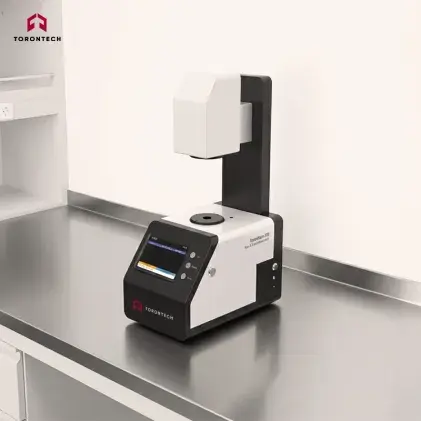
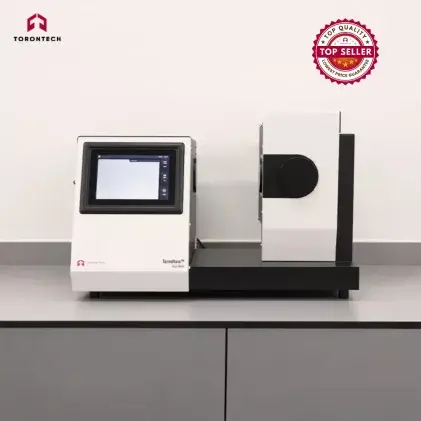
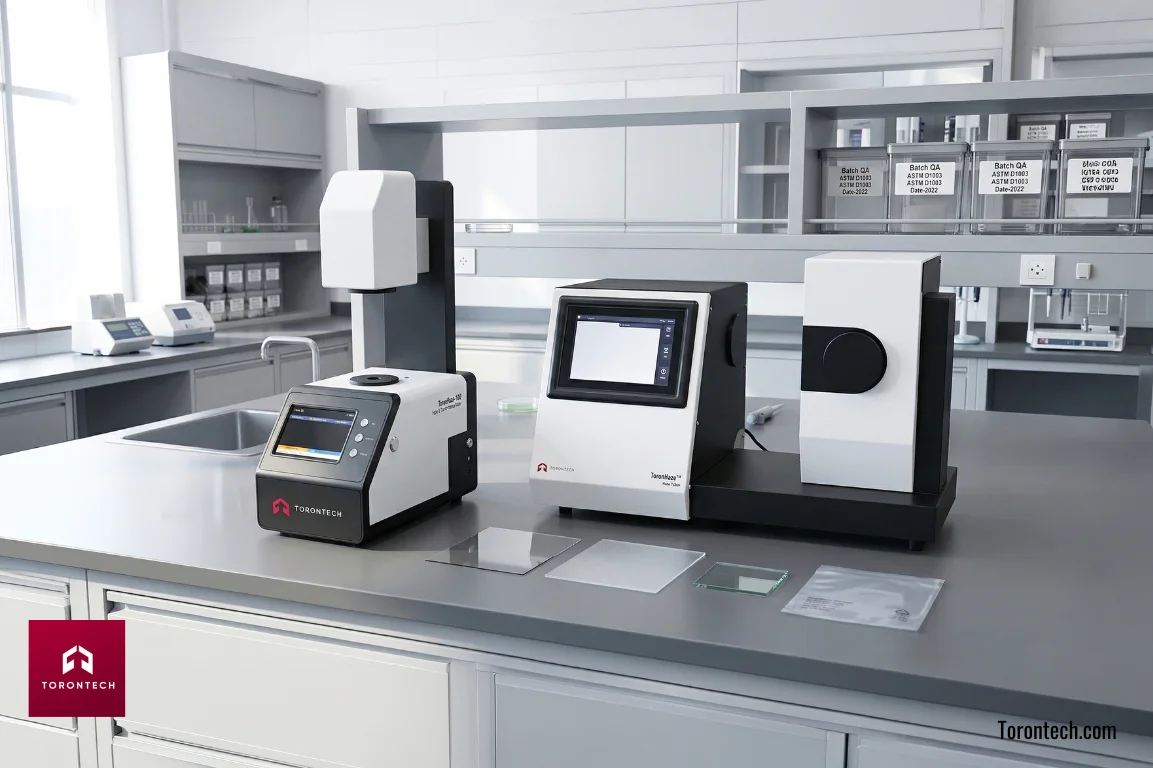
- The Heavy-Duty Benchtop Route: Tools like our benchtop Haze Meter - ToronHaze™ use a rock-steady light source and a fancy "collecting sphere." This setup grabs every single ray of light bouncing around your sample, giving you numbers that perfectly match up with strict international rules like ASTM D1003 and ISO 14782. Accurate measurement is critical for quality control, though you have to watch out for discrepancies caused by instrument geometry or sample properties.
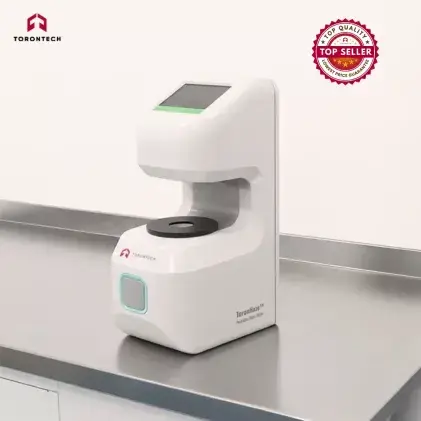
- On-the-Move Accuracy: If your QA team needs to bounce around different stations or check raw materials right as they roll off the delivery truck, packing a Portable Haze Meter ToronHaze™ (TTH-Series) gives you those exact same reliable, repeatable numbers right there on the floor.
- Full-Spectrum Checks: When you need to look at both the scattered light and the exact color profile, grabbing a highly accurate Spectrophotometer ensures every single visual detail is satisfyingly spot on. Some shops are even adopting new imaging-based techniques to better link haze metrics to actual visual perception, and having top-tier analytical gear backs that up.
We are firm believers that tossing out the guesswork and relying on standardized gear is the absolute best way to make sure your product quality is 100% right on the money, every single time.
Related article: Portable vs Benchtop Haze Meters: Which is Best?
Crystal-Clear Quality With Torontech
At Torontech, we believe nailing your quality control should not cost a literal arm and a leg. As a North American supplier, we skip the heavy "big brand" markups to bring you cost-effective, smart-thinking tools that actually protect your wallet.
Whether you are testing liquids with a Liquid Color Spectrophotometer ToronSpec™ TT-LC2 or scanning solid plastics with our ToronHaze™ units, our gear is fast, highly accurate, and incredibly easy to run. We give you the exact numbers you need so you never have to guess about the difference between haze and transmittance again.
Ready to get some seriously sharp numbers on your production line? Check out our full stack of Color, Paint & Coating Test Equipment today. Let’s get your testing sorted with the perfect mix of new-school tech and massive value.
References:
- Busato, S., Kremer, D., & Perevedentsev, A. (2021). Imaging‐Based Metrics Drawn from Visual Perception of Haze and Clarity of Materials. I. Method, Analysis, and Distance‐Dependent Transparency. Macromolecular Materials and Engineering.
- Busato, S., & Perevedentsev, A. (2018). A simple imaging-based technique for quantifying haze and transmittance of materials. Polymer Engineering and Science, 58, 345-352.
- Guzmán-Puyol, S., Benitez, J., & Heredia-Guerrero, J. (2022). Transparency of polymeric food packaging materials. Food research international, 161, 111792.
- Liu, W., Hwang, J., Koo, A., Wu, H., Leecharoen, R., & Yu, H. (2018). APMP Pilot Study on Transmittance Haze. Journal of Physics: Conference Series, 972.
- Liu, W., Koo, A., Molloy, E., Wu, H., Leecharoen, R., Zhang, J., Liu, Y., Suryani, D., & Yu, H. (2024). APMP Pilot Study on High Transmittance Haze. Journal of Physics: Conference Series, 2864.
- Liu, W., & Yu, H. (2021). Transmittance Haze Measurement by DIN 5036 Part 3 1.
- Molloy, E., Koo, A., Gevaux, L., Obein, G., & Yang, L. (2023). Use of bidirectional transmittance distribution function measurements to determine transmittance haze. Metrologia, 60.