Complete Guide to Rotary Evaporation
Want to maximize your daily solvent recovery rates while keeping even your most fragile compounds perfectly intact? We are confident that a modern rotating vacuum setup is the ultimate system to keep your lab runs fast, safe, and highly efficient.
This guide breaks down the simple science behind the process, delivers a step-by-step operating checklist for your team, and offers direct advice on choosing the right gear. Read on to discover how easy it is to secure pristine yields, protect delicate samples from heat damage, and scale your daily processing output.
Key Takeaways
- Gentle and Efficient Process: Combines vacuum pressure, continuous rotation, and mild heat to strip solvents quickly without scorching sensitive samples.
- Superior to Traditional Boiling: Outperforms standard distillation by keeping processing temperatures exceptionally low to protect fragile compounds.
- Strict Temperature Control: Following the proven Delta 20 Rule ensures consistent yields and guards your most delicate materials.
- Highly Scalable Operations: Modern systems easily match your facility size, scaling from compact lab benches to massive 100-liter industrial floors.
- Requires a Complete Ecosystem: Pairing your main unit with a dependable chiller and a strong vacuum pump is absolutely vital for peak performance.
What is Rotary Evaporation & How Does It Work?
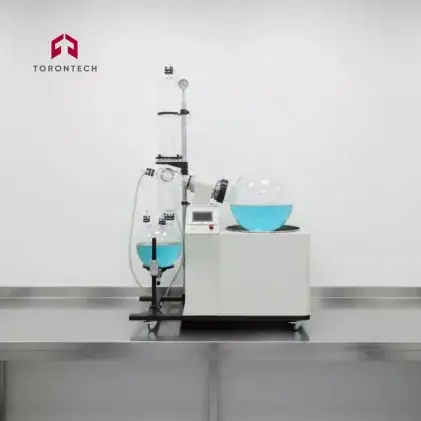
If you are asking what does a rotary evaporator do, it is a laboratory instrument built specifically to strip solvents from a sample. It is highly valued in drug development, chemical formulation, and plant extractions to concentrate mixtures, purify compounds, or save expensive processing liquids.
So, how does a rotary evaporator work? The process relies on three simple mechanisms:
- Vacuum Suction: A pump lowers internal pressure, forcing the target solvent to boil at a much cooler temperature than normal.
- The Spin Cycle: A motor spins the flask, coating the inner glass walls in a thin liquid film. This increases the surface area for evaporation and stops the liquid from violently bumping over, a common headache for any chemist.
- Warmth and Chilling: A heated bath coaxes the solvent to turn to vapor, while cold condenser coils catch those vapors and drop them back into a collection flask.
While speed is always a goal, we believe the true value lies in balancing throughput with sample safety. You get clean separations quickly without exposing sensitive compounds to high, destructive heat.
Key Industrial Applications of Rotary Evaporation
Moving beyond bench experiments, rotating setups handle heavy lifting in major commercial industries that rely on high-yield processing. In our view, their widespread use shows how vital temperature control is when scaling up:
- Pharmaceutical Development: Preserving active ingredients from heat degradation, concentrating processing mixtures, and drying powders to strict standards. For example, operators routinely use this equipment to gently strip ethanol from highly sensitive botanical extracts without degrading the active compounds.
- Chemical Manufacturing: Reclaiming expensive solvents, scaling up processing batches, and cleaning up impurities.
- Food and Beverage: Distilling delicate flavors and capturing specific aromatic compounds without cooking the taste out of them. A classic industry example is concentrating fresh fruit juices or capturing highly volatile hop aromas for craft brewing.
- Environmental Analysis: Preparing samples to test for pollutants, chemicals, or metals in soil and water.
Rotary Evaporation vs. Distillation
Both methods separate liquids by exploiting boiling points, but they serve different operational goals. We often point out that traditional boiling setups handle simple separation tasks well, but they lack the delicate, targeted touch needed for volatile or thermal-sensitive mixtures.
To give you a clear comparison: use a rotating setup to gently pull a low-boiling liquid out of a fragile essential oil, but opt for a traditional distillation tower when you need to separate highly stable crude oil fractions.
Related article: Short Path Distillation vs Rotary Evaporator Guide
| Feature | Rotary Evaporation | Distillation |
|---|---|---|
| Pressure Level | Lowered pressure (Vacuum) | Atmospheric pressure (standard) |
| Thermal Risk | Low (protects fragile compounds) | Higher (requires direct heat) |
| Scale Capacity | Great for small to medium volumes | Best for highly stable, huge bulk runs |
| Cycle Speed | Fast, continuous evaporation | Slower, especially on complex mixtures |
| Primary Use | Solvent stripping and concentration | Splitting stable chemical components |
| Risk of Ruined Samples | Extremely low risk | High risk of thermal degradation |
Advantages and Limitations in Lab Settings
The Advantages:
- Speed and Efficiency: Lowered boiling points mean your solvents evaporate in a fraction of the time.
- Sample Integrity: Low-heat processes protect fragile compounds from thermal damage.
- Cost Savings: We are convinced that recovering and reusing expensive solvents is a major win for your operating budget. Plus, utilizing equipment built with energy-efficient designs helps keep your daily electrical overhead low.
The Limitations:
- It is not the right tool for splitting liquids with nearly identical boiling points (fractional columns are better there).
- A leaky vacuum pump or a struggling chiller will quickly stall your entire workflow.
Related article: How to Pair Soxhlet and Rotary Evaporators for Yield
Optimal Temperatures for Rotary Evaporation
Generally, keeping your water bath between 40°C and 60°C delivers the best balance. Maintaining this mild temperature range is vital to protect sensitive compounds. Experienced operators rely heavily on the "Delta 20 Rule" to keep the math simple and the yields high.
For instance, if you are concentrating a plant extract, the vacuum drops the liquid's boiling point so your water bath stays at a completely safe 50°C to 60°C, the solvent vapor travels upward at 30°C to 40°C, and your cooling coils catch the vapor at a frosty 10°C to 20°C.
Careful optimization of these specific variables substantially shortens solvent removal time, especially for high-boiling liquids. Research also highlights that utilizing the right flask size and a flask immersion angle of around 25 degrees supports highly efficient evaporation.
In our view, sticking to optimal temperature differences is essential for repeatable, high-quality yields. Achieving this requires reliable performance. For example, models in Torontech’s EV-x01 Series (such as the EV-301 and EV-501) are built to deliver consistent and accurate results, ensuring your heating bath stays exactly where you need it to keep your delicate compounds safe.
How to Use a Rotary Evaporator: Standard Operating Procedure (SOP)
When training new team members on how to use rotary evaporator setups, a standardized step-by-step method is key to keeping everyone safe and protecting the hardware. We suggest using this basic rotary evaporator standard operating procedure as your team's baseline checklist:
1. Preparation
Turn on the chiller lines to ensure proper condenser coolant circulation, pre-heat the water bath to your target temperature, and verify all vacuum connections are sealed tight. Give your chiller a few minutes to reach its frosty target before attaching any glass to guarantee you capture vapors effectively from the very first drop.
2. Mount the Flask
Pour your liquid sample into the boiling flask, taking strict care to keep it under half full, and firmly secure it to the spinning shaft with a Keck clip. Leaving that extra headspace is absolutely critical to prevent sudden splashing and keeps your mixture from shooting straight up into the condenser neck.
3. Start the Spin
Activate the rotation motor, keeping the speed usually between 50 and 100 rpm, to coat the inside of the glass with a perfectly even, thin liquid film. This steady spin maximizes the surface area for rapid solvent removal without flinging your delicate sample out of control.
4. Apply Vacuum & Heat
Slowly dial in the vacuum until the liquid begins to bubble gently so the solvent boils well below its normal boiling point. Once the bubbling turns into a steady, controlled simmer, go ahead and lower the rotating flask into the warm bath. Applying suction too fast is a guaranteed recipe for a messy overflow, so patience pays off here.
Pro-tip: We highly recommend utilizing systems built with advanced features and modern safety standards. Options like the EV-x000 Series (including the EV-5000) are built for reliable performance, helping you maintain consistent parameters without constantly fighting manual adjustments.
5. Shutdown
Monitor the condensation rates and tweak your rotation or pressure as needed for steady, continuous evaporation. Once the process is finished, reverse the sequence to safely cool things down: lift the flask out of the heat, stop the motor, slowly vent the system to release the vacuum pressure, and carefully remove your warm glass flasks to collect your isolated yield.
Safety Precautions & Best Practices
To keep your lab running smoothly and prevent accidents, we suggest making these habits a core part of your team's routine:
- Check the Glassware: In our experience, this is the most common safety oversight. Inspect your flasks for minor star cracks or chips before pulling a vacuum. A damaged flask under vacuum is a serious implosion hazard.
- Use Proper Ventilation: If you are stripping toxic or flammable solvents, always run the equipment inside a fume hood or well-ventilated enclosure.
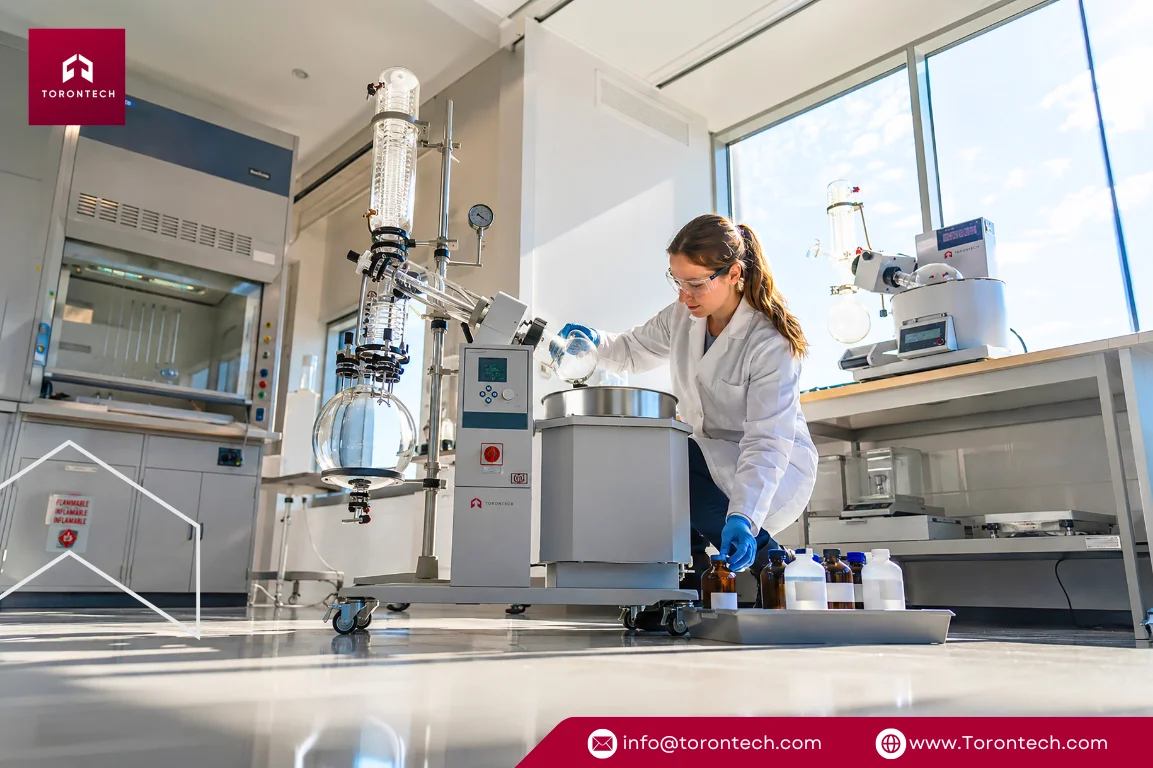
- Wear Standard PPE: Standard laboratory safety gear, including protective glasses, lab coats, and chemical-resistant gloves, is mandatory.
- Avoid Heating Sealed Systems: Always ensure the setup has a path to vent pressure before applying heat.
- Monitor the Catch Flask: Regularly empty your receiving flask so solvent doesn't overflow and get pulled into your vacuum pump.
Common Troubleshooting Tips
Even in well-managed labs, operational issues occur. Fortunately, most performance drops are simple to resolve. Use this quick reference guide to get back on track:
| Issue | Potential Cause | Quick Fix |
|---|---|---|
| Vacuum is dropping | Worn seals, loose clips, or dry glass joints. | Check all connection points. We suggest applying vacuum grease to ground glass joints to fix stubborn leaks. |
| Sample is bumping | Sucking too hard too quickly, or the bath is too hot. | Reduce the bath temperature, let a small amount of air in, or increase the spin speed. |
| Slow processing speed | Coils are too warm, or the pump is losing suction. | Verify that the chiller is reaching 0°C to maintain the Delta 20 Rule. Test pump performance. |
How to Choose the Right Rotary Evaporator for Your Lab
Selecting the right equipment comes down to your daily sample volumes, available bench space, and facility safety regulations. In our view, matching your growth plans with your safety requirements is the key to a smart investment. Here is how we recommend evaluating your options:
Capacity and Scale
Benchtop Units
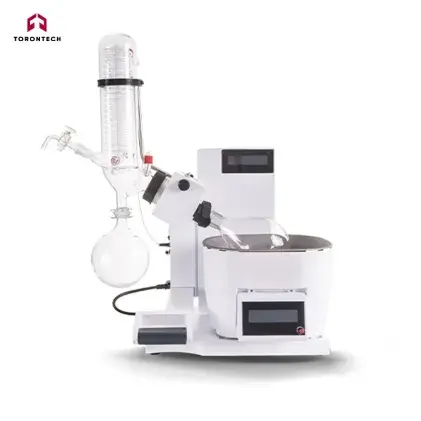
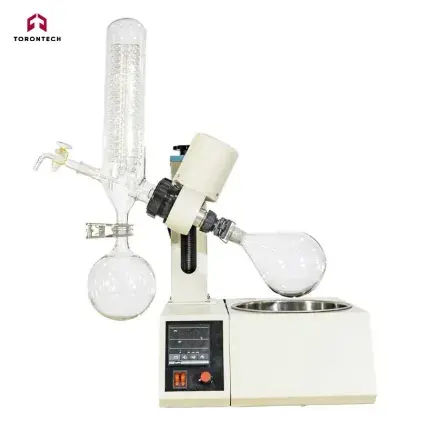
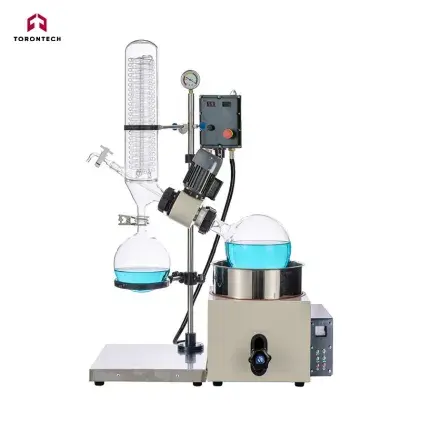
For general testing or small R&D tasks, the straightforward AVR-001 is an excellent option that saves valuable desk space. If you require flexible bench configurations for routine workflows, the EV-52 Series (including the EV-52A and EV-52C) fits perfectly into this profile. A university teaching lab running daily 50-milliliter test batches, for example, fits perfectly into this profile.
Mid-Scale Units
When transitioning from basic tests to pilot production, you need efficient pilot-scale solvent removal. Systems in the EV Pilot lines (like the EV-1002, EV-3002, or EV-1050) bridge the gap beautifully.
Large Industrial Units
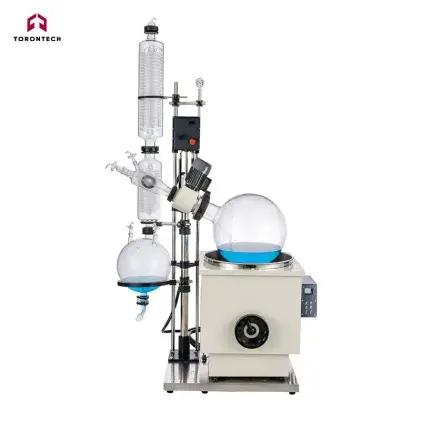
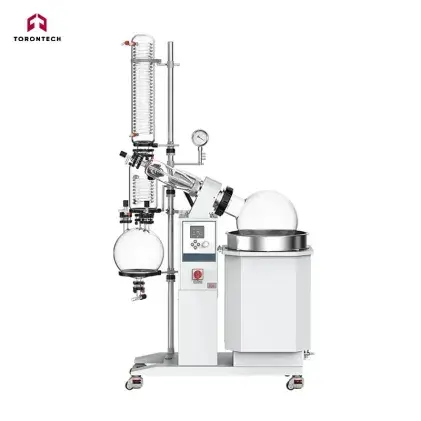
For production plants processing massive liquid volumes, we suggest investing in the Rotary Evaporator 100L, a high-capacity system built for continuous operation. A commercial extraction facility clearing 50 liters of solvent per shift requires this exact level of heavy-duty hardware.
Hazardous Environments
If you process flammable solvents, we strongly recommend looking at explosion-proof, Ex-rated setups, such as Torontech's R-1005, R-1050, or the spark-free R-2020Ex series.
Quick Compare Guide:
| Scale Class | Best Suited For | Recommended Torontech Models |
|---|---|---|
| Benchtop / Lab | Routine solvent stripping, R&D, QC testing | AVR-001, EV-52 Series, EV-x01 Series |
| Pilot Production | Process scale-up and recipe refinement | EV-1002, EV-1050, Ex-rated R Series |
| Industrial Scale | Continuous, high-output manufacturing | Rotary Evaporator 100L system |
The Complete Ecosystem: Chillers and Vacuum Pumps
An evaporator cannot work by itself; it needs auxiliary systems to perform efficiently. In our view, pairing an advanced evaporator with a weak pump or chiller is like putting budget tires on a high-end sports car since it bottlenecks your entire system. To maximize your solvent recovery, we recommend pairing your unit with:
- Vacuum Pumps: Essential for maintaining a steady, precise vacuum so solvents boil cool without bumping. View Torontech's chemical-resistant Vacuum Technology for dependable options.
- Chillers: Crucial for keeping condenser coils cold enough to catch escaping vapors. View Torontech's Laboratory and Industrial Chillers to maintain your temperature targets.
Scale Up Your Solvent Recovery Safely with Torontech
When you decide to buy rotary evaporator online, you are investing in the daily workflow, safety, and long-term output of your team. We know that equipment reliability is critical in busy research and production environments. That is why Torontech offers premium options across every scale, ensuring you find the exact fit to support your operations.
Built with energy-efficient components, modern safety standards, and long-lasting durability, Torontech's hardware is trusted globally for consistent and accurate results. We back every system with expert technical assistance and dependable customer care to make your transition to a scaled-up workflow smooth and worry-free.
Ready to streamline your solvent recovery process? We have the exact setup to support your operations. Explore Torontech’s Full Range of Rotary Evaporators Here or Contact Our Experts for a Custom Quote.
References (Click to expand)
- Chen, Y., Wang, W., & Zhang, Q. (2023). Investigation of Factors Affecting the Rate of High-Boiling-Point Solvent Removal Using a Rotary Evaporator. Synlett.
- Kulikova, N., Chernobrovina, A., Roeva, N., & Popova, O. (2023). Evaporation as a Method for Obtaining Plant Concentrates. Food Processing: Techniques and Technology.
- Santoso, B., Imaduddin, F., Sukanto, H., Triyono, J., Lambang, R. L., Widodo, P. J., & Siswantoro, D. H. (2021). Procurement and Operation Technical For Meniran (Phyllanthus Niruri) Extraction Equipment. Mekanika: Majalah Ilmiah Mekanika.
- Sumalatha, M., PhaniDeepthi, A. N., Vamsi, S., Raman, N., Gopi, Y., & Student, K. (2022). Modeling and Static Analysis of Rotary Evaporator Parts using Solidworks. Proceedings of the International Conference on Industrial Engineering and Operations Management.