

XAFS (X-ray Absorption Fine Structure) Spectrometer
XAFS (X-ray Absorption Fine Structure) Spectrometer – ToronXAFS™ 1500/2500
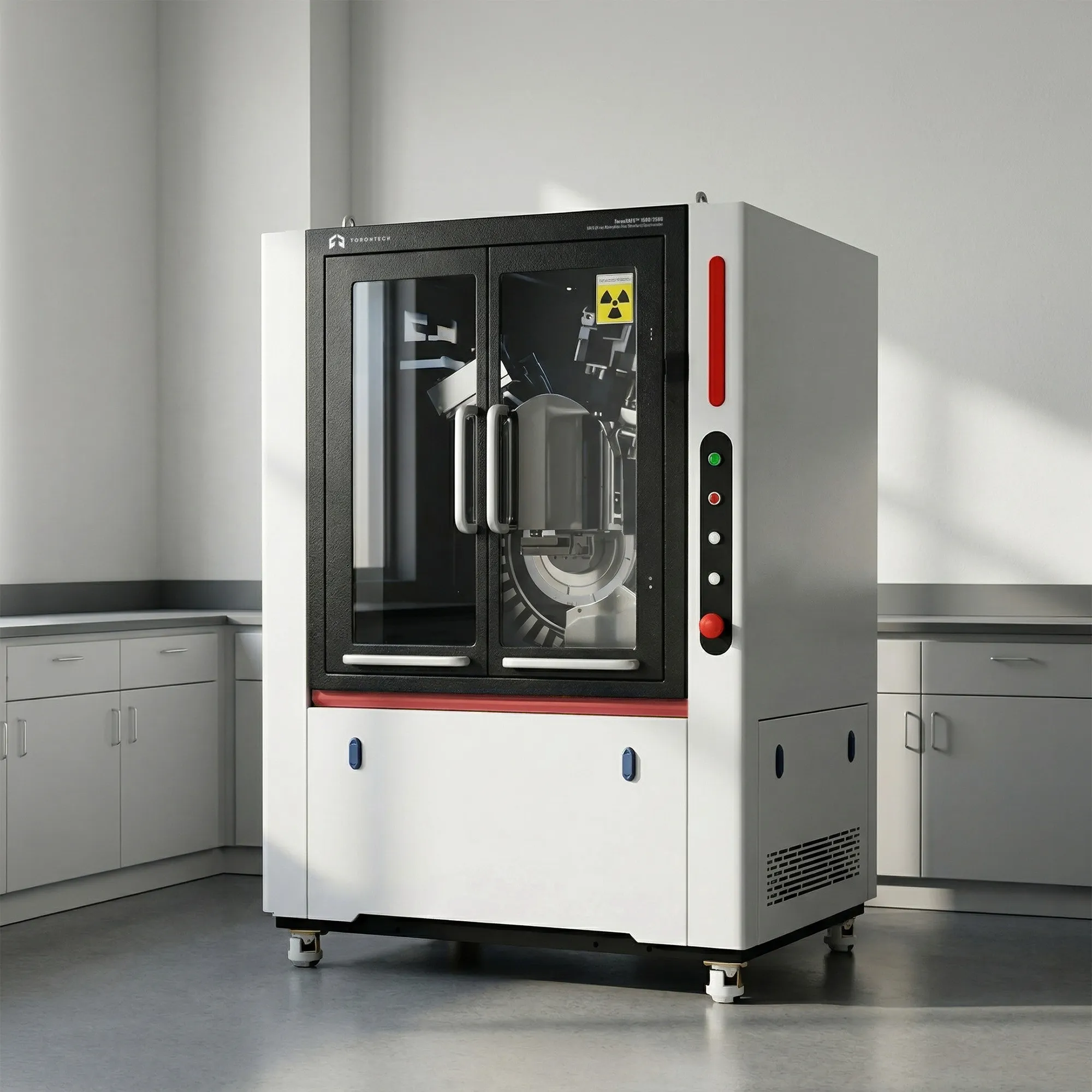
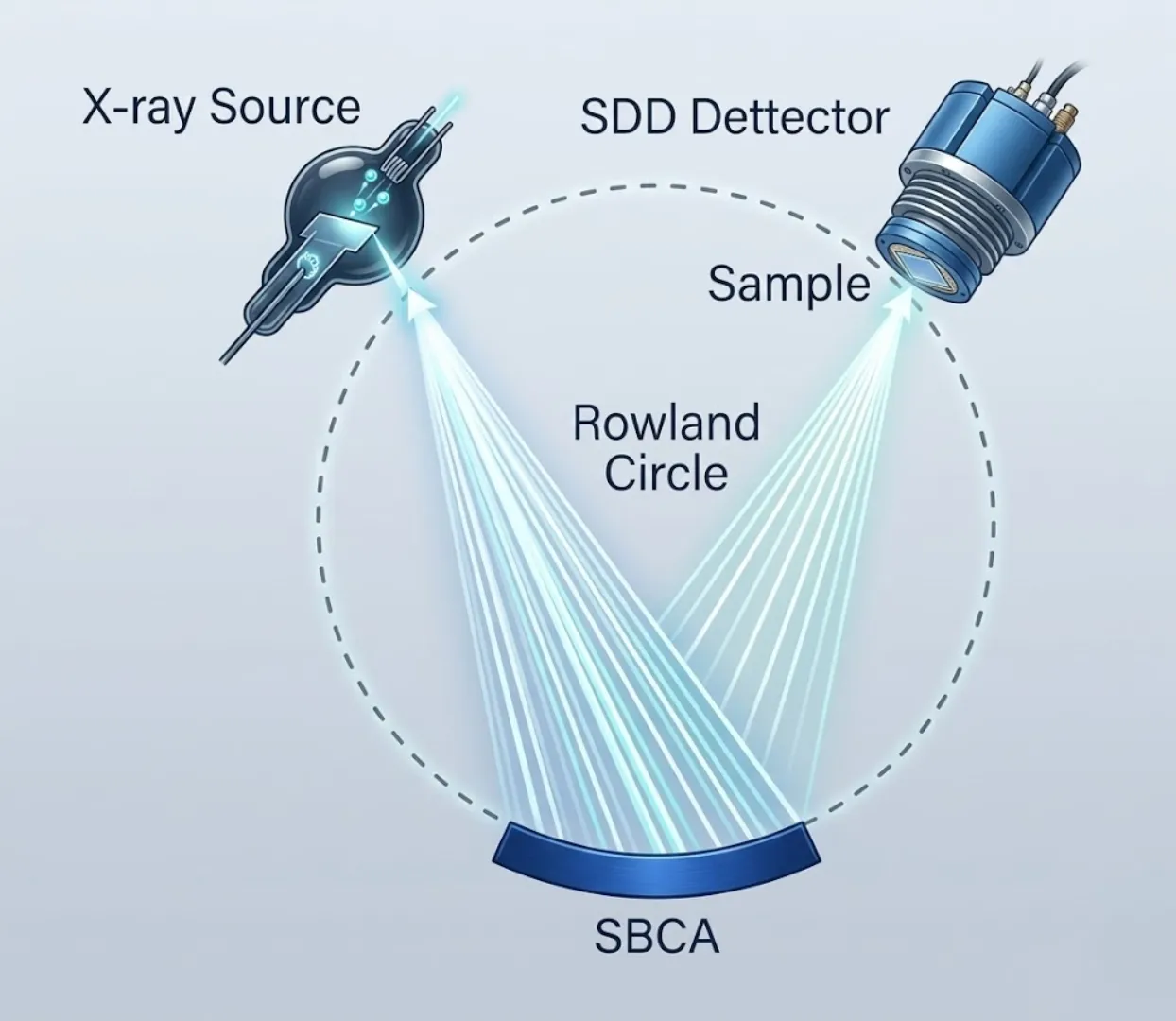
X-ray Absorption Fine Structure (XAFS) analysis becomes far easier to schedule when it can run inside a conventional laboratory. The ToronXAFS™ 1500/2500 platform is a lab-based XAFS spectrometer that uses a Rowland-circle optical path with large-area curved crystal optics and a proprietary monochromator design, enabling XAFS work without synchrotron radiation. It also supports XAS, XES, and XRD measurement modes with easy switching, so one system can cover local atomic/electronic structure plus diffraction-based phase and crystal structure context.
ToronXAFS™ 1500/2500 is built to study oxidation states, bond covalency, and the chemical environment around specific elements, helping teams interpret electronic structure and coordination changes in functional materials. The product page highlights use for analyzing catalytic active sites, understanding reaction mechanisms and pathways, and making local structural characterization more accessible for routine lab workflows.
The system integrates a micro-focus X-ray source, a multi-dimensional sample stage, and an intelligent detection system in a cabinet-style design intended for simpler setup. The platform also includes a stabilization concept (DARCS-M) that aims to reduce manual alignment, repeated calibration, and routine maintenance during crystal changes.
XAFS (X-ray Absorption Fine Structure) Spectrometer – ToronXAFS™ 1500/2500 Application

- Catalytic materials: XAFS can characterize catalyst active sites and track changes in coordination, oxidation state, and electronic structure under reaction conditions. The page calls out metals such as Pt, Pd, and single-atom Fe/Co and emphasizes in-situ monitoring for mechanism studies and catalyst design.
- Battery research: ToronXAFS™ 1500/2500 is positioned for in-situ tracking of transition metals in electrodes (examples include Mn, Ni, Co, Fe), supporting studies of valence change, local coordination, ion migration, interface reactions, and degradation pathways.
- Nanomaterials and functional materials: XAFS is presented as useful for dopants, active sites, amorphous phases, clusters, and interfaces, where diffraction alone may miss local coordination details.

- Geology and mineralogy: Speciation and oxidation-state analysis for key elements in geological samples to support ore genesis, geochemical modeling, and mineral resource studies.
- Life sciences and biomolecules: XAFS is described as a way to resolve coordination geometry and oxidation-state changes of metal cofactors (Fe, Mn, Zn, Cu) in proteins and enzymes without disrupting native states.
- Environmental science: chemical speciation and local coordination for contaminants such as As, Cr, Cd, Pb in soil, water, and particulates, supporting risk assessment and remediation design.
XAFS (X-ray Absorption Fine Structure) Spectrometer – ToronXAFS™ 1500/2500 Key Features
- Lab-based XAFS without synchrotron radiation, using a Rowland-circle optical path and curved crystal optics with a proprietary monochromator design.
- Multi-mode measurement: XAS, XES, and XRD with switching between modes.
- Integrated cabinet design combining micro-focus X-ray source, multi-dimensional stage, and intelligent detection for simpler installation and readiness.
- Dual-feedback stabilization concept (DARCS-M) intended to reduce manual alignment and repeated calibration during crystal changes.
- Quick-disassembly helium protection cover designed to streamline protective-atmosphere operation without manual optical-path adjustment.
- In-situ/operando expandability through standardized interfaces for electrochemical cells, gas/liquid reaction cells, and temperature devices.
- Software interface with centralized status visibility for instrument parameters, optical-path status, sample environment, and data quality.
- Safety interlock mechanisms described to support safer operation and lower operator burden.
Theory and Method
What XAFS measures
X-ray Absorption Fine Structure (XAFS) measures how strongly a sample absorbs X-rays as photon energy is scanned across the absorption edge of a selected element. The output is an absorption spectrum μ(E) that contains edge-sensitive features tied to oxidation state and local electronic structure, plus oscillations caused by interference between the outgoing photoelectron wave and waves scattered by neighboring atoms. Those features make XAFS element-specific, which helps separate the behavior of one metal or dopant even inside complex mixtures. ToronXAFS™ 1500/2500 performs this measurement in a laboratory system using Rowland-circle optics and a curved crystal monochromator to deliver narrow-band X-ray energy to the sample.
XANES and EXAFS: two parts of the same scan
The near-edge region is typically treated as XANES, where subtle changes in edge position and spectral shape reflect oxidation state, coordination symmetry, and unoccupied electronic states. The higher-energy region is treated as EXAFS, where the oscillations encode interatomic distances, coordination numbers, and disorder around the absorbing atom. ToronXAFS™ 1500/2500 lists XANES energy resolution down to the sub-eV range at 8 keV and an EXAFS energy-resolution range appropriate for EXAFS oscillation analysis.
How ToronXAFS™ 1500/2500 performs the measurement?
ToronXAFS™ 1500/2500 uses a micro-focus X-ray source and monochromation to scan energy across the target absorption edge, then records the signal as a function of energy. Measurement can be run in XAS mode, and the platform also supports XES and XRD modes with switching, which helps users pair local-structure results with emission or diffraction context when needed. A helium protection cover and inert-gas options help reduce air absorption and stabilize measurements for lower-energy edges or sensitive samples.
Detection approaches and what they mean for data
XAFS commonly uses transmission or fluorescence-style detection depending on sample thickness and concentration. Transmission-like setups are typically preferred for uniform, sufficiently concentrated samples because μ(E) can be derived from incident and transmitted intensity. Fluorescence-style approaches are typically used for dilute elements, thicker matrices, or complex samples where transmitted intensity is too low, and ToronXAFS™ 1500/2500 specifies an SDD detector that supports fluorescence-style workflows. Data quality is usually validated with energy calibration against reference foils/standards and by checking repeat scans for stability and drift.
Practical workflow
A typical ToronXAFS™ 1500/2500 workflow starts with selecting the element and edge energy, choosing the optical configuration and atmosphere, and mounting the sample on the multi-dimensional stage. The system scans energy across the edge to collect XANES and EXAFS in one run, then software is used for normalization, background subtraction, and conversion to EXAFS χ(k) for fitting. Operando or in-situ measurements can be added through standardized interfaces for electrochemical cells or reaction cells, allowing spectra to be recorded as conditions change. ToronXAFS™ 1500/2500 lists typical full-spectrum acquisition on the order of minutes for many edges, which supports routine lab scheduling rather than synchrotron-only campaigns.
XAFS (X-ray Absorption Fine Structure) Spectrometer – ToronXAFS™ 1500/2500 Technical Specification
| Item | ToronXAFS™ 1500/2500 |
|---|---|
| Dimensions (W × D × H) | 1400 mm × 1100 mm × 1855 mm |
| Detector | SDD detector |
| Rowland circle radius | 500 mm |
| Measurement modes | XAS, XES, and XRD modes (switchable) |
| X-ray source | Metal ceramic X-ray tube; Mo/Cu/Ag targets optional |
| Energy range | 3 keV – 28 keV (scalable) |
| Energy resolution | XANES: 0.1–1.5 eV @ 8 keV; EXAFS: 1.5–10 eV |
| Flux | > 5,000,000 phs/s @ 7–9 keV |
| Data acquisition speed | Typical complete XAFS spectrum: ≤ 10 minutes |
| Sample environment | Atmospheric or inert gas optional; single/multiple inlet options |
| Operating temperature | 10°C to 30°C |
| Voltage | AC 220 V, 20 A, 50 Hz (110V is also available) |