What is a Cutting Mill? Your Ultimate Lab Guide
Is your laboratory getting the precision it deserves?
In the world of high-stakes analysis, the quality of your data often begins long before the sample reaches the analyzer. For professionals working with challenging materials like rubber, fibrous plants, or mixed electronic scrap, the right preparation tool opens the door to flawless results.
As your North American equipment partner, Torontech knows that precise results shouldn't exhaust your budget. Here is the lowdown on what is a cutting mill and how to choose one without the headache.
Key Takeaways
- Cutting mills use shearing force to slice materials rather than crushing them with impact.
- This method generates less heat and protects sample integrity for sensitive analysis.
- These mills are superior for elastic, fibrous, and mixed materials like rubber or e-waste.
- Torontech models offer easy cleaning features to reduce cross-contamination risks.
- Choosing the right model depends on your specific throughput needs and material type.
What is a Cutting Mill?
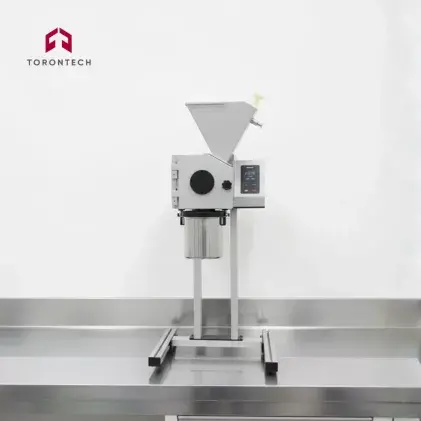
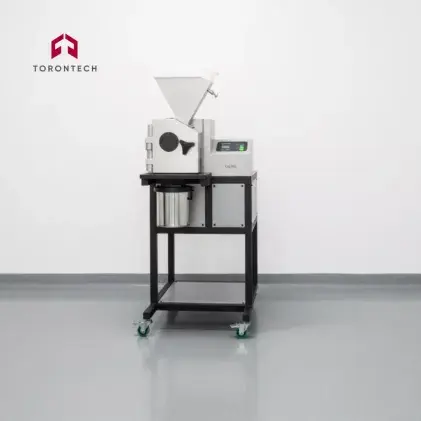
So, what is a cutting mill exactly? Think of it as an industrial-grade shredder optimized for precision. It is a serious instrument engineered to process materials that usually refuse to cooperate, such as soft plastics, tough leather, or fibrous biomass.
A cutting mill is fundamentally a machine tool used to reduce the size of materials by cutting them into smaller pieces, often using rotating blades. The cutting process involves rotary cutters that shear or chop the material, differing significantly from other milling methods that may use grinding or crushing.
Unlike crushers that simply hammer materials, a cutting mill utilizes pure shearing force. Visualize a set of sharp knives spinning on a rotor against stationary bars (similar to high-speed scissors that never dull). The material is sliced repeatedly until it is fine enough to pass through a sieve at the bottom.
Read more: Choosing the Right Tool: Cutting Mill vs Crusher Guide
We are telling you, for anything stringy or heat-sensitive, shearing is the only logical method. Any other approach invites complications.
You would typically use this unit for:
- Plastics and Polymers: PET bottles, rubber seals, foils, and preforms.
- Biomass & Biofuels: Wood chips, straw, fuel pellets, and secondary fuels (RDF).
- Food and Feed: Animal feed, spices, bones, and fibrous grains.
- Waste Management: Cable scrap, circuit boards, paper, and mixed household waste.
- Pharmaceuticals & Biology: Cannabis flower, herbal roots, leaves, and medicinal plants.
- Textiles & Leather: Fabric swatches, shoe soles, and raw leather patches.
Cutting Mill vs. Rotor Mill: The Comparison
Here is the question we receive constantly: what is the difference in the cutting mill vs rotor mill debate? Industry professionals often confuse the two, but they are distinct technologies.
1. How They Work
- Cutting Mills rely on precision shearing action. They don't just bash the sample; they slice it between the rotor and fixed knives, much like a pair of industrial scissors. The rotor spins at a controlled pace to maintain high torque and stability.
- Rotor Mills use high-velocity impact. They spin at incredibly high speeds (often 20,000 rpm) to pulverize substances against a ring or sieve.
Comparing a cutting mill to a rotor mill, the rotor mill typically uses a rotor with integrated cutters (such as Finger Cutters) that operate inside the rotor body, requiring less torque and allowing integration with multi-axis flexible milling machines. This design improves production accuracy and reduces torque demands compared to traditional disc cutters.
Generally, rotor mills are preferred for complex shapes and precision, while cutting mills are more general-purpose for size reduction.
2. The Heat Factor
- Cutting Mills operate with surprisingly low thermal output. This is a massive benefit for heat-sensitive materials that might degrade or lose critical moisture content if temperatures rise. If you "cook" your sample before you analyze it, your data is compromised.
- Rotor Mills generate significant friction heat due to the extreme speed. Unless you want your samples to melt or degrade, you will often require additional (and expensive) cooling accessories like liquid nitrogen feeds.
3. What Should You Pick?
- Select a Cutting Mill if your sample is elastic, fibrous, or a heterogeneous mix of metal and plastic. It delivers a uniform cut without producing excessive dust.
- Select a Rotor Mill if you need to pulverize dry, brittle items like minerals or seeds rapidly and don't mind the heat.
Here is our perspective: The "higher speed is better" mentality is a misconception. It leads labs to purchase expensive, high-speed rotor mills that degrade their rubber samples. If the material is elastic, you need correct geometry, not speed. A cutting mill is simply the smarter choice.
The Cutting Mill Advantage

Why do lab managers prioritize these units? The cutting mill advantage is that it serves as a versatile workhorse.
- Sample Integrity is Preserved: Because it slices cleanly without overheating the sample, the chemical composition remains unchanged. This ensures your analysis is accurate.
- It Handles Resilient Materials: Have you ever attempted to grind a shoe sole? It simply bounces inside an impact mill. A cutting mill’s shearing action slices through it effortlessly.
- Cleaning is Efficient: We know cross-contamination is a major concern. Modern cutting mills, like our versatile CM100M, feature accessible hoppers and rotors that can be removed in seconds. We consider ease of cleaning to be just as critical as the grinding performance, because no one has time to waste scrubbing a machine.
- It Satisfies Compliance Requirements: You need your particle sizes to align with regulations. Our mills are built to meet strict international benchmarks (like ASTM and ISO) for applications like plastic testing and heavy metal analysis.
How to Choose a Cutting Mill
If you are unsure how to choose a cutting mill, we have the essential checklist right here. Overall, selecting an appropriate cutting mill involves balancing material properties, desired output quality, and machine capabilities.
When choosing a cutting mill, factors to consider include the hardness and type of material, desired particle size, cutter design (blade shape and arrangement), and operational parameters like feed rate and rotational speed. The choice impacts cutting forces, surface quality, and efficiency; for example, blade shape influences cutting force and vibration, affecting surface roughness.
Additionally, selecting between different cutter types (e.g., ball-end vs. toroidal) depends on the machining operation's complexity and surface finish requirements.
Assess Your Material
Is it moist? Does it melt easily? If you are grinding complex electronic waste, ensure the motor has significant torque and the knives are constructed from durable materials, like tungsten carbide.
For example, processing tough e-waste generally requires high torque to prevent stalling, whereas soft botanical samples require sharp shearing edges to avoid mashing.
Best For: Complex, mixed, or temperature-sensitive materials.
Define Final Fineness
Review the sieve options. You want a machine that can switch from coarse (20mm) to fine (0.25mm) without difficulty. If your protocol calls for <1mm particles for rapid extraction (common in biofuel or pharmaceutical testing), ensure the mill offers a comprehensive range of bottom sieves.
Best For: Strict analytical protocols requiring specific particle size distributions.
Estimate Throughput
Are you processing a small vial or a large batch? Ensure the funnel is substantial enough to accept your sample size without jamming. A small R&D facility might only need a standard hopper, while a pilot plant processing bulk feed pellets would benefit from a long-stock funnel on the CM200 to handle larger volumes efficiently.
Best For: High-volume processing or continuous batch runs.
Maximize Value
You want necessary features like variable speed and safety interlocks, but you shouldn't have to overspend for them. We firmly believe you shouldn't have to choose between operator safety and staying within budget.
Best For: Labs balancing strict budget constraints with safety requirements.
The Technical Specifications
For those who require specific data, here is what our equipment delivers:
| Feature | Performance |
|---|---|
| Material Hardness | Soft, medium-hard, elastic, fibrous |
| Feed Size | Up to 60 x 80 mm (depending on funnel configuration) |
| Final Fineness | Range from 0.25 mm to 20 mm |
| Speed | Adjustable (typically 500 – 3000 rpm) |
| Safety | CE Certified, Instant Motor Brake |
Torontech Solutions: The Professional Choice
We categorize our mills into two groups so you only invest in the capacity you require.
- Universal Cutting Mills (CM100M): These are the standard units. Ideal for most labs handling everything from leather to biomass.
- Heavy-Duty Cutting Mills (CM200): These are the industrial powerhouses. Built for facilities that operate continuously, processing highly resistant materials like thick rubber or circuit boards without stalling.
Related article: Rapid Sample Prep: The Ultra Centrifugal Mill Guide
Reliable, Intelligent, and Cost-Effective
We will be direct: Torontech equipment delivers results. We believe that obtaining top-tier sample preparation shouldn't require excessive expenditure. Our cutting mills are durable, safe, and complete the task without complications.
It is our opinion that technology should resolve your challenges, not create new ones.
Whether you are testing recycled polymers or analyzing biofuels, our machines will process the material efficiently.
Ready to improve your sample preparation?
Review our lineup of Cutting Mills here or contact us directly. We will assist you in finding a configuration that fits your budget and your laboratory needs. Experience the Torontech standard, where we make innovation accessible.
References:
- Bergström, A. (2019). An improvement in the production flexibility and accuracy of rotor milling process employing Finger Cutters. IOP Conference Series: Materials Science and Engineering, 604.
- Chunmei, Y., Qingwei, L., Ting, J., Mingliang, S., Yan, M., & Jiuqing, L. (2020). TEST ANALYSIS AND VERIFICATION OF THE INFLUENCE OF MILLING CUTTER BLADE SHAPE ON WOOD MILLING. Wood Research, 65, 313-322.
- Geier, F. (1950). The Machine Tool Industry. Financial Analysts Journal, 6, 27-29.
- Herraz, M., Redonnet, J., Mongeau, M., & Sbihi, M. (2020). A new method for choosing between ball-end cutter and toroidal cutter when machining free-form surfaces. The International Journal of Advanced Manufacturing Technology, 111, 1425 - 1443.
- Kudzaev, A., Kalagova, R., Tsgoev, A., Korobeynik, I., & Urtaev, T. (2022). Clarification on the soil cutter parameters used for cultivation. IOP Conference Series: Earth and Environmental Science, 979.
- Susanto, A., Yuwono, I., Wahyudi, N., & Wicaknono, R. (2021). Analisa Gaya Potong pada Proses Frais Komponen Kereta Api Menggunakan OCTAVE: Bagian 1 Up Milling. Manutech : Jurnal Teknologi Manufaktur.