Virgin Plastic vs Recycled Plastic: Which is Best?
Is virgin plastic really the superior choice? We believe the industry assumption that "new is better" is quickly becoming an expensive mistake.
Sticking strictly to virgin resin exposes you to volatile markets, while competitors are cutting costs with sustainable alternatives. This is a practical guide for making the right material decisions for your profit margins.
Key Takeaways
- Virgin plastic offers consistency but exposes manufacturers to volatile oil markets and higher costs compared to recycled alternatives.
- New regulations and plastic taxes in the EU and North America are making recycled content a financial necessity rather than just an environmental option.
- Blending virgin and recycled pellets is a practical strategy to lower raw material expenses significantly without sacrificing product strength.
- Contamination is the primary barrier to quality so rigorous washing and filtration are essential to prevent defects in the final output.
- Torontech provides advanced shredders, washing lines, and pelletizing systems that allow you to transform waste into high-value material that rivals virgin resin.
What is Virgin Plastic, Exactly?
To begin, let's establish the fundamentals.
Virgin plastic refers to plastic material produced directly from petrochemical feedstocks without any prior use or recycling. Think of it as a formulation with a completely known history.
It is made from raw fossil-based resources and has not undergone any previous processing. Its consistency is why it has been the standard for sensitive applications like medical components and food packaging.
However, that level of quality comes with a price tag that fluctuates with the volatile oil market. For many, planning a budget around that kind of unpredictability is a constant challenge.
The Showdown: Recycled Plastic vs Virgin Plastic
To clarify the virgin plastic vs recycled plastic comparison, it helps to look at the environmental and economic data.
Compared to virgin plastics, recycled plastics are derived from reprocessing used plastic products. This process can reduce carbon emissions significantly during production and offer environmental benefits by diverting waste from landfills.
Here is how the two materials stack up in a real-world production environment:
| The Factor | Virgin Plastic (The New Stuff) | Recycled Plastic (The Comeback Kid) |
|---|---|---|
| Source Material | Straight from a petrochemical plant. | From post-consumer or post-industrial scrap. |
| The Cost Factor | Tied to global oil prices; often the more expensive option. | Generally a lower-cost alternative; a huge saving for in-house recycling. |
| The Purity Level | Completely pure. Its molecular structure is untouched. | This is the key variable. Its quality is a direct result of the processing technology used. |
| The Environmental Impact | A significant carbon footprint. | Supports a circular economy and has a much lower footprint. |
| Common Applications | Food-grade packaging, medical devices, high-stress parts. | Industrial containers, piping, automotive parts, decking. |
Regulatory and Market Pressures
The push to use recycled material is no longer just a suggestion. Governing bodies are taking a firm stance. We see these regulations not as obstacles but as catalysts for innovation. Before placing your next material order, consider these drivers:
- Plastic Taxes: In the UK and EU, taxes are now applied to packaging that fails to meet a minimum threshold of recycled content.
- Producer Responsibility Rules: Across North America, legislation is increasingly making manufacturers accountable for the entire lifecycle of their products.
Investing in your own recycling capabilities is a forward-thinking move that turns a compliance issue into a tangible business advantage.
A Look at Performance Across Polymer Types
Different plastics behave differently in the recycling stream. We must be realistic about the physics involved.
Recycled plastics may exhibit altered physical and mechanical properties such as increased brittleness or changes in melt flow rate, depending on the polymer type and recycling process.
However, with the right plastic recycling machinery, some recycled plastics can fall within the property range of virgin plastics.
PET (e.g., Soda Bottles)
A prime example of successful recycling. When processed through a dedicated PET Recycling Line, recycled PET can meet specifications that are nearly identical to virgin material.
For instance, we often see operators converting washed PET flakes into polyester fiber for clothing or industrial strapping.
Read more: PET Recycling Line: Transforming Plastic Waste Into Environmental Solutions
HDPE (e.g., Milk Jugs)
This material is a workhorse that recycles into extremely durable goods. A common application involves taking ground-up detergent bottles and extruding them into park benches. The most common challenge is achieving consistent color.
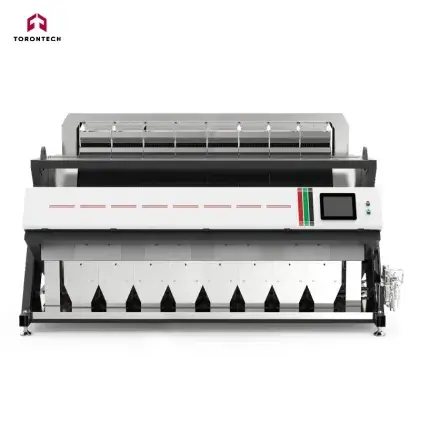
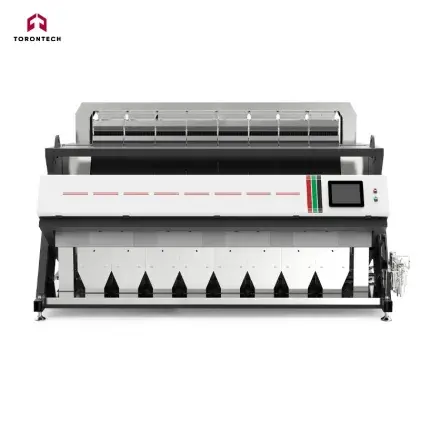
To solve this, we recommend using Optical Sorting for Plastic Waste Recycling, specifically the Flake Color Sorter ToronGV Series, to separate streams before they hit the extruder.
PP (e.g., Car Parts)
Recycled PP has excellent fatigue resistance. This makes it a reliable option for automotive components.
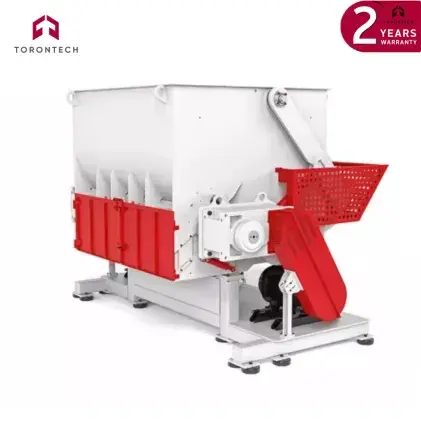
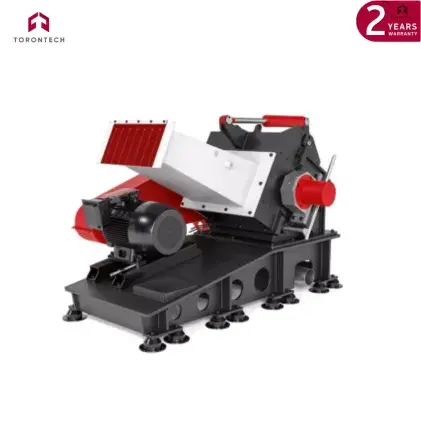
Its final performance often depends on the quality of the initial breakdown, which often requires a heavy-duty Plastic Shredder or Plastic Crusher Machine to handle bulkier items efficiently.
Related article: Plastic Crusher Machine: Industrial Scrap to Revenue
The Hybrid Strategy: Blending for Performance and Cost
For most operations, the virgin plastic vs recycled plastic decision isn't an all-or-nothing switch. That is why we find the most pragmatic approach is blending.
By mixing a percentage of high-grade recycled pellets with virgin material, such as a 70/30 split, a company can substantially lower its raw material costs without compromising the final product's integrity. This requires an advanced setup, such as a Twin Screw Extruder or a Cutter Compactor Pelletizing System, to completely homogenize the blend.
Related article: Single vs Twin Screw Extruder: An Expert Comparison
Consider a pipe producer. Instead of burning cash on 100% virgin resin, they might run a co-extrusion setup. The core could be recycled stock to keep costs down while the outer skin remains virgin plastic for that glossy, perfect finish.
The Quality Challenge: Solving Contamination
If recycled plastic offers so many benefits, what holds companies back? The answer is simple: contamination.
This is the point where profitability is either won or lost. Recycled plastics tend to accumulate higher levels of hazardous chemicals and volatile organic compounds (VOCs) compared to virgin plastics. This raises concerns about chemical exposure risks, especially in food-contact applications.
Picture a run of plastic film. If there is even a trace of trapped moisture or chemical residue, you end up with defects that destroy the surface finish. Or consider injection-molded crates. If paper label residue slips through, it creates a weak point.
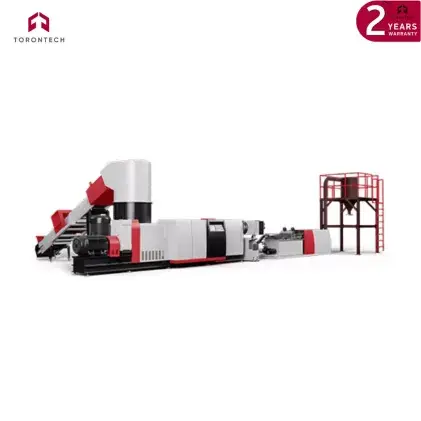
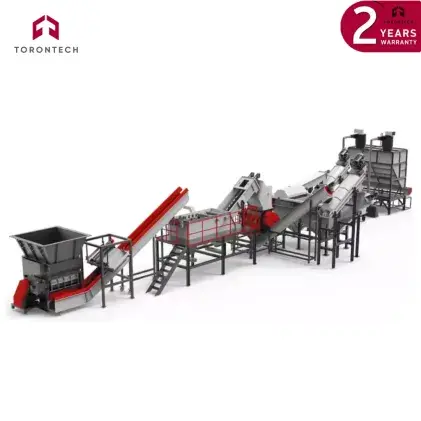
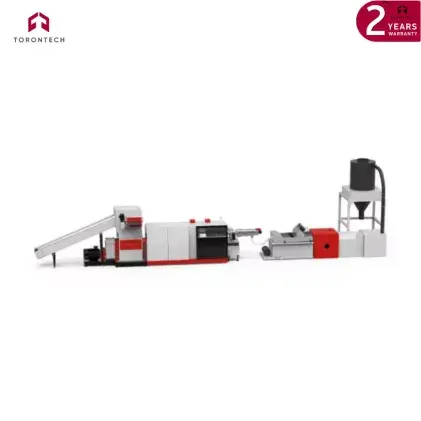
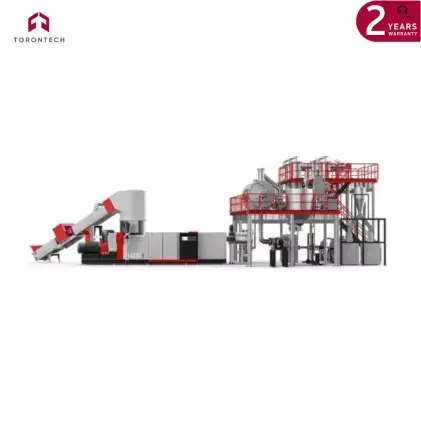
To avoid this, we often deploy a comprehensive Washing and Pelletizing Line or a Shredder Extruder Recycling Pelletizing System to ensure total purity. Advanced recycling methods like these are essential because they can improve the quality of recycled plastics closer to virgin standards while maintaining lower greenhouse gas emissions than producing new virgin plastic.
To create recycled pellets that can genuinely replace virgin resin, the process must include:
- A thorough washing stage to remove foreign particles and residues.
- An efficient dewatering system, as moisture can ruin plastic extrusion.
- A precision filtration process to remove microscopic impurities.
Torontech: Making Recycled Rival Virgin Plastic
Whether your plant runs on virgin plastic, recycled material, or a strategic hybrid, the choice in the recycled plastic vs virgin plastic equation is ultimately tied to the quality of your processing equipment.
At Torontech, our approach is straightforward. High-quality output requires high-performance machinery. Our reputation is built on providing cost-effective and innovative technologies that are engineered to solve the exact contamination and consistency challenges we have discussed here.
Don't let volatile material costs control your margins. Explore our full range of plastic recycling machinery today.
References
- Cabanes, A., Valdés, F., & Fullana, A. (2020). A review on VOCs from recycled plastics. Sustainable Materials and Technologies, 25.
- Çelik, Y., Shamsuyeva, M., & Endres, H. (2022). Thermal and Mechanical Properties of the Recycled and Virgin PET—Part I. Polymers, 14.
- Daggubati, L., Sobhani, Z., Carbery, M., Ramadass, K., & Palanisami, T. (2025). Fingerprinting risk from recycled plastic products using physical and chemical properties. Journal of hazardous materials, 488, 137507.
- Ganesan, A., Preetha, H., Subathara, S., & Bhowmik, S. (2022). Comparative analysis of carbon emission from products of virgin plastics and recycled plastics and their environmental benefits. International Journal of Environmental Science and Technology, 20, 6713-6722.
- Järvelä, E., Peräniemi, S., Vepsäläinen, J., Hrovat, B., Raninen, K., Tomppo, L., Koistinen, A., & Rysä, J. (2025). A study protocol for chemical analysis and toxicity testing of virgin and recycled microplastics and associated chemicals. The Science of the total environment, 975, 179287.
- Ladhari, A., Kucukpinar, E., Stoll, H., & Sängerlaub, S. (2021). Comparison of Properties with Relevance for the Automotive Sector in Mechanically Recycled and Virgin Polypropylene. Recycling.
- Nordahl, S., Baral, N., Helms, B., & Scown, C. (2023). Complementary roles for mechanical and solvent-based recycling in low-carbon, circular polypropylene. Proceedings of the National Academy of Sciences of the United States of America, 120.
- Rosenboom, J., Langer, R., & Traverso, G. (2022). Bioplastics for a circular economy. Nature Reviews. Materials, 7, 117 - 137.