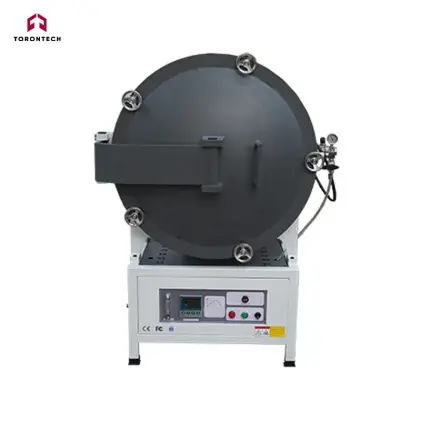
Vacuum Furnace vs Atmosphere: Which is Better for You?
Choosing the right industrial furnace is a major business decision, one that has serious consequences for your production quality, your schedule, and your bottom line.
As specialists who have guided many companies through the vacuum furnace vs atmosphere furnace choice, we want to offer our direct perspective to help you make a genuinely smart investment.
The Key Difference: What Happens Inside the Heating Chamber
The entire performance in the vacuum furnace vs atmosphere furnace comparison comes down to the environment they create.
A vacuum furnace is a sophisticated system designed to remove virtually all atmospheric contaminants. By creating an empty space, it ensures nothing interferes with the material's surface—an elegant solution for extremely sensitive applications.
An atmosphere furnace, however, takes a different approach—one we believe is more practical for the majority of industrial work. Instead of creating a void, it fills the chamber with a precisely controlled blend of gases. This engineered environment serves as a protective shield for your materials and can even be used to actively improve their surface properties.
Related article: Furnace vs Lab Ovens: Which Do You Really Need?
At a Glance: Vacuum Furnace vs. Atmosphere Furnace
Here is a straightforward look at how they stack up.
| Feature | Vacuum Furnace | Atmosphere Furnace |
| Primary Function | Heats components in a void to prevent surface reactions. | Heats components in a controlled gas shield for protection and treatment. |
| Typical Users | Companies producing aerospace components, medical implants, and sensitive electronics. | Manufacturers of automotive parts, industrial tools, and sintered metal components. |
| Resulting Finish | An exceptionally bright, immaculate surface. | A high-quality, clean surface, with the final result depending on gas purity. |
| Initial Investment | Higher. The vacuum pumps and chamber engineering require significant capital. | Lower. This is a much more accessible capital investment for most businesses. |
| Operational Costs | No recurring gas expenses, but expect higher energy usage and specialized maintenance costs. | The primary running cost is the process gas, which is a predictable operational expense. |
| Process Versatility | A top performer for high-purity processes like brazing and diffusion bonding. | A highly adaptable machine; changing the gas allows for a wide range of different treatments. |
Which Industries Prefer Which Furnace?
You will find vacuum furnaces in sectors where performance and safety are non-negotiable. When building components for jet engines or medical devices, the absolute perfection a vacuum provides is essential.
However, from our vantage point, the atmosphere furnace is the operational backbone of the factory floor. This is where the majority of industrial work gets done, especially in demanding fields like the automotive industry, tool and die manufacturing, and powder metallurgy.
In the vacuum furnace vs atmosphere furnace debate, it delivers an outstanding mix of precision and operational practicality.
Related article: Tube Furnace vs Box Furnace: The Right Choice
A Practical Framework for Choosing Your Furnace
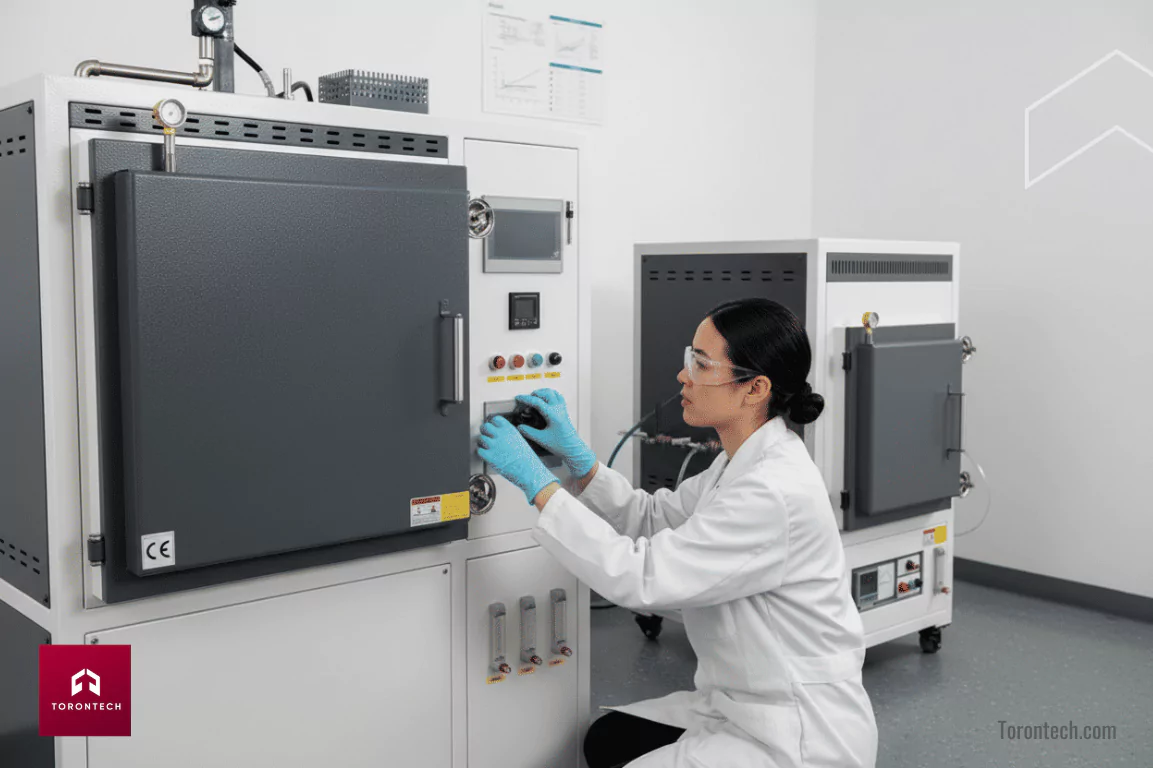 Here is the approach we use to help our partners determine the best path forward.
1. Analyze Your Materials and Processes First.
An atmosphere furnace is, in our expert opinion, the superior tool for surface modification jobs like carburizing and nitriding, where the gas itself is an active part of the treatment.
A Common Scenario: A company manufactures high volumes of steel gears that need a hardened, wear-resistant surface. They use an atmosphere furnace for carburizing. The process is efficient, repeatable, and designed for high-throughput production. A specialized unit like our TT-AF-64-1200 is engineered for these kinds of demanding tasks.
In contrast, a vacuum furnace is the clear winner for high-purity brazing or for materials that react aggressively with any atmospheric elements.
A Different Scenario: An aerospace supplier needs to braze a complex fuel line assembly. The joint integrity must be flawless. In this case, a vacuum furnace is the only responsible choice because it guarantees a pure environment for a perfect, residue-free bond.
2. Evaluate the Full Financial Picture: Upfront Cost vs. Lifetime Value.
The initial capital required for a vacuum furnace is considerable. We design our atmosphere furnaces to be a more manageable initial investment, freeing up your capital.
When we look at the total cost of ownership, the atmosphere furnace often presents a stronger business case. A well-engineered model, like our Controlled Atmosphere TT-AF-8-1200 or TT-AF-18-1400, is built for gas efficiency, making your operational expenses predictable and easier to manage.
3. Consider Your Production Demands.
From our perspective, if production speed is a key performance indicator, the faster cycle times of an atmosphere furnace are a major competitive advantage in the vacuum furnace vs atmosphere furnace evaluation. The long pump-down cycles of vacuum systems can create significant production bottlenecks.
Our product line, from the compact TT-AF-45-1200 to the large-capacity TT-AF-500-1400, is built to match your operational tempo.
4. Assess Your Facility and Staffing.
We have always focused on creating equipment that is practical to install and operate. The straightforward design of atmosphere furnaces makes them easier to integrate into existing facilities and requires less specialized training for your technical staff.
Vacuum vs Atmosphere: The Torontech Verdict
So, what is our final take on the vacuum furnace vs atmosphere furnace discussion? While vacuum technology is a necessary and impressive tool for a select group of specialized applications, we believe the functional versatility and financial viability of a modern atmosphere furnace make it the most prudent choice for the vast majority of industrial producers.
At Torontech, our entire business is built on providing equipment that delivers exceptional performance without excessive cost. Our Atmosphere Furnaces, the TT-AF Series, are engineered to be a cost-effective, high-performance solution. They provide the control, reliability, and repeatable outcomes that today's production lines require.
If you are looking for an effective and efficient heat treatment solution, we recommend exploring our offerings. Contact our team for a quote, and let us help you identify the ideal furnace for your operational needs.
Need the Right Furnaces?
Explore cost-effective Torontech industrial and lab furnaces for reliable results.