

5 Main Types of HPLC Columns Explained
The HPLC column is the most critical component in your entire analysis setup. Selecting the right hardware is what separates successful, repeatable results from days filled with analytical problems.
At Torontech, we believe a solid grasp of this technology and the different types of columns used in HPLC analysis is key to making smart purchasing decisions, which is why we are committed to offering reliable, cost-effective solutions that support your lab's long-term goals.
This guide will provide a practical breakdown of the main types of columns for HPLC available. We’ll explain what they do and share our insights on how to choose from the many types of HPLC columns, all while keeping operational costs in view.
Reversed-Phase HPLC Columns
In modern chromatography, reversed-phase columns—and the C18 phase in particular—are the undisputed industry standard among all types of HPLC columns.
This column uses a non-polar stationary phase (long chains of carbon, like C18 or C8) bonded to a silica support, paired with a polar mobile phase. This setup is exceptionally effective for a huge variety of small molecules, making it a staple in pharmaceutical QC, environmental testing, and food analysis.
The C18 phase, with its longer carbon chain, offers greater retention, which is excellent for separating complex mixtures. The C8, with a shorter chain, provides less retention and can be useful for faster analysis times.
This versatility is why any discussion of the different types of columns used in HPLC almost always begins here. That’s why ensuring labs have access to reliable and economical C18 and C8 columns is a core part of our mission.
Normal-Phase HPLC Columns
This is a more specialized, classic technique, but for certain applications, it remains the superior choice. Using a polar stationary phase (typically unmodified silica) and a non-polar mobile phase, normal-phase columns excel at separating compounds that are highly soluble in organic solvents.
Their unique selectivity makes them invaluable for separating structural isomers (for instance, cis- and trans-isomers) that can be impossible to resolve with reversed-phase methods. When considering the various types of columns for HPLC, we view normal-phase as an essential problem-solving tool for specific challenges in chemical synthesis and purification.
Ion-Exchange HPLC Columns
When your work involves molecules that carry an electrical charge, ion-exchange is the most effective technique.
The column's stationary phase has a charged surface that creates controlled electrostatic interactions with the sample molecules, allowing for a separation based on the net charge. These columns come in four main varieties: strong/weak cation exchangers (for positively charged analytes) and strong/weak anion exchangers (for negatively charged analytes).
This method is fundamental in biotechnology and biochemistry for achieving high-purity separations of proteins, peptides, nucleic acids, and amino acids.
Size-Exclusion HPLC Columns
This technique functions like a highly precise molecular filter, separating molecules based on their physical size in solution—a unique function among the various types of HPLC columns.
The column packing contains porous particles with a carefully controlled pore size distribution. Large molecules are unable to enter these pores, so they pass through the column quickly and elute first. Smaller molecules can enter the pores, extending their path through the column and causing them to elute later.
It is critical in biopharmaceutical labs for analyzing monoclonal antibodies and detecting the presence of aggregates. We work closely with clients in these regulated fields to provide columns that deliver the consistent, reproducible results they depend on.
Affinity HPLC Columns
This is the most targeted separation tool available among the different types of columns used in HPLC.
It uses a specific ligand—such as an antibody or a receptor protein—that is chemically bonded to the stationary phase. This ligand has a unique and strong binding affinity for one specific target molecule in a complex sample like cell lysate or serum.
All other components of the mixture pass through the column without being retained. Common examples include Protein A columns used for purifying monoclonal antibodies.
While a focused investment, its outstanding selectivity offers an unmatched return for high-value purification tasks.
At-a-Glance Comparison
To simplify the differences between the main types of columns for HPLC, this table provides a quick reference for each separation mode and its common application.
| Column Type | Stationary Phase | Mobile Phase | Primary Use Case |
| Reversed-Phase | Non-Polar (e.g., C18, C8) | Polar (e.g., Water/Methanol) | Pharmaceuticals, peptides, organic molecules |
| Normal-Phase | Polar (e.g., Silica, Alumina) | Non-Polar (e.g., Hexane, Chloroform) | Isomers, lipid-soluble compounds, non-polar analytes |
| Ion-Exchange | Cationic or Anionic Surface | Buffered Aqueous Solution | Proteins, amino acids, nucleic acids, ions |
| Size-Exclusion | Porous Particles with Specific Pore Sizes | Varies (Aqueous or Organic) | Large polymers, proteins, polysaccharides |
| Affinity | Immobilized Ligand (e.g., Antibody) | Specific Buffer System | Purification of specific proteins or biomolecules |
How to Select the Right HPLC Column for Your Application
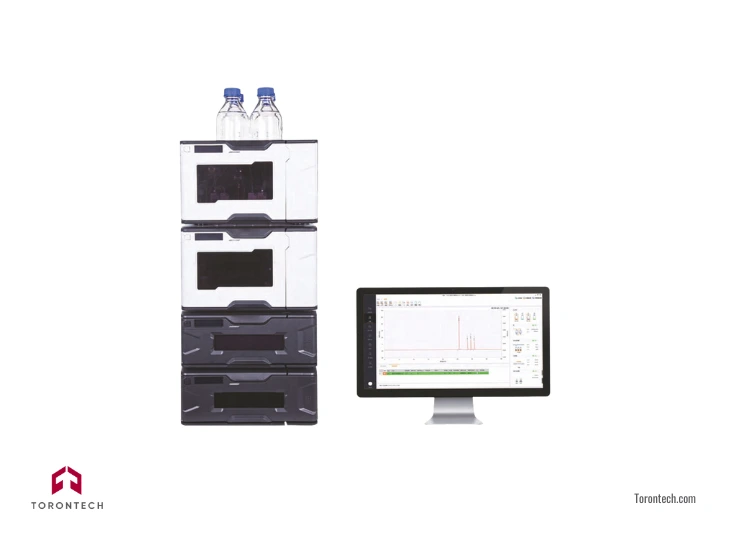
Making the right choice from the start is key to an efficient and economical method when working with the many types of HPLC columns. We advise our clients to base their decision on these practical considerations:
- Analyze your sample's properties first. The polarity, molecular weight, and charge of your analyte are the most important factors that will guide you to the correct separation mode (e.g., reversed-phase for polar molecules, ion-exchange for charged ones).
- Define your primary analytical goal. Are you aiming for the highest possible resolution to separate complex mixtures, or is high-speed throughput for routine QC your main priority? This will determine the ideal column dimensions and particle size.
- Consider your existing equipment's capabilities. We often advise clients to ensure their HPLC system's pump can handle the backpressure from a new column. Making sure your investment is compatible with your current setup is a simple check we can help with.
Maximizing ROI: Extending Column Life and Reducing Costs
An HPLC column is a consumable, but its operational lifetime can be significantly extended with proper procedures, which protects your investment across all types of columns for HPLC.
- Use a guard column. This is the most effective, low-cost method to protect your primary analytical column from contamination by particulates or strongly retained impurities. It’s a small investment that protects a much larger one, which is why we offer a comprehensive and affordable range to match any column.
- Implement proper column care and storage. Always flush buffers from the column before shutdown using a buffer-free solvent mixture. Never store a column in a mobile phase containing salts, as crystallization can cause irreversible damage.
- Optimize your methods to reduce costs. Modern column technology can directly lower operational spending. Updating a method to use a shorter column with smaller particles can often cut solvent consumption and analysis time significantly while maintaining or even improving data quality.
Choosing HPLC Column Types with Torontech
A clear grasp of the available types of HPLC columns is fundamental to running an efficient and effective laboratory. From the versatile reversed-phase column to the highly targeted affinity column, the correct choice is dictated by your sample, your objectives, and your equipment.
At Torontech, our position is that high-level analytical performance should not demand excessive costs. We are focused on providing reliable, high-quality HPLC systems and components that offer excellent long-term value.
We aim to be a partner in your lab's success. If you are looking to improve your methods and control operational expenses, we encourage you to review our cost-effective product lines. Allow our team to help you identify the ideal column for your work, ensuring you get accurate data and support your budget.
