Pharmaceutical Testing Equipment for Indonesia's CPOB Labs
Every batch release in an Indonesian pharmaceutical plant depends on defensible test data. When BPOM auditors review a CPOB dossier, they expect qualified instruments, traceable calibration, and validated methods. Weak QC data stalls approvals and threatens market access.
Reliable pharmaceutical testing equipment in Indonesia gives quality-control teams the dissolution, disintegration, hardness, and friability results that CPOB and pharmacopeial methods demand. Torontech supplies a full pharmaceutical testing range built for regulated solid-dosage production.
Why Indonesia's Pharmaceutical Sector Needs Dependable QC
Indonesia runs the largest pharmaceutical market in Southeast Asia. More than 220 manufacturers hold BPOM licenses, and most produce solid oral dosage forms for the JKN national health program. That scale places constant pressure on quality-control throughput.
Government policy adds further weight. National initiatives push local production and reduce dependence on imported active pharmaceutical ingredients. Producers such as Kalbe Farma, Kimia Farma, and Bio Farma keep expanding capacity, and every new line needs matching instrumentation.
Java anchors most of this output. Clusters around Jakarta, Bandung, and Surabaya concentrate contract production, generics lines, and vaccine facilities. Contract manufacturers carry especially heavy testing loads, since they release many products under one roof.
The JKN insurance scheme now covers most of the population and drives enormous generic volumes. Every tender-winning batch must clear release testing before it reaches primary clinics and referral hospitals nationwide.
As a result, demand for pharmaceutical testing equipment in Indonesia rises with each production expansion. Reliable data confirms drug release, batch uniformity, and shelf stability, which are the outcomes BPOM and buyers weigh most.
Core Instruments for Solid-Dosage Testing
Most Indonesian QC labs test tablets and capsules against the same core parameters. Each parameter maps to a specific instrument and a recognized pharmacopeial method:
| Test | Instrument | Reference Method |
|---|---|---|
| Drug release | Dissolution tester | USP <711> |
| Break-up time | Disintegration tester | USP <701> |
| Mechanical strength | Tablet hardness tester | USP <1217> |
| Abrasion resistance | Friability tester | EP 2.9.7 |
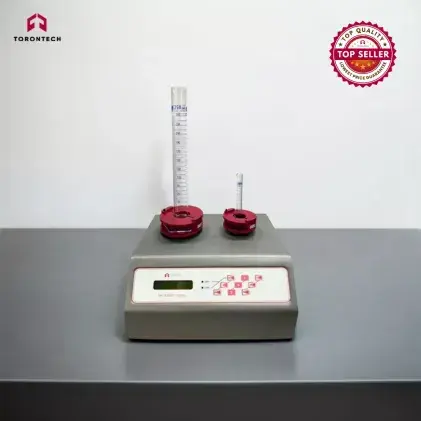
| Powder packing | Tap density tester | USP <616> |
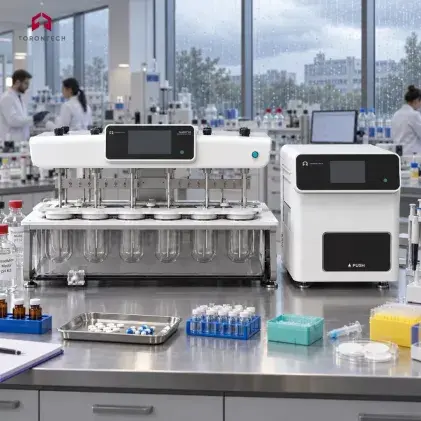
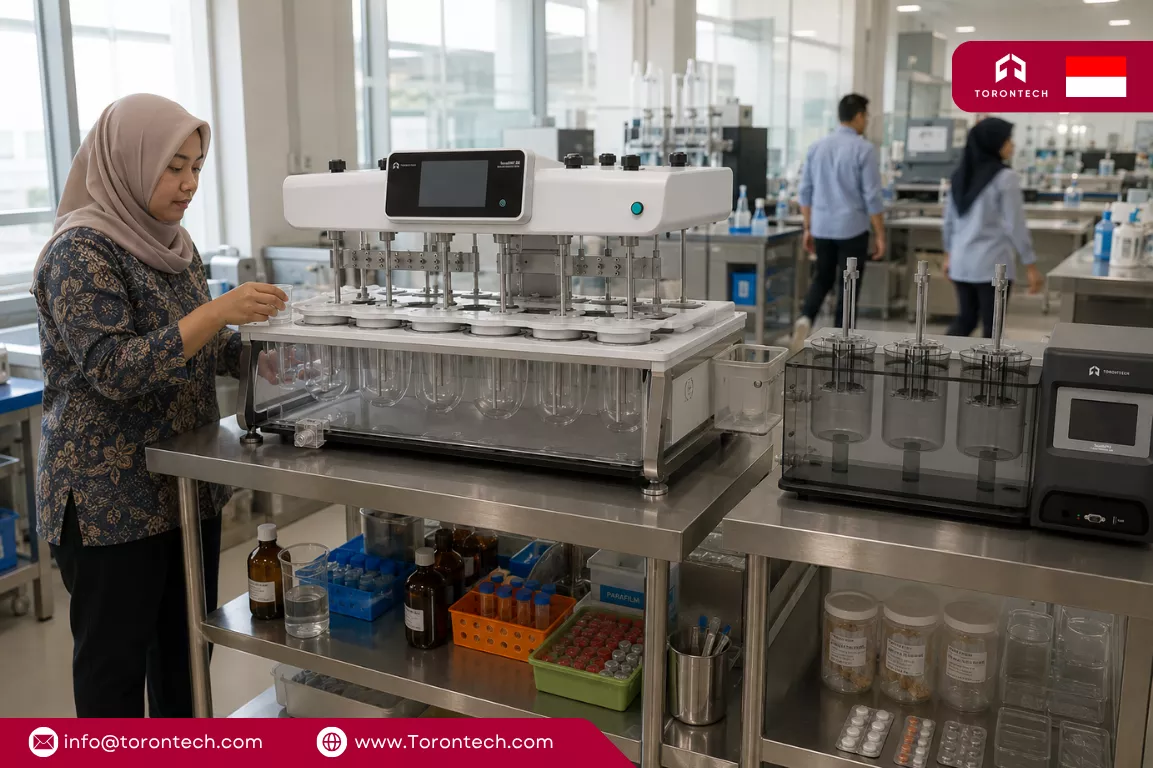
Torontech's dissolution testers cover 8-station and 14-station systems, plus USP Apparatus 7 reciprocating models for modified-release forms. Validation-ready controls support the audit trails that CPOB documentation requires.
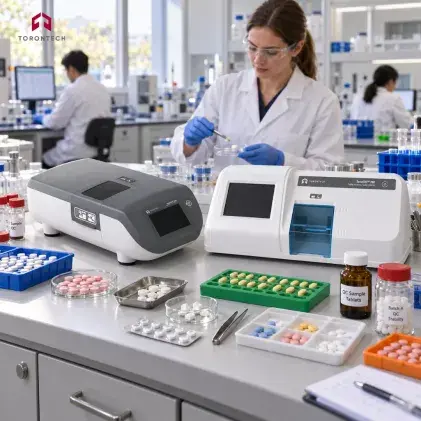
Beyond these core five, the range extends to leak testers, powder flowability analyzers, gelatin capsule hardness testers, and inhaler testing instruments for MDI and DPI products.
Hardness and friability testing protect tablet durability through packaging and distribution across Indonesia's wide archipelago. Tap density and flowability data keep tableting and capsule-filling lines steady during high-volume generic runs.
Modified-release formulations, common in Indonesia's chronic-disease portfolio, rely on precise dissolution profiling. Accurate profiles confirm controlled drug delivery over the full dosing window.
Aligning With CPOB, BPOM, and Farmakope Indonesia
CPOB, Indonesia's Good Manufacturing Practice standard, is enforced by BPOM and aligned with PIC/S. It requires that every instrument be qualified, calibrated on schedule, and supported by validated procedures. Equipment choice therefore shapes audit outcomes directly.
Qualification typically spans installation, operational, and performance stages. Auditors expect the supporting records on file, so instruments that arrive with clear documentation shorten the path to a compliant lab.
Indonesian labs run assays to Farmakope Indonesia methods, which harmonize closely with USP and European Pharmacopoeia chapters. Torontech's friability testers are built to USP, EP 2.9.7, and Indian Pharmacopoeia requirements, so results translate cleanly into local compendial reporting.
Halal compliance now shapes the sector too. Presidential Regulation 6/2023 extends halal certification to medicines, with BPJPH overseeing the process. Thorough QC records help manufacturers document product integrity across these overlapping frameworks.
PIC/S alignment also supports export ambitions. Producers targeting regional, GCC, and African markets benefit when their QC data already meets internationally recognized methods.
Choosing Pharmaceutical Testing Equipment in Indonesia
Selecting the right configuration depends on your dosage forms, batch volume, and documentation needs. Key decision points for Indonesian labs include:
- Station count: 8-station units suit routine QC, while 14-station systems handle high-throughput generics production.
- Validation support: choose instruments that ship with qualification documentation and calibration certificates for CPOB dossiers.
- Automation: automated sample collection reduces analyst variability during long dissolution runs.
- Local service: on-site calibration and spare-part access keep instruments qualified year-round.
Matching equipment to workload prevents both bottlenecks and over-investment. A clear specification up front also simplifies later BPOM inspection and gives procurement a defensible basis for capital approval.
Equip Your Lab for Indonesian Compliance
Indonesia's pharmaceutical growth rewards manufacturers who can prove quality on demand. From Jakarta contract sites to Surabaya generics plants, defensible dissolution and tablet data keeps products moving through registration and release. Delays at the QC bench ripple straight into tender commitments.
Torontech configures pharmaceutical testing systems around your standards, throughput, and validation requirements, with regional support through its GCC and APAC network. Our team can advise on station counts, apparatus types, and documentation packages suited to CPOB workflows. Local calibration and spare-part logistics keep instruments audit-ready between inspections.
To specify the right instruments for your facility, reach out to the Torontech team and share your dosage forms and testing volume.