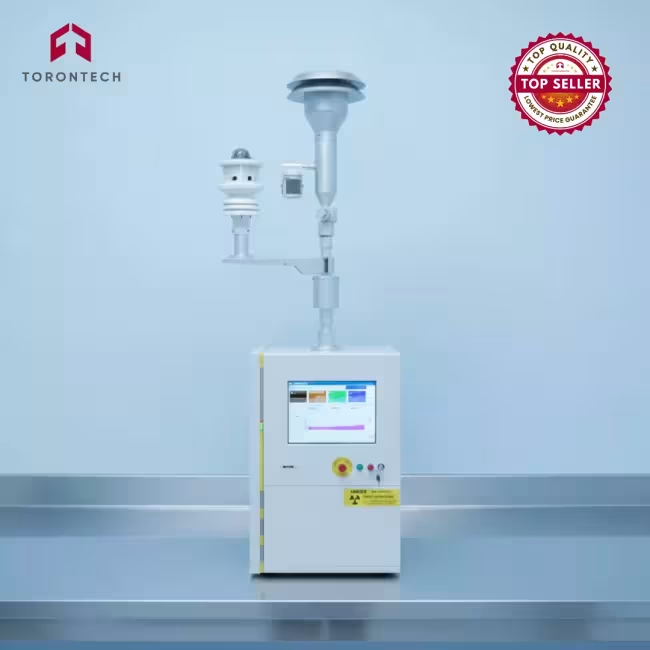
The Atmospheric Heavy Metal On-line Monitor is an advanced air quality monitoring solution designed for continuous and reliable measurement of airborne particulates and atmospheric heavy metal content. It integrates fusion X-ray fluorescence (XRF) technology, β-ray absorption detection, and an automatic air particle enrichment system to deliver stable, repeatable, and accurate measurement results. Developed for long-term environmental monitoring, the system complies with the US EPA IO-3.3 standard method, making it suitable for regulatory monitoring programs, research institutions, and environmental assessment applications.
This analyzer provides precise measurement of air particulate mass concentration while simultaneously determining the elemental composition of collected particles. It is capable of detecting trace levels of heavy metals such as lead, cadmium, chromium, and arsenic, while also supporting particulate matter (PM) concentration monitoring. Designed for operational efficiency and stability, the system supports fully automated and unattended operation, enabling consistent data collection over extended monitoring periods with minimal manual intervention.
Key Highlights
- Continuous online monitoring of atmospheric heavy metals and particulate matter
- Combined PM mass concentration and elemental analysis in a single system
- High sensitivity for trace-level heavy metal detection
- Designed for long-term, stable, and unattended operation
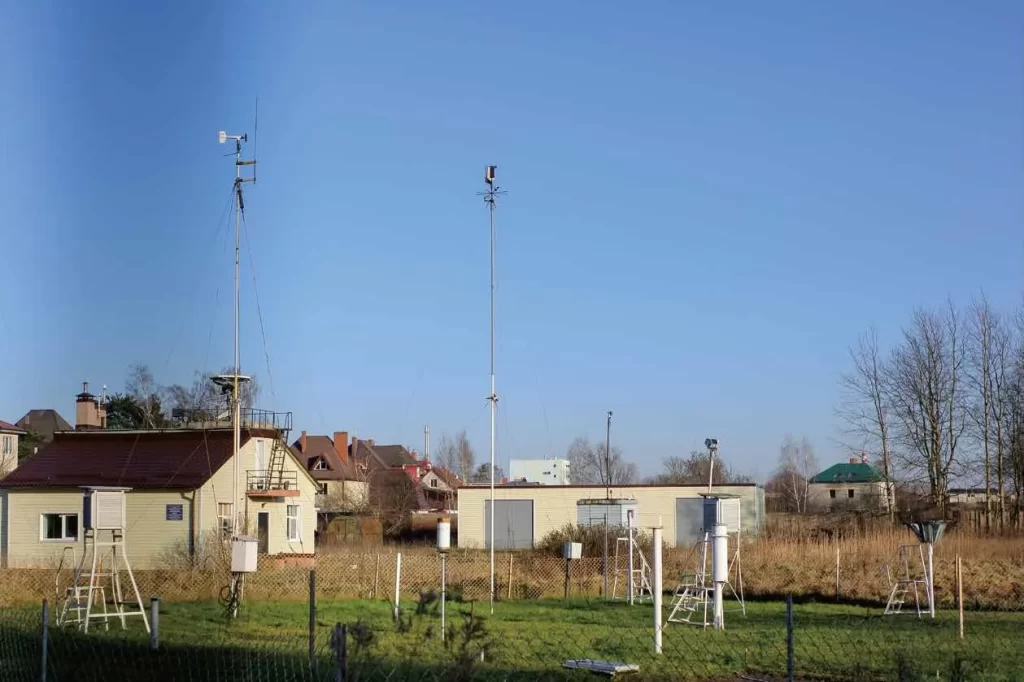
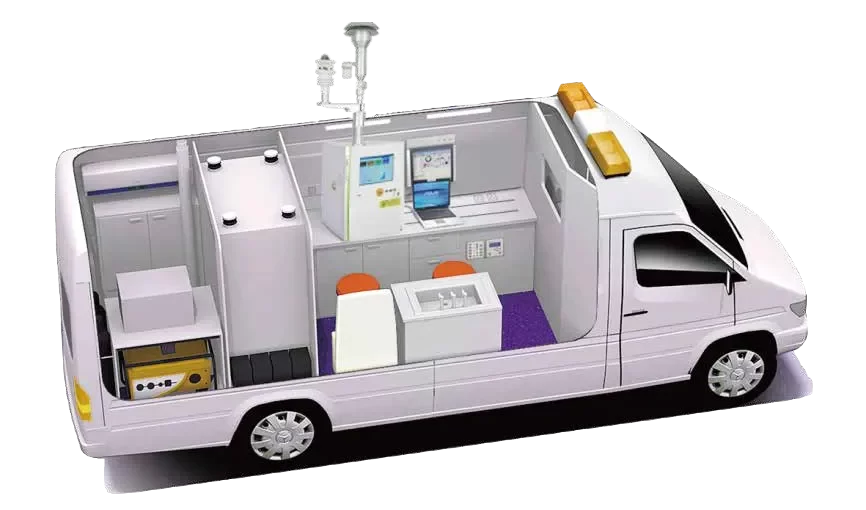
- Suitable for fixed monitoring stations and mobile monitoring deployments
Application
- Online monitoring of PM2.5 heavy metals
- On-line monitoring of heavy metals in flue gas
- Emergency response to smoke pollution accidents
- Spot checks of flue gas emissions from enterprises
- Online nuclear radiation monitoring at radiation monitoring stations
- Heavy metal detection after solid waste or waste incineration
- Rapid detection of heavy metals in automobile exhaust
- Environmental assessment and licensing
- Pollution source identification and traceability, pollution prediction, and early warning
- Field experiment detection and law enforcement



X-Ray Fluorescence Process Explained
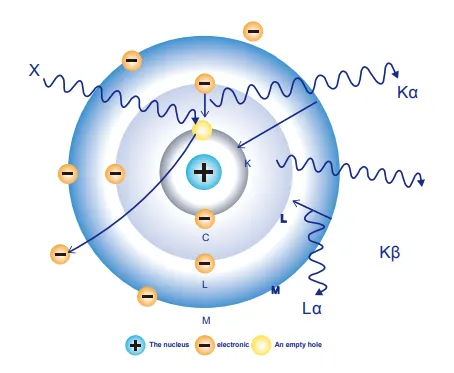
When a sample is bombarded with X-rays, the energy excites the atoms within it, producing X-ray fluorescence. This occurs as X-rays eject inner electrons from the K and L shells of an atom. The resulting vacancies are filled by outer electrons with higher energy, which release the excess energy as X-ray fluorescence when transitioning to lower energy orbitals.
These emitted X-ray lines serve as unique signatures for elements, much like fingerprints, and are unaffected by the atom's chemical valence. The intensity of the emitted radiation correlates directly with the concentration of the specific element in the sample.

Configuration
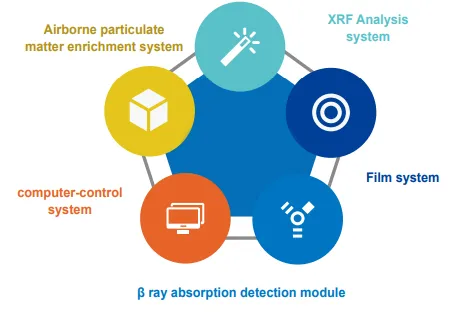
Atmospheric heavy metal online analyzer features an air particulate matter enrichment system, coil film system, β-ray absorption detection module, XRF analysis system, and a computer control system. Except for the particle cutter and sampling pump, the entire system is enclosed in a single compact box, ensuring convenient transport and straightforward installation.
Technical principle
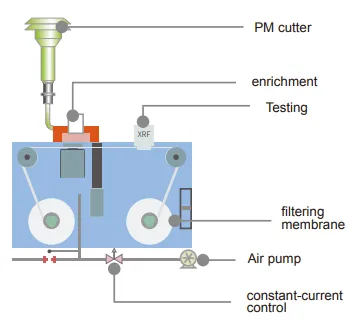
The atmospheric heavy metal online analyzer utilizes a precision constant flow sampling system to ensure accurate control of the collected air volume. Air particles are enriched through a filter membrane, and the β-ray absorption method is used to detect the concentration of particles on the filter membrane, with the air particulate concentration denoted as C1 (μg/m³).
X-ray fluorescence technology is then applied to detect the elemental content in the particulate matter, providing the element concentration in the air as C2 (ng/m³). By combining the measurements of particulate matter concentration and elemental concentration, the mass concentration of elements in particulate matter (C3) is calculated as:
C3 = (C2 / C1) * 10³ (ppm)
Additionally, the percentage content of elements in particulate matter (P) is calculated as:
P = (C2 / C1) * 10⁻³ * 100%
Work Functional Picture
Performance Feature
- Accurate Heavy Metal Detection: The analyzer precisely measures the content of various heavy metals, such as lead, cadmium, chromium, and arsenic, with a low detection limit of up to 0.01 ng/m³. Custom element models can be tailored to meet user requirements.
- Chassis and Installation: The main unit is housed in a 19" international standard chassis, allowing for installation on mobile monitoring vehicles or in standard cabinets at automated air stations.
- High Reliability and Stability: The instrument is designed for high operational reliability and stability, with intelligent fault diagnosis and self-correction capabilities.
- Built-in Calibration Module: The system features a built-in calibration module that automatically calibrates XRF spectrum horizontal and vertical coordinates. Calibration frequency is adjustable, and a specific metal internal standard source ensures automatic quality control and alarm functions.
- Flow Control and Calibration: Accurate control of sampled flow conditions is achieved through a mass flow controller, temperature, and pressure sensors, with automatic flow calibration capabilities.
- Data Transmission and Remote Monitoring: The analyzer supports multiple data transmission modes, including RS232/485, USB, GPRS, ADSL, and Ethernet, enabling remote transmission, monitoring, and inspection of operational parameters, status, and data.
- Radiation Protection: The system includes professional radiation protection measures, ensuring no radiation leakage in all directions during measurements.
- Non-Destructive Testing: The system performs non-destructive testing, and filter film samples can be stored for further analysis.
- Programmable Sampling and Analysis: The analyzer allows for programmable sampling and analysis times, offering flexibility in operation.
The system can be installed in a mobile monitoring vehicle, making it ideal for emergency monitoring and rapid screening of sudden environmental pollution accidents.
Air particulate matter enrichment system
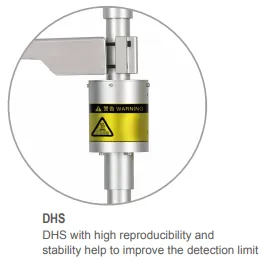
The system is primarily composed of a particulate matter cutter, a DHS (Dynamic Heating System), filter paper tape, and a sampling pump, ensuring reliable and efficient functionality.
Particulate Matter Cutter
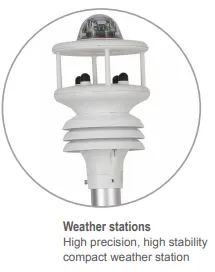
The system includes three types of particulate matter cutters—TSP, PM10, and PM2.5—that can be selected based on user requirements. These cutters enable the classification and analysis of heavy metals in particles of various sizes. The setup is further enhanced with an outdoor temperature and humidity sensor, complete with a louver shield and a lightning protection isolator for reliable operation in diverse conditions.
Dynamic Heating System (DHS)
The DHS dynamically regulates the temperature of the sampled air to control its humidity, effectively eliminating the impact of moisture on testing accuracy.
Sampling Pump
The system features a high-efficiency diaphragm pump with a maximum flow rate of 20 L/min and a minimum vacuum level of 0.5 Pa, ensuring reliable and precise sampling performance.
Coil membrane system
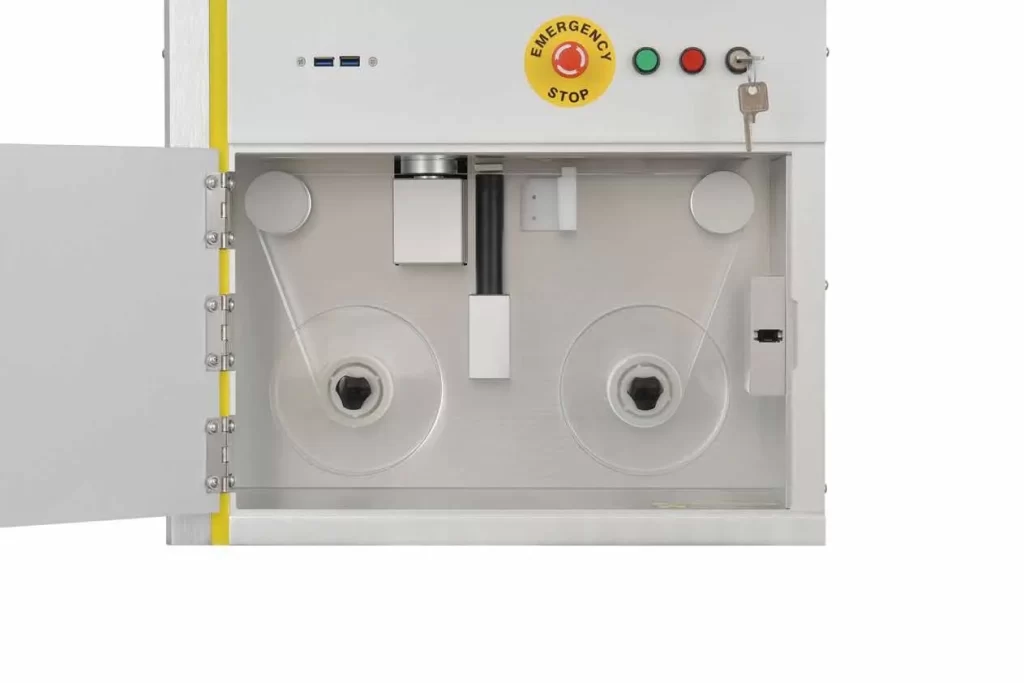
The system primarily consists of a hair film motor, a film receiving motor, a guide rod, a PTFE filter membrane, and other essential components, ensuring efficient operation.
The system uses a specialized PTFE filter film, which differs from conventional quartz, glass fiber, or polyvinyl chloride filter films typically used for particulate matter measurement. This filter film is free of heavy metals, reducing the measurement background, and offers sufficient strength for reliable performance.
β ray absorption detection module
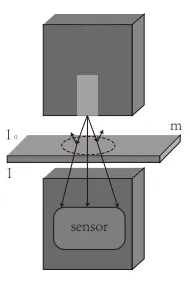
PM2.5 particles are collected on filter paper, and a beam of beta rays is directed through the filter and particles. As the rays pass through, they are attenuated by scattering, with the degree of attenuation being directly proportional to the weight of the PM2.5 particles. By measuring the attenuation of the rays, the weight of the PM2.5 can be accurately calculated.
The system utilizes a low-energy 14C radioactive source, chosen for its stability, safety, and durability. Its activity level is generally below the exempted value, ensuring compliance with radioactive safety standards.
Computer control system
PM2.5 particles are collected on filter paper, and a beam of beta rays is directed through the filter and particles. As the rays pass through, they are attenuated by scattering, with the degree of attenuation being directly proportional to the weight of the PM2.5 particles. By measuring the attenuation of the rays, the weight of the PM2.5 can be accurately calculated.
The system utilizes a low-energy 14C radioactive source, chosen for its stability, safety, and durability. Its activity level is generally below the exempted value, ensuring compliance with radioactive safety standards.
XRF analysis system
X-ray fluorescence analysis system primarily consists of a low-power X-ray tube, an X-ray fluorescence detector, a multi-filter switching device, an automatic zero calibration device, a digital multi-channel analyzer, and analysis software, ensuring accurate and efficient elemental analysis.
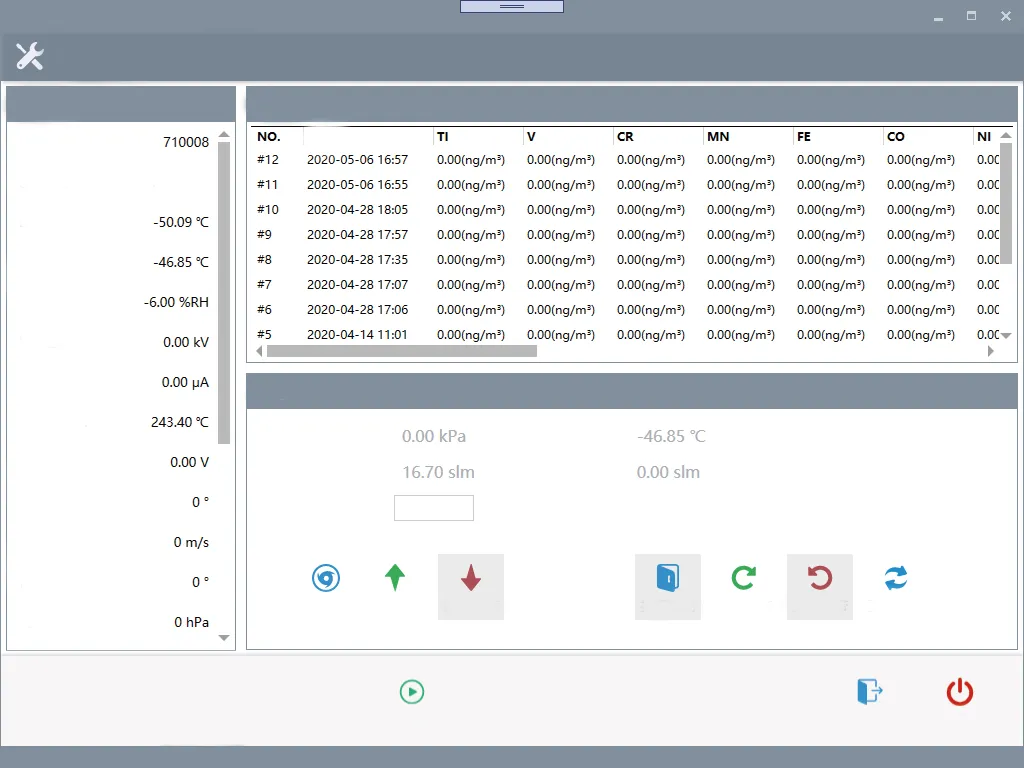
The analysis software features an advanced hierarchical modular design, offering powerful and flexible functions for data setting, calibration, storage, display, querying, analysis, and transmission.
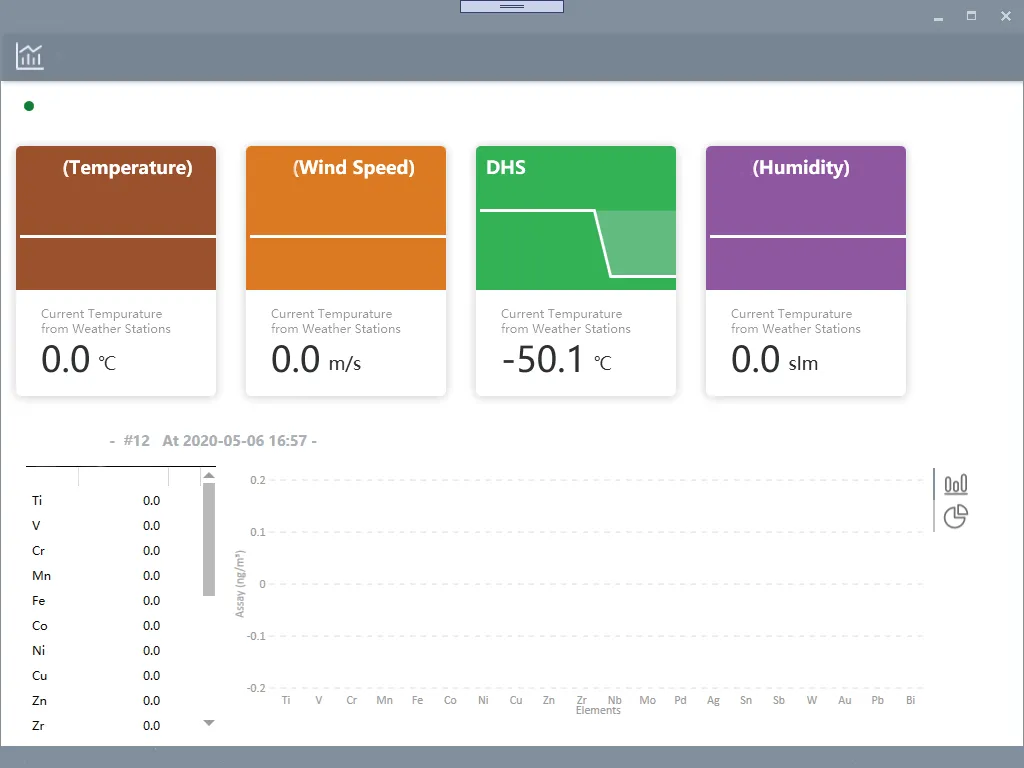
Intelligent Platform
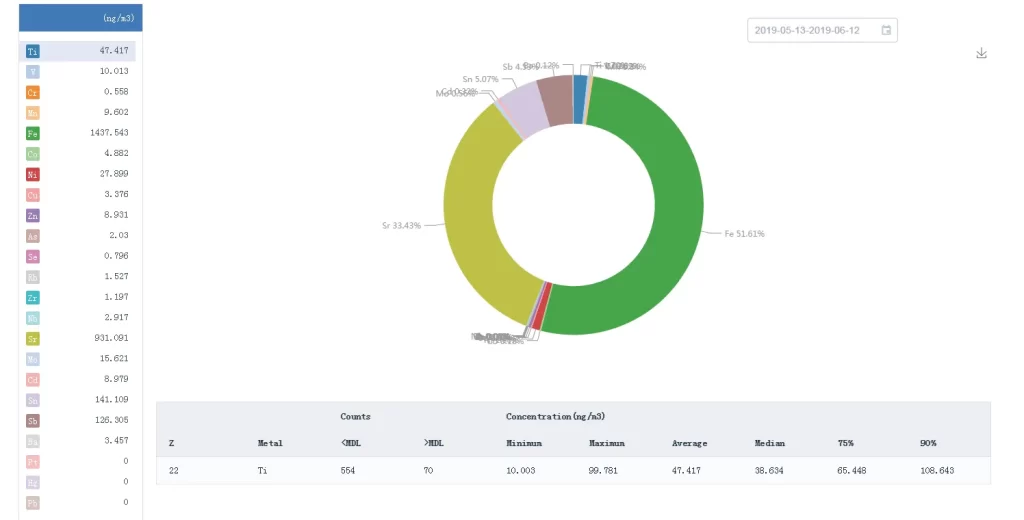
By analyzing the main components and elemental correlations through the XRF system, the process provides a more accurate basis for pollution traceability and source analysis.
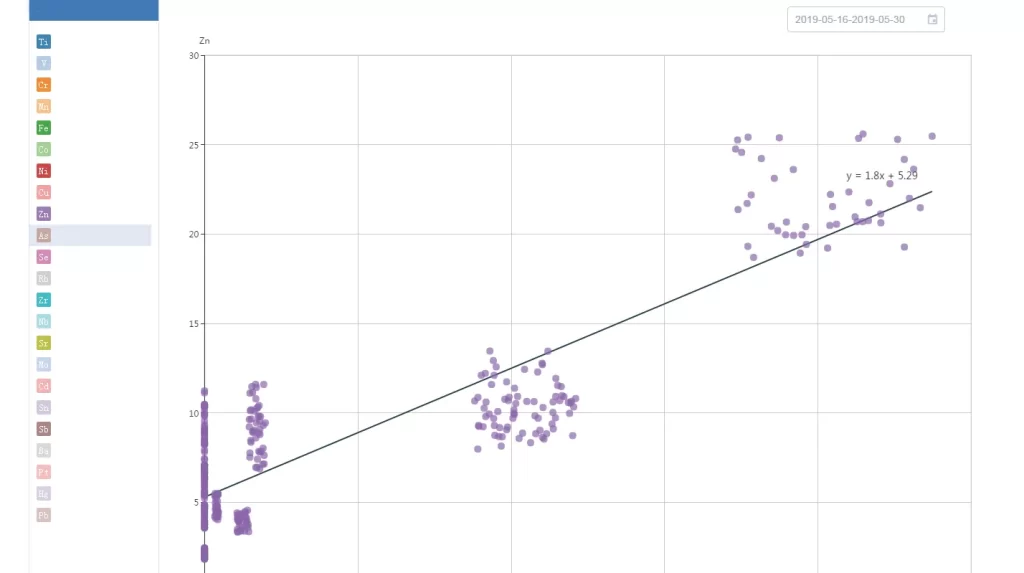
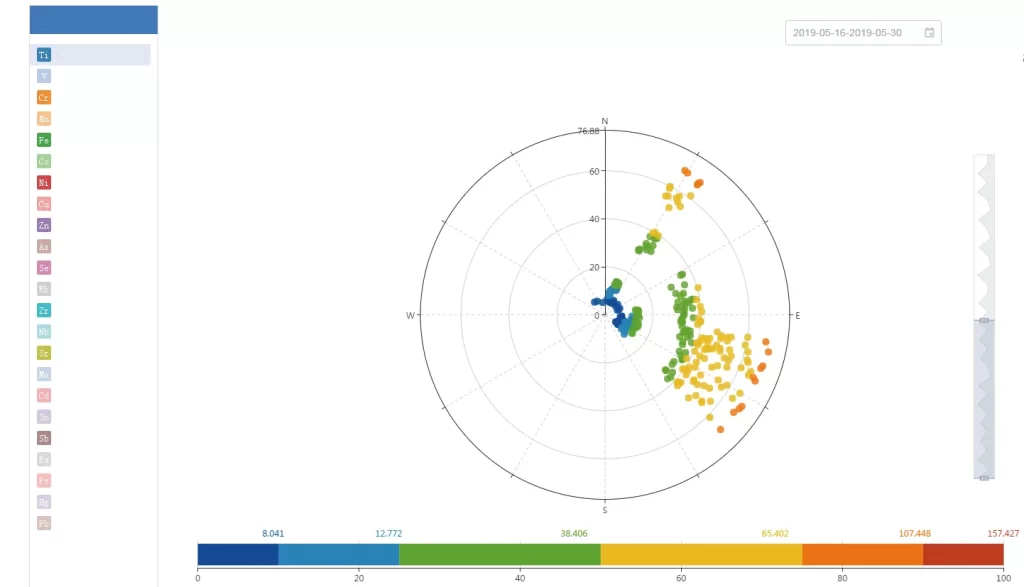
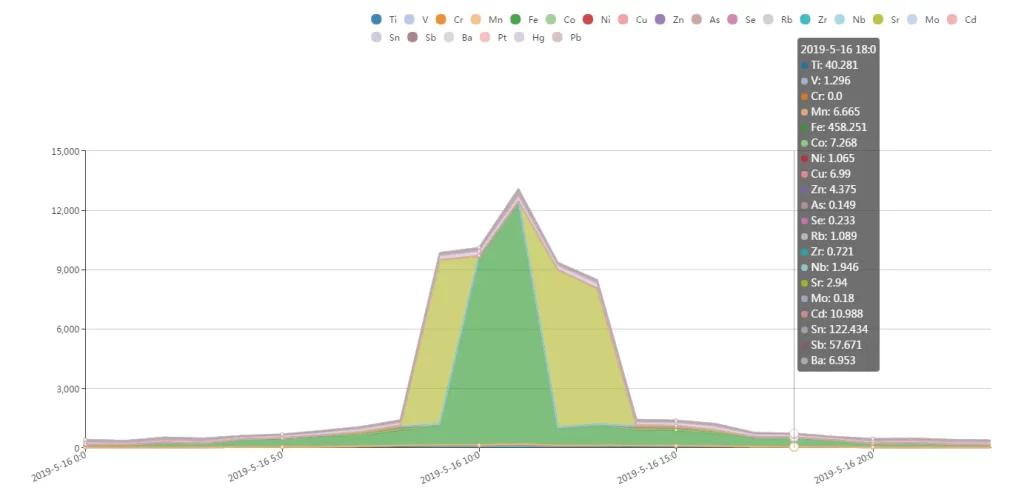
The system enables real-time, continuous online monitoring of the concentration and trends of heavy metal elements in particulate matter (PM2.5), providing essential data for evaluating pollution emissions and air quality.
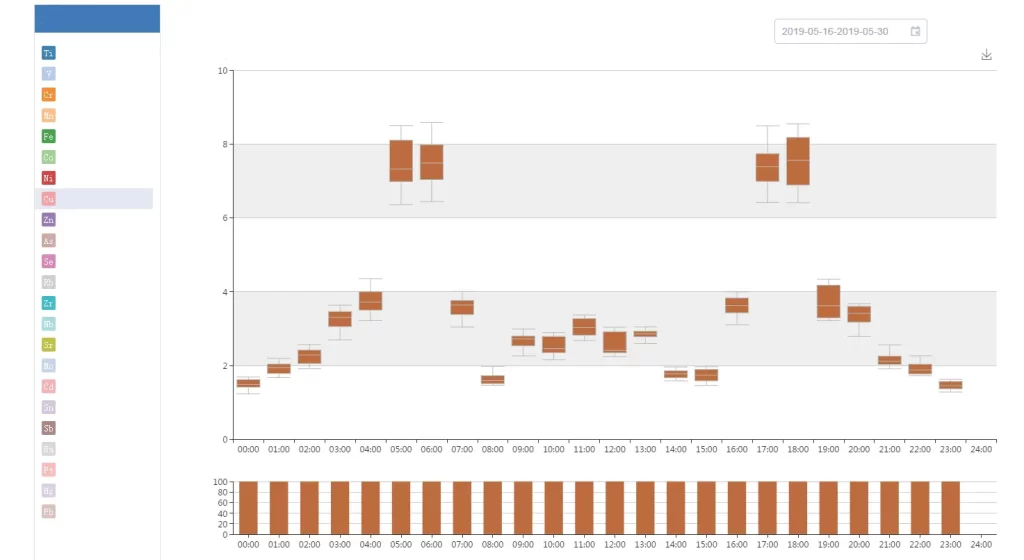
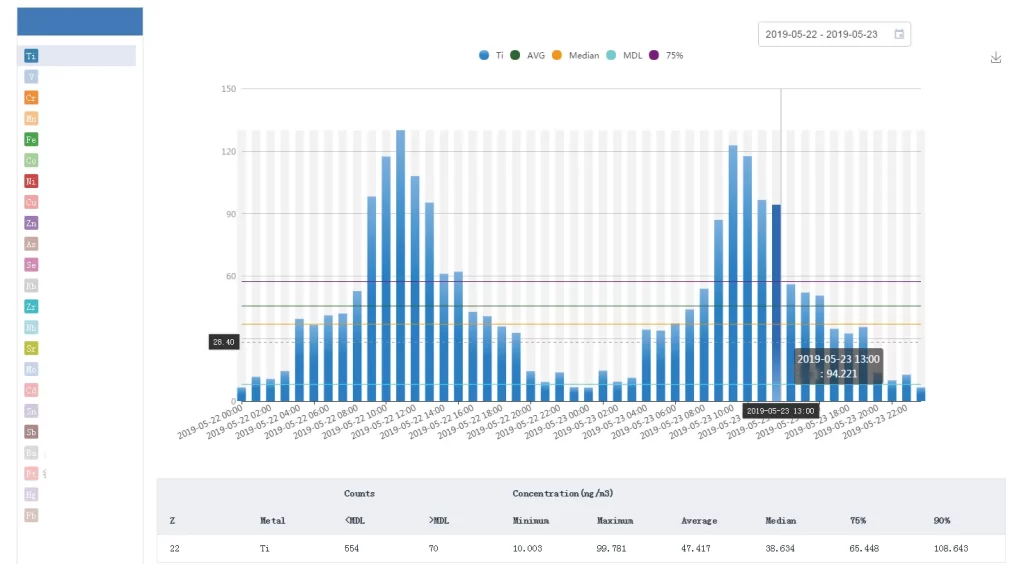
The system enables integrated collaborative testing of airborne particulate matter concentration and atmospheric heavy metal levels, often used to analyze the background value, environmental activity, and sources of heavy metals.
Working power supply | 220VAC±10%,50Hz±1Hz (110V also available) |
Measuring ambient temperature | -40~50℃ |
Measuring ambient Humidity | 0%RH~90%RH |
Operating temperature of the Main Unit | 0℃~40℃ |
Humidity of the Main Unit operating environment | 30%RH~60%RH |
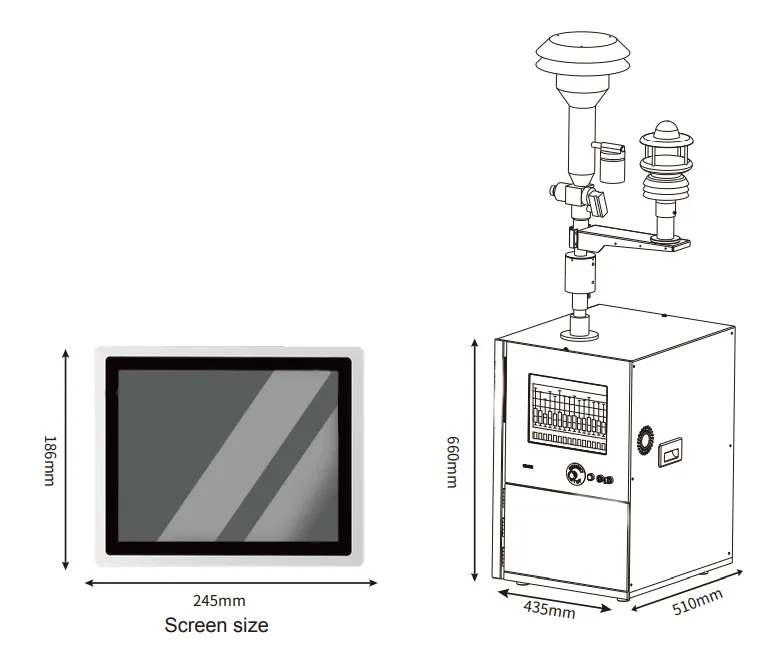
Size | 435×510×660mm(L×W×H) |
Way to work | Continuous automatic monitoring; One year of trouble-free operation and self-recovery function |
Applicable standards | HM: US EPA IO-3.3 Standard Method "Determination of Heavy Metals in Environmental Particles by X-ray Fluorescence Spectrometry" PM: HJ653-2013 "Ambient Air Particulate Matter (PM10 and PM2.5) Continuous Monitoring System Technical Requirements and Detection Methods" |
The control mode | Computer control with self-diagnosis and configuration features, real-time status monitoring, and long-term data storage of more than ten years |
Interface | English touch-screen interface displaying sampling flow, sampling time, measurement status, heavy metal concentration, and trend curves Supports cabinet installation or mobile truck installation |
Installation | 1. TSP/PM10/PM2.5 mass concentration 2. Simultaneous monitoring of Pb, Cd, Hg, As and up to 30 elements (expandable per user requirements) |
Monitoring indicators | HM: 0-100μg/m3 PM: 0-10mg/m3 |
Measuring range | HM: 10 pg/m3 (sampling time 1H, flow rate 20L/min) PM: <0.5μg/m3 (24H average) |
Detection limit | HM: <15% (Pb, Cd, As, sampling time 4H) PM: ±5μg/m3 (in 24H) |