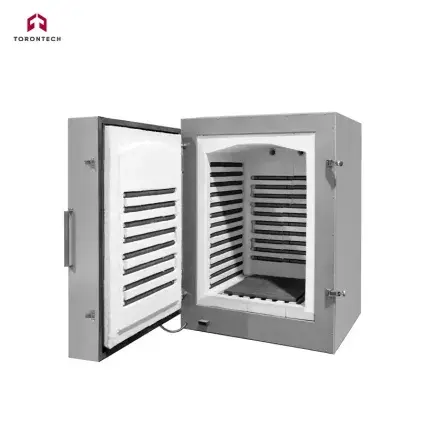
Furnace Muffle - What It Is, How It Works, and Where It’s Used
A furnace muffle is used when you need clean, high-temperature heating without contaminating your samples. Whether you work in a research lab or a manufacturing facility, this equipment offers precise control for processes like ashing, heat treatment, and thermal analysis.
Understanding how it works and where it's most effective helps you make confident decisions when choosing a model for your needs. From basic functions to advanced features, here's everything you should know.
What Is a Muffle Furnace?
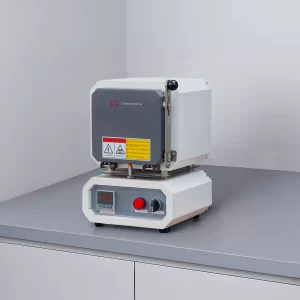
A muffle furnace is a high-temperature heating device designed to isolate the sample from direct contact with the heating element. It provides controlled, uniform heating inside an enclosed chamber.
You’ll often find it used in laboratories, materials testing, and industrial quality control settings. Unlike traditional furnaces, it avoids cross-contamination by using an insulated barrier, sometimes referred to as a "muffle."
It’s especially useful when clean, oxygen-controlled environments are required for testing. Common configurations include laboratory muffle furnace, benchtop muffle furnace, and electric muffle furnace models.
Box Furnace vs. Muffle Furnace
While both are high-temperature ovens, box furnaces and muffle furnaces differ in sample exposure and application:
| Feature | Box Furnace | Muffle Furnace |
| Sample Exposure | Direct contact with heat source | Isolated from heating element |
| Heating Environment | Open-air or semi-open | Clean, contamination-free |
| Typical Use | Hardening, stress relief | Ashing, analytical testing |
| Temperature Uniformity | Moderate | Highly uniform |
| Safety | Lower | Higher (sealed chamber) |
A lab muffle furnace is the preferred choice when accuracy, sample purity, or minimal contamination is essential, especially in chemical analysis or forensic labs.
How a Muffle Furnace Works
A muffle furnace works on the principle of indirect heating. The heating elements are placed outside the chamber, transferring heat through radiation and convection.
The sample remains isolated inside a ceramic or refractory-lined space. Temperature is monitored and adjusted using a digital or analog controller, often PID-based.
Some models come equipped with exhaust outlets to manage gases released during heating. Many modern units, such as the Thermolyne muffle furnace or MTI muffle furnace, offer programmable ramps, hold times, and safety features.
What Are the Main Components?
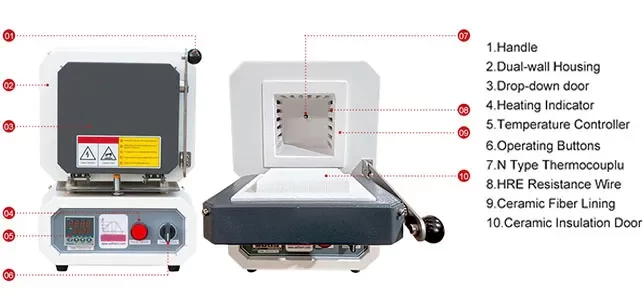
Each part of the muffle furnace works together to maintain stable and safe operation. These components include:
- Heating elements: Commonly made from nichrome, silicon carbide (SiC), or molybdenum disilicide (MoSi₂)
- Insulated chamber: Prevents heat loss and isolates the sample
- Temperature controller: Allows precise control and automation
- Thermocouple sensor: Reads internal temperature accurately
- Safety door lock: Prevents operation when open
- Exhaust vent: Releases gases to maintain clean airflow
Referencing a muffle furnace drawing can help visualize these parts and understand how the system is structured.
Temperature Ranges and Heating Materials
Different applications require different maximum temperatures. Here’s a quick reference:
| Heating Element | Max Temperature | Common Use |
| Nichrome wire | 1100–1200°C | General lab heating |
| Silicon carbide (SiC) | Up to 1600°C | Ceramics, sintering |
| Molybdenum disilicide | Up to 1800°C | Advanced metallurgical testing |
If you're looking at a 1200 C muffle furnace, it’s typically used for standard testing and ashing processes. Higher-temperature options are better suited for advanced industrial work.
Application of Muffle Furnace in Industries
You’ll find muffle furnaces in industries where clean, consistent high-temperature heating is a must. Because they isolate the sample from heating elements and combustion byproducts, they help you maintain purity while reaching precise temperatures, often up to 1,800°C.
Here’s how different sectors use this versatile tool:
1. Metallurgy and Metal Processing
In metallurgy and metalworking, you can use a lab muffle furnace to perform heat treatment like hardening, annealing, or tempering. These furnaces also support sintering, brazing, and the smelting of metals including aluminum, magnesium, and rare earth elements.
2. Ceramics and Glass
If you’re working with glass or ceramics, a muffle furnace helps with firing, melting, blow molding, or annealing under stable temperatures. It's also useful when recycling glass or testing ceramic strength.
3. Pharmaceuticals
In the pharmaceutical industry, you might need a muffle furnace for lab settings to dry or sterilize compounds, inspect drugs, or prepare medical samples before analysis.
4. Chemical and Analytical Labs
Chemical labs and environmental testing rely on muffle furnaces for ashing, loss on ignition (LOI), or calcination. You’ll often use them to analyze food, textiles, coal, petroleum, or water samples where composition matters.
5. Textile and Paint Industries
For paint and textile testing, muffle furnaces offer quick, consistent drying of coatings and allow you to determine ash content in fabrics or fibers.
6. Biomedical and Research
Research institutions and biomedical labs use muffle furnaces to simulate extreme thermal conditions, analyze material behavior, or test biological samples under heat.
7. Other Specialized Uses
- Pretreat samples in water quality or environmental analysis workflows.
- Sinter ceramic prosthetics in dental labs.
- Anneal silicon wafers in semiconductor fabrication.
No matter your industry, a muffle furnace for lab use gives you the control, repeatability, and clean operation needed for reliable results. Choose a model that matches your temperature range, chamber size, and precision requirements.
What are the Hazards of a Muffle Furnace?
Despite being widely used, operating a muffle furnace comes with risks. Be mindful of:
- High-temperature burn injuries
- Electrical issues due to improper grounding
- Fire hazards from volatile samples
- Exposure to toxic fumes without proper exhaust
Always follow safety procedures, wear appropriate gear, and never overload the chamber. Routine checks and calibration help prevent most issues.
Advantages and Disadvantages of Muffle Furnace
A. Advantage of a Muffle Furnace
The biggest advantage is its clean, isolated heating environment. Because samples never touch the heat source, you avoid:
- Contamination
- Erratic temperature changes
- Inconsistent results
This makes muffle furnaces for lab work far superior to many open-source heating options. Their sealed design also improves user safety and test reliability.
B. Disadvantages You Should Know
While they’re effective, muffle furnaces aren’t perfect for every scenario. Some downsides include:
- Limited chamber size for larger samples
- Slower cooldown periods due to insulation
- Higher power requirements
- Element wear over time, requiring replacement
- Higher upfront investment compared to simple ovens
Even so, the benefits usually outweigh these trade-offs for anyone needing clean, precise heating.
How to Choose the Right Muffle Furnace
Before buying, consider your exact needs. Use this checklist to guide your decision:
- Maximum temperature needed (e.g., 1,200°C vs 1,600°C)
- Sample size and required chamber volume
- Controller type: Manual or programmable PID
- Power supply compatibility
- Standards compliance (ISO, ASTM, etc.)
- Exhaust and safety system
- Type: freestanding, muffle furnace for lab, or benchtop
If you're working in a lab, a muffle furnace lab model with basic digital controls might be ideal. For production, look for programmable options with enhanced insulation and airflow control. Torontech also offers an extensive range of muffle furnaces, you can contact us to find the best solution.
Final Thoughts
A furnace muffle provides clean, reliable, and consistent heat, making it a core tool for labs, materials testing, and thermal processing. From ashing samples to sintering metals, it supports a range of processes across industries.
Choosing the right model depends on temperature needs, chamber size, and operational safety. Whether you need a muffled furnace for daily lab use or advanced production, the right information helps you buy with confidence.
To find a solution that fits your specific needs, you can explore our extensive range of muffle furnaces at our website. If you have questions or need personalized guidance, feel free to contact us for a consultation.