Dynamic vs Kinematic Viscosity: The Difference
For any business that works with fluids, getting a handle on how they behave is a critical part of the operation. It can often be a persistent challenge to pin down a liquid's properties, and mistakes here can be costly.
People use the term "viscosity," but the story has two sides: dynamic and kinematic. From our experience, knowing the difference in the dynamic vs kinematic viscosity discussion is what separates a smooth viscosity testing from an expensive operational problem.
Here, we'll outline the key distinctions, look at their real-world uses, and show you the simple calculation that connects them.
Dynamic Viscosity
This measurement is all about direct force.
Dynamic viscosity tells you exactly how much a fluid internally resists being moved or agitated. It’s a pure measure of the fluid’s own friction—a key factor in preventing batch failures. This focus on applied force is a critical concept in the dynamic vs kinematic viscosity comparison.
A great way to think about it is the effort needed to stir a thick resin. That feeling of the material pushing back? That is a physical demonstration of dynamic viscosity. It’s a direct measure of that resistance, and it isn't affected by the fluid's density.
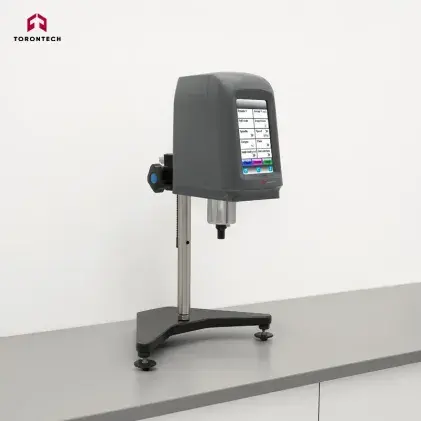
We work with clients in the chemical and pharmaceutical fields who depend on this number for product consistency. It’s why our ToronVisc™ rotational viscometers are built to measure this value with high precision, giving them the reliable data needed for complete confidence in their process.
Related article: How Does a Viscometer Work? The Expert Answer
Kinematic Viscosity
Kinematic viscosity is a different measurement altogether.
It describes how a fluid flows when the only thing acting on it is gravity. This one is directly linked to a fluid's density, and getting it right is often essential for meeting tough industry standards. This relationship with density is the other half of the kinematic vs dynamic viscosity puzzle.
Think about pouring a light oil and a thick syrup. The oil will empty out quickly, showing a low kinematic viscosity. The syrup will pour at a crawl, showing a high one.
For our customers in the automotive and lubrication sectors, this is a cornerstone of their quality control. It's the most practical way to confirm that an oil will properly coat engine parts when gravity is the only force ensuring it gets where it needs to go.
Related article: High Viscosity vs Low Viscosity: A Complete Guide
Dynamic vs. Kinematic Viscosity: What's the Core Distinction?
The central difference in the dynamic viscosity vs kinematic viscosity comparison comes down to the role of density. Making the right equipment choice based on this difference is a strategic decision that directly impacts your efficiency and budget.
- Force vs. Flow Speed: Dynamic is about the force needed to create movement. Kinematic is about the resulting speed of that movement under gravity. This is the simplest way to frame the kinematic vs dynamic viscosity debate.
- Density's Influence: Dynamic viscosity is an independent property. Kinematic viscosity is a calculated property that changes with the fluid's density.
- Measurement Method: This is where having a versatile tool becomes invaluable. A quality rotational viscometer provides the greatest flexibility for tackling the widest range of fluid challenges, which is a smart way to maximize the value of your equipment investment.
Related article: Viscosity vs Density: The Key Difference
Real-World Applications
We’ve seen firsthand how the dynamic vs kinematic viscosity choice plays out across many industries. Having the right instrument simplifies the entire process. Dynamic Viscosity is essential in processes involving applied force:
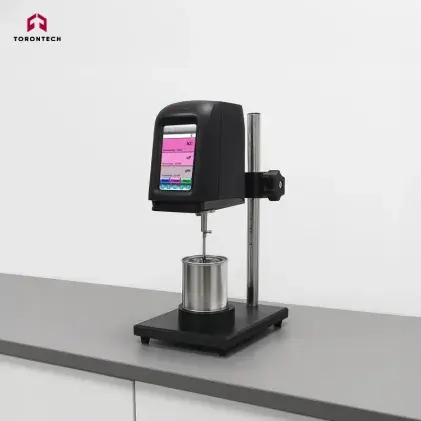
- Paints & Coatings: For this industry, we recommend our ToronVisc™ STM-2T Krebs Stormer Viscometer for standardized KU values, ensuring a paint applies smoothly but doesn't sag.
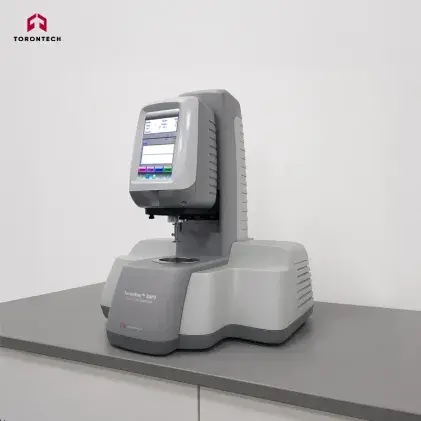
- Pharmaceuticals & Cosmetics: When working with valuable, small-volume samples, our ToronVisc™ Cone and Plate viscometers provide the required absolute viscosity data without significant product loss.
- Food Production: We assist clients in managing the texture and processability of products like sauces and creams using our dependable digital viscometers.
Kinematic Viscosity is the focus in gravity-driven systems:
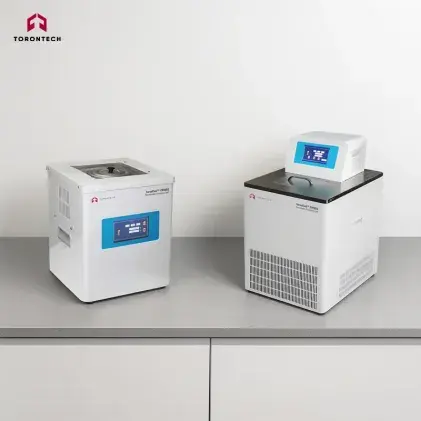
- Automotive & Lubrication: This is the key value for motor oil grades (SAE ratings). Our clients use our viscometers, often with ToronCool™ temperature control accessories, to calculate the precise kinematic viscosity to meet specifications.
- Petrochemical Industry: This value is used to predict how fuels will flow through pipelines, a figure that can be easily determined from primary data, saving considerable time and effort.
The Formula: A Direct Bridge Between Measurements
When you have a reading for one type of viscosity but your reporting requires the other, a straightforward conversion is all you need. The dynamic viscosity vs kinematic viscosity formula is the direct bridge that allows a single instrument to serve multiple functions.
The mathematical relationship is expressed as:
Kinematic Viscosity (ν) = Dynamic Viscosity (η) / Density (ρ)
Conversely, this also means:
Dynamic Viscosity (η) = Kinematic Viscosity (ν) x Density (ρ)
From Lab Data to a Specification Sheet
Applying this conversion correctly means a single, flexible ToronVisc™ instrument can help you meet a variety of quality standards, which is an efficient use of a lab's resources.
- Scenario: Your lab uses a ToronVisc™ T Series Digital Viscometer and measures an industrial oil, obtaining a dynamic viscosity of 55 cP at 40°C.
- The oil's density is determined to be 0.85 g/cm³.
- Calculation:
- Kinematic Viscosity (in cSt) = 55 cP / 0.85 g/cm³
- Kinematic Viscosity (in cSt) ≈ 64.7 cSt
With this, you can report the value with confidence on any technical document that requires a kinematic viscosity specification.
Torontech: Your Dynamic & Kinematic Viscosity Solution
In the end, your choice in the dynamic viscosity vs kinematic viscosity debate comes down to your application.
Dynamic viscosity is concerned with the force needed to move a fluid, which is vital for pumping and mixing. Kinematic viscosity is about how that fluid moves under gravity, which is crucial for lubrication and coating. However, a high-quality rotational viscometer provides the foundational data for both, offering the greatest operational flexibility and long-term value.
At Torontech, our focus is on providing you with testing solutions that deliver exceptional performance without the expected price tag. Our ToronVisc™ line, from portable models to programmable lab systems, is engineered to give you the accuracy you require.
We invite you to contact us to discuss your specific needs. Let's identify the right ToronVisc™ model to ensure your product quality and protect your bottom line.
Need the Right Viscosity Measurement?
Explore cost-effective Torontech viscometers for precise, reliable results.
References
- Drews, A. (1998). Standard Test Method for Kinematic Viscosity of Transparent and Opaque Liquids (the Calculation of Dynamic Viscosity). Micro & Nano Letters. doi.org/10.1520/MNL10842M
- Stanciu, I. (2023). Some Methods for Determining the Viscosity Index of Hydraulic Oil. Indian Journal Of Science And Technology. doi.org/10.17485/ijst/v16i4.1461
- Dukić, J., & Jukić, D. (2021). Real Fluid Simulation for Determination of Engine Oil Viscosity. 30th International Conference on Organization and Technology of Maintenance (OTO 2021). doi.org/10.1007/978-3-030-92851-3_30
- Rani, M., Maken, S., & Park, S. (2019). Measurement and modeling of viscosity for binary mixtures of diisopropyl ether with n-alkanes (C7–C10). Korean Journal of Chemical Engineering, 36, 1401 - 1409. doi.org/10.1007/s11814-019-0341-8
- Bizhigitov, T., & Madaliyeva, E. (2024). METHODS FOR STUDYING THE DEPENDENCE OF MOLECULES ON PHYSICAL PARAMETERS CHARACTERIZING THEIR ACTIVATION ENERGY. Bulletin of Dulaty University. doi.org/10.55956/anws4471
- Barr, G (1936). General physics: 3. Viscosity. Reports on Progress in Physics, 3, 19 - 25. doi.org/10.1088/0034-4885/3/1/303