BOCLE vs HFRR: Guide to Fuel Lubricity Testing
Engine life starts with top-tier fuel slipperiness, and we are seeing a massive industry push for testing protocols that truly guarantee long-term hardware safety. Getting the absolute right data means choosing between progressive wear models and sudden seizure models.
This guide breaks down the Ball on Cylinder vs High Frequency Reciprocating Rig to help you pick the most professional, cost-effective path for your specific laboratory.
Quick-Reference Comparison: BOCLE vs. HFRR
| Feature | BOCLE TT-5001 | HFRR TT-6079 |
|---|---|---|
| Primary Target Fuel | Jet Fuel / Aviation Specialties | Diesel and Middle Distillates |
| The Industry Standard | ASTM D5001 | ASTM D6079, ISO 12156-1 |
| Mechanical Action | Rotational (Fixed ball on a spinning ring) | Vibrational (Linear sliding disk) |
| Sample Size | A significant pour (50 ± 1.0 ml) | A minimal drop (2 ± 0.2 ml) |
| Test Duration | 30 ± 0.1 minutes | 75 ± 0.1 minutes |
Core Methodology: Ball on Cylinder vs. High Frequency Reciprocating Rig
Both of these testing configurations evaluate how effectively fuels prevent metal on metal grinding, yet they approach the task with entirely different mechanical logic. From where we stand, gaining a crystal clear perspective on these physical differences is the only way to ensure your data is truly meaningful.
Defining the BOCLE Method
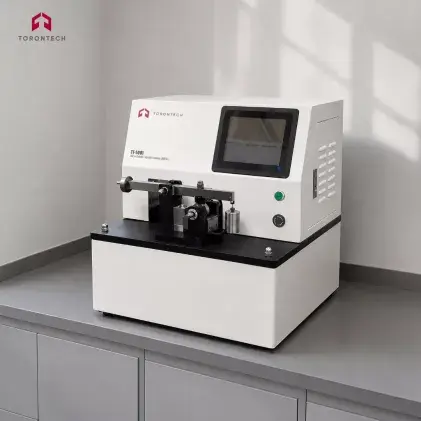
The Ball on Cylinder Lubricity Evaluator (BOCLE) is a testing instrument primarily constructed to evaluate the slipperiness of aviation turbine fuels.
Take our Ball-on-Cylinder Lubricity Evaluator (BOCLE) TT-5001, for example. The entire process involves a fixed steel ball pressed against a spinning steel ring (rotating up to 240 rpm) that is partially submerged in a 50 ml fuel reservoir, utilizing a strictly applied 1000g load. After running for exactly 30 minutes under specific pressure and conditioned air, the tiny wear scar left on the ball is measured.
We view the BOCLE as a non-negotiable asset for meeting ASTM D5001 requirements because it does an excellent job of mimicking the continuous circular motion found in high pressure aircraft pumps. Historically, this method became the absolute key for detecting the loss of natural lubricity and measuring the effect of corrosion inhibitors in aviation fuels.
Plus, with the TT-5001's built in microscope and camera system featuring an electronic micrometer, getting a swift, spot-on reading of that wear scar is incredibly straightforward.
Defining the HFRR Method
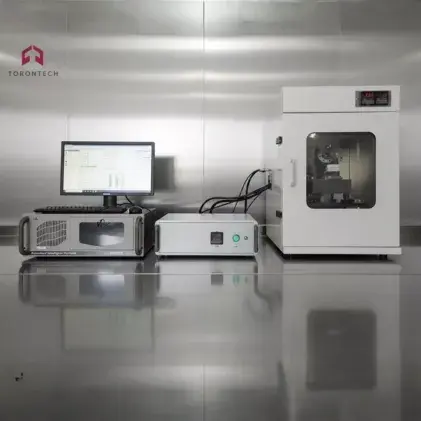
The High Frequency Reciprocating Rig (HFRR) is the definitive choice for assessing the lubrication properties of diesel and biodiesel blends. When operating a unit like our High-Frequency Reciprocating Rig (HFRR) TT-6079, a fixed steel ball is pushed against a rapidly vibrating steel disk, hitting a precise 50 Hz frequency with a 1.0 mm stroke, while completely immersed in the fuel.
To guarantee perfect results, our TT-6079 utilizes an electromagnetic actuator that provides stable energy conversion with zero vibration, paired with a specialized push rod design and a composite slide way to ensure absolutely stable displacement with zero transverse interference.
We find that this exact configuration is the most dependable way to replicate the fast paced, back and forth sliding wear that occurs within modern diesel injection systems. Research shows that the HFRR is exceptionally effective at measuring progressive wear and friction under start and stop conditions, evaluating the wear scar primarily on the ball as the main lubricity metric.
Key Technical Distinctions
When we stack BOCLE vs HFRR against each other, the fundamental split concerns the type of fuel you are processing and the mechanical motion the machine utilizes to generate wear.
- Application Profile: BOCLE is the undisputed choice for aviation grade fuels, while HFRR is reserved strictly for diesel and its related middle distillates.
- The Physics of Motion and Failure Modes: The BOCLE relies on a continuous rotational movement to model scuffing and seizure resistance, replicating the way components interact in a jet fuel pump. The HFRR utilizes a high speed, back and forth sliding action to model progressive wear, which we feel more accurately demonstrates the boundary and mixed lubrication levels found in diesel fuel sprayers.
- Volume and Efficiency: HFRR procedures require only a minimal amount of fuel (roughly 2 mL). While a BOCLE run demands a much larger sample, we consider that a necessary trade-off for the specialized safety data required in the aerospace sector.
It is highly critical to point out that multiple studies show a poor overall correlation between the HFRR and BOCLE methods. Because they measure completely different failure modes, you must align your equipment with your specific testing goals rather than assuming one test translates directly to the other.
Operational Use Cases
To make this concrete, let's look at how these instruments fit into daily operations.
- Scenario A: Aerospace Quality Control. A facility managing jet fuel contracts for commercial airlines relies heavily on the BOCLE. Because aviation demands zero room for error, they use the rotational testing mechanism to prove their fuel won't degrade high altitude pumps.
- Scenario B: Commercial Diesel Distribution. A distributor providing diesel for a city bus fleet leans entirely on the HFRR. They need to verify that their fuel keeps ground level injection systems running smoothly through stop and go city traffic, making the linear vibrational test the exact tool for the job.
Lubricity Testing for Sustainable Fuels (SAF & Biodiesel)
As the energy sector moves in the direction of more sustainable alternatives, we believe evaluating the lubricating performance of these fuels has become more vital than ever. Sustainable Aviation Fuel (SAF) and renewable diesels often lack the natural oily film found in traditional petroleum-derived products.
SAF Safety and Compliance
We strongly recommend BOCLE to ensure synthetic jet fuels provide the necessary boundary layer for aircraft systems, preventing catastrophic component failures before they can occur. For instance, when a supplier scales up production of synthetic kerosene for commercial airlines, BOCLE testing provides the necessary proof that the green alternative matches the slippery profile of standard jet fuel.
Studies confirm that BOCLE and related methods are incredibly sensitive to lubricity improvers, making them ideal for representing pump conditions for synthetic aviation fuels.
Biodiesel Lubricity Validation
In our professional opinion, the HFRR is an absolute lifesaver for verifying the lubrication quality of biodiesel blends, ensuring they interact correctly with modern engines without causing premature wear on sensitive parts.
Consider a distributor validating a new B20 blend meant for heavy duty agricultural equipment; the HFRR accurately confirms that the biofuel won't chew up those expensive tractor injectors. The HFRR consistently delivers logical dose response trends, meaning that as you increase the commercial additive level, you see a clear and reliable improvement in lubricity across various fuels.
Considerations for Volatile Blends
While the HFRR is exceptional for standard diesel, we advise extreme caution if you are testing highly volatile blends like ethanol-diesel mixtures.
Research indicates that the composition of these fuels can change drastically due to ethanol evaporation during the standard 75 minute HFRR test at elevated temperatures. For those specific mixtures, alternative or modified methods are required to maintain testing integrity.
Strategic Selection: When to Choose BOCLE
Deciding how to choose BOCLE depends entirely on your client base and your specific testing scope. We suggest securing a BOCLE system if:
- Your primary focus is aviation: If your lab evaluates jet fuels or aerospace specific additives, BOCLE is the essential choice for maintaining ASTM D5001 certification.
- You prioritize flight safety: The aviation industry has zero tolerance for error. Securing a unit with a PLC control system for fully automated operation and a high-precision gas mass flow controller, like the TT-5001, ensures you rapidly hit that mandatory 10% relative humidity without annoying drift, keeping your wear scar data completely reliable. Furthermore, the semiconductor technology ensures your heating and cooling cycle times are phenomenally quick.
- You check jet additives: Any chemical meant to improve the slipperiness of jet fuel must be verified using the rotational motion that only a BOCLE can provide. Take an additive manufacturer developing a new friction reducing compound for commercial jets; they rely strictly on BOCLE data to demonstrate exact wear scar reductions to their buyers.
Strategic Selection: When to Choose HFRR
On the other hand, knowing how to choose HFRR is quite simple for those handling ground based transportation fuels. We suggest integrating an HFRR into your lab if:
- Your main business is diesel: If your facility handles standard diesel, marine fuels, or heating oil, HFRR is the industry standard path to follow.
- You handle high-volume processing: Facilities checking massive quantities of fuel need highly durable gear. The TT-6079 features an automatic constant temperature and humidity system alongside a PTC ceramic chip heater that provides uniform heating up to 200°C and never requires replacement, significantly extending your machine's service life.
- You are working with ULSD (Ultra-Low Sulfur Diesel): We have observed that refineries producing low sulfur diesel must utilize HFRR to ensure their additive packages are actually protecting fuel injection hardware. Picture a regional refinery verifying a winter grade ULSD mix for a national trucking fleet; the HFRR provides the concrete proof that their specific additive package will keep those engines safe through thousands of highway miles.
Maintenance and Operational Efficiency
Beyond simply picking the right test, we believe that B2B procurement professionals must look at the total expenditure over the life of the machine. From our perspective, professional grade testing should never result in excessive downtime or overly complicated maintenance routines.
Torontech’s testing equipment is built specifically for a high-volume, professional laboratory environment. Our units provide:
- Straightforward Operation: We provide touch screen operation on our BOCLE units that makes parameter adjustment an absolute breeze, allowing you to stay compliant without the usual headaches.
- Pinpoint Measurement: The HFRR TT-6079 includes an advanced wear scar measuring system pulling 100x magnification with 1μm accuracy. It connects directly to your computer to capture, measure, and save those crucial wear scar pictures in seconds.
- Smart, Laboratory-Friendly Touches: We appreciate the small details that improve daily throughput, like the highly convenient 2ml marked line inside the HFRR oil box that saves your technicians time on every single pour.
Torontech: Your Partner for Fuel Lubricity Testing
Choosing between BOCLE vs HFRR is about matching your gear to your fuel.
HFRR is the clear winner for diesel wear and additive checks, while BOCLE is the top choice for aviation and seizure risks. For new or complex fuels, we believe running both gives the most accurate picture.
At Torontech, we provide highly innovative testing solutions at incredibly cost-effective price points. We firmly believe absolute accuracy should never break your laboratory budget. Whether you need the BOCLE TT-5001 or the HFRR TT-6079, Torontech has the exact professional hardware you require.
Contact us today to find the perfect, budget-friendly fix for your daily operations.
Click to view full list of references
- , L., , J., , H., , Z., , C., , G., , T., , Z., , Z., & , J. (2016). Experimental and Molecular Simulations for Evaluating the Effect of Lubricity Improvers on the Property of Jet Fuel. 18, 80-84.
- Blizard, N., & Bennett, P. (1996). A Comparison of Modified Elevated Temperature HFRR Test Data With Scuffing BOCLE Results. SAE transactions, 105, 1401-1411.
- Dukek, W. (1988). Ball-on-Cylinder Testing for Aviation Fuel Lubricity.
- Kaźmierczak, U., Kulczycki, A., & Ozimina, D. (2021). THE INFLUENCE OF SYNTHETIC HYDROCARBON ON LUBRICATING PROPERTIES OF FUELS FOR TURBINE ENGINES. Tribologia.
- Knothe, G. (2007). Evaluation of ball and disc wear scar data in the HFRR lubricity test. Lubrication Science, 20.
- Kuronen, M., Kiiski, U., & Lehto, K. (2015). Diesel Fuel Lubricity Comparisons with HFRR and Scuffing Load Ball-on-Cylinder Lubricity Evaluator Methods, part II.
- Kuszewski, H., Jaworski, A., & Mądziel, M. (2021). Lubricity of Ethanol–Diesel Fuel Blends—Study with the Four-Ball Machine Method. Materials, 14.
- Lacey, P. (1993). Wear with low-lubricity fuels II. Correlation between wear maps and pump components. Wear, 160, 333-343.
- Lehto, K., Vepsäläinen, A., Kiiski, U., & Kuronen, M. (2014). Diesel Fuel Lubricity Comparisons with HFRR and Scuffing Load Ball-on-Cylinder Lubricity Evaluator Methods. SAE International Journal of Fuels and Lubricants, 7, 842-848.
- Maru, M., Trommer, R., Cavalcanti, K., Figueiredo, E., Silva, R., & Achete, C. (2014). The Stribeck curve as a suitable characterization method of the lubricity of biodiesel and diesel blends. Energy, 69, 673-681.
- Stavinoha, L., Mckay, B., Villahermosa, L., & Muzzell, P. (2004). Evaluation of Ball on Three Disks as Lubricity Evaluator for CI/LI in Synthetic JP-5.