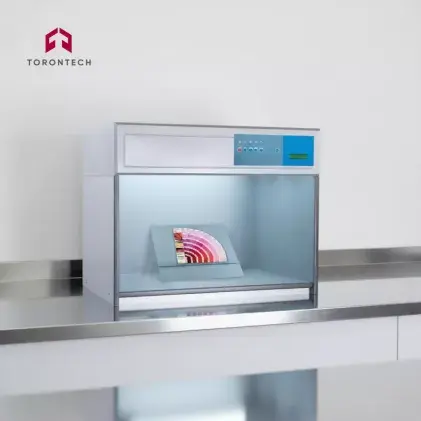
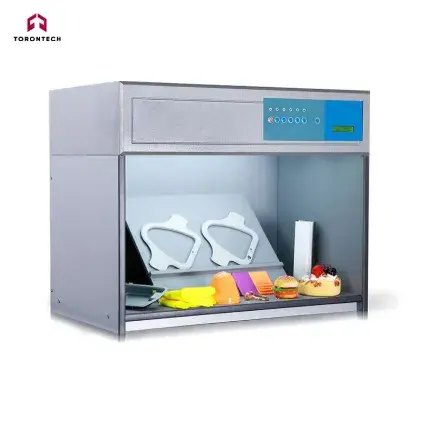
Light Booth - Color Matching Cabinet
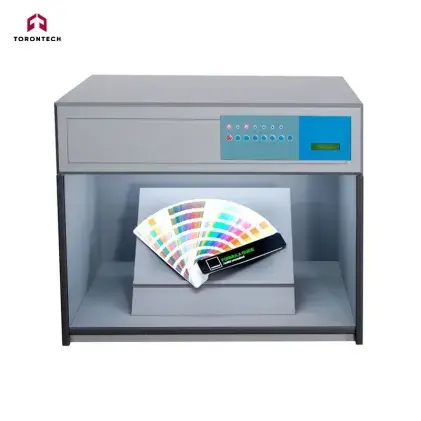
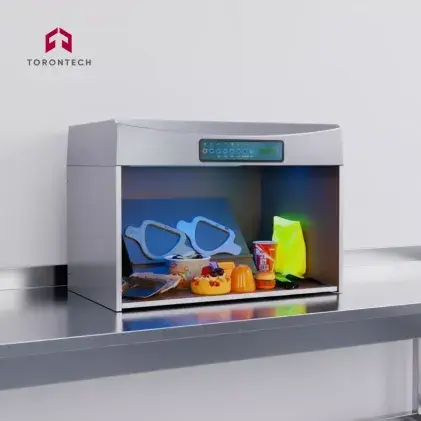
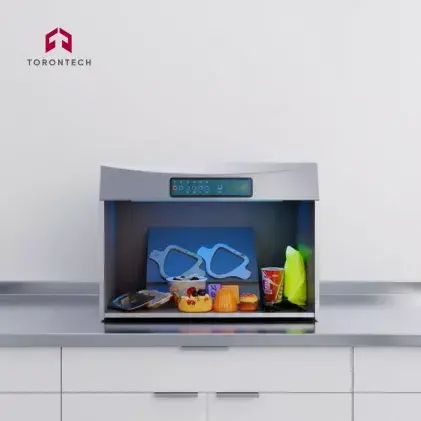
Visual color assessment is often compromised by variable environmental lighting, leading to costly errors and product rejections. Torontech’s Color Matching Cabinets eliminate this uncertainty by providing standardized, controllable lighting environments. These tools are essential for detecting metamerism (where colors match under one light but fail under another) and ensuring consistency across textiles, plastics, automotive parts, and graphic arts.
Designed to meet international standards (ASTM, ISO, CIE), our cabinets allow Quality Control (QC) professionals to switch instantly between various illuminants—simulating daylight, store lighting, and UV environments—to verify product appearance before it reaches the market.
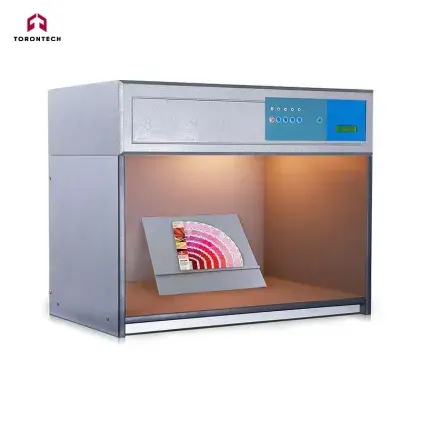
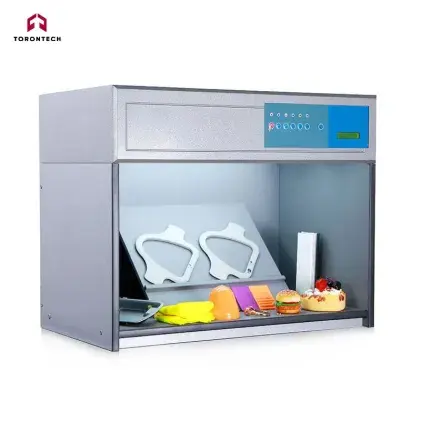
Compare Light Booth and Color Matching Cabinet Options
Side-by-side overview of Torontech light booths and color assessment viewers to standardize visual color evaluation and detect metamerism across industries.
P-Series Light Booths (Product and Sample Viewing)
| Feature | TT-P60(6) | P60+ | TT-P120 Oversize |
|---|---|---|---|
| Primary purpose | Standardized light booth for reliable color matching and metamerism checks | Standardized color viewing for QC workflows with quick illuminant switching | Oversize light booth for larger samples and bigger product evaluation setups |
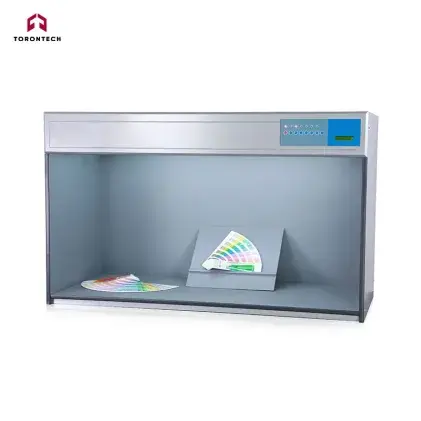
| Best for | Daily QC where consistent lighting reduces rejects and rework | Teams needing a practical, flexible booth for routine color approval | Automotive parts, large textiles, packaging samples, and oversized items |
| Typical industries | Textiles, plastics, automotive components, printing (application dependent) | Textiles, plastics, automotive, graphic arts (application dependent) | Automotive, large-format printing, textiles, industrial QC (application dependent) |
| Sample size fit | Standard samples | Standard samples | Oversize / large parts and samples |
| Decision driver | Need stable lighting to reduce judgment differences and detect metamerism | Need a reliable booth for routine color matching across multiple illuminants | Need a larger viewing area to evaluate big parts without compromising lighting control |
| How to choose | Choose when you need a standard multi-illuminant booth for frequent inspections | Choose when you want a flexible P-series option for everyday QC | Choose when your samples do not fit standard booths or need more space to evaluate |
| Selection tip | If you are setting up a baseline color QC station, this is a common starting point | If your team switches illuminants often, this is a strong practical choice | If your workflow is slowed by cramped viewing space, go oversize |
T-Series Light Booths (General QC and Textile Workflows)
| Feature | TT-T60+ | TT-T60(4) | TT-T60(5) | TT-T60B | TT-M60 |
|---|---|---|---|---|---|
| Primary purpose | Multi-illuminant light booth for consistent visual color evaluation | Light booth configuration for standardized color matching with selected illuminants | Light booth configuration for broader illuminant coverage and color approval | Light booth designed for controlled color evaluation workflows (model dependent) | Light booth option for standardized lighting in compact QC setups |
| Best for | QC teams needing reliable day-to-day color assessment | Operations that want core illuminants without over-specifying the station | Teams that must validate appearance under more lighting conditions | Workflows needing consistent viewing with a focused booth configuration | Labs needing a compact, dependable color assessment booth |
| Illuminant flexibility | Switch between multiple illuminants for metamerism checks (config dependent) | 4-illuminant configuration (as labeled) | 5-illuminant configuration (as labeled) | Configured for controlled lighting evaluation (model dependent) | Standardized illuminant switching for consistent QC (model dependent) |
| Typical use cases | Textiles, plastics, automotive parts, printing and packaging (application dependent) | Routine color matching where a smaller set of lighting conditions is sufficient | Color approvals needing more viewing conditions (daylight, store, UV, etc.) | Color inspection for recurring product lines and standardized QC procedures | General color matching and metamerism checks in limited-space environments |
| Decision driver | Need consistent results across inspectors and shifts | Need standardized viewing without extra complexity | Need broader lighting validation to reduce mismatch risk in real environments | Need a dedicated booth configuration that supports your specific QC method | Need a compact booth that still supports standardized evaluation |
| How to choose | Choose when you want a flexible, general-purpose T-series booth | Choose when your spec calls for a 4-illuminant viewing setup | Choose when your spec calls for a 5-illuminant viewing setup | Choose when you want a dedicated booth option for controlled QC workflows | Choose when space is limited but standardized lighting is still required |
| Selection tip | If your QC involves metamerism checks, prioritize multi-illuminant flexibility | If your spec is fixed and simple, this keeps things efficient | If you sell into multiple retail or lighting environments, broader coverage helps | If your team wants a consistent, repeatable station for a specific workflow, choose this | If you need a compact booth for routine approvals, this is a practical option |
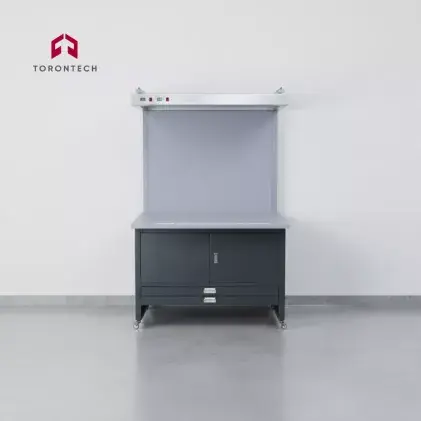
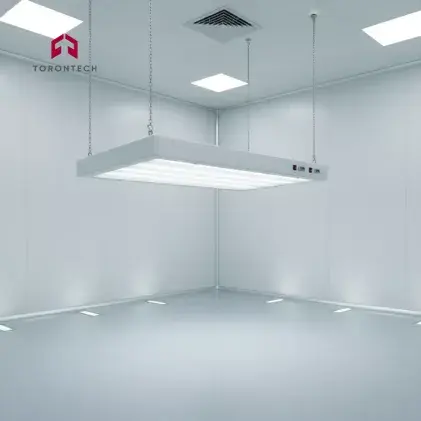
Color Viewers and Assessment Stations
| Feature | Color Viewer Light Table (TT-CC120) | Hanging Color Assessment Viewer (TT-CC120-W) |
|---|---|---|
| Primary purpose | Light table style station for consistent color viewing and evaluation | Hanging viewer setup for larger or vertically presented samples |
| Best for | Flat samples, print materials, textiles swatches, and surface checks | Hanging textiles, larger pieces, and workflows needing vertical presentation |
| Setup style | Table / bench workstation | Hanging / vertical viewing station |
| Decision driver | Need a dedicated viewing station that fits on a bench and supports consistent evaluation | Need a hanging assessment option for sample handling and workflow efficiency |
| Selection tip | If your samples are mostly flat and you want a stable station, start here | If textiles or large samples are easier to inspect vertically, choose this option |