
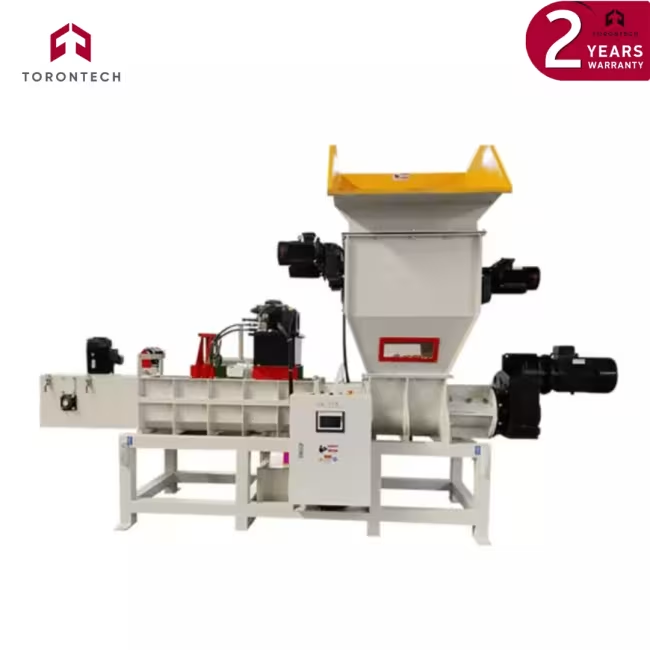
Foam Recycling Pelletizing Machine TT-EPS
Polystyrene resin incorporates a foaming agent, and upon heating, it softens, releasing gas to create a rigid, closed-cell plastic foam structure. It finds primary use in insulating building walls and roofs, composite board insulation, preserving agricultural and fishery products in fish boxes, and maintaining temperature in cold storage, air conditioners, vehicles, ships, floor heating, as well as in decorative and carving applications. Its versatility allows for extensive usage across various industries.
- Construction Industry – Recycles EPS foam from wall and roof insulation boards.
- Packaging Sector – Processes waste foam from protective packaging, fish boxes, and storage containers.
- Agriculture & Fisheries – Re-pelletizes foam used in produce packaging and fishery boxes.
- Cold Chain & Storage – Handles EPS foam from cold storage insulation, refrigerated transport, and warehouses.
- HVAC & Appliances – Recycles insulation foam from air conditioners, floor heating, and refrigeration systems.
- Automotive & Marine – Converts foam recovered from vehicles, ships, and component insulation.
- Decorative & Craft Applications – Recycles foam used in carving, decoration, and display materials.
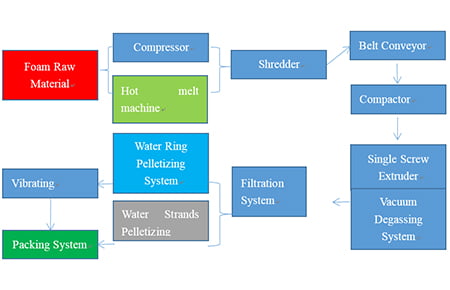
EQUIPMENT PROCESS PRINCIPLE
An integrated, end-to-end workflow transforms lightweight foams into high-quality pellets. From pre-treatment and shredding to compaction, extrusion, filtration, pelletizing, and final packing—each module is synchronized for stable throughput and consistent results.
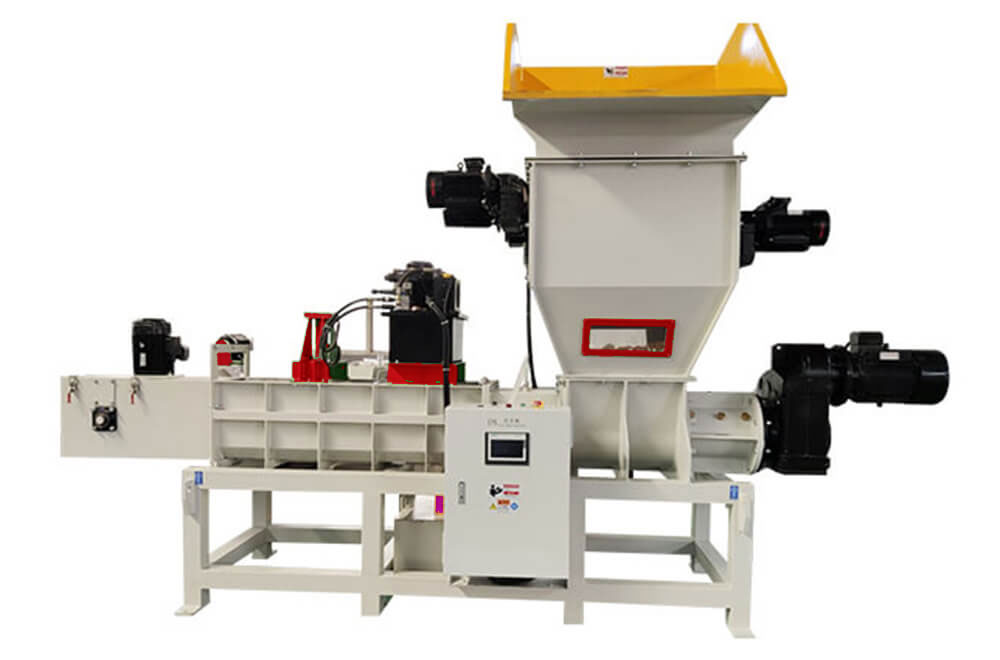
FOAM PRE-TREATMENT EQUIPMENT
EPS foams (10–45 kg/m³) are bulky and costly to transport, and their low bulk density limits feeder efficiency. We recommend pre-treatment to boost density and capacity:
- Cold compression: 1:50 typical compression ratio to dramatically cut volume.
- Hot-melt densifying: melt and cool into blocks for optimized bulk density and smoother downstream feeding.
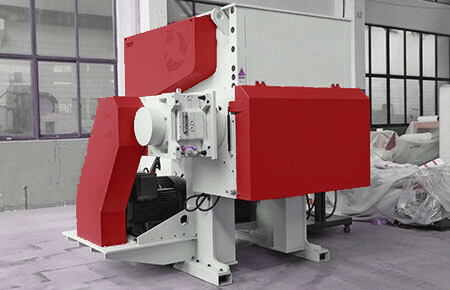
SHREDDER
Densified blocks—whether cold-pressed or hot-melted—are reduced to uniform chips (typically <12 mm). Right-sized feed ensures steady compaction and consistent extrusion downstream.
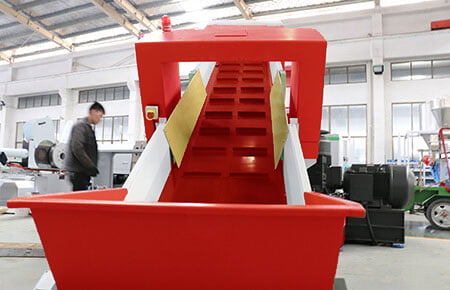
FEEDING
A heavy-duty belt conveyor feeds film, filament, raffia, and similar scraps to the compactor. Roll scrap is handled by an optional roll haul-off. ABB-driven inverters automate speed to match compactor load. An inline metal detector ties into the control system to alarm and stop on detection for added safety.

DUST & MOISTURE REMOVAL
Exhaust ports on the compactor connect to a dedicated separator that extracts vapor and fines generated during cutting and densifying—improving pellet quality without extra energy for post-drying.
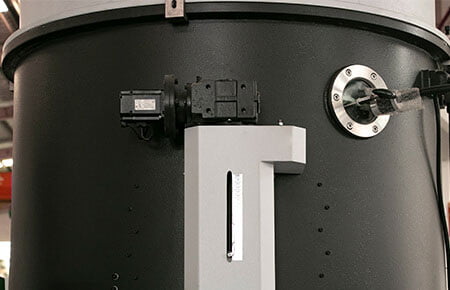
SLIDING GATE WITH SERVO MOTOR
Precisely controls residence time for soft and rigid materials, enabling pre-drying and ensuring only clean, dry feed reaches the screw. The PLC governs forced-feed quantity to maintain rated throughput.
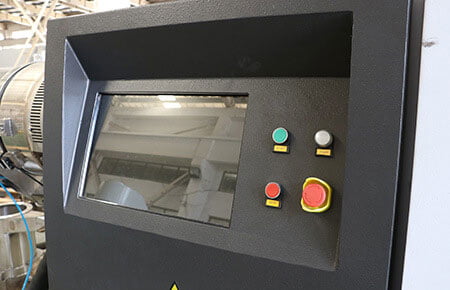
INTELLIGENT CONTROL
Smart Start: One-button launch runs interlocked modules in the correct sequence.
Smart Stop: One-button orderly shutdown of connected modules.
Emergency Stop: Instant halt for operator and equipment safety.
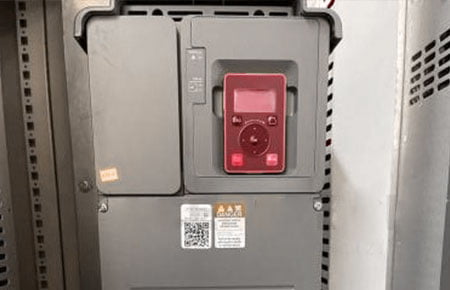
FREQUENCY CONVERTER
Variable-frequency control optimizes compactor speed, protects the drive, and aligns feed rate with real-time load—reducing spikes and improving overall line stability.
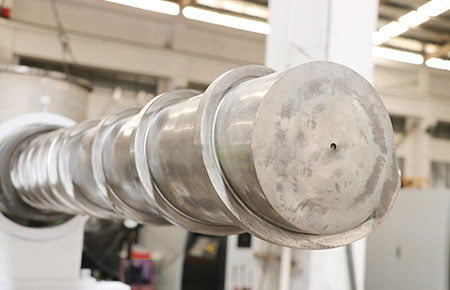
SINGLE SCREW EXTRUDER
CNC-machined 38CrMoAlA screws are nitrided for superior wear and corrosion resistance. The geometry enables efficient polyolefin melting at lower temperatures and pressures—even at high RPM—for uniform plasticization and stable output.

ROTATORY BLADES OF COMPACTOR
High-speed cutting generates frictional heat to pre-shrink material just below agglomeration. Optional guides compress and steer the feed toward the screw—combining crushing, drying, and densifying to guarantee smooth extrusion.

CRUSHING & COMPACTING
Rotor-stator interaction warms the bed through controlled friction. A dedicated exhaust removes released moisture and dust—improving melt stability and reducing downstream drying energy.

BARREL
An extended L/D ratio emulates double-stage performance in a single stage. Mid-line piston filtration plus an optional end-filter raise melt purity and maximize pellet consistency.
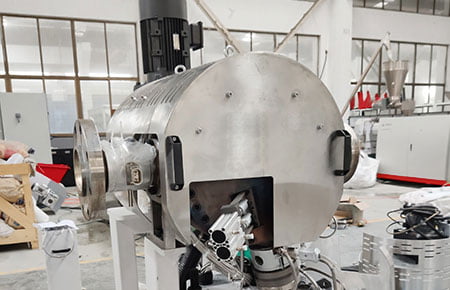
2-IN-1 OPTION (SCF)
Our proprietary self-cleaning filtration (SCF) runs continuously while removing up to ~5% contaminants—paper, wood, rubber, aluminum, and unmelted plastics—so you can re-pelletize highly contaminated streams with fewer stops.

MELT FILTRATION
Choose a single-plate/piston double-station or non-stop four-station screen changer at the head. Select filtration based on feed contamination and target pellet specs to balance quality, uptime, and cost.

LIQUID OUTLET / TWO-STAGE
For higher output and tighter melt control, multiple single-screw extruders can feed a second-stage extruder. This layout enhances filtration, stabilization, and overall capacity.

PELLETIZING
A die-face water ring system is standard. The self-adjusting cutter maintains accurate blade pressure, while automatic blade RPM responds to melt pressure—delivering uniform granules and long, stable runs.
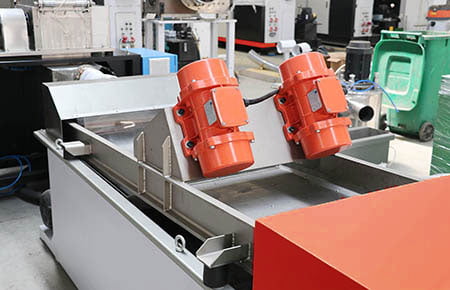
VIBRATION DRY
A dewatering vibration sieve paired with horizontal centrifugal drying quickly reduces surface moisture with lower energy consumption, preparing pellets for packing or downstream use.
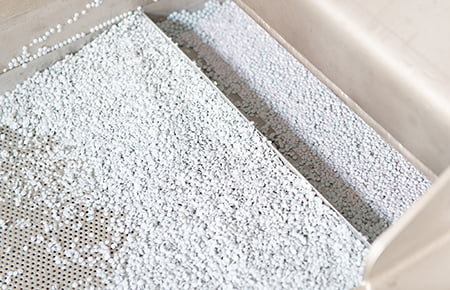
PLASTIC PARTICLES
Final output: clean, uniform pellets ready for reuse in high-quality plastic manufacturing—supporting circularity and cost savings.

PACKING SYSTEM
A drying shaker and horizontal centrifuge deliver low-energy, ready-to-ship pellets. The fully integrated line—crushing, compacting, extrusion, filtration, pelletizing, drying, and packing—reduces labor needs and operating costs while boosting capacity for films, filaments, raffia, and foams. Enjoy a lower initial investment, dependable build quality, global installation/training, and rapid-ship spare parts under warranty.
Machine Model | TT-EPS |
Final Product Shape | Particles |
System composition | Belt Conveyor, Air Exhausting Device, Sliding Gate, Cutting Compactor with Inverter, Single Screw Extruder, Filtration first, Vacuum Degassing, Pelletizer, Water Cooling Device, Dehydration Section, Conveyor Fan, Product Silo. |
Output Range | 320kg/h-2100kg/h |
Feeding Device | Belt Conveyor (Standard), Roll Hualing off device (Optional) |
Compactor Volume | 300L-1600L |
Diameter of screw | 100mm-180mm |
Material of screw | Bimetal |
L/D of screw | 36/ 1 |
Heater of barrel | Ceramic heater or Far-infrared heater |
Cooling of Barrel | Air cooling of fans through blowers |
Vacuum deashing exhaust | Two Double-zone vacuum degassing system (Standard) |
Pelletizing type | Water-ring pelletizing/ water-strands pelletizing/ Under-water pelletizing |
Voltage Standard | According to the Voltage of the Customer's Location |
Optional device | Metal detector, Roll hualing off device, Masterbatch and additives feeder |
Warranty | 13 months from the date of bill of lading |
Technical services | project design, factory construction, installation and recommendations, commissioning |